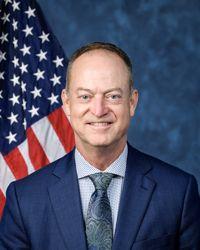
U.S. Representative for Indiana’s 8th district
Republican
119th Congress, two-year term
Missed 1.9% of roll calls. Chamber median 1.9%.
The full voting recordCounts roll calls where most Democrats and most Republicans voted differently, leaving out procedural votes.
How we countFrom FEC filings, Voteview roll calls and Congress.gov.
Republican. In Congress since 2025, 1 term in total.
Following saves Messmer to your list, which Chamber & Street keeps on its server, linked to a cookie on this browser and not to your name or email. Email alerts will come with constituent verification.
Bills and resolutions Messmer signed on to as a cosponsor. An original cosponsor signed on the day the bill was introduced. Source: govinfo bill status files, last updated Nov 6, 2026.
Messmer also withdrew as a cosponsor from 3 bills, not listed here.
Retire through Ownership Act
Sponsor Rick Allen (R). Joined Sep 18, 2025. 4 cosponsors. H.R. 5169 on Congress.gov
Introduced
Retire through Ownership Act
This bill allows the fiduciary of an Employee Stock Ownership Plan (ESOP) to rely on a valuation provided by an independent valuation or business appraiser in determining the fair market value of the plan's assets if the assets are not securities for which there is a generally recognized market and the expert or appraiser follows specified methodologies.
In general, ESOPs are defined contribution pension plans where employees accrue shares of their employers' stock in individual accounts as part of their compensation. After separating from employment or retiring, employees receive the cash value of their shares.
Under the bill, an independent appraiser or expert must adhere to the methodology established under the Internal Revenue Service Ruling 59-60, which prescribes the factors a professional business appraiser should consider in forming a valuation of the stock for a closely held business.
Direct Seller and Real Estate Agent Harmonization Act
Sponsor Kevin Kiley (I). Joined Sep 17, 2025. 31 cosponsors. H.R. 3495 on Congress.gov(opens in a new tab)
Introduced
Direct Seller and Real Estate Agent Harmonization Act
This bill excludes a real estate agent or a direct seller of consumer products from the definition of an employee for the purpose of applying the Fair Labor Standards Act of 1938 (FLSA). Workers who are considered employees under the FLSA must be paid the minimum wage and are generally eligible to receive overtime compensation for hours worked in excess of a 40-hour workweek.
Honoring the life and legacy of Charles Charlie James Kirk.
Sponsor Mike Johnson (R). Original cosponsor. 196 cosponsors. H.Res. 719 on Congress.gov(opens in a new tab)
Passed the House
This resolution (1) condemns the assassination of Charles "Charlie" James Kirk and all forms of political violence; and (2) honors the life, leadership, and legacy of Charlie Kirk.
Pay Our Troops Act of 2026
Sponsor Jennifer Kiggans (R). Original cosponsor. 210 cosponsors. H.R. 5401 on Congress.gov(opens in a new tab)
Introduced
Pay Our Troops Act of 2026
This bill provides continuing appropriations for military pay for any period during which interim or full-year appropriations for FY2026 are not in effect (i.e., a government shutdown).
Specifically, the bill provides FY2026 continuing appropriations for the pay and allowances of (1) members of the Armed Forces, including reserve components, who perform active service during the period; and (2) civilian personnel and contractors of the Department of Defense (and the Department of Homeland Security in the case of the Coast Guard) who are providing support to such members of the Armed Forces.
If a government shutdown occurs, the bill provides the continuing appropriations until the earlier of (1) the enactment into law of specified appropriations legislation, or (2) January 1, 2027.
Honoring Charlie Kirk following his assassination on September 10, 2025, in Orem, Utah.
Sponsor Cory Mills (R). Joined Sep 11, 2025. 61 cosponsors. H.Res. 695 on Congress.gov(opens in a new tab)
Introduced
Tribal Labor Sovereignty Act of 2025
Sponsor John Moolenaar (R). Joined Sep 10, 2025. 7 cosponsors. H.R. 1723 on Congress.gov(opens in a new tab)
Introduced
Tribal Labor Sovereignty Act of 2025
This bill excludes Indian tribes and tribal enterprises and institutions on tribal land from requirements for employers under the National Labor Relations Act (NLRA). (Currently under the NLRA, employers may not engage in unfair labor practices and must allow employees to form unions, engage in collective bargaining, and take collective action.)
Federal Mechanical Insulation Act
Sponsor Randy Weber (R). Joined Sep 4, 2025. 36 cosponsors. H.R. 3474 on Congress.gov(opens in a new tab)
Introduced
Federal Mechanical Insulation Act
The bill directs federal agencies to identify energy saving and water saving measures, such as the installation of mechanical insulation property, in certain annual energy and water evaluations of federal buildings. Thus, the bill allows the installation of mechanical insulation property (e.g., thermal insulation) to be considered an energy or water efficiency measure that may be used in federal buildings under the National Energy Conservation Policy Act.
Biomanufacturing and Jobs Act of 2025
Sponsor Mark Alford (R). Original cosponsor. 7 cosponsors. H.R. 4832 on Congress.gov(opens in a new tab)
Introduced
United States-Israel Defense Partnership Act of 2025
Sponsor Joe Wilson (R). Joined Aug 1, 2025. 178 cosponsors. H.R. 1229 on Congress.gov(opens in a new tab)
Introduced
United States-Israel Defense Partnership Act of 2025
This bill requires or authorizes certain actions to increase defense-related cooperation between the United States and Israel.
Specifically, the bill requires the Department of Defense (DOD) to
• establish a cooperative program, with the concurrence of Israel's Ministry of Defense (MOD), to develop and deploy advanced technologies for countering unmanned systems that threaten the United States and Israel;
• establish in Israel an office of the Defense Innovation Unit (an organization that focuses on rapidly fielding and scaling commercial technology across the U.S. military); and
• seek to engage Israel's MOD on the ascension of Israel into the national technology and industrial base (currently defined in law as the persons and organizations engaged in research, development, production, integration, services, or information technology activities conducted within the United States, the United Kingdom, Australia, New Zealand, and Canada).
The bill authorizes DOD, upon request of Israel's MOD, to jointly conduct research, development, test, and evaluation (RDT&E) of emerging technologies such as artificial intelligence and robotics to meet defense challenges.
Additionally, the bill extends the authority for DOD to (1) carry out RDT&E on a joint basis with Israel to establish anti-tunnel and counter unmanned aerial systems capabilities through 2028, and (2) transfer defense articles intended for use as reserve stocks for Israel through January 1, 2029.
Enhanced Iran Sanctions Act of 2025
Sponsor Michael Lawler (R). Joined Jul 29, 2025. 295 cosponsors. H.R. 1422 on Congress.gov(opens in a new tab)
Passed the House
Enhanced Iran Sanctions Act of 2025
This bill imposes sanctions on certain foreign persons (individuals and entities) that are involved in Iran's petroleum sector as well as certain associated persons. The bill also requires or authorizes actions to facilitate the enforcement of sanctions on Iran.
Specifically, the bill requires the President to impose visa- and property-blocking sanctions on any foreign person that, after the bill's enactment, knowingly engages in any transaction related to the processing, export, or sale of oil, condensates, gas, liquefied natural gas, or other petrochemical products in whole or in part from Iran. The President must also impose sanctions on certain foreign persons associated with a sanctioned individual or entity. For example, the President must sanction the subsidiaries and corporate officers of a sanctioned business.
The bill provides certain exceptions to these sanctions, including specifying that sanctions do not apply to the importation of goods or to conducting or facilitating transactions for humanitarian assistance.
The Department of State must establish an interagency working group that shall seek to establish a multilateral contact group to coordinate international efforts to enforce sanctions on Iran.
The bill expands the State Department rewards program to authorize a reward payment to any individual who furnishes information leading to the identification of a person (1) subject to sanctions under this bill, or (2) that has attempted or is attempting to evade sanctions under this bill.
Save Our Bacon Act
Sponsor Ashley Hinson (R). Original cosponsor. 25 cosponsors. H.R. 4673 on Congress.gov(opens in a new tab)
Introduced
Save Our Bacon Act
This bill prohibits a state or local government from enacting or enforcing a condition or standard on livestock production for livestock physically raised in another state or locality.
Further, the bill prohibits a state or local government from enacting or enforcing a condition for sale or consumption that requires an out-of-state livestock producer to meet any of the state or local government’s conditions or standards of production that are in addition to, or different from, those in the state of production.
Under the bill, production means the raising (including breeding) of a domestic animal for the purpose of (1) slaughter for human consumption, or (2) producing products manufactured for human consumption which are derived from milk processing (e.g., fluid milk). The bill excludes domestic animals raised for the primary purpose of egg production.
Seasonal Agriculture CDL Modernization Act
Sponsor Tracey Mann (R). Original cosponsor. 22 cosponsors. H.R. 4601 on Congress.gov(opens in a new tab)
Introduced
Crime Victims Fund Stabilization Act of 2025
Sponsor Ann Wagner (R). Joined Jul 17, 2025. 327 cosponsors. H.R. 909 on Congress.gov(opens in a new tab)
Passed the House
Crime Victims Fund Stabilization Act of 2025
This bill adds a new source of revenue for the Crime Victims Fund (CVF). Specifically, the bill requires certain civil monetary penalties collected from settlements and judgments in cases involving fraud and false claims against the federal government to be deposited into the CVF through FY2029.
The CVF supports federal, state, and local programs and activities to compensate and assist victims of crimes. Currently, the CVF is funded by deposits from a variety of sources, including federal criminal fines, penalties, and assessments; forfeited bail bonds; and certain other gifts, donations, and bequests.
BANNED in Latin America Act
Sponsor Jefferson Shreve (R). Original cosponsor. 7 cosponsors. H.R. 4531 on Congress.gov(opens in a new tab)
Introduced
LEDGER Act
Sponsor Mike Haridopolos (R). Joined Jul 17, 2025. 60 cosponsors. H.R. 4091 on Congress.gov(opens in a new tab)
Introduced
Locating Every Disbursement in Government Expenditure Records Act or the LEDGER Act
This bill requires the Department of the Treasury to implement a system that tracks all outlays from each appropriation, receipt, or other fund account in the Treasury by each department, agency, office, or other establishment in the executive, legislative, or judicial branches of the federal government. The system must also track the period of availability of the amounts in the applicable appropriation, receipt, or other fund account.
Mikaela Naylon Give Kids a Chance Act
Sponsor Michael McCaul (R). Joined Jul 17, 2025. 313 cosponsors. H.R. 1262 on Congress.gov(opens in a new tab)
Passed the House
Give Kids a Chance Act of 2025
This bill expands the Food and Drug Administration’s (FDA’s) authority with respect to research on rare pediatric diseases, including by permitting the FDA to take enforcement action against drug sponsors that fail to satisfy pediatric study requirements and by reauthorizing programs that support pediatric research.
Specifically, the bill
• modifies requirements relating to molecularly targeted pediatric cancer investigations to permit research on new drugs in combination with active ingredients that have already been approved, provided certain conditions are met;
• permits the FDA to take enforcement action against drug sponsors that fail to comply with pediatric study requirements, if such sponsors demonstrated a lack of due diligence in satisfying the requirement;
• renews the FDA’s authority to award priority review vouchers to sponsors of new products intended to treat rare pediatric diseases through September 30, 2029; and
• reauthorizes through FY2027 certain funding for the National Institutes of Health to support priority pediatric research.
The bill also provides statutory authority for the FDA’s interpretation of the orphan drug exclusivity period. The bill specifies, consistent with FDA regulations, that the seven-year market exclusivity period for drugs for rare diseases or conditions (i.e., orphan drugs) prohibits the approval of the same drug for the same approved use or indication with respect to the disease or condition. (In Catalyst Pharmaceuticals, Inc. v. Becerra, a court rejected the FDA’s interpretation and held that orphan drug exclusivity extends to all uses or indications for the disease or condition.)
FAST VETS Act
Sponsor Maxine Dexter (D). Original cosponsor. 3 cosponsors. H.R. 4446 on Congress.gov(opens in a new tab)
Became law
Focused Assistance and Skills Training for Veterans' Employment and Transition Success Act or the FAST VETS Act
This act establishes conditions under which a veteran's individualized vocational rehabilitation plan (under the Veteran Readiness and Employment program) must be redeveloped. The program provides job training and employment-related services to veterans with service-connected disabilities.
Currently, the Department of Veterans Affairs (VA) must formulate and annually review an individualized vocational rehabilitation plan for veterans who have a serious employment handicap and have a reasonably feasible vocational goal.
The act provides that such plan must be redeveloped with the veteran if the VA determines the achievement of the long-range rehabilitation goals for the veteran are no longer feasible due to changes in the employment handicap of the veteran and are more likely under a different plan.
Defend Girls Athletics Act
Sponsor Andy Barr (R). Original cosponsor. 57 cosponsors. H.R. 4363 on Congress.gov(opens in a new tab)
Introduced
Abraham Accords Defense Against Terror Act
Sponsor Michael Lawler (R). Original cosponsor. 35 cosponsors. H.R. 4335 on Congress.gov(opens in a new tab)
Passed committee
Self-Insurance Protection Act
Sponsor Robert Onder (R). Joined Jul 10, 2025. 2 cosponsors. H.R. 2571 on Congress.gov(opens in a new tab)
Introduced
Accreditation Choice and Innovation Act
Sponsor Randy Fine (R). Joined Jul 2, 2025. 1 cosponsor. H.R. 4054 on Congress.gov(opens in a new tab)
Introduced
Accreditation Choice and Innovation Act
This bill revises the accreditation process for reviewing the quality of education offered by institutions of higher education (IHEs).
Under current law, an IHE seeking to participate in many federal programs (e.g., federal student aid programs) must be accredited by an agency recognized by the Department of Education (ED) as a reliable authority on the quality of the education being offered at the IHE. An ED-recognized accrediting agency must meet various provisions under the Higher Education Act of 1965 and in regulations.
Under this bill, states may designate an entity (e.g., an industry-specific quality assurance entity) as an accrediting agency for programs or IHEs in the state. The bill outlines the requirements for the state to submit a plan to ED and for ED to respond to the plan.
Additionally, the bill provides an accelerated path to recognition by authorizing ED to recognize new accrediting agencies within two years of their application.
ED must convene a panel of experts to develop common terminology for accrediting agencies to use in making accrediting decisions and publish those recommendations.
Further, the bill (1) requires accrediting agencies to establish specified standards for measures assessing student success (e.g., labor market outcomes), and (2) requires accrediting agencies to establish procedures for assessing compliance with agency standards that reflect an IHE's risk of losing accreditation.
The bill reauthorizes through September 30, 2028, and revises the National Advisory Committee on Institutional Quality and Integrity, which advises ED on matters related to accreditation.
FIREARM Act
Sponsor Darrell Issa (R). Joined Jul 2, 2025. 41 cosponsors. H.R. 3770 on Congress.gov(opens in a new tab)
Passed committee
Fighting Irrational Regulatory Enforcement to Avert Retailers’ Misfortune Act or the FIREARM Act
This bill prohibits the Bureau of Alcohol, Tobacco, Firearms and Explosives (ATF) from bringing an enforcement action to revoke or deny renewal of a federal firearms license on the basis of a self-reported violation that is correctable, so long as the violation did not involve the transfer of a firearm to a prohibited person.
The term self-reported violation means a violation of a statutory provision or implementing regulation by a federal firearms licensee (e.g., a gun dealer) that the licensee reports to the ATF before it is discovered during a compliance inspection.
The bill applies retroactively.
Improving Seniors’ Timely Access to Care Act of 2025
Sponsor Mike Kelly (R). Joined Jul 2, 2025. 308 cosponsors. H.R. 3514 on Congress.gov(opens in a new tab)
Passed committee
Improving Seniors' Timely Access to Care Act of 2025
This bill establishes several requirements and standards relating to prior authorization processes under Medicare Advantage (MA) plans.
Specifically, MA plans must (1) establish an electronic prior authorization program that meets specified standards; (2) annually submit to the CMS for publication specified prior authorization information, including the percentage of requests approved and the average response time; and (3) meet other standards, as set by the Centers for Medicare & Medicaid Services (CMS), relating to the quality and timeliness of prior authorization determinations.
The CMS and the Office of the National Coordinator for Health Information Technology must publish on the CMS' website a report that analyzes the information received from MA plans, the feasibility of implementing real-time decision making with respect to prior authorization requests, and the impact of decisions that are made using artificial intelligence on patient access.
Affordable Housing Credit Improvement Act of 2025
Sponsor Darin LaHood (R). Joined Jul 2, 2025. 168 cosponsors. H.R. 2725 on Congress.gov(opens in a new tab)
Introduced
To transfer the functions, duties, responsibilities, assets, liabilities, orders, determinations, rules, regulations, permits, grants, loans, contracts, agreements, certificates, licenses, and privileges of the United States Agency for International Development relating to implementing and administering the Food for Peace Act to the Department of Agriculture.
Sponsor Tracey Mann (R). Joined Jul 2, 2025. 44 cosponsors. H.R. 1207 on Congress.gov(opens in a new tab)
Introduced