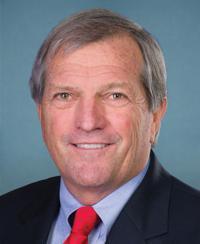
U.S. Representative for California’s 10th district
Democrat
119th Congress, two-year term
Missed 1.6% of roll calls. Chamber median 1.9%.
The full voting recordCounts roll calls where most Democrats and most Republicans voted differently, leaving out procedural votes.
How we countFrom FEC filings, Voteview roll calls and Congress.gov.
Democrat. In Congress since 2015, 6 terms in total.
Following saves DeSaulnier to your list, which Chamber & Street keeps on its server, linked to a cookie on this browser and not to your name or email. Email alerts will come with constituent verification.
Bills and resolutions DeSaulnier signed on to as a cosponsor. An original cosponsor signed on the day the bill was introduced. Source: govinfo bill status files, last updated Nov 6, 2026.
Federal Firefighters Families First Act
Joined Mar 21, 2025. 77 cosponsors. H.R. 759 on Congress.gov
Progress not on file
Neighbors Not Enemies Act
Sponsor Ilhan Omar (D). Joined Mar 21, 2025. 67 cosponsors. H.R. 630 on Congress.gov(opens in a new tab)
Introduced
Neighbors Not Enemies Act
This bill repeals provisions authorizing the President to apprehend and remove from the United States the citizens of a particular nation, if the United States has declared war against that nation or that nation has threatened an invasion against the United States.
National Rosie the Riveter Day Act
Sponsor John Garamendi (D). Original cosponsor. 7 cosponsors. H.R. 2256 on Congress.gov(opens in a new tab)
Introduced
To amend the Workforce Innovation and Opportunity Act to authorize a study to review specific outcomes of entrepreneurial skills development programs, and for other purposes.
Sponsor Rick Allen (R). Joined Mar 21, 2025. 2 cosponsors. H.R. 2099 on Congress.gov(opens in a new tab)
Introduced
This bill requires states to incorporate into their career services programs (1) information about entrepreneurship, and (2) referrals to microenterprise services. It also requires the Department of Labor to conduct a multistate study of entrepreneurial skills development programs, including a review of successful practices for developing such skills.
MERIT Act
Sponsor LaMonica McIver (D). Joined Mar 21, 2025. 108 cosponsors. H.R. 1835 on Congress.gov(opens in a new tab)
Introduced
Department of Peacebuilding Act of 2025
Sponsor Ilhan Omar (D). Joined Mar 21, 2025. 52 cosponsors. H.R. 1111 on Congress.gov(opens in a new tab)
Introduced
Disaster Resiliency and Coverage Act of 2025
Sponsor Mike Thompson (D). Joined Mar 21, 2025. 63 cosponsors. H.R. 1105 on Congress.gov(opens in a new tab)
Introduced
Disaster Resiliency and Coverage Act of 2025
This bill establishes a grant program for certain hazard mitigation measures for homes in disaster risk areas and provides a tax credit for up to 30% of expenditures on such mitigation measures. It also excludes from taxable income certain payments for residential hazard mitigation and federal emergency agricultural assistance.
The bill requires the Federal Emergency Management Agency (FEMA) to award grants to states and Indian tribal governments for specified hazard mitigation activities on residential properties at a high risk of experiencing a major disaster. FEMA must establish and periodically update disaster risk areas in which homes are eligible for the grant funding. Individual residential households, subject to certain income limitations, may receive up to $10,000 (adjusted for inflation) for eligible hazard mitigation activities, such as reinforcing a roof, installing a flood control system, or reducing flammable vegetation near the home. The bill also provides an income tax credit to individuals and businesses for up to 30% of expenditures on the specified residential mitigation activities eligible under the grant program.
Additionally, under current law, payments for disaster relief and payments under federal hazard mitigation programs are excluded from taxable income. The bill specifically excludes from taxable income payments to an individual for hazard mitigation improvements to their residence under any program established or administered by a state or local government. The bill also excludes certain federal emergency and disaster agricultural assistance from taxable income as a type of disaster relief payment.
Caring for All Families Act
Sponsor Jahana Hayes (D). Joined Mar 21, 2025. 47 cosponsors. H.R. 1002 on Congress.gov(opens in a new tab)
Introduced
Medicare Dental, Vision, and Hearing Benefit Act of 2025
Sponsor Lloyd Doggett (D). Original cosponsor. 132 cosponsors. H.R. 2045 on Congress.gov(opens in a new tab)
Introduced
Medicare Dental, Vision, and Hearing Benefit Act of 2025
This bill provides for Medicare coverage of dental, vision, and hearing care. Coverage includes (1) routine dental cleanings and exams, basic and major dental services, emergency dental care, and dentures; (2) routine eye exams, eyeglasses, and contact lenses; and (3) routine hearing exams, hearing aids, and exams for hearing aids. With respect to such care, the bill establishes special payment rules, limitations, and coinsurance requirements.
Stop Comstock Act
Sponsor Becca Balint (D). Original cosponsor. 146 cosponsors. H.R. 2029 on Congress.gov(opens in a new tab)
Introduced
Proxy Voting for New Parents Resolution
Sponsor Brittany Pettersen (D). Joined Mar 10, 2025. 175 cosponsors. H.Res. 23 on Congress.gov(opens in a new tab)
Introduced
Proxy Voting for New Parents Resolution
This resolution authorizes proxy voting in the House of Representatives for a Member who has given birth or whose spouse has given birth and pregnant Members who are unable to travel safely or have a serious medical condition.
Under the resolution, a qualifying Member may designate a proxy to cast a vote in a committee, the Committee of the Whole, or on the House floor; however, proxies will not be counted for purposes of establishing a quorum. The proxy designation is valid for up to 12 weeks.
To designate a proxy for House and Committee of the Whole votes, the Member must submit a signed and dated letter to the Clerk stating the Member’s qualifying circumstances and the name and state of the Member who has agreed to be designated as proxy. A Member who has designated a proxy according to these requirements may also designate a proxy for committee votes. To designate a proxy for committee votes, the Member must provide the committee chair and ranking minority member with a signed and dated letter specifying another member of the committee to cast a proxy vote.
The resolution further provides that a Member may revoke the proxy authorization by (1) casting the Member’s own vote; (2) recording the Member’s own presence in the House or in the Committee of the Whole; or (3) in a committee, by submitting a signed letter to the chair and ranking minority member.
To award a Congressional Gold Medal to the Freedom Riders, collectively, in recognition of their unique contribution to Civil Rights, which inspired a revolutionary movement for equality in interstate travel.
Sponsor Henry Johnson (D). Joined Mar 10, 2025. 124 cosponsors. H.R. 945 on Congress.gov(opens in a new tab)
Introduced
This bill provides for the presentation of a Congressional Gold Medal to the Freedom Riders, in recognition of their contribution to civil rights by fighting for equality in interstate travel.
Do No Harm Act
Sponsor Robert Scott (D). Original cosponsor. 125 cosponsors. H.R. 1954 on Congress.gov(opens in a new tab)
Introduced
Do No Harm Act
This bill prohibits the application of the Religious Freedom Restoration Act of 1993 (RFRA) to specified federal laws or the implementation of such laws. Currently, RFRA prohibits the government from substantially burdening a person's exercise of religion even if the burden results from a rule of general applicability, except in furtherance of a compelling governmental interest when using the least restrictive means.
Under the bill, RFRA is inapplicable to laws or the implementation of laws that
• protect against discrimination or require the promotion of equal opportunity (e.g., the Civil Rights Act of 1964);
• require employers to provide wages, other compensation, or benefits, including leave;
• protect collective activity in the workplace;
• protect against child labor, abuse, or exploitation; or
• provide for access to, information about, referrals for, provision of, or coverage for any health care item or service.
The bill prevents RFRA from being used to deny (1) goods or services the government has agreed to provide to a beneficiary of or participant in a program or activity funded by a government contract, grant, agreement, or other award; or (2) a person's full and equal enjoyment of a government-provided good, service, benefit, facility, privilege, advantage, or accommodation.
In order for a person to assert a RFRA claim or defense in a judicial proceeding, the government must be a party to the proceeding.
Richard L. Trumka Protecting the Right to Organize Act of 2025
Sponsor Robert Scott (D). Original cosponsor. 217 cosponsors. H.R. 20 on Congress.gov(opens in a new tab)
Introduced
John R. Lewis Voting Rights Advancement Act of 2025
Sponsor Terri Sewell (D). Original cosponsor. 221 cosponsors. H.R. 14 on Congress.gov(opens in a new tab)
Introduced
John R. Lewis Voting Rights Advancement Act of 2025
This bill establishes new criteria for determining which states and political subdivisions must obtain preclearance before changes to voting practices may take effect. Preclearance is the process of receiving preapproval from the Department of Justice (DOJ) or the U.S. District Court for the District of Columbia before making legal changes that would affect voting rights.
A state and all of its political subdivisions shall be subject to preclearance of voting practice changes for a 10-year period if, during the previous 25 years:
• 15 or more voting rights violations occurred in the state;
• 10 or more violations occurred, at least 1 of which was committed by the state itself; or
• 3 or more violations occurred and the state administers the elections.
A political subdivision as a separate unit shall also be subject to preclearance for a 10-year period if three or more voting rights violations occurred there during the previous 25 years.
States and political subdivisions that meet certain thresholds regarding minority groups must preclear covered practices before implementation, such as redistricting.
States and political subdivisions must notify the public of changes to voting practices.
The bill authorizes DOJ to require states or political subdivisions to provide certain documents or answers to questions for enforcing voting rights.
The bill outlines factors courts must consider when hearing challenges to voting practices, such as the extent of any history of official voting discrimination in the state or political subdivision.
Original Black History Month Resolution of 2025
Sponsor Al Green (D). Original cosponsor. 84 cosponsors. H.Res. 181 on Congress.gov(opens in a new tab)
Introduced
Original Black History Month Resolution of 2025
This resolution recognizes the importance of commemorating Black History Month as it acknowledges the achievements of Black Americans throughout the nation's history.
Cleaner Air Spaces Act of 2025
Sponsor Scott Peters (D). Joined Mar 3, 2025. 18 cosponsors. H.R. 566 on Congress.gov(opens in a new tab)
Introduced
Cleaner Air Spaces Act of 2025
This bill requires the Environmental Protection Agency to provide grants to air pollution control agencies, including at least one tribal agency with jurisdiction over air quality, to implement cleaner air space programs (i.e., programs to provide clean air to the public during wildland fire smoke events). Generally, such programs must be located in areas at risk of exposure to wildland fire smoke and must help provide educational materials, clean air centers (i.e., one or more clean air rooms in a publicly accessible building), and air filtration systems to certain households. Clean air rooms are rooms designed to keep levels of harmful air pollutants as low as possible during wildland fire smoke events.
Under the bill, air pollution control agencies must partner with at least one community-based organization in implementing such programs.
PAST Act of 2025
Sponsor Brian Fitzpatrick (R). Original cosponsor. 207 cosponsors. H.R. 1684 on Congress.gov(opens in a new tab)
Introduced
Prevent All Soring Tactics Act of 2025 or the PAST Act of 2025
This bill increases protections for horses at shows, exhibitions, sales, or auctions (horse events) to prevent the practice of soring horses. Generally, the soring of horses includes certain actions taken on horses' limbs to produce higher gaits that may cause pain, distress, inflammation, or lameness.
Specifically, the bill expands existing soring prohibitions under the Horse Protection Act, including by banning the use of certain action devices (e.g., nonprotective boots) on specified horse breeds.
The bill also requires soring inspectors at horse events to be assigned by the Animal and Plant Health Inspection Service (APHIS) of the Department of Agriculture rather than appointed by the management of horse events. APHIS must also license, train, and oversee inspectors to detect and diagnose soring at such events.
Additionally, the bill increases penalties for violations of the act. It also directs APHIS to disqualify horses found to be sore from being shown or exhibited for specified periods. Further, APHIS may permanently disqualify violators from participating in horse events after the third or any subsequent violation.
By way of background, APHIS issued a rule in 2024 to increase efforts to protect horses from soring practices. However, in 2025, a court vacated parts of the rule as exceeding APHIS' statutory authority (e.g., prohibiting the use of certain action devices) while deeming other parts acceptable (e.g., establishing APHIS-designated inspectors). APHIS subsequently delayed the effective date of the rule to December 31, 2026.
Keep Americans Safe Act
Sponsor Diana DeGette (D). Original cosponsor. 145 cosponsors. H.R. 1674 on Congress.gov(opens in a new tab)
Introduced
Keep Americans Safe Act
This bill establishes a new criminal offense for the import, sale, manufacture, transfer, or possession of a large capacity ammunition feeding device (LCAFD).
The bill does not prohibit certain conduct with respect to an LCAFD, including the following:
• importation, sale, manufacture, transfer, or possession related to certain law enforcement efforts, or authorized tests or experiments;
• importation, sale, transfer, or possession related to securing nuclear materials; and
• possession by a retired law enforcement officer.
The bill permits continued possession of, but prohibits sale or transfer of, a grandfathered LCAFD.
Newly manufactured LCAFDs must display serial number identification and the date of manufacture.
Additionally, the bill allows a state or local government to use Edward Byrne Memorial Justice Assistance Grant Program funds to compensate individuals who surrender an LCAFD under a buy-back program.
Pell Grant Sustainability Act
Sponsor Sean Casten (D). Original cosponsor. 41 cosponsors. H.R. 1666 on Congress.gov(opens in a new tab)
Introduced
Pell Grant Sustainability Act
This bill indexes the maximum award amount for Pell Grants to the rate of inflation. The bill also permanently reauthorizes the discretionary statutory authority for the Pell Grant program.
American Dream and Promise Act of 2025
Sponsor Sylvia Garcia (D). Original cosponsor. 221 cosponsors. H.R. 1589 on Congress.gov(opens in a new tab)
Introduced
American Dream and Promise Act of 2025
This bill provides certain non-U.S. nationals (aliens under federal law) with a path to receive permanent resident status and contains other immigration-related provisions.
The Department of Homeland Security (DHS) or the Department of Justice (DOJ) shall provide conditional permanent resident status for 10 years to a qualifying individual who entered the United States as a minor and (1) is deportable or inadmissible, (2) has deferred enforced departure (DED) status or temporary protected status (TPS), or (3) is the child of certain classes of nonimmigrants. The bill imposes various qualifying requirements, such as the individual being continuously physically present in the United States since January 1, 2021, passing a background check, and being enrolled in or having completed certain educational programs.
DHS shall remove the conditions placed on permanent resident status granted under this bill if the individual applies and meets certain requirements, such as completing certain programs at an educational institution, serving in the military, or being employed.
Furthermore, DHS or DOJ shall provide lawful permanent resident status to certain individuals who had TPS, were eligible for TPS, or were eligible for DED status on certain dates. Such individuals must meet certain requirements and apply for such status within three years of this bill's enactment.
This bill also repeals a restriction that bars a state from providing higher education benefits to undocumented individuals unless those benefits are available to all U.S. nationals without regard to residency in the state.
To amend the Federal Water Pollution Control Act with respect to San Francisco Bay restoration, and for other purposes.
Sponsor Jared Huffman (D). Joined Feb 26, 2025. 8 cosponsors. H.R. 1382 on Congress.gov(opens in a new tab)
Passed committee
Ethan's Law
Sponsor Rosa DeLauro (D). Original cosponsor. 202 cosponsors. H.R. 1564 on Congress.gov(opens in a new tab)
Introduced
Ethan's Law
This bill establishes a framework to regulate the storage of firearms on residential premises at the federal, state, and tribal levels.
At the federal level, the bill establishes statutory requirements for firearms on residential premises to be safely stored if a minor is likely to gain access without permission or if a resident is ineligible to possess a firearm.
An individual who violates the requirements is subject to criminal penalties. A firearm stored in violation of the requirements is subject to seizure and forfeiture.
At the state and tribal levels, the bill requires the Department of Justice to award grants to implement functionally identical requirements for the safe storage of firearms.
Recognizing January 2025 as "National Mentoring Month".
Sponsor Mary Gay Scanlon (D). Original cosponsor. 32 cosponsors. H.Res. 160 on Congress.gov(opens in a new tab)
Introduced
This resolution recognizes National Mentoring Month.
Expressing support for the designation of the week of February 24 through February 28, 2025, as "Public Schools Week".
Sponsor Mark Pocan (D). Original cosponsor. 99 cosponsors. H.Res. 159 on Congress.gov(opens in a new tab)
Introduced
This resolution supports the designation of Public Schools Week.