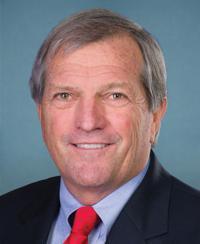
U.S. Representative for California’s 10th district
Democrat
119th Congress, two-year term
Missed 1.6% of roll calls. Chamber median 1.9%.
The full voting recordCounts roll calls where most Democrats and most Republicans voted differently, leaving out procedural votes.
How we countFrom FEC filings, Voteview roll calls and Congress.gov.
Democrat. In Congress since 2015, 6 terms in total.
Following saves DeSaulnier to your list, which Chamber & Street keeps on its server, linked to a cookie on this browser and not to your name or email. Email alerts will come with constituent verification.
Bills and resolutions DeSaulnier signed on to as a cosponsor. An original cosponsor signed on the day the bill was introduced. Source: govinfo bill status files, last updated Nov 6, 2026.
SSI Savings Penalty Elimination Act
Sponsor Danny Davis (D). Joined May 5, 2025. 41 cosponsors. H.R. 2540 on Congress.gov
Introduced
Assault Weapons Ban of 2025
Sponsor Lucy McBath (D). Original cosponsor. 194 cosponsors. H.R. 3115 on Congress.gov(opens in a new tab)
Introduced
Assault Weapons Ban of 2025
This bill makes it a crime to knowingly import, sell, manufacture, transfer, or possess a semiautomatic assault weapon (SAW) or large capacity ammunition feeding device (LCAFD).
The prohibition does not apply to a firearm that is (1) manually operated by bolt, pump, lever, or slide action, except for certain shotguns; (2) permanently inoperable; (3) an antique; (4) only capable of firing rimfire ammunition; or (5) a rifle or shotgun specifically identified by make and model.
The bill also exempts from the prohibition the following, with respect to a SAW or LCAFD:
• importation, sale, manufacture, transfer, or possession related to certain law enforcement efforts, or authorized tests or experiments;
• importation, sale, transfer, or possession related to securing nuclear materials; and
• possession by a retired law enforcement officer.
The bill permits continued possession, sale, or transfer of a grandfathered SAW, which must be securely stored. A licensed gun dealer must conduct a background check prior to the sale or transfer of a grandfathered SAW between private parties.
The bill permits continued possession of, but prohibits sale or transfer of, a grandfathered LCAFD.
Newly manufactured LCAFDs must display serial number identification. Newly manufactured SAWs and LCAFDs must display the date of manufacture.
The bill also allows a state or local government to use Edward Byrne Memorial Justice Assistance Grant Program funds to compensate individuals who surrender a SAW or LCAFD under a buy-back program.
Medicare for All Act
Sponsor Pramila Jayapal (D). Original cosponsor. 118 cosponsors. H.R. 3069 on Congress.gov(opens in a new tab)
Introduced
Medicare for All Act
This bill establishes a national health insurance program that is administered by the Department of Health and Human Services (HHS).
Among other requirements, the program must (1) cover all U.S. residents; (2) provide for automatic enrollment of individuals upon birth or residency in the United States; and (3) cover items and services that are medically necessary or appropriate to maintain health or to diagnose, treat, or rehabilitate a health condition, including hospital services, prescription drugs, mental health and substance abuse treatment, dental and vision services, long-term care, gender affirming care, and reproductive care, including contraception and abortions.
The bill prohibits cost-sharing (e.g., deductibles, coinsurance, and copayments) and other charges for covered services. Additionally, private health insurers and employers may only offer coverage that is supplemental to, and not duplicative of, benefits provided under the program.
Health insurance exchanges and specified federal health programs terminate upon program implementation. However, the program does not affect coverage provided through the Department of Veterans Affairs or the Indian Health Service.
The bill also establishes a series of implementing provisions relating to (1) health care provider participation; (2) HHS administration; and (3) payments and costs, including the requirement that HHS negotiate prices for prescription drugs.
Individuals who are age 18 or younger, age 55 or older, or already enrolled in Medicare may enroll in the program starting one year after enactment of this bill; other individuals may buy into the program at this time. The program must be fully implemented two years after enactment.
Equality Act
Sponsor Mark Takano (D). Original cosponsor. 218 cosponsors. H.R. 15 on Congress.gov(opens in a new tab)
Introduced
Equality Act
This bill prohibits discrimination based on sex, sexual orientation, or gender identity with respect to businesses, employment, housing, federally funded programs, and other settings.
Specifically, the bill expands Title II and Title VI of the Civil Rights Act of 1964 to prohibit public accommodations and federally funded programs, respectively, from discriminating based on sex, sexual orientation, or gender identity. It also includes stores, transit services, recreational facilities, and establishments that provide health care, accounting, or legal services as public accommodations under Title II.
The bill also expands Title IV (desegregation of public schools) and Title VII (employment discrimination) to specifically include sexual orientation and gender identity. (The Supreme Court held in Bostock v. Clayton County that Title VII's prohibition of employment discrimination based on sex also prohibits employment discrimination based on sexual orientation or gender identity.)
The bill similarly expands the Fair Housing Act (discrimination in public and private housing) to include sexual orientation and gender identity. It also prohibits discrimination based on sexual orientation or gender identity by creditors and with respect to jury selection.
The bill defines sex for purposes of the aforementioned provisions to include sex stereotypes, pregnancy, childbirth, sexual orientation, gender identity, and sex characteristics.
Protect America's Workforce Act
Sponsor Jared Golden (D). Joined Apr 28, 2025. 226 cosponsors. H.R. 2550 on Congress.gov(opens in a new tab)
Passed the House
Protect America's Workforce Act
This bill nullifies the Executive Order titled Exclusions from Federal Labor-Management Relations Programs (issued on March 27, 2025), which excludes specified executive agencies and subdivisions from the Federal Service Labor-Management Relations Statute. The statute authorizes federal employees' participation in collective bargaining and enforces collective bargaining rights.
The bill also specifies that a covered collective bargaining agreement in place as of March 26, 2025, shall have full force and effect through the stated term of the agreement.
Of inquiry requesting the President, and directing the Secretary of Health and Human Services, to transmit respectively, to the House of Representatives certain documents relating to the elimination of the Administration for Community Living-.
Sponsor Suzanne Bonamici (D). Original cosponsor. 10 cosponsors. H.Res. 344 on Congress.gov(opens in a new tab)
Introduced
Expressing support for honoring Earth Day, and for other purposes.
Sponsor Doris Matsui (D). Original cosponsor. 52 cosponsors. H.Res. 341 on Congress.gov(opens in a new tab)
Introduced
California Clean Coast Act of 2025
Sponsor Salud Carbajal (D). Joined Apr 17, 2025. 37 cosponsors. H.R. 2820 on Congress.gov(opens in a new tab)
Introduced
West Coast Ocean Protection Act of 2025
Sponsor Jared Huffman (D). Original cosponsor. 39 cosponsors. H.R. 2849 on Congress.gov(opens in a new tab)
Introduced
SERVICE Act
Sponsor Joe Courtney (D). Original cosponsor. 6 cosponsors. H.R. 2829 on Congress.gov(opens in a new tab)
Introduced
Strengthening Efforts for Relief and Vital Incentives for Community Service and Engagement Act or the SERVICE Act
This bill makes changes to the Public Service Loan Forgiveness (PSLF) program.
Under the current PSLF program, the Department of Education (ED) must cancel the balance of interest and principal due on a borrower's Federal Direct Loans after the borrower makes 120 monthly loan payments while employed in a public service job and, at the time of loan forgiveness, the borrower is employed in a public service job.
Among other changes to the PSLF program, this bill
• reduces from 120 to 96 the number of monthly payments required for loan forgiveness;
• expands qualifying monthly payments, deferments, and forbearances allowed under the PSLF program;
• removes the requirement that a borrower must be employed in a public service job at the time of loan forgiveness;
• establishes a reconsideration process for borrowers who have their initial PSLF application denied; and
• prohibits interest capitalization on loans after deferment or forbearance.
The bill directs ED to (1) establish an online portal that provides borrowers with information on loans and the PSLF program, and (2) establish and regularly update a database listing public service jobs.
The bill allows an eligible teacher to use the same teaching service to qualify for both the Teacher Loan Forgiveness program and the PSLF program.
The Government Accountability Office must study and report on the feasibility of establishing data matching agreements for PSLF that allows borrowers to forgo requesting employment certification from their employer.
American Family Act
Sponsor Rosa DeLauro (D). Original cosponsor. 215 cosponsors. H.R. 2763 on Congress.gov(opens in a new tab)
Introduced
Raise the Wage Act of 2025
Sponsor Robert Scott (D). Original cosponsor. 177 cosponsors. H.R. 2743 on Congress.gov(opens in a new tab)
Introduced
Ending PUSHOUT Act of 2025
Sponsor Ayanna Pressley (D). Original cosponsor. 12 cosponsors. H.R. 2738 on Congress.gov(opens in a new tab)
Introduced
Ending Punitive, Unfair, School-based Harm that is Overt and Unresponsive to Trauma Act of 2025 or the Ending PUSHOUT Act of 2025
This bill requires the Department of Education (ED) to award grants to local educational agencies and nonprofit organizations for the purpose of reducing suspension and expulsion of students (i.e., exclusionary disciplinary practices).
The bill requires ED to collect data on exclusionary discipline in schools.
It also establishes a joint task force to end overuse of exclusionary discipline practices, failure to address trauma or other mental health needs, discrimination, or other educational barriers (i.e., school pushout).
No Tax Breaks for Union Busting (NTBUB) Act
Sponsor Donald Norcross (D). Original cosponsor. 137 cosponsors. H.R. 2692 on Congress.gov(opens in a new tab)
Introduced
No Tax Breaks for Union Busting (NTBUB) Act
This bill excludes from the tax deduction for ordinary and necessary business expenses amounts paid or incurred to influence employees with respect to labor organizations or labor organization activities. The bill also imposes information reporting requirements related to such expenses and imposes penalties for failure to comply.
Under the bill, amounts paid to influence employees with respect to labor organizations include amounts paid (including wages and other costs)
• in connection with an action that results in a complaint or settlement related to an unfair labor practice or a finding of interference, influence, or coercion related to railway employees’ rights to organize and bargain collectively;
• for any meeting or training attended by employees and at which labor organizations are discussed; and
• that require certain employer disclosures and financial reporting.
(Some exceptions apply.)
The bill requires employers to file a return reporting certain information related to expenses paid to influence employees with respect to labor organizations and imposes a penalty for noncompliance. The amount of the penalty is the greater of (1) $10,000, or (2) $1,000 multiplied by the number full-time equivalent employees. Additional penalties apply for violations that continue for more than 90 days.
The bill also imposes information reporting requirements on persons conducting activities on behalf of another person to influence employees with respect to labor organizations.
The bill allows certain penalties for noncompliance with the reporting requirements to be waived if noncompliance is due to reasonable cause and not willful neglect.
Expanding Access to School Meals Act of 2025
Sponsor Josh Gottheimer (D). Original cosponsor. 48 cosponsors. H.R. 2680 on Congress.gov(opens in a new tab)
Introduced
Expanding Access to School Meals Act of 2025
This bill increases student access to free school lunches and breakfasts under the National School Lunch Program and School Breakfast Program of the Department of Agriculture (USDA).
Specifically, the bill expands program eligibility to include students in households with income at or below 224% of the federal poverty level. (Currently, students in households with income at or below 130% are eligible.) The bill also eliminates the reduced price school lunch and breakfast programs and prohibits USDA from providing reimbursements for reduced price programs.
States may use Medicaid participation data to directly certify students for free school meals. (Direct certification allows schools to approve meals without the need for a separate application for children who receive assistance under other programs.) Under current law, states may apply to participate in a USDA demonstration project to directly certify children for free and reduced price meals based on household income data acquired through Medicaid.
Further, the bill increases the number of free meals a school in a high-poverty area may be reimbursed for at the free-meal rate under the Community Eligibility Provision. (This provision allows eligible schools, groups of schools, and school districts to offer free meals at no cost to all enrolled students without collecting separate applications.) Specifically, the bill increases from 1.6% to 2.5% the reimbursement multiplier, which is used to calculate how many meals USDA will reimburse the school for at the free meal rate.
Tax Fairness for Workers Act
Sponsor Brendan Boyle (D). Original cosponsor. 176 cosponsors. H.R. 2671 on Congress.gov(opens in a new tab)
Introduced
IDEA Full Funding Act
Sponsor Jared Huffman (D). Original cosponsor. 175 cosponsors. H.R. 2598 on Congress.gov(opens in a new tab)
Introduced
Protecting Sensitive Locations Act
Sponsor Adriano Espaillat (D). Joined Apr 2, 2025. 157 cosponsors. H.R. 1061 on Congress.gov(opens in a new tab)
Introduced
Protecting Sensitive Locations Act
This bill prohibits immigration enforcement actions within 1,000 feet of a sensitive location except in exigent circumstances, such as the imminent risk of death, violence, or physical harm to any person.
Sensitive locations include
• health care facilities;
• schools and school bus stops;
• places that provide assistance for people such as children, pregnant women, and abuse victims;
• child care facilities;
• places that provide disaster or emergency services;
• places of worship;
• courthouses and lawyers’ offices;
• facilities used as polling places;
• certain labor union facilities; and
• public assistance offices.
The prohibition shall apply to Department of Homeland Security officers and agents, as well as state employees pursuing immigration enforcement actions.
If an enforcement action is carried out in violation of this prohibition (1) no information resulting from the action may be entered into the record in a resulting removal proceeding, and (2) the affected individual may move to immediately terminate such a proceeding.
U.S. Immigration and Customs Enforcement and U.S. Customs and Border Protection shall annually report to Congress about enforcement actions taken at sensitive locations in the preceding year.
Department of Education Protection Act
Sponsor Jahana Hayes (D). Joined Mar 31, 2025. 132 cosponsors. H.R. 433 on Congress.gov(opens in a new tab)
Introduced
Department of Education Protection Act
This bill prohibits the use of appropriated funds made available to the Department of Education (ED) to decentralize, reduce the staffing level of, or alter the responsibilities or functionality of ED compared to its organization or operation on January 1, 2025.
UNRWA Funding Emergency Restoration Act of 2025
Sponsor André Carson (D). Original cosponsor. 81 cosponsors. H.R. 2411 on Congress.gov(opens in a new tab)
Introduced
No Hungry Kids in Schools Act
Sponsor Pete Aguilar (D). Original cosponsor. 25 cosponsors. H.R. 2402 on Congress.gov(opens in a new tab)
Introduced
No Hungry Kids in Schools Act
This bill directs the Department of Agriculture (USDA) to establish an option for states to utilize a statewide Community Eligibility Provision (CEP) for USDA school meal programs. As background, the CEP allows eligible schools, groups of schools, and school districts the option to offer free breakfast and lunch to all enrolled students without collecting household applications.
Specifically, USDA must establish a statewide CEP option that may be used by a state agency. The state agency must provide state (nonfederal) funding to local educational agencies to reimburse applicable schools at the free reimbursement rate for 100% of the meals served.
Eligibility for the statewide CEP must be based on a statewide calculation of the percentage of identified enrolled students, regardless of a school's local educational agency. Further, the bill lowers the CEP participation threshold for a statewide CEP to an identified student percentage (ISP) of zero, from a minimum of 25% under current regulations. The ISP is the percentage of students who are eligible for free school meals without a household application, primarily those who are directly certified through the Supplemental Nutrition Assistance Program (SNAP).
In addition, the bill specifies that the reimbursement multiplier for school meals remains at the current level of 1.6. The reimbursement multiplier is used to calculate how many meals will be reimbursed at the free meal rate.
Raise the Age Act of 2025
Sponsor Glenn Ivey (D). Original cosponsor. 176 cosponsors. H.R. 2368 on Congress.gov(opens in a new tab)
Introduced
Raise the Age Act of 2025
This bill establishes new restrictions on the sale or transfer of certain semiautomatic firearms to individuals under 21 years of age.
Specifically, this bill makes it unlawful for a licensed gun dealer, importer, manufacturer, or collector to sell or deliver a semiautomatic center-fire rifle or semiautomatic center-fire shotgun that has (or has the capacity to accept) an ammunition feeding device with a capacity of more than five rounds to an individual who the licensee knows or has reasonable cause to believe is under age 21.
The prohibition does not apply if the individual under age 21 is a full-time law enforcement officer or active-duty member of the Armed Forces.
The bill also requires the Federal Bureau of Investigation to report on the operation of its public access line, including a description of information sharing protocols and recommendations for improving such protocols.
Paycheck Fairness Act
Sponsor Rosa DeLauro (D). Original cosponsor. 221 cosponsors. H.R. 17 on Congress.gov(opens in a new tab)
Introduced
Proposing an amendment to the Constitution of the United States providing that the rights protected and extended by the Constitution are the rights of natural persons only.
Sponsor Pramila Jayapal (D). Joined Mar 24, 2025. 82 cosponsors. H.J.Res. 54 on Congress.gov(opens in a new tab)
Introduced
This joint resolution proposes a constitutional amendment providing that the rights protected and extended by the Constitution are the rights of natural persons only. Artificial entities, such as corporations, shall have no rights under the Constitution and are subject to regulation.
The amendment requires federal, state, and local governments to (1) regulate, limit, or prohibit election contributions and expenditures, including a candidate's own contributions and expenditures, to ensure equal access of citizens to the political process, regardless of economic status; and (2) require that any permissible contributions and expenditures be publicly disclosed.
Additionally, the judiciary is prohibited from construing the spending of money to influence elections to be speech under the First Amendment.
Of inquiry requesting the President and directing the Secretary of Education to transmit, respectively, certain documents to the House of Representatives relating to the reduction in force and other downsizing measures at the Department of Education.
Sponsor Robert Scott (D). Original cosponsor. 15 cosponsors. H.Res. 237 on Congress.gov(opens in a new tab)
Introduced
This resolution requests that the President provide, and directs the Department of Education (ED) to provide, to the House of Representatives all documents and materials related to
• the closure of ED;
• any reduction in force or other downsizing measures at ED;
• any actions taken pursuant to a specified March 3, 2025, communication to ED staff;
• any actions taken pursuant to any executive order directing the closure of ED; and
• any determinations made by the President, the Secretary of ED, or other ED staff that the staff remaining at ED after any reduction in force, other downsizing measure, or closure are sufficient to faithfully execute specified federal laws, including the Individuals with Disabilities Education Act, the Elementary and Secondary Education Act of 1965, and the Higher Education Act of 1965.