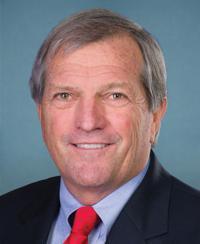
U.S. Representative for California’s 10th district
Democrat
119th Congress, two-year term
Missed 1.6% of roll calls. Chamber median 1.9%.
The full voting recordCounts roll calls where most Democrats and most Republicans voted differently, leaving out procedural votes.
How we countFrom FEC filings, Voteview roll calls and Congress.gov.
Democrat. In Congress since 2015, 6 terms in total.
Following saves DeSaulnier to your list, which Chamber & Street keeps on its server, linked to a cookie on this browser and not to your name or email. Email alerts will come with constituent verification.
Bills and resolutions DeSaulnier signed on to as a cosponsor. An original cosponsor signed on the day the bill was introduced. Source: govinfo bill status files, last updated Nov 6, 2026.
Bipartisan Background Checks Act of 2025
Sponsor Mike Thompson (D). Original cosponsor. 214 cosponsors. H.R. 18 on Congress.gov
Introduced
Bipartisan Background Checks Act of 2025
This bill establishes new background check requirements for firearm transfers between private parties (i.e., unlicensed individuals).
Specifically, it prohibits a firearm transfer between private parties unless a licensed gun dealer, manufacturer, or importer first takes possession of the firearm to conduct a background check.
The prohibition does not apply to certain firearm transfers or exchanges, such as a gift between spouses.
TRACE Act
Sponsor Mike Quigley (D). Original cosponsor. 23 cosponsors. H.R. 3823 on Congress.gov(opens in a new tab)
Introduced
Calling for the urgent delivery and disbursement of humanitarian aid to address the needs of civilians in Gaza.
Sponsor Pramila Jayapal (D). Original cosponsor. 125 cosponsors. H.Res. 473 on Congress.gov(opens in a new tab)
Introduced
This resolution expresses the House of Representatives' grave concern with (1) the humanitarian crisis and acute suffering of Palestinian civilians in Gaza, and (2) the suffering of the hostages and hostage families.
The resolution also calls on the White House, the Department of State, and other relevant federal agencies to use all available diplomatic tools to bring about the release of the hostages, the disbursement of food and humanitarian aid to Palestinian civilians, and a durable end to the Gaza conflict.
Equal Access to Justice for Victims of Gun Violence Act of 2025
Original cosponsor. 114 cosponsors. H.R. 3740 on Congress.gov(opens in a new tab)
Progress not on file
Equal Access to Justice for Victims of Gun Violence Act of 2025
This bill removes limitations on the civil liability of gun manufacturers and the disclosure of gun trace data in civil actions.
Specifically, the bill repeals the Protection of Lawful Commerce in Arms Act, which prohibits civil actions against a firearm or ammunition manufacturer, seller, importer, dealer, or trade association for damages resulting from the criminal or unlawful misuse of a firearm.
Additionally, the bill states that firearms trace data maintained by the Bureau of Alcohol, Tobacco, Firearms and Explosives is not immune from legal process. Such data is subject to discovery; is admissible as evidence; and may be used, relied on, or disclosed in a civil action or administrative proceeding.
Golden Mussel Eradication and Control Act of 2025
Sponsor Josh Harder (D). Original cosponsor. 7 cosponsors. H.R. 3717 on Congress.gov(opens in a new tab)
Introduced
Expressing support for the designation of June 6, 2025, as "National Gun Violence Awareness Day" and June 2025 as "National Gun Violence Awareness Month".
Sponsor Robin Kelly (D). Original cosponsor. 87 cosponsors. H.Res. 457 on Congress.gov(opens in a new tab)
Introduced
Major Richard Star Act
Sponsor Gus Bilirakis (R). Joined May 29, 2025. 340 cosponsors. H.R. 2102 on Congress.gov(opens in a new tab)
Introduced
Major Richard Star Act
This bill allows a veteran with a combat-related disability to receive retirement pay, without reduction, concurrently with their disability compensation. This includes veterans with a combat-related disability and fewer than 20 years of creditable service. (Currently, veterans who receive combat-related special compensation and retirement pay are subject to an offset in retirement pay for concurrent receipt of such benefits.)
Recognizing the importance of California's public higher education systems and reaffirming the United States' commitment to supporting these institutions.
Sponsor Ami Bera (D). Original cosponsor. 20 cosponsors. H.Res. 442 on Congress.gov(opens in a new tab)
Introduced
This resolution expresses support for California's public higher education systems and commends their impacts on California's economy and underserved communities.
Strength in Diversity Act of 2025
Sponsor Robert Scott (D). Original cosponsor. 28 cosponsors. H.R. 3605 on Congress.gov(opens in a new tab)
Introduced
Strength in Diversity Act of 2025
This bill establishes a program through which the Department of Education must award planning and implementation grants to specified educational agencies (e.g., local educational agencies) to improve diversity and reduce or eliminate racial or socioeconomic isolation in publicly funded early childhood education programs, public elementary schools, or public secondary schools.
Hands Off Medicaid and SNAP Act of 2025
Sponsor Brendan Boyle (D). Joined May 19, 2025. 42 cosponsors. H.R. 2753 on Congress.gov(opens in a new tab)
Introduced
Hands Off Medicaid and SNAP Act of 2025
This bill establishes a budget point of order against considering budget reconciliation legislation in the House or the Senate that (1) reduces enrollment or benefits for individuals enrolled in the Medicaid program, or (2) reduces eligibility or benefits for households that participate in the Supplemental Nutrition Assistance Program (SNAP).
(Under current law, reconciliation bills are considered by Congress using expedited legislative procedures that prevent a filibuster and restrict amendments in the Senate.)
The point of order expires on January 20, 2029.
American Teacher Act
Sponsor Frederica Wilson (D). Joined May 15, 2025. 102 cosponsors. H.R. 2021 on Congress.gov(opens in a new tab)
Introduced
American Teacher Act
This bill establishes grants to increase the minimum salary of public elementary and secondary school teachers. It also authorizes a national campaign regarding the value of the teaching profession.
First, the bill directs the Department of Education (ED) to award four-year grants to state educational agencies (SEAs) and, through them, subgrants to local educational agencies to establish a minimum annual salary of $60,000 (to be adjusted annually for inflation) for these teachers.
Second, the bill directs ED to award grants to eligible SEAs to provide cost-of-living adjustments to the annual base salary of teachers.
Finally, the bill authorizes ED to carry out a national campaign to (1) increase awareness about the importance of teachers and the value of the teaching profession, (2) encourage secondary school and college students to consider teaching as a professional career, and (3) diversify the pool of individuals who enter the teaching profession.
Scientific Integrity Act
Sponsor Paul Tonko (D). Joined May 15, 2025. 140 cosponsors. H.R. 1106 on Congress.gov(opens in a new tab)
Introduced
Scientific Integrity Act
This bill requires each federal agency that funds, conducts, or oversees scientific research to adopt and enforce a scientific integrity policy.
Under the bill, among other parameters, such policies must (1) ensure that scientific conclusions are not based on political considerations, (2) prohibit the suppression or alteration of findings, and (3) permit researchers to disseminate their findings and engage with the scientific community as appropriate. Scientific integrity policies must also include a mechanism through which stakeholders may report violations of the policy.
Agencies are required to submit their scientific integrity policies to the Office of Science and Technology Policy (OSTP) for approval. Approved policies must be made public, submitted to Congress, and periodically updated. Agencies may use their existing policies provided they satisfy the requirements of the bill. The Government Accountability Office must review implementation of the policies.
Each agency is also required to (1) appoint a Scientific Integrity Officer, (2) establish a process for dispute resolution consistent with the scientific integrity policy, and (3) establish a specified training program for current and new employees.
Access to Counsel Act
Sponsor Pramila Jayapal (D). Joined May 14, 2025. 73 cosponsors. H.R. 944 on Congress.gov(opens in a new tab)
Introduced
Access to Counsel Act
This bill provides various protections for covered individuals subject to secondary or deferred inspections when seeking admission into the United States. Covered individuals include U.S. nationals, lawful permanent residents, non-U.S. nationals (aliens under federal law) in possession of a visa, returning asylees, and refugees.
The Department of Homeland Security must ensure that a covered individual subject to secondary or deferred inspection has a meaningful opportunity to consult with counsel and certain related parties, such as a relative, within an hour of the start of the secondary inspection and as necessary during the inspection process. The counsel and related party must be allowed to advocate on behalf of the covered individual, including by providing evidence and information to the examining immigration officer.
A lawful permanent resident subject to secondary or deferred inspection may not abandon lawful permanent resident status until the individual has had a meaningful opportunity to seek advice from counsel, unless the individual voluntarily and knowingly waives in writing this opportunity to seek counsel's advice.
Support UNFPA Funding Act
Sponsor Chrissy Houlahan (D). Joined May 14, 2025. 51 cosponsors. H.R. 2439 on Congress.gov(opens in a new tab)
Introduced
Establishing the ratification of the Equal Rights Amendment.
Sponsor Ayanna Pressley (D). Joined May 14, 2025. 221 cosponsors. H.J.Res. 80 on Congress.gov(opens in a new tab)
Introduced
This joint resolution provides that the Equal Rights Amendment, which prohibits discrimination on the basis of sex, was ratified by three-fourths of the states and is therefore a valid constitutional amendment, regardless of any time limit that was in the original proposal.
The Equal Rights Amendment was originally proposed to the states in 1972. The original proposal included a deadline for ratification of March 22, 1979; Congress subsequently extended the deadline to June 30, 1982. Although the requisite 38 states have ratified the amendment, three of these states did so after the deadlines, and five states subsequently rescinded their ratifications. The status of the amendment has been the subject of litigation.
Expressing the sense of the House of Representatives that Congress should take all appropriate measures to ensure that the United States Postal Service remains an independent establishment of the Federal Government and is not subject to privatization.
Sponsor Stephen Lynch (D). Joined May 13, 2025. 238 cosponsors. H.Res. 70 on Congress.gov(opens in a new tab)
Introduced
This resolution expresses the sense of the House of Representatives that Congress should ensure that the U.S. Postal Service is not privatized and remains an independent establishment of the federal government.
Supporting the designation of May 10, 2025, as "National Asian American, Native Hawaiian, and Pacific Islander Mental Health Day".
Sponsor Judy Chu (D). Original cosponsor. 27 cosponsors. H.Res. 407 on Congress.gov(opens in a new tab)
Introduced
Therapeutic Fraud Prevention Act of 2025
Sponsor Ted Lieu (D). Joined May 13, 2025. 204 cosponsors. H.R. 3243 on Congress.gov(opens in a new tab)
Introduced
Safe Schools Improvement Act
Sponsor Linda Sánchez (D). Joined May 13, 2025. 218 cosponsors. H.R. 1810 on Congress.gov(opens in a new tab)
Introduced
Safe Schools Improvement Act
This bill requires states to direct their local educational agencies (LEAs) to establish policies that prevent and prohibit bullying and harassment of elementary and secondary school students. In particular, these policies must prohibit bullying and harassment based on race, color, national origin, disability, religion, or sex. Sex includes sexual orientation, gender identity, and sex characteristics (including intersex traits).
Further, LEAs must provide (1) students, parents, and educational professionals with annual notice of the conduct prohibited in their disciplinary policies; (2) students and parents with grievance procedures that target such conduct; and (3) the public with annual data on the incidence and frequency of that conduct at the school and LEA level.
The Department of Education must conduct and report on an independent biennial evaluation of programs and policies to combat bullying and harassment in elementary and secondary schools. The National Center for Education Statistics must collect state data to determine the incidence and frequency of the conduct prohibited by LEA disciplinary policies.
To repeal certain executive orders.
Sponsor Kathy Castor (D). Joined May 13, 2025. 20 cosponsors. H.R. 1781 on Congress.gov(opens in a new tab)
Introduced
SAFE Act of 2025
Sponsor Vern Buchanan (R). Joined May 13, 2025. 238 cosponsors. H.R. 1661 on Congress.gov(opens in a new tab)
Introduced
Save America's Forgotten Equines Act of 2025 or the SAFE Act of 2025
This bill permanently prohibits the slaughter of equines (e.g., horses and mules) for human consumption. (Current law prohibits the slaughter of dogs and cats for human consumption. This bill extends the prohibition to equines.)
Specifically, this bill prohibits a person from knowingly (1) slaughtering an equine for human consumption; or (2) shipping, transporting, possessing, purchasing, selling, or donating an equine to be slaughtered for human consumption or equine parts for human consumption.
The bill subjects a violator to a fine.
The bill applies to conduct in or affecting interstate or foreign commerce or within the special maritime and territorial jurisdiction of the United States. However, it does not apply to an activity carried out by an Indian for a religious ceremony.
As background, in recent years, the appropriations acts have prohibited the Department of Agriculture (USDA) from using federal funds to inspect horses before they are slaughtered for human consumption. Therefore, there are currently no USDA-inspected horse slaughter facilities in the United States.
Protecting our Students in Schools Act of 2025
Sponsor Suzanne Bonamici (D). Original cosponsor. 21 cosponsors. H.R. 3265 on Congress.gov(opens in a new tab)
Introduced
Community Services Block Grant Improvement Act of 2025
Sponsor Glenn Thompson (R). Joined May 8, 2025. 31 cosponsors. H.R. 3131 on Congress.gov(opens in a new tab)
Introduced
Community Services Block Grant Improvement Act of 2025
This bill reauthorizes the Community Services Block Grant (CSBG) program through FY2032 and makes certain changes to the program and associated eligibility requirements. The CSBG program supports various antipoverty activities, primarily through formula-based allotments to states, tribes, and territories, the majority of which must be made available in grants to eligible local entities.
Specifically, the bill permanently sets the measure of eligibility for services, assistance, or resources provided directly to individuals or families under the program at 200% of the poverty line. (Under current law, the eligibility measure is temporarily set at 200% of the poverty line, an increase from the previous measure of 125% of the poverty line.)
The bill also makes certain changes to the permitted uses of funding, including by allowing CSBG funds to be used to facilitate low-income individuals’ and communities’ access to high-speed broadband, digital literacy training, technical support, and other services. States may also use certain funds allocated for training and technical assistance to assist eligible entities in responding to statewide and regional conditions that create economic insecurity, including emergency conditions.
The bill also expands requirements for the plans that states must submit to the Department of Health and Human Services in order to receive CSBG funds (e.g., transparency assurances), and sets deadlines by which states must make funds available to eligible entities.
Finally, the bill repeals a provision that allowed states to use CSBG funds to offset revenue losses associated with state charity tax credits.
Food Secure Strikers Act of 2025
Sponsor Alma Adams (D). Joined May 7, 2025. 89 cosponsors. H.R. 2357 on Congress.gov(opens in a new tab)
Introduced
Food Secure Strikers Act of 2025
This bill allows certain striking workers and their households to maintain their eligibility for the Supplemental Nutrition Assistance Program (SNAP).
Specifically, the bill provides that a household that would otherwise be eligible to participate in SNAP is eligible for benefits if any member of the household is on strike because of a labor dispute. Current law generally prohibits a household from participating in SNAP if any member of the household is on strike unless the household was eligible for SNAP immediately prior to the strike. Also, under current law, households are not eligible for an increased SNAP allotment as a result of the decreased income of a striking member of the household. The bill expands SNAP eligibility for households with striking workers by repealing both of these restrictions.
The bill also allows a government employee who is dismissed for striking and their household to maintain SNAP program eligibility. Specifically, current law prohibits certain individuals who voluntarily and without good cause quit a job from participating in SNAP. Further, a federal, state, or local government employee who participates in a strike against the government that results in their dismissal is considered to have voluntarily quit without good cause. The bill eliminates the provision that considers the dismissed government employee to have voluntarily quit without good cause, thereby allowing the employee and their household to maintain SNAP program eligibility if they are otherwise eligible for the program.
RAISE Act of 2025
Sponsor Jahana Hayes (D). Joined May 7, 2025. 52 cosponsors. H.R. 1611 on Congress.gov(opens in a new tab)
Introduced
Respect, Advancement, and Increasing Support for Educators Act of 2025 or the RAISE Act of 2025
This bill establishes a refundable federal tax credit for eligible educators and increases and expands the federal tax deduction for certain classroom and professional development expenses. The bill also increases federal funding for programs that support effective instruction.
Specifically, the bill allows (1) eligible educators (elementary and secondary public school teachers and early childhood educators) to claim a tax credit of $1,000, and (2) eligible educators employed at a qualifying school to claim an additional tax credit of up to $14,000 ($9,000 for an early childhood educator without a bachelor’s degree) based on the qualifying school’s student poverty ratio.
The bill generally defines a qualifying school as
• a public elementary or secondary school served by a local education agency eligible for federal grants that support the education of disadvantaged children,
• an elementary school or secondary school funded by the Bureau of Indian Education, or
• an early childhood education program serving children who are eligible for certain financial or food assistance.
Further, the bill increases to $500 ($300 in 2025) and continues to adjust annually the above-the-line tax deduction for certain classroom and professional development expenses of educators. The bill also expands eligibility for the credit to include early childhood educators. (Above-the-line tax deductions are subtracted from gross income to calculate adjusted gross income.)
Finally, the bill provides additional funding for education programs, including teacher salary incentive grants and professional development, certificate, and credentialing programs.