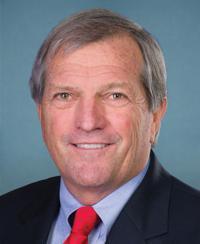
U.S. Representative for California’s 10th district
Democrat
119th Congress, two-year term
Missed 1.6% of roll calls. Chamber median 1.9%.
The full voting recordCounts roll calls where most Democrats and most Republicans voted differently, leaving out procedural votes.
How we countFrom FEC filings, Voteview roll calls and Congress.gov.
Democrat. In Congress since 2015, 6 terms in total.
Following saves DeSaulnier to your list, which Chamber & Street keeps on its server, linked to a cookie on this browser and not to your name or email. Email alerts will come with constituent verification.
Bills and resolutions DeSaulnier signed on to as a cosponsor. An original cosponsor signed on the day the bill was introduced. Source: govinfo bill status files, last updated Nov 6, 2026.
WIC Benefits Protection Act
Sponsor Robert Scott (D). Original cosponsor. 99 cosponsors. H.R. 5740 on Congress.gov
Introduced
Resident Physician Shortage Reduction Act of 2025
Sponsor Terri Sewell (D). Joined Oct 10, 2025. 139 cosponsors. H.R. 4731 on Congress.gov(opens in a new tab)
Introduced
Resident Physician Shortage Reduction Act of 2025
This bill increases the number of residency positions eligible for graduate medical education payments under Medicare for qualifying hospitals, including hospitals in rural areas and health professional shortage areas.
The bill provides for an additional increase of 2,000 positions per fiscal year from FY2026-FY2032; during this period, each hospital may receive up to 75 additional positions in total under the bill and current law. Additionally, one-third of the positions that are made available under the bill must be allocated to hospitals that are already operating above applicable resident limits.
The bill also requires the Government Accountability Office to report on strategies to increase the diversity of the health professional workforce, including with respect to representation from rural, low-income, and minority communities.
Expressing concern about the growing problem of book banning and the proliferation of threats to freedom of expression in the United States.
Sponsor Jamie Raskin (D). Original cosponsor. 60 cosponsors. H.Res. 797 on Congress.gov(opens in a new tab)
Introduced
Expressing support for the designation of October 1, 2025, as "National Animal Rescue Day" to create awareness of the importance of animal adoption, to educate on the importance of spaying and neutering animals, and to encourage animal adoptions throughout the United States.
Sponsor Donald Norcross (D). Joined Oct 8, 2025. 23 cosponsors. H.Res. 781 on Congress.gov(opens in a new tab)
Introduced
This resolution supports the designation of a National Animal Rescue Day to create awareness for animal rescue programs throughout the year and address the challenge of pet overpopulation through continued spaying and neutering.
Federal Worker Childcare Protection Act of 2025
Sponsor Ilhan Omar (D). Original cosponsor. 33 cosponsors. H.R. 5720 on Congress.gov(opens in a new tab)
Introduced
Federal Worker Childcare Protection Act of 2025
This bill authorizes certain federal employees to be reimbursed for childcare expenses paid during the government shutdown that began on October 1, 2025.
Under the bill, any federal employee who was furloughed or worked without receiving a paycheck during the lapse in appropriations (i.e., government shutdown) that began on October 1, 2025, and paid for childcare during the lapse is eligible to be reimbursed for the childcare expenses if (1) appropriations are provided for this purpose, and (2) the employee submits a receipt from a childcare provider to the General Services Administration.
Expressing support for the designation of the week of September 20 through September 27, 2025, as "National Estuaries Week".
Sponsor Brian Mast (R). Joined Oct 3, 2025. 28 cosponsors. H.Res. 733 on Congress.gov(opens in a new tab)
Introduced
This resolution expresses support for the designation of National Estuaries Week.
Nancy Gardner Sewell Medicare Multi-Cancer Early Detection Screening Coverage Act
Sponsor Jodey Arrington (R). Joined Sep 30, 2025. 338 cosponsors. H.R. 842 on Congress.gov(opens in a new tab)
Introduced
Nancy Gardner Sewell Medicare Multi-Cancer Early Detection Screening Coverage Act
This bill allows, beginning in 2028, for Medicare coverage and payment for multi-cancer early detection screening tests that are approved by the Food and Drug Administration and that are used to screen for cancer across many cancer types, if the Centers for Medicare & Medicaid Services determines such coverage is appropriate. Coverage is limited to those under a certain age (age 68 in 2028, increased by one year every year thereafter) and to one test every 11 months.
Child Care for Every Community Act
Original cosponsor. 73 cosponsors. H.R. 5658 on Congress.gov(opens in a new tab)
Progress not on file
No Shame at School Act of 2025
Sponsor Ilhan Omar (D). Original cosponsor. 45 cosponsors. H.R. 5655 on Congress.gov(opens in a new tab)
Introduced
CONNECT for Health Act of 2025
Sponsor Mike Thompson (D). Joined Sep 30, 2025. 248 cosponsors. H.R. 4206 on Congress.gov(opens in a new tab)
Introduced
Supreme Court Tenure Establishment and Retirement Modernization Act of 2025
Sponsor Henry Johnson (D). Joined Sep 30, 2025. 91 cosponsors. H.R. 3544 on Congress.gov(opens in a new tab)
Introduced
Supreme Court Ethics, Recusal, and Transparency Act of 2025
Sponsor Henry Johnson (D). Joined Sep 30, 2025. 98 cosponsors. H.R. 3513 on Congress.gov(opens in a new tab)
Introduced
Supreme Court Ethics, Recusal, and Transparency Act of 2025
This bill makes various changes related to the ethical standards, financial disclosure requirements, and recusal requirements that apply to Supreme Court Justices.
Among the changes, the bill requires the Supreme Court to
• adopt a code of conduct for Justices and establish procedures to receive and investigate complaints of judicial misconduct;
• adopt rules governing the disclosure of gifts, income, or reimbursements received by the Justices and law clerks that are at least as rigorous as the House and Senate disclosure rules; and
• establish procedural rules requiring each party or amicus to disclose any gift, income, or reimbursement provided to Justices.
Additionally, the bill
• expands the circumstances under which a Justice or judge must be disqualified; and
• requires the Supreme Court and the Judicial Conference to establish procedural rules for prohibiting the filing of or striking an amicus brief that would result in the disqualification of a Justice, judge, or magistrate judge.
Condemning attempts to use Federal regulatory power or litigation to suppress lawful speech, particularly speech critical of a political party or the President of the United States, and warning against the rise of authoritarianism.
Sponsor Yassamin Ansari (D). Original cosponsor. 124 cosponsors. H.Res. 748 on Congress.gov(opens in a new tab)
Introduced
Expressing the sense of the House of Representatives condemning all forms of political violence and rejecting rhetoric that dehumanizes or demonizes political opponents.
Sponsor Marc Veasey (D). Original cosponsor. 167 cosponsors. H.Res. 746 on Congress.gov(opens in a new tab)
Introduced
Tyler Clementi Higher Education Anti-Harassment Act of 2025
Sponsor Mark Pocan (D). Original cosponsor. 174 cosponsors. H.R. 5486 on Congress.gov(opens in a new tab)
Introduced
Redistricting Reform Act of 2025
Sponsor Zoe Lofgren (D). Original cosponsor. 60 cosponsors. H.R. 5449 on Congress.gov(opens in a new tab)
Introduced
Redistricting Reform Act of 2025
This bill sets forth requirements for congressional redistricting and generally prohibits mid-decade redistricting.
Specifically, the bill requires that congressional redistricting be conducted in accordance with a plan developed by (1) a state-established independent commission; or (2) if such a commission does not enact a plan, a three-judge panel from a U.S. District Court. This requirement does not apply to a state that has a plan developed and approved by an independent redistricting commission that complies with specified requirements.
The bill outlines the criteria for a redistricting plan, including that congressional districts must be drawn to (1) ensure the practical ability of a protected group to participate in the political process, nominate candidates, and elect representatives of choice; and (2) represent communities of interest and neighborhoods.
Additionally, the bill prohibits the use of a redistricting plan that was drawn with the intent (or has the effect of) materially favoring or disfavoring any political party.
Further, the bill establishes the requirements for appointing members to a state-established independent redistricting commission, including diversity requirements. The Government Accountability Office must report on the extent to which these commissions meet the diversity requirements.
The bill includes a provision to prevent states from redistricting more than once following an apportionment (i.e., mid-decade redistricting).
The bill also directs the Election Assistance Commission to make payments to states to carry out congressional redistricting.
To amend title 23, United States Code, with respect to the special rule for low emission and energy efficient vehicles facilities, and for other purposes.
Sponsor Nick LaLota (R). Joined Sep 18, 2025. 11 cosponsors. H.R. 5321 on Congress.gov(opens in a new tab)
Introduced
Roadless Area Conservation Act of 2025
Sponsor Andrea Salinas (D). Joined Sep 18, 2025. 95 cosponsors. H.R. 3930 on Congress.gov(opens in a new tab)
Introduced
Health Care Affordability Act of 2025
Sponsor Lauren Underwood (D). Joined Sep 18, 2025. 165 cosponsors. H.R. 247 on Congress.gov(opens in a new tab)
Introduced
Health Care Affordability Act of 2025
This bill makes permanent temporary changes enacted by the American Rescue Plan Act of 2021 (ARPA) and the Inflation Reduction Act of 2022 (IRA) that generally expand eligibility for and increase the amount of the premium tax credit.
Currently, eligible taxpayers may be able to claim the premium tax credit, which applies toward the cost of obtaining health insurance through health insurance exchanges. To be eligible for the premium tax credit, a taxpayer’s household income must meet or exceed 100% of the federal poverty level (FPL) and, after 2025, may not exceed 400% of the FPL (maximum income limit). For 2021-2025, the ARPA and IRA eliminated the maximum income limit, which generally expands eligibility for the premium tax credit.
Further, under current law, the amount of the premium tax credit is (1) generally the plan premium (conditions apply), minus (2) the taxpayer’s household income multiplied by the applicable percentage. The applicable percentage is a specific percentage that varies depending on which of six income ranges (adjusted for inflation after 2025) the taxpayer’s household income falls within. For 2021-2025, the ARPA and IRA lowered the applicable percentages and eliminated the adjustment of the applicable percentages for inflation, which generally increases the amount of the premium tax credit.
The bill makes permanent the elimination of the 400% maximum income limit, the lower applicable percentages, and the elimination of the inflation adjustment for the applicable percentages.
Mikaela Naylon Give Kids a Chance Act
Sponsor Michael McCaul (R). Joined Sep 18, 2025. 313 cosponsors. H.R. 1262 on Congress.gov(opens in a new tab)
Passed the House
Give Kids a Chance Act of 2025
This bill expands the Food and Drug Administration’s (FDA’s) authority with respect to research on rare pediatric diseases, including by permitting the FDA to take enforcement action against drug sponsors that fail to satisfy pediatric study requirements and by reauthorizing programs that support pediatric research.
Specifically, the bill
• modifies requirements relating to molecularly targeted pediatric cancer investigations to permit research on new drugs in combination with active ingredients that have already been approved, provided certain conditions are met;
• permits the FDA to take enforcement action against drug sponsors that fail to comply with pediatric study requirements, if such sponsors demonstrated a lack of due diligence in satisfying the requirement;
• renews the FDA’s authority to award priority review vouchers to sponsors of new products intended to treat rare pediatric diseases through September 30, 2029; and
• reauthorizes through FY2027 certain funding for the National Institutes of Health to support priority pediatric research.
The bill also provides statutory authority for the FDA’s interpretation of the orphan drug exclusivity period. The bill specifies, consistent with FDA regulations, that the seven-year market exclusivity period for drugs for rare diseases or conditions (i.e., orphan drugs) prohibits the approval of the same drug for the same approved use or indication with respect to the disease or condition. (In Catalyst Pharmaceuticals, Inc. v. Becerra, a court rejected the FDA’s interpretation and held that orphan drug exclusivity extends to all uses or indications for the disease or condition.)
FAMILY Act
Sponsor Rosa DeLauro (D). Original cosponsor. 208 cosponsors. H.R. 5390 on Congress.gov(opens in a new tab)
Introduced
George Floyd Justice in Policing Act of 2025
Sponsor Glenn Ivey (D). Original cosponsor. 136 cosponsors. H.R. 5361 on Congress.gov(opens in a new tab)
Introduced
George Floyd Justice in Policing Act of 2025
This bill addresses a wide range of policies and issues regarding policing practices and law enforcement accountability. It increases accountability for law enforcement misconduct, restricts the use of certain policing practices, enhances transparency and data collection, and establishes best practices and training requirements.
The bill enhances existing enforcement mechanisms to remedy violations by law enforcement. Among other things, it does the following:
• lowers the criminal intent standard—from willful to knowing or reckless—to convict a law enforcement officer for misconduct in a federal prosecution,
• limits qualified immunity as a defense to liability in a private civil action against a law enforcement officer, and
• grants administrative subpoena power to the Department of Justice (DOJ) in pattern-or-practice investigations.
It establishes a framework to prevent and remedy racial profiling by law enforcement at the federal, state, and local levels. It also limits the unnecessary use of force and restricts the use of no-knock warrants, chokeholds, and carotid holds.
The bill creates a national registry—the National Police Misconduct Registry—to compile data on complaints and records of police misconduct. It also establishes new reporting requirements, including on the use of force, officer misconduct, and routine policing practices (e.g., stops and searches).
Finally, it directs DOJ to create uniform accreditation standards for law enforcement agencies and requires law enforcement officers to complete training on racial profiling, implicit bias, and the duty to intervene when another officer uses excessive force.
FAIR Act of 2025
Sponsor Henry Johnson (D). Original cosponsor. 72 cosponsors. H.R. 5350 on Congress.gov(opens in a new tab)
Introduced
Forced Arbitration Injustice Repeal Act of 2025 or the FAIR Act of 2025
This bill prohibits a predispute arbitration agreement from being valid or enforceable if it requires arbitration of an employment, consumer, antitrust, or civil rights dispute.
Congressional Tribute to Constance Baker Motley Act of 2025
Sponsor Rosa DeLauro (D). Original cosponsor. 209 cosponsors. H.R. 5309 on Congress.gov(opens in a new tab)
Introduced
PFAS Alternatives Act
Sponsor Debbie Dingell (D). Joined Sep 11, 2025. 151 cosponsors. H.R. 3184 on Congress.gov(opens in a new tab)
Introduced