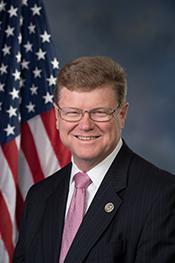
U.S. Representative for Nevada’s 2nd district
Republican
119th Congress, two-year term
Missed 2.8% of roll calls. Chamber median 1.9%.
The full voting recordCounts roll calls where most Democrats and most Republicans voted differently, leaving out procedural votes.
How we countFrom FEC filings, Voteview roll calls and Congress.gov.
Republican. In Congress since 2011, 8 terms in total.
Following saves Amodei to your list, which Chamber & Street keeps on its server, linked to a cookie on this browser and not to your name or email. Email alerts will come with constituent verification.
Bills and resolutions Amodei signed on to as a cosponsor. An original cosponsor signed on the day the bill was introduced. Source: govinfo bill status files, last updated Nov 6, 2026.
To repeal the Impoundment Control Act of 1974.
Sponsor Andrew Clyde (R). Original cosponsor. 25 cosponsors. H.R. 1180 on Congress.gov
Introduced
This bill repeals the Impoundment Control Act of 1974 (ICA). The ICA generally limits the authority of the President to impound (i.e., withhold from obligation or expenditure) funds that have been appropriated by Congress and establishes related procedures. It also establishes expedited legislative procedures that Congress may use to consider legislation to enact rescissions proposed by the President.
Crime Victims Fund Stabilization Act of 2025
Sponsor Ann Wagner (R). Joined Feb 6, 2025. 327 cosponsors. H.R. 909 on Congress.gov(opens in a new tab)
Passed the House
Crime Victims Fund Stabilization Act of 2025
This bill adds a new source of revenue for the Crime Victims Fund (CVF). Specifically, the bill requires certain civil monetary penalties collected from settlements and judgments in cases involving fraud and false claims against the federal government to be deposited into the CVF through FY2029.
The CVF supports federal, state, and local programs and activities to compensate and assist victims of crimes. Currently, the CVF is funded by deposits from a variety of sources, including federal criminal fines, penalties, and assessments; forfeited bail bonds; and certain other gifts, donations, and bequests.
Commission To Study the Potential of a National Museum of Italian American History and Culture Act
Sponsor Thomas Suozzi (D). Original cosponsor. 53 cosponsors. H.R. 1102 on Congress.gov(opens in a new tab)
Introduced
Veterans 2nd Amendment Protection Act
Sponsor Mike Bost (R). Original cosponsor. 70 cosponsors. H.R. 1041 on Congress.gov(opens in a new tab)
Passed the House
Veterans 2nd Amendment Protection Act
This bill prohibits the Department of Veterans Affairs (VA) from transmitting certain information to the National Instant Criminal Background Check System (NICS) utilized by licensed importers or dealers of firearms.
Specifically, the bill prohibits the VA from transmitting personally identifying information of a veteran or a beneficiary to the NICS solely on the basis that such veteran or beneficiary has an appointed fiduciary to manage their benefits, unless there is an order or finding of a judicial authority that such veteran or beneficiary is a danger to themselves or others.
Emergency Wildfire Fighting Technology Act of 2025
Sponsor David Valadao (R). Joined Feb 4, 2025. 5 cosponsors. H.R. 836 on Congress.gov(opens in a new tab)
Passed the House
Emergency Wildfire Fighting Technology Act of 2025
This bill requires the Forest Service and the Department of the Interior to (1) jointly evaluate the container aerial firefighting system to assess its use to mitigate and suppress wildfires, and (2) report on the results of the evaluation to Congress.
The system allows for the use of airdrop-capable disposable containers of water or fire retardant in order to increase the number of airlift assets available for wildfire emergencies.
Promoting Domestic Energy Production Act
Sponsor Mike Carey (R). Joined Jan 28, 2025. 43 cosponsors. H.R. 662 on Congress.gov(opens in a new tab)
Introduced
Promoting Domestic Energy Production Act
This bill allows corporations to reduce their adjusted financial statement income to account for certain intangible costs related to oil, gas, or geothermal well drilling and development for purposes of calculating the corporate alternative minimum tax.
Under current law, a 15% corporate alternative minimum tax is imposed on a corporation with adjusted financial statement income exceeding an average of $1 billion for a consecutive three-year period (or an average of $100 million for a U.S. corporation that is part of a foreign parent multinational group if the adjusted financial statement income of such group exceeds an average of $1 billion for a consecutive three-year period). Adjusted financial statement income generally is the net income or loss reported on the corporation’s applicable financial statement for a tax year, with adjustments for specific items.
This bill expands the reductions that may be made to a corporation’s adjusted financial statement income to include (1) intangible drilling and development costs incurred by an operator of a domestic oil, gas, or geothermal well that are allowed as a deduction in the current tax year when computing regular taxable income; and (2) any depletion expenses related to the intangible oil, gas, or geothermal well drilling and development costs.
Main Street Tax Certainty Act
Sponsor Lloyd Smucker (R). Original cosponsor. 192 cosponsors. H.R. 703 on Congress.gov(opens in a new tab)
Introduced
Main Street Tax Certainty Act
This bill makes permanent the qualified business income (QBI) tax deduction.
Under current law, individuals, estates, and trusts may deduct the lower of (1) 20% of QBI from a qualified business, qualified real estate investment trust dividends, and qualified publicly traded partnership income; or (2) 20% of taxable income less net capital gain. (Some limitations apply.)
However, under current law, the QBI tax deduction expires after December 31, 2025.
Apex Area Technical Corrections Act
Sponsor Steven Horsford (D). Joined Jan 23, 2025. 3 cosponsors. H.R. 618 on Congress.gov(opens in a new tab)
Became law
Apex Area Technical Corrections Act
This act directs the Department of the Interior to grant certain rights-of-way related to the Apex Project (an industrial park) to Clark County in Nevada, the city of North Las Vegas, and the Apex Industrial Park Owners Association. Thus, the act expedites the federal permitting process for expanding the industrial park's infrastructure.
Specifically, the act directs Interior to grant utility and transportation rights-of-way to the city of North Las Vegas and the Apex Industrial Park Owners Association for the connection of existing electric power, water, natural gas, telephone, railroad, and highway facilities to lands within the Apex Project site. (Interior is already directed to grant such rights-of-way to Clark County.)
Interior must also grant to the county, the city, and association such rights-of-way on public lands as may be necessary to support the development of the industrial park as a heavy use industrial zone. (Currently, Interior may grant the rights-of-way to the county.)
The act also requires that the withdrawal of the transferred lands within the Apex Site from all forms of entry and appropriation under the public land laws (e.g., leasing the land for minerals) continue in perpetuity.
In the case of the sale of mineral materials resulting from grading or other activities on the surface of a land parcel within the Apex Project site, the sales are exempt from quantity and term limitations placed on noncompetitive sales.
Proposing an amendment to the Constitution of the United States to require that the Supreme Court of the United States be composed of nine justices.
Sponsor Dusty Johnson (R). Original cosponsor. 108 cosponsors. H.J.Res. 28 on Congress.gov(opens in a new tab)
Introduced
This joint resolution proposes a constitutional amendment requiring the Supreme Court to consist of nine Justices.
To amend the Convention on Cultural Property Implementation Act to make certain technical corrections to facilitate the lawful trade and collecting of numismatic materials.
Sponsor Beth Van Duyne (R). Original cosponsor. 15 cosponsors. H.R. 595 on Congress.gov(opens in a new tab)
Introduced
This bill revises the standard for providing satisfactory evidence to U.S. Customs and Border Protection (CBP) regarding the importation of numismatic material (i.e., coins, tokens, paper money, medals, and related objects) into the United States.
Current law generally prohibits the importation of designated archaeological or ethnological material that is exported from certain countries that are a party to the 1970 UNESCO Convention on the Means of Prohibiting and Preventing the Illicit Import, Export and Transfer of Ownership of Cultural Property. Importation is allowed if the country issues a certification or other documentation certifying the exportation was not in violation of the country's laws. The United States implements its obligations through the Convention on Cultural Property Implementation Act.
Under current law, CBP must seize imports of designated archaeological or ethnological material unless the importer establishes by certain documentation or satisfactory evidence that the material is admissible into the United States.
This bill specifies the standard for satisfactory evidence with respect to numismatic material. Specifically, the bill allows for the import of numismatic material with evidence that the numismatic material was acquired and exported lawfully, is of a known type, and is not known to be the direct product of illicit excavations within certain countries after the effective date for any import restrictions on such material.
The bill prohibits CBP, when reviewing satisfactory evidence, from requiring other documentation unless there is probable cause to believe the presented evidence is false or fraudulent.
Ending Presidential Overreach on Public Lands Act
Sponsor Celeste Maloy (R). Original cosponsor. 15 cosponsors. H.R. 521 on Congress.gov(opens in a new tab)
Introduced
Ending Presidential Overreach on Public Lands Act
This bill removes the president's authority to designate or expand national monuments and gives that authority to Congress instead.
Fix Our Forests Act
Sponsor Bruce Westerman (R). Original cosponsor. 56 cosponsors. H.R. 471 on Congress.gov(opens in a new tab)
Passed the House
Fix Our Forests Act
This bill establishes requirements for managing forests on federal land, including requirements concerning reducing wildfire threats, expediting the review of certain forest management projects, and implementing forest management projects and other activities.
Specifically, the bill (1) designates certain firesheds at high risk for wildfires as fireshed management areas; (2) directs the U.S. Forest Service and U.S. Geological Survey to jointly establish an interagency Fireshed Center that is responsible for duties related to assessing and predicting fire, including maintaining a fireshed registry on a publicly accessible website that provides interactive geospatial data on individual firesheds; and (3) makes other requirements related to reducing wildfire.
Next, the bill expedites the review of certain forest management projects under the National Environmental Policy Act (NEPA) of 1969 and exempts certain activities from NEPA review. It also establishes intra-agency strike teams to accelerate the review and any interagency consultation processes under NEPA, the Endangered Species Act of 1973, and the National Historic Preservation Act. It also limits consultation requirements concerning threatened and endangered species under the Forest and Rangeland Renewable Resources Planning Act of 1974 and the Federal Land Management and Policy Act of 1976. Finally, it limits litigation involving fireshed management projects and limits remedies that courts may provide.
Additionally, the bill supports reducing community wildfire risks, carrying out forest restoration and stewardship activities (including watershed protection and restoration), conducting biochar demonstration projects, advancing technologies to address forest wildfires, and assisting wildland firefighters and their families.
Miracle on Ice Congressional Gold Medal Act
Sponsor Pete Stauber (R). Original cosponsor. 299 cosponsors. H.R. 452 on Congress.gov(opens in a new tab)
Became law
Miracle on Ice Congressional Gold Medal Act
This act provides for the award of Congressional Gold Medals to the members of the 1980 U.S. Olympic men's ice hockey team in recognition of the team's achievement at the 1980 Winter Olympic Games.
Rosie the Riveter Commemorative Coin Act
Sponsor John Garamendi (D). Original cosponsor. 169 cosponsors. H.R. 429 on Congress.gov(opens in a new tab)
Introduced
Rosie the Riveter Commemorative Coin Act
This bill directs the Department of the Treasury to mint and issue coins in recognition and celebration of the women who contributed to the U.S. home front during World War II. All sales of coins issued under this bill must include a surcharge to be paid to the Rosie the Riveter Trust to support the National Park Service in maintaining and repairing the Rosie the Riveter WWII Home Front National Historical Park.
Regulation Reduction Act of 2025
Sponsor Stephanie Bice (R). Original cosponsor. 24 cosponsors. H.R. 377 on Congress.gov(opens in a new tab)
Introduced
Regulation Reduction Act of 2025
This bill requires federal agencies to repeal certain existing rules prior to issuing a new rule.
Specifically, the bill prohibits an agency from issuing a rule that imposes a cost or responsibility on a nongovernmental person or a state or local government unless it repeals three or more related rules.
Additionally, an agency may not issue a major rule that imposes such a cost or responsibility unless (1) the agency has repealed three or more related rules, and (2) the cost of the new rule is less than or equal to the cost of the rules being repealed. A major rule is a rule that has resulted in or is likely to result in (1) an annual economic effect of at least $100 million; (2) a major increase in costs or prices for consumers, individual industries, government agencies, or geographic regions; or (3) significant adverse effects on competition, employment, investment, productivity, or innovation.
Any such repealed rule must be published in the Federal Register.
This bill does not apply to a rule or major rule that (1) relates to an internal agency policy or practice, (2) relates to procurement, or (3) is being revised to be less burdensome to decrease requirements imposed or compliance costs.
Additionally, each federal agency must submit to Congress and the Office of Management and Budget a report that includes a review of each rule of the agency and that identifies whether each rule is costly, ineffective, duplicative, or outdated.
National Law Enforcement Officers Remembrance, Support, and Community Outreach Act
Sponsor Troy Nehls (R). Original cosponsor. 124 cosponsors. H.R. 309 on Congress.gov(opens in a new tab)
Passed the House
National Law Enforcement Officers Remembrance, Support and Community Outreach Act. [sic]
This bill temporarily directs the Department of the Interior to award a grant to the National Law Enforcement Officers Memorial Fund for the expenses associated with operating and enhancing the community outreach, public education, and officer safety and wellness programs of the National Law Enforcement Museum.
Born-Alive Abortion Survivors Protection Act
Sponsor Ann Wagner (R). Joined Jan 7, 2025. 163 cosponsors. H.R. 21 on Congress.gov(opens in a new tab)
Passed the House
Born-Alive Abortion Survivors Protection Act
This bill establishes requirements for the degree of care a health care practitioner must provide in the case of a child born alive following an abortion or attempted abortion.
Specifically, a health care practitioner who is present must (1) exercise the same degree of care as would reasonably be provided to any other child born alive at the same gestational age, and (2) ensure the child is immediately admitted to a hospital. Additionally, a health care practitioner or other employee who has knowledge of a failure to comply with the degree-of-care requirements must immediately report such failure to law enforcement.
A health care practitioner who fails to provide the required degree of care, or a health care practitioner or other employee who fails to report such failure, is subject to criminal penalties—a fine, up to five years in prison, or both.
An individual who intentionally kills or attempts to kill a child born alive is subject to prosecution for murder.
The bill bars the criminal prosecution of a mother of a child born alive under this bill and allows her to bring a civil action against a health care practitioner or other employee for violations.
FIND Act
Sponsor Jack Bergman (R). Original cosponsor. 154 cosponsors. H.R. 45 on Congress.gov(opens in a new tab)
Introduced
Firearm Industry Non-Discrimination Act or the FIND Act
This bill prohibits the federal government from entering into contracts with an entity that discriminates against firearm trade associations or businesses that deal in firearms, ammunition, or related products.
Specifically, the bill requires a federal agency to include in each contract for the procurement of goods or services awarded by the agency a clause requiring the prime contractor to certify that it (1) has no policy, practice, guidance, or directive that discriminates against a firearm entity or firearm trade association; and (2) will not adopt a policy, practice, guidance, or directive that discriminates against a firearm entity or firearm trade association during the term of the contract.
The bill establishes (1) a similar requirement with respect to subcontracts, and (2) penalties for violations.
The bill makes such prohibition inapplicable to a contract for the procurement of goods or services that is a sole-source contract.
Constitutional Concealed Carry Reciprocity Act of 2025
Sponsor Richard Hudson (R). Original cosponsor. 189 cosponsors. H.R. 38 on Congress.gov(opens in a new tab)
Introduced
Constitutional Concealed Carry Reciprocity Act
This bill establishes a federal statutory framework to regulate the carry or possession of concealed firearms across state lines.
Specifically, an individual who is eligible to carry a concealed firearm in one state may carry or possess a concealed handgun (other than a machine gun or destructive device) in another state that allows its residents to carry concealed firearms.
It sets forth requirements for lawful concealed carry across state lines. The bill preempts most state and local laws related to concealed carry and establishes a private right of action for a person adversely affected by interference with a concealed-carry right established by this bill.
TCJA Permanency Act
Sponsor Vern Buchanan (R). Original cosponsor. 53 cosponsors. H.R. 137 on Congress.gov(opens in a new tab)
Introduced
TCJA Permanency Act
This bill makes permanent multiple federal tax provisions enacted in 2017 by the Tax Cuts and Jobs Act.
The bill makes permanent the
• individual tax rates of 10%, 12%, 22%, 24%, 32%, 35%, and 37%;
• increased standard deduction;
• personal exemption allowance repeal;
• exclusion from income of student loans discharged due to death or disability;
• qualified business income tax deduction (199A tax deduction);
• allowance of ABLE account contributions in excess of the annual gift tax exclusion amount;
• base estate and gift tax exclusion amount of $10 million (adjusted annually); and
• alternative minimum tax exemption and phaseout amounts for noncorporate taxpayers.
The bill makes permanent the child tax credit amounts of $2,000 per child and $500 for dependents, the $200,000 phaseout threshold ($400,000 for joint filers), and the refundable portion of the tax credit.
The bill expands the expenses eligible for tax-free withdrawals from qualified tuition plans (529 plans) to include additional expenses associated with homeschool and elementary and secondary schools (e.g., instructional materials, tutoring, test and enrollment fees, and educational therapies).
The bill permanently eliminates certain miscellaneous itemized deductions and makes permanent the
• state and local tax deduction limit of $10,000 ($5,000 for married individuals filing separately),
• mortgage interest tax deduction limit of $750,000 ($375,000 for married individuals filing separately),
• limit on the deduction of cash charitable contributions to 60% of a taxpayer’s adjusted gross income, and
• certain limits on casualty loss tax deductions.
The bill also permanently eliminates the exclusion from income for employer-reimbursed bicycle commuting expenses.