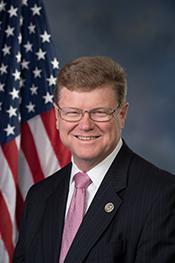
U.S. Representative for Nevada’s 2nd district
Republican
119th Congress, two-year term
Missed 2.8% of roll calls. Chamber median 1.9%.
The full voting recordCounts roll calls where most Democrats and most Republicans voted differently, leaving out procedural votes.
How we countFrom FEC filings, Voteview roll calls and Congress.gov.
Republican. In Congress since 2011, 8 terms in total.
Following saves Amodei to your list, which Chamber & Street keeps on its server, linked to a cookie on this browser and not to your name or email. Email alerts will come with constituent verification.
Bills and resolutions Amodei signed on to as a cosponsor. An original cosponsor signed on the day the bill was introduced. Source: govinfo bill status files, last updated Nov 6, 2026.
Air America Act of 2025
Sponsor Glenn Grothman (R). Joined Mar 21, 2025. 178 cosponsors. H.R. 2192 on Congress.gov
Introduced
NEDD Act
Sponsor Susie Lee (D). Original cosponsor. 11 cosponsors. H.R. 2205 on Congress.gov(opens in a new tab)
Introduced
Commemorating the centennial of Delta Air Lines.
Sponsor Nikema Williams (D). Original cosponsor. 22 cosponsors. H.Res. 226 on Congress.gov(opens in a new tab)
Introduced
This resolution commemorates the centennial of Delta Air Lines.
Southern Nevada Economic Development and Conservation Act
Sponsor Susie Lee (D). Original cosponsor. 2 cosponsors. H.R. 2134 on Congress.gov(opens in a new tab)
Introduced
Arctic Watchers Act
Sponsor William Keating (D). Original cosponsor. 7 cosponsors. H.R. 2000 on Congress.gov(opens in a new tab)
Introduced
Public Land Renewable Energy Development Act of 2025
Sponsor Paul Gosar (R). Original cosponsor. 3 cosponsors. H.R. 1994 on Congress.gov(opens in a new tab)
Introduced
Tanning Tax Repeal Act of 2025
Sponsor Carol Miller (R). Joined Mar 10, 2025. 26 cosponsors. H.R. 1940 on Congress.gov(opens in a new tab)
Introduced
Tanning Tax Repeal Act of 2025
This bill repeals the 10% excise tax imposed on the amount paid for indoor tanning services.
FLASH Act
Sponsor Juan Ciscomani (R). Joined Mar 10, 2025. 23 cosponsors. H.R. 1820 on Congress.gov(opens in a new tab)
Introduced
Protect and Serve Act of 2025
Sponsor John Rutherford (R). Joined Mar 10, 2025. 120 cosponsors. H.R. 1551 on Congress.gov(opens in a new tab)
Introduced
Anti-CBDC Surveillance State Act
Sponsor Tom Emmer (R). Original cosponsor. 135 cosponsors. H.R. 1919 on Congress.gov(opens in a new tab)
Passed the House
Anti-CBDC Surveillance State Act
This bill prohibits a Federal Reserve bank from offering products or services directly to an individual, maintaining an account on behalf of an individual, or issuing a central bank digital currency (i.e., a digital dollar). Further, the Board of Governors of the Federal Reserve System is prohibited from using a central bank digital currency to implement monetary policy or from testing, studying, creating, or implementing a central bank digital currency, with exceptions as provided by the bill.
ESA Amendments Act of 2025
Sponsor Bruce Westerman (R). Original cosponsor. 26 cosponsors. H.R. 1897 on Congress.gov(opens in a new tab)
Passed committee
ESA Amendments Act of 2025
This bill reauthorizes through FY2031 the Endangered Species Act and generally narrows protections provided under the act.
The bill directs the Fish and Wildlife Service and the National Marine Fisheries Service to submit a National Listing Work Plan that establishes a five-year schedule and plan for addressing listing of endangered or threatened species and designation of critical habitats for such species. Under the plan, the bill gives the Services flexibility on the timing of acting on listing petitions and eliminates the requirement for the Services to act within 12 months on listing petitions.
The bill limits what land may be designated as critical habitat for an endangered or threatened species.
It also limits protections provided to threatened species and allows a state to regulate the recovery of such species if the Services determine the state's proposed recovery strategy would conserve the species.
The bill provides statutory authority for Conservation Benefit Agreements, which allow private landowners to voluntarily enter agreements to reduce threats to candidate species in exchange for being allowed to continue their operations if the species is later listed.
The bill also modifies the permitting process for certain other voluntary conservation agreements, including by exempting incidental take permits (e.g., permits to harm or kill a species) from environmental review requirements.
The bill also makes a variety of other changes to the act, including limiting consultation requirements, judicial review, and awards for attorneys’ fees in certain cases.
911 SAVES Act
Sponsor Norma Torres (D). Joined Mar 3, 2025. 89 cosponsors. H.R. 637 on Congress.gov(opens in a new tab)
Introduced
Supporting Accurate Views of Emergency Services Act of 2025 or the 911 SAVES Act
This bill requires the Office of Management and Budget to categorize public safety telecommunicators as a protective service occupation under the Standard Occupational Classification system no later than 30 days after the enactment of this bill. (The Standard Occupational Classification system is a federal statistical standard used by federal agencies to classify workers into occupational categories for the purpose of collecting, calculating, or disseminating data.)
Expressing support for the Iranian people's desires for a democratic, secular, and nonnuclear Republic of Iran, and condemning the Iranian regime's terrorism, regional proxy war, internal suppression, and for other purposes.
Sponsor Tom McClintock (R). Original cosponsor. 230 cosponsors. H.Res. 166 on Congress.gov(opens in a new tab)
Introduced
PURR Act of 2025
Sponsor Steve Womack (R). Joined Feb 25, 2025. 15 cosponsors. H.R. 597 on Congress.gov(opens in a new tab)
Introduced
Pet Food Uniform Regulatory Reform Act of 2025 or the PURR Act of 2025
This bill establishes the Food and Drug Administration's Center for Veterinary Medicine (CVM) as the sole regulatory authority over pet food for dogs and cats. It also provides certain flexibilities for pet food manufacturers with respect to the types of ingredients they may use and the associated labeling and marketing requirements.
The bill specifies that, with exceptions for certain existing oversight activities, no state or local government may establish, implement, or enforce any authority or requirement relating to pet food marketing or labeling and instead provides for oversight by the CVM.
The bill requires the CVM to review and act on pet food ingredient submissions within 90 days. Additionally, the bill provides a presumption that pet food ingredients are generally recognized as safe (GRAS) if they are recognized as acceptable per the Association of American Feed Control Officials and the CVM does not find otherwise. Manufacturers may voluntarily notify the CVM of ingredients that are considered GRAS but that have not yet been specifically recognized as such.
The bill also allows manufacturers to state, without prior approval, that their products (1) sometimes, but not always, have certain ingredients (e.g., flavors); (2) have certain health benefits (e.g., tartar control); or (3) are human grade or natural, if certain conditions are met.
REPAIR Act
Sponsor Neal Dunn (R). Original cosponsor. 44 cosponsors. H.R. 1566 on Congress.gov(opens in a new tab)
Introduced
Protecting Privacy in Purchases Act
Sponsor Riley Moore (R). Joined Feb 21, 2025. 132 cosponsors. H.R. 1181 on Congress.gov(opens in a new tab)
Passed the House
Protecting Privacy in Purchases Act
This bill prohibits payment card networks from using merchant codes that distinguish firearms retailers from general-merchandise retailers or sporting-goods retailers.
The Department of Justice must enforce this bill and report annually on the resulting investigations and cases.
Discriminatory Gaming Tax Repeal Act of 2025
Sponsor Dina Titus (D). Original cosponsor. 7 cosponsors. H.R. 1440 on Congress.gov(opens in a new tab)
Introduced
Discriminatory Gaming Tax Repeal Act of 2025
This bill repeals the excise tax imposed on wagers (also known as the handle tax) and the occupational tax imposed on businesses receiving taxable wagers.
As background, an excise tax on wagers is imposed on businesses that accept wagers, persons conducting a wagering pool or lottery, and certain persons accepting wagers on behalf of another person. Under current law, the amount of the excise tax is (1) 0.25% of the amount wagered (also known as the handle) for wagers authorized by the state, or (2) 2% of the amount wagered for wagers not authorized by the state. (Some exceptions apply.)
Further, under current law, an annual occupational tax is imposed in the amount of (1) $50 for persons in the business of accepting taxable wagers (or persons accepting taxable wagers on such persons’ behalf) in a state where the wagers are authorized, or (2) $500 for such persons in states where the wagers are not authorized. (Some exceptions apply.)
Downwinders Parity Act of 2025
Sponsor Paul Gosar (R). Original cosponsor. 9 cosponsors. H.R. 1362 on Congress.gov(opens in a new tab)
Introduced
Smithsonian National Museum of the American Latino Act
Sponsor Nicole Malliotakis (R). Original cosponsor. 130 cosponsors. H.R. 1330 on Congress.gov(opens in a new tab)
Introduced
Smithsonian American Women’s History Museum Act
Sponsor Nicole Malliotakis (R). Original cosponsor. 231 cosponsors. H.R. 1329 on Congress.gov(opens in a new tab)
Introduced
Smithsonian American Women’s History Museum Act
This bill authorizes the Smithsonian American Women's History Museum to be located on a particular site within the Reserve of the National Mall in Washington, DC.
Specifically, the bill designates the South Monument site as the location for the museum; however, the President may designate an alternative site within 180 days of the bill's enactment. (The site is the undeveloped land across the National Mall from the National Museum of African American History and Culture.) Administrative jurisdiction of the site must be transferred to the Smithsonian Institution.
The Board of Regents of the Smithsonian Institution must have the approval of specified federal entities (e.g., the Commission of Fine Arts) to plan, design, and construct a museum building. The bill (1) outlines the criteria for considering site and design proposals, and (2) requires the Smithsonian Institution to reimburse for costs resulting from the building approval process.
The bill directs the museum to be dedicated to preserving, researching, and presenting the history, achievements, and lived experiences of biological women in the United States. Under this bill, the museum may not identify, present, describe, or depict any biological male as a female.
In carrying out its duties, the museum's advisory council must (1) seek and utilize guidance from a broad array of knowledgeable and respected sources reflecting the diversity of the political viewpoints and authentic experiences held by women in the United States, and (2) seek guidance for the creation and substantial revision of exhibits and programs.
Death Tax Repeal Act
Sponsor Randy Feenstra (R). Original cosponsor. 182 cosponsors. H.R. 1301 on Congress.gov(opens in a new tab)
Introduced
Supporting the Local Radio Freedom Act.
Sponsor Steve Womack (R). Original cosponsor. 233 cosponsors. H.Con.Res. 12 on Congress.gov(opens in a new tab)
Introduced
This concurrent resolution declares that Congress should not impose any new performance fee, tax, royalty, or other charge relating to the public performance of sound recordings on a local radio station for broadcasting sound recordings over the air, or on any business for such public performance of sound recordings.
AM Radio for Every Vehicle Act of 2025
Sponsor Gus Bilirakis (R). Joined Feb 12, 2025. 317 cosponsors. H.R. 979 on Congress.gov(opens in a new tab)
Passed the House
AM Radio for Every Vehicle Act of 2025
This bill requires the Department of Transportation (DOT) to issue a rule requiring AM radio capabilities to be standard in all new passenger vehicles. (AM radio is often used to deliver emergency alerts and news and entertainment programming; some newer vehicles do not include AM equipment.)
Specifically, this bill applies to passenger vehicles (1) manufactured in the United States for sale in the United States, imported into the United States, or shipped in interstate commerce; and (2) manufactured after the rule's effective date. The rule must require all such vehicles to have devices that can receive signals and play content transmitted by AM stations or digital audio AM stations installed as standard equipment and made easily accessible to drivers.
Prior to the rule's effective date, manufacturers that do not include devices that can access AM radio as standard equipment (1) must inform purchasers of this fact through clear and conspicuous labeling, and (2) may not charge an additional or separate fee for AM radio access.
DOT may assess civil penalties for any violation of the rule. The Department of Justice may also bring a civil action to enjoin a violation.
The rule, including DOT’s authority to enforce it, must expire 10 years after the bill’s enactment.
Further, the Government Accountability Office must study and report on the dissemination of emergency alerts to the public, including by conducting an assessment of AM radio relative to other Integrated Public Alert and Warning System communication technologies.
Fair Access to Banking Act
Sponsor Andy Barr (R). Joined Feb 11, 2025. 151 cosponsors. H.R. 987 on Congress.gov(opens in a new tab)
Introduced
Fair Access to Banking Act
This bill places restrictions on certain banks, credit unions, and payment card networks if they refuse to do business with a person who complies with the law. Restrictions include prohibiting the use of electronic funds transfer systems and lending programs, termination of an institution's depository insurance, and specified civil penalties.
Banks and other specified financial institutions are allowed to deny financial services to a person only if the denial is justified by a documented failure of that person to meet quantitative, impartial, risk-based standards established in advance by the institution. This justification may not be based upon reputational risks to the institution.
The bill establishes the right for a person to bring a civil action for a violation of this bill.
BNA Fairness Act
Sponsor Steve Womack (R). Joined Feb 11, 2025. 19 cosponsors. H.R. 715 on Congress.gov(opens in a new tab)
Introduced
BNA Fairness Act
This bill excludes from gross income (for federal income tax purposes) the basic needs allowance received by eligible members of the Armed Forces.
Under current law, members of the Armed Forces may be eligible to receive the basic needs allowance (additional monthly payment) if (1) they have completed initial training, (2) they have at least one dependent, and (3) their total household income does not exceed 200% of the federal poverty level (based on the location and number of individuals in the household). Further, under current law, certain qualified military benefits may be excluded from gross income. However, the basic needs allowance is not included within the definition of qualified military benefits and must be included in gross income for federal tax purposes.
Under the bill, the definition of qualified military benefits that may be excluded from gross income is expanded to include the basic needs allowance.