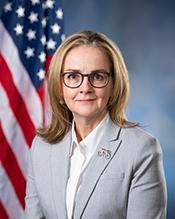
U.S. Representative for Pennsylvania’s 4th district
Democrat
119th Congress, two-year term
Missed 1.5% of roll calls. Chamber median 1.9%.
The full voting recordCounts roll calls where most Democrats and most Republicans voted differently, leaving out procedural votes.
How we countFrom FEC filings, Voteview roll calls and Congress.gov.
Democrat. In Congress since 2019, 4 terms in total.
Following saves Dean to your list, which Chamber & Street keeps on its server, linked to a cookie on this browser and not to your name or email. Email alerts will come with constituent verification.
Bills and resolutions Dean signed on to as a cosponsor. An original cosponsor signed on the day the bill was introduced. Source: govinfo bill status files, last updated Nov 6, 2026.
Expressing the sense of the House of Representatives that Congress should take all appropriate measures to ensure that the United States Postal Service remains an independent establishment of the Federal Government and is not subject to privatization.
Sponsor Stephen Lynch (D). Joined Feb 4, 2025. 238 cosponsors. H.Res. 70 on Congress.gov
Introduced
This resolution expresses the sense of the House of Representatives that Congress should ensure that the U.S. Postal Service is not privatized and remains an independent establishment of the federal government.
Combating International Islamophobia Act
Sponsor Ilhan Omar (D). Original cosponsor. 21 cosponsors. H.R. 959 on Congress.gov(opens in a new tab)
Introduced
To award a Congressional Gold Medal to the Freedom Riders, collectively, in recognition of their unique contribution to Civil Rights, which inspired a revolutionary movement for equality in interstate travel.
Sponsor Henry Johnson (D). Original cosponsor. 124 cosponsors. H.R. 945 on Congress.gov(opens in a new tab)
Introduced
This bill provides for the presentation of a Congressional Gold Medal to the Freedom Riders, in recognition of their contribution to civil rights by fighting for equality in interstate travel.
Period PROUD (Providing Resources for Our Underserved and Disadvantaged) Act of 2025
Sponsor Sean Casten (D). Original cosponsor. 32 cosponsors. H.R. 922 on Congress.gov(opens in a new tab)
Introduced
Period PROUD (Providing Resources for Our Underserved and Disadvantaged) Act of 2025
This bill provides additional funding through FY2029 for the Social Services Block Grant to support the provision of menstrual products (e.g., menstrual cups and underwear, sanitary napkins, and tampons) to low-income individuals. (This grant is a flexible funding stream used by states and territories to support a wide range of social services.)
The bill also exempts the additional funds from sequestration. Sequestration is a process of automatic, across-the-board reductions under which budgetary resources are permanently cancelled to enforce specific budget policy goals.
Department of Education Protection Act
Sponsor Jahana Hayes (D). Joined Feb 4, 2025. 132 cosponsors. H.R. 433 on Congress.gov(opens in a new tab)
Introduced
Department of Education Protection Act
This bill prohibits the use of appropriated funds made available to the Department of Education (ED) to decentralize, reduce the staffing level of, or alter the responsibilities or functionality of ED compared to its organization or operation on January 1, 2025.
DERAIL Act
Sponsor Christopher Deluzio (D). Original cosponsor. 16 cosponsors. H.R. 854 on Congress.gov(opens in a new tab)
Introduced
Decreasing Emergency Railroad Accident Instances Locally Act or the DERAIL Act
This bill requires the Department of Transportation (DOT) to expand the definition of a high-hazard flammable train (HHFT), thereby subjecting more trains to additional safety requirements.
Specifically, DOT must expand the definition of HHFT to mean a train transporting one or more loaded tank cars of a Class 3 flammable liquid (e.g., benzene residue) or a Class 2 flammable gas (e.g., vinyl chloride) and other materials DOT determines necessary for safety. Current regulations define HHFT as a train transporting 20 or more loaded tank cars of a Class 3 flammable liquid in a continuous block or 35 or more loaded tank cars of a Class 3 flammable liquid dispersed throughout the train.
The bill also requires railway carriers to report a train derailment that involves a train carrying material toxic by inhalation within 24 hours of the derailment to the National Response Center (NRC), state and local officials, and tribal governments. As background, the NRC is a part of the federally established National Response System. Reports to the NRC activate the National Oil and Hazardous Substances Pollution Contingency Plan and the federal government's response capabilities.
Holocaust Education and Antisemitism Lessons Act
Sponsor Josh Gottheimer (D). Original cosponsor. 112 cosponsors. H.R. 768 on Congress.gov(opens in a new tab)
Introduced
Holocaust Education and Antisemitism Lessons Act
This bill directs the U.S. Holocaust Memorial Museum to study and report on Holocaust education efforts in states, local educational agencies (LEAs), and public elementary and secondary schools. Among other elements, the study must (1) determine whether states and LEAs require Holocaust education as part of the curriculum taught in public elementary and secondary schools, (2) identify the standards and requirements relating to Holocaust education, and (3) identify the types of instructional material used to teach students about the Holocaust.
Global Health, Empowerment and Rights Act
Sponsor Lois Frankel (D). Original cosponsor. 138 cosponsors. H.R. 764 on Congress.gov(opens in a new tab)
Introduced
Global Health, Empowerment and Rights Act
This bill establishes that a foreign nongovernmental organization shall not be disqualified from receiving certain U.S. international development assistance solely because the organization provides medical services (including counseling and referral services) using non-U.S. government funds if the medical services do not violate the laws of the country in which they are being provided. Such foreign organizations shall not be subject to requirements relating to their use of non-U.S. funds for advocacy or lobbying activities other than those that apply to U.S. nongovernmental organizations receiving such assistance.
Expressing the sense of Congress that tax-exempt fraternal benefit societies have historically provided and continue to provide critical benefits to the people and communities of the United States.
Sponsor Darin LaHood (R). Original cosponsor. 122 cosponsors. H.Con.Res. 4 on Congress.gov(opens in a new tab)
Introduced
This concurrent resolution expresses the sense of Congress that tax-exempt fraternal benefit societies serve as a private economic and social support system, providing benefits to their members is necessary to support the charitable and fraternal activities of the volunteer chapters, and their work should continue to be promoted.
Build Housing with Care Act of 2025
Sponsor Suzanne Bonamici (D). Original cosponsor. 35 cosponsors. H.R. 646 on Congress.gov(opens in a new tab)
Introduced
Build Housing with Care Act of 2025
This bill establishes a competitive grant program to support co-located childcare and housing facilities. It also requires the Government Accountability Office to study the availability and affordability of childcare for residents of public housing.
Specifically, the Department of Housing and Urban Development must award the grants to eligible entities, which include community development financial institutions, public housing authorities, licensed childcare providers, government entities, housing developers, and consortia of such entities. Entities must use the grants for designing, planning, constructing, acquiring, renovating, or otherwise supporting new or existing housing facilities with childcare providers on the same premises or nearby.
TAKE IT DOWN Act
Sponsor Maria Salazar (R). Original cosponsor. 41 cosponsors. H.R. 633 on Congress.gov(opens in a new tab)
Introduced
Tools to Address Known Exploitation by Immobilizing Technological Deepfakes On Websites and Networks Act or the TAKE IT DOWN Act
This bill generally prohibits the nonconsensual online publication of intimate visual depictions of individuals, both authentic and computer-generated, and requires certain online platforms to promptly remove such depictions upon receiving notice of their existence.
Specifically, the bill prohibits the online publication of intimate visual depictions of
• an adult subject where publication is intended to cause or does cause harm to the subject, and where the depiction was published without the subject’s consent or, in the case of an authentic depiction, was created or obtained under circumstances where the adult had a reasonable expectation of privacy; or
• a minor subject where publication is intended to abuse or harass the minor or to arouse or gratify the sexual desire of any person.
Violators are subject to mandatory restitution and criminal penalties, including prison, a fine, or both. Threats to publish intimate visual depictions of a subject are similarly prohibited under the bill and subject to criminal penalties.
Separately, covered platforms must establish a process through which subjects of intimate visual depictions may notify the platform of the existence of, and request removal of, an intimate visual depiction including the subject that was published without the subject’s consent. Covered platforms must remove such depictions within 48 hours of notification. Under the bill, covered platforms are defined as public websites, online services, or applications that primarily provide a forum for user-generated content.
Protecting First Responders from Secondary Exposure Act of 2025
Sponsor David Joyce (R). Original cosponsor. 28 cosponsors. H.R. 621 on Congress.gov(opens in a new tab)
Introduced
Protecting First Responders from Secondary Exposure Act of 2025
This bill expands the allowable uses of grant funds under the Comprehensive Opioid, Stimulant, and Substance Use Program administered by the Department of Justice.
Specifically, the bill allows grants to be used for purchasing containment devices for first responders and training first responders on the use of containment devices to prevent secondary exposure to fentanyl and other potentially lethal substances.
TRUST in Congress Act
Sponsor Seth Magaziner (D). Joined Jan 22, 2025. 103 cosponsors. H.R. 396 on Congress.gov(opens in a new tab)
Introduced
Transparent Representation Upholding Service and Trust in Congress Act or the TRUST in Congress Act
This bill requires a Member of Congress, as well as any spouse or dependent child of a Member, to place specified investments into a qualified blind trust (i.e., an arrangement in which certain financial holdings are placed in someone else's control to avoid a possible conflict of interest) until 180 days after the end of their tenure as a Member of Congress.
Young Americans Financial Literacy Act
Sponsor André Carson (D). Original cosponsor. 50 cosponsors. H.R. 486 on Congress.gov(opens in a new tab)
Introduced
Young Americans Financial Literacy Act
This bill requires the Consumer Financial Protection Bureau to award competitive grants to eligible institutions for the establishment of financial literacy education programs for young people and families.
An eligible institution is a partnership among two or more of the following:
• an institution of higher education;
• a state or local government agency specializing in financial education;
• a nonprofit agency, organization, or association;
• a financial institution; or
• another small organization.
Authorized grant funded activities shall include
• developing and implementing comprehensive, research based, financial-literacy education programs for young people;
• developing and supporting the delivery of professional development programs in financial literacy education;
• developing educational programs to reduce student loan default rates; and
• conducting ongoing research and evaluation of financial literacy education programs.
The grant program shall terminate after FY2029.
Proxy Voting for New Parents Resolution
Sponsor Brittany Pettersen (D). Joined Jan 15, 2025. 175 cosponsors. H.Res. 23 on Congress.gov(opens in a new tab)
Introduced
Proxy Voting for New Parents Resolution
This resolution authorizes proxy voting in the House of Representatives for a Member who has given birth or whose spouse has given birth and pregnant Members who are unable to travel safely or have a serious medical condition.
Under the resolution, a qualifying Member may designate a proxy to cast a vote in a committee, the Committee of the Whole, or on the House floor; however, proxies will not be counted for purposes of establishing a quorum. The proxy designation is valid for up to 12 weeks.
To designate a proxy for House and Committee of the Whole votes, the Member must submit a signed and dated letter to the Clerk stating the Member’s qualifying circumstances and the name and state of the Member who has agreed to be designated as proxy. A Member who has designated a proxy according to these requirements may also designate a proxy for committee votes. To designate a proxy for committee votes, the Member must provide the committee chair and ranking minority member with a signed and dated letter specifying another member of the committee to cast a proxy vote.
The resolution further provides that a Member may revoke the proxy authorization by (1) casting the Member’s own vote; (2) recording the Member’s own presence in the House or in the Committee of the Whole; or (3) in a committee, by submitting a signed letter to the chair and ranking minority member.
Rosie the Riveter Commemorative Coin Act
Sponsor John Garamendi (D). Original cosponsor. 169 cosponsors. H.R. 429 on Congress.gov(opens in a new tab)
Introduced
Rosie the Riveter Commemorative Coin Act
This bill directs the Department of the Treasury to mint and issue coins in recognition and celebration of the women who contributed to the U.S. home front during World War II. All sales of coins issued under this bill must include a surcharge to be paid to the Rosie the Riveter Trust to support the National Park Service in maintaining and repairing the Rosie the Riveter WWII Home Front National Historical Park.
Honoring the life, achievements, legacy, and public service of former President James Earl "Jimmy" Carter, Jr.
Sponsor Nikema Williams (D). Original cosponsor. 120 cosponsors. H.Res. 30 on Congress.gov(opens in a new tab)
Introduced
This resolution honors the life, achievements, legacy, and distinguished public service of former President Jimmy Carter. The resolution also (1) acknowledges President Carter's contributions to the state of Georgia, the United States, and the world; and (2) establishes his legacy as one of the great leaders and statesmen of the United States.
To direct the Joint Committee on the Library to procure a statue of Benjamin Franklin for placement in the Capitol.
Sponsor Chrissy Houlahan (D). Original cosponsor. 34 cosponsors. H.R. 250 on Congress.gov(opens in a new tab)
Passed the House
This bill requires the Joint Committee on the Library to contract for and place a statue of Benjamin Franklin in the Capitol.
The committee shall place the statue in a permanent public location where it is accessible during a guided tour provided by the Capitol Visitor Center.
The contract must be executed by December 31, 2025, and the statue must be placed by December 31, 2026.
Capitol Remembrance Act
Sponsor Jason Crow (D). Joined Jan 9, 2025. 46 cosponsors. H.R. 212 on Congress.gov(opens in a new tab)
Introduced
Capitol Remembrance Act
This bill requires the Architect of the Capitol (AOC) to design and install in a prominent location in the U.S. Capitol a permanent exhibit that depicts the January 6, 2021, attack on the Capitol.
To the extent possible, the AOC must preserve property that was damaged during the attack and include it in the exhibit. The AOC must also include (1) existing photographic records relating to the attack; and (2) a plaque to honor the U.S. Capitol Police and other law enforcement agencies that protected the Capitol, the individuals who died or sustained injuries to protect the Capitol, and the staff who helped restore the Capitol complex after the attack.
The exhibit shall be installed within two years after the bill's enactment.
Washington, D.C. Admission Act
Sponsor Eleanor Norton (D). Original cosponsor. 209 cosponsors. H.R. 51 on Congress.gov(opens in a new tab)
Introduced
Washington, D.C. Admission Act
This bill provides for the establishment of the State of Washington, Douglass Commonwealth, and its admission into the United States.
The state is composed of most of the territory of the District of Columbia (DC), excluding a specified area that encompasses the U.S. Capitol, the White House, the U.S. Supreme Court building, federal monuments, and federal office buildings adjacent to the National Mall and the U.S. Capitol. The excluded territory shall be known as the Capital and serve as the seat of the government of the United States, as provided for in Article I of the Constitution. The state may not impose taxes on federal property except as Congress permits.
The bill provides for the DC Mayor to issue a proclamation for the first elections to Congress of two Senators and one Representative of the state. The bill eliminates the office of Delegate to the House of Representatives.
The bill applies current DC laws to the state. DC judicial proceedings and contractual obligations shall continue under the state’s authority. The bill also provides for specified federal obligations to transfer to the state upon its certification that it has funds and laws in place to assume the obligations. These include maintaining a retirement fund for judges and operating public defender services.
The bill establishes a commission that is generally comprised of members who are appointed by DC and federal government officials to advise on an orderly transition to statehood.