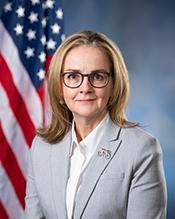
U.S. Representative for Pennsylvania’s 4th district
Democrat
119th Congress, two-year term
Missed 1.5% of roll calls. Chamber median 1.9%.
The full voting recordCounts roll calls where most Democrats and most Republicans voted differently, leaving out procedural votes.
How we countFrom FEC filings, Voteview roll calls and Congress.gov.
Democrat. In Congress since 2019, 4 terms in total.
Following saves Dean to your list, which Chamber & Street keeps on its server, linked to a cookie on this browser and not to your name or email. Email alerts will come with constituent verification.
Bills and resolutions Dean signed on to as a cosponsor. An original cosponsor signed on the day the bill was introduced. Source: govinfo bill status files, last updated Nov 6, 2026.
Recognizing the significance of equal pay and the disparity between wages paid to men and women.
Sponsor Lois Frankel (D). Original cosponsor. 132 cosponsors. H.Con.Res. 21 on Congress.gov
Introduced
Establishing the ratification of the Equal Rights Amendment.
Sponsor Ayanna Pressley (D). Original cosponsor. 221 cosponsors. H.J.Res. 80 on Congress.gov(opens in a new tab)
Introduced
This joint resolution provides that the Equal Rights Amendment, which prohibits discrimination on the basis of sex, was ratified by three-fourths of the states and is therefore a valid constitutional amendment, regardless of any time limit that was in the original proposal.
The Equal Rights Amendment was originally proposed to the states in 1972. The original proposal included a deadline for ratification of March 22, 1979; Congress subsequently extended the deadline to June 30, 1982. Although the requisite 38 states have ratified the amendment, three of these states did so after the deadlines, and five states subsequently rescinded their ratifications. The status of the amendment has been the subject of litigation.
Expressing the sense of the House of Representatives that every person has the basic right to emergency health care, including abortion care.
Sponsor Emilia Sykes (D). Original cosponsor. 111 cosponsors. H.Res. 238 on Congress.gov(opens in a new tab)
Introduced
This resolution expresses the sense of the House of Representatives that every individual has the right to emergency health care, including abortion care.
Protect Veteran Jobs Act
Sponsor Derek Tran (D). Joined Mar 21, 2025. 96 cosponsors. H.R. 1637 on Congress.gov(opens in a new tab)
Introduced
Protect Veteran Jobs Act
This bill provides reinstatement eligibility to veterans who were involuntarily removed or otherwise dismissed without cause from civil service positions from January 20, 2025, through the date of enactment of this bill. Such veterans must be eligible for reinstatement to their former positions or any other civil service positions for which they are qualified.
Each executive branch agency must regularly report through January 20, 2029, to Congress regarding veteran employees who were removed or otherwise dismissed from the agency, including the total number of employees removed and the reasons for the dismissals.
Crime Victims Fund Stabilization Act of 2025
Sponsor Ann Wagner (R). Joined Mar 14, 2025. 327 cosponsors. H.R. 909 on Congress.gov(opens in a new tab)
Passed the House
Crime Victims Fund Stabilization Act of 2025
This bill adds a new source of revenue for the Crime Victims Fund (CVF). Specifically, the bill requires certain civil monetary penalties collected from settlements and judgments in cases involving fraud and false claims against the federal government to be deposited into the CVF through FY2029.
The CVF supports federal, state, and local programs and activities to compensate and assist victims of crimes. Currently, the CVF is funded by deposits from a variety of sources, including federal criminal fines, penalties, and assessments; forfeited bail bonds; and certain other gifts, donations, and bequests.
Condemning the Members of Congress constituting the leadership team of the House Republican Conference.
Sponsor Sylvia Garcia (D). Original cosponsor. 125 cosponsors. H.Res. 216 on Congress.gov(opens in a new tab)
Introduced
Medicare Dental, Vision, and Hearing Benefit Act of 2025
Sponsor Lloyd Doggett (D). Original cosponsor. 132 cosponsors. H.R. 2045 on Congress.gov(opens in a new tab)
Introduced
Medicare Dental, Vision, and Hearing Benefit Act of 2025
This bill provides for Medicare coverage of dental, vision, and hearing care. Coverage includes (1) routine dental cleanings and exams, basic and major dental services, emergency dental care, and dentures; (2) routine eye exams, eyeglasses, and contact lenses; and (3) routine hearing exams, hearing aids, and exams for hearing aids. With respect to such care, the bill establishes special payment rules, limitations, and coinsurance requirements.
Stop Comstock Act
Sponsor Becca Balint (D). Original cosponsor. 146 cosponsors. H.R. 2029 on Congress.gov(opens in a new tab)
Introduced
American Teacher Act
Sponsor Frederica Wilson (D). Original cosponsor. 102 cosponsors. H.R. 2021 on Congress.gov(opens in a new tab)
Introduced
American Teacher Act
This bill establishes grants to increase the minimum salary of public elementary and secondary school teachers. It also authorizes a national campaign regarding the value of the teaching profession.
First, the bill directs the Department of Education (ED) to award four-year grants to state educational agencies (SEAs) and, through them, subgrants to local educational agencies to establish a minimum annual salary of $60,000 (to be adjusted annually for inflation) for these teachers.
Second, the bill directs ED to award grants to eligible SEAs to provide cost-of-living adjustments to the annual base salary of teachers.
Finally, the bill authorizes ED to carry out a national campaign to (1) increase awareness about the importance of teachers and the value of the teaching profession, (2) encourage secondary school and college students to consider teaching as a professional career, and (3) diversify the pool of individuals who enter the teaching profession.
Mamas and Babies in Underserved Communities Act of 2025
Sponsor Maxine Waters (D). Original cosponsor. 40 cosponsors. H.R. 1966 on Congress.gov(opens in a new tab)
Introduced
Mamas and Babies in Underserved Communities Act of 2025
This bill establishes Department of Health and Human Services grants for public or nonprofit private health care providers to expand and improve maternal health care services (including prenatal, postnatal, and postpartum care) and reduce disparities in access to such care. Health care providers are eligible to apply if they serve one or more minority, low-income, or medically underserved communities.
Do No Harm Act
Sponsor Robert Scott (D). Original cosponsor. 125 cosponsors. H.R. 1954 on Congress.gov(opens in a new tab)
Introduced
Do No Harm Act
This bill prohibits the application of the Religious Freedom Restoration Act of 1993 (RFRA) to specified federal laws or the implementation of such laws. Currently, RFRA prohibits the government from substantially burdening a person's exercise of religion even if the burden results from a rule of general applicability, except in furtherance of a compelling governmental interest when using the least restrictive means.
Under the bill, RFRA is inapplicable to laws or the implementation of laws that
• protect against discrimination or require the promotion of equal opportunity (e.g., the Civil Rights Act of 1964);
• require employers to provide wages, other compensation, or benefits, including leave;
• protect collective activity in the workplace;
• protect against child labor, abuse, or exploitation; or
• provide for access to, information about, referrals for, provision of, or coverage for any health care item or service.
The bill prevents RFRA from being used to deny (1) goods or services the government has agreed to provide to a beneficiary of or participant in a program or activity funded by a government contract, grant, agreement, or other award; or (2) a person's full and equal enjoyment of a government-provided good, service, benefit, facility, privilege, advantage, or accommodation.
In order for a person to assert a RFRA claim or defense in a judicial proceeding, the government must be a party to the proceeding.
HERO Act
Sponsor Ami Bera (D). Original cosponsor. 36 cosponsors. H.R. 1902 on Congress.gov(opens in a new tab)
Introduced
Helping Emergency Responders Overcome Act or the HERO Act
This bill establishes a series of programs relating to the behavioral health of law enforcement officers, first responders, 9-1-1 operators, and other public safety officers and health care providers.
The programs include
• a public safety officer suicide-reporting system at the Centers for Disease Control and Prevention,
• a grant program for peer-support behavioral health and wellness programs within fire departments and emergency medical services agencies, and
• a grant program for behavioral health and wellness programs for health care providers.
Richard L. Trumka Protecting the Right to Organize Act of 2025
Sponsor Robert Scott (D). Original cosponsor. 217 cosponsors. H.R. 20 on Congress.gov(opens in a new tab)
Introduced
Protecting Americans’ Social Security Data Act
Sponsor John Larson (D). Original cosponsor. 152 cosponsors. H.R. 1877 on Congress.gov(opens in a new tab)
Introduced
Protecting Americans’ Social Security Data Act
This bill prohibits political appointees and special government employees from accessing Social Security data systems that contain personally identifiable information about Social Security beneficiaries.
Specifically, political appointees and special government employees may not access systems maintained by the Social Security Administration (SSA) that issue or record Social Security account numbers, that are used to determine eligibility for or to pay Social Security benefits, or that otherwise contain personally identifiable information about individuals receiving or applying for benefits.
The bill also establishes a civil right of action for an individual whose information was negligently accessed or disclosed in violation of these provisions. The individual may bring suit against the United States if the violator was a U.S. employee or officer, or against the violator if they were not a U.S. employee or officer. Such a claim must be brought within two years of the affected individual’s discovery of the violation. Upon a finding of liability, defendants are liable for specified monetary damages.
If an individual is criminally charged or subject to proposed disciplinary or adverse action by a federal or state agency for having accessed or disclosed information in violation of these provisions, SSA must notify the individual whose information was accessed or disclosed of the violation as soon as practicable.
Finally, the bill requires the SSA Office of the Inspector General to investigate and report to Congress on any unauthorized access to or disclosure of information in a beneficiary data system.
John R. Lewis Voting Rights Advancement Act of 2025
Sponsor Terri Sewell (D). Original cosponsor. 221 cosponsors. H.R. 14 on Congress.gov(opens in a new tab)
Introduced
John R. Lewis Voting Rights Advancement Act of 2025
This bill establishes new criteria for determining which states and political subdivisions must obtain preclearance before changes to voting practices may take effect. Preclearance is the process of receiving preapproval from the Department of Justice (DOJ) or the U.S. District Court for the District of Columbia before making legal changes that would affect voting rights.
A state and all of its political subdivisions shall be subject to preclearance of voting practice changes for a 10-year period if, during the previous 25 years:
• 15 or more voting rights violations occurred in the state;
• 10 or more violations occurred, at least 1 of which was committed by the state itself; or
• 3 or more violations occurred and the state administers the elections.
A political subdivision as a separate unit shall also be subject to preclearance for a 10-year period if three or more voting rights violations occurred there during the previous 25 years.
States and political subdivisions that meet certain thresholds regarding minority groups must preclear covered practices before implementation, such as redistricting.
States and political subdivisions must notify the public of changes to voting practices.
The bill authorizes DOJ to require states or political subdivisions to provide certain documents or answers to questions for enforcing voting rights.
The bill outlines factors courts must consider when hearing challenges to voting practices, such as the extent of any history of official voting discrimination in the state or political subdivision.
MERIT Act
Sponsor LaMonica McIver (D). Original cosponsor. 108 cosponsors. H.R. 1835 on Congress.gov(opens in a new tab)
Introduced
Smithsonian American Women’s History Museum Act
Sponsor Nicole Malliotakis (R). Joined Mar 4, 2025. 231 cosponsors. H.R. 1329 on Congress.gov(opens in a new tab)
Introduced
Smithsonian American Women’s History Museum Act
This bill authorizes the Smithsonian American Women's History Museum to be located on a particular site within the Reserve of the National Mall in Washington, DC.
Specifically, the bill designates the South Monument site as the location for the museum; however, the President may designate an alternative site within 180 days of the bill's enactment. (The site is the undeveloped land across the National Mall from the National Museum of African American History and Culture.) Administrative jurisdiction of the site must be transferred to the Smithsonian Institution.
The Board of Regents of the Smithsonian Institution must have the approval of specified federal entities (e.g., the Commission of Fine Arts) to plan, design, and construct a museum building. The bill (1) outlines the criteria for considering site and design proposals, and (2) requires the Smithsonian Institution to reimburse for costs resulting from the building approval process.
The bill directs the museum to be dedicated to preserving, researching, and presenting the history, achievements, and lived experiences of biological women in the United States. Under this bill, the museum may not identify, present, describe, or depict any biological male as a female.
In carrying out its duties, the museum's advisory council must (1) seek and utilize guidance from a broad array of knowledgeable and respected sources reflecting the diversity of the political viewpoints and authentic experiences held by women in the United States, and (2) seek guidance for the creation and substantial revision of exhibits and programs.
Original Black History Month Resolution of 2025
Sponsor Al Green (D). Original cosponsor. 84 cosponsors. H.Res. 181 on Congress.gov(opens in a new tab)
Introduced
Original Black History Month Resolution of 2025
This resolution recognizes the importance of commemorating Black History Month as it acknowledges the achievements of Black Americans throughout the nation's history.
SECURE Notarization Act of 2025
Sponsor Cliff Bentz (R). Original cosponsor. 8 cosponsors. H.R. 1777 on Congress.gov(opens in a new tab)
Introduced
Securing and Enabling Commerce Using Remote and Electronic Notarization Act of 2025 or the SECURE Notarization Act of 2025
This bill allows a notary public commissioned under state law to remotely notarize electronic records and perform notarizations for remotely located individuals. The bill provides technical requirements for the notarizations, including the creation and retention of video and audio recordings and the use of communication technologies (i.e., video chat).
Additionally, the bill requires U.S. courts and states to recognize notarizations—including remote notarizations of electronic records and notarizations of remotely-located individuals—that occur in or affect interstate commerce and are performed by a notary public commissioned under the laws of other states.
The bill also allows a notary public to remotely notarize electronic records involving an individual located outside of the United States, subject to certain requirements.
Recognizing the seriousness of polycystic ovary syndrome (PCOS) and expressing support for the designation of the month of September as "PCOS Awareness Month".
Original cosponsor. 44 cosponsors. H.Res. 175 on Congress.gov(opens in a new tab)
Progress not on file
This resolution expresses support for the goals and ideals of PCOS Awareness Month. Polycystic ovary syndrome (PCOS) is caused by a hormone imbalance and can cause symptoms such as infertility, weight gain, excess hair growth, and acne.
PAST Act of 2025
Sponsor Brian Fitzpatrick (R). Original cosponsor. 207 cosponsors. H.R. 1684 on Congress.gov(opens in a new tab)
Introduced
Prevent All Soring Tactics Act of 2025 or the PAST Act of 2025
This bill increases protections for horses at shows, exhibitions, sales, or auctions (horse events) to prevent the practice of soring horses. Generally, the soring of horses includes certain actions taken on horses' limbs to produce higher gaits that may cause pain, distress, inflammation, or lameness.
Specifically, the bill expands existing soring prohibitions under the Horse Protection Act, including by banning the use of certain action devices (e.g., nonprotective boots) on specified horse breeds.
The bill also requires soring inspectors at horse events to be assigned by the Animal and Plant Health Inspection Service (APHIS) of the Department of Agriculture rather than appointed by the management of horse events. APHIS must also license, train, and oversee inspectors to detect and diagnose soring at such events.
Additionally, the bill increases penalties for violations of the act. It also directs APHIS to disqualify horses found to be sore from being shown or exhibited for specified periods. Further, APHIS may permanently disqualify violators from participating in horse events after the third or any subsequent violation.
By way of background, APHIS issued a rule in 2024 to increase efforts to protect horses from soring practices. However, in 2025, a court vacated parts of the rule as exceeding APHIS' statutory authority (e.g., prohibiting the use of certain action devices) while deeming other parts acceptable (e.g., establishing APHIS-designated inspectors). APHIS subsequently delayed the effective date of the rule to December 31, 2026.
Keep Americans Safe Act
Sponsor Diana DeGette (D). Original cosponsor. 145 cosponsors. H.R. 1674 on Congress.gov(opens in a new tab)
Introduced
Keep Americans Safe Act
This bill establishes a new criminal offense for the import, sale, manufacture, transfer, or possession of a large capacity ammunition feeding device (LCAFD).
The bill does not prohibit certain conduct with respect to an LCAFD, including the following:
• importation, sale, manufacture, transfer, or possession related to certain law enforcement efforts, or authorized tests or experiments;
• importation, sale, transfer, or possession related to securing nuclear materials; and
• possession by a retired law enforcement officer.
The bill permits continued possession of, but prohibits sale or transfer of, a grandfathered LCAFD.
Newly manufactured LCAFDs must display serial number identification and the date of manufacture.
Additionally, the bill allows a state or local government to use Edward Byrne Memorial Justice Assistance Grant Program funds to compensate individuals who surrender an LCAFD under a buy-back program.
SAFE Act of 2025
Sponsor Vern Buchanan (R). Original cosponsor. 238 cosponsors. H.R. 1661 on Congress.gov(opens in a new tab)
Introduced
Save America's Forgotten Equines Act of 2025 or the SAFE Act of 2025
This bill permanently prohibits the slaughter of equines (e.g., horses and mules) for human consumption. (Current law prohibits the slaughter of dogs and cats for human consumption. This bill extends the prohibition to equines.)
Specifically, this bill prohibits a person from knowingly (1) slaughtering an equine for human consumption; or (2) shipping, transporting, possessing, purchasing, selling, or donating an equine to be slaughtered for human consumption or equine parts for human consumption.
The bill subjects a violator to a fine.
The bill applies to conduct in or affecting interstate or foreign commerce or within the special maritime and territorial jurisdiction of the United States. However, it does not apply to an activity carried out by an Indian for a religious ceremony.
As background, in recent years, the appropriations acts have prohibited the Department of Agriculture (USDA) from using federal funds to inspect horses before they are slaughtered for human consumption. Therefore, there are currently no USDA-inspected horse slaughter facilities in the United States.
Providing for a joint session of the Congress in Philadelphia, Pennsylvania, on Thursday, July 2, 2026, in honor of the semiquincentennial of the Declaration of Independence.
Sponsor Brendan Boyle (D). Original cosponsor. 28 cosponsors. H.Con.Res. 16 on Congress.gov(opens in a new tab)
Introduced
Defending Ukraine’s Territorial Integrity Act
Original cosponsor. 10 cosponsors. H.R. 1601 on Congress.gov(opens in a new tab)
Progress not on file