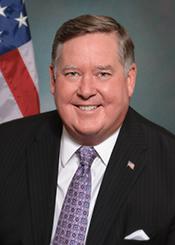
U.S. Representative for California’s 41st district
Republican
119th Congress, two-year term
Missed 0.3% of roll calls. Chamber median 1.9%.
The full voting recordCounts roll calls where most Democrats and most Republicans voted differently, leaving out procedural votes.
How we countFrom FEC filings, Voteview roll calls and Congress.gov.
Republican. In Congress since 1993, 17 terms in total.
Following saves Calvert to your list, which Chamber & Street keeps on its server, linked to a cookie on this browser and not to your name or email. Email alerts will come with constituent verification.
Bills and resolutions Calvert signed on to as a cosponsor. An original cosponsor signed on the day the bill was introduced. Source: govinfo bill status files, last updated Nov 6, 2026.
SAFE Act of 2025
Sponsor Vern Buchanan (R). Original cosponsor. 238 cosponsors. H.R. 1661 on Congress.gov
Introduced
Save America's Forgotten Equines Act of 2025 or the SAFE Act of 2025
This bill permanently prohibits the slaughter of equines (e.g., horses and mules) for human consumption. (Current law prohibits the slaughter of dogs and cats for human consumption. This bill extends the prohibition to equines.)
Specifically, this bill prohibits a person from knowingly (1) slaughtering an equine for human consumption; or (2) shipping, transporting, possessing, purchasing, selling, or donating an equine to be slaughtered for human consumption or equine parts for human consumption.
The bill subjects a violator to a fine.
The bill applies to conduct in or affecting interstate or foreign commerce or within the special maritime and territorial jurisdiction of the United States. However, it does not apply to an activity carried out by an Indian for a religious ceremony.
As background, in recent years, the appropriations acts have prohibited the Department of Agriculture (USDA) from using federal funds to inspect horses before they are slaughtered for human consumption. Therefore, there are currently no USDA-inspected horse slaughter facilities in the United States.
Humane Cosmetics Act of 2025
Sponsor Donald Beyer (D). Original cosponsor. 161 cosponsors. H.R. 1657 on Congress.gov(opens in a new tab)
Introduced
Humane Cosmetics Act of 2025
This bill generally prohibits animal testing in the evaluation of cosmetic products, and it prohibits the sale or transport of cosmetics developed using animal testing, subject to civil penalties. These prohibitions begin one year after enactment.
The bill specifies exceptions to these prohibitions, including if such animal testing (1) is conducted outside the United States to comply with a foreign regulatory authority; (2) is pursuant to a finding by the Food and Drug Administration (FDA) that there are no nonanimal alternatives to test the safety of a potentially dangerous cosmetic product or ingredient; (3) is of a product or ingredient for a drug or device subject to regulation by the FDA; or (4) is required for a noncosmetic purpose pursuant to a state, federal, or foreign regulatory authority.
Further, evidence derived from animal testing conducted more than one year after the bill's enactment may not be used to establish the safety of a cosmetic product or ingredient that is regulated by the FDA, subject to limited exceptions.
Expressing support for the Iranian people's desires for a democratic, secular, and nonnuclear Republic of Iran, and condemning the Iranian regime's terrorism, regional proxy war, internal suppression, and for other purposes.
Sponsor Tom McClintock (R). Original cosponsor. 230 cosponsors. H.Res. 166 on Congress.gov(opens in a new tab)
Introduced
Nancy Gardner Sewell Medicare Multi-Cancer Early Detection Screening Coverage Act
Sponsor Jodey Arrington (R). Joined Feb 26, 2025. 338 cosponsors. H.R. 842 on Congress.gov(opens in a new tab)
Introduced
Nancy Gardner Sewell Medicare Multi-Cancer Early Detection Screening Coverage Act
This bill allows, beginning in 2028, for Medicare coverage and payment for multi-cancer early detection screening tests that are approved by the Food and Drug Administration and that are used to screen for cancer across many cancer types, if the Centers for Medicare & Medicaid Services determines such coverage is appropriate. Coverage is limited to those under a certain age (age 68 in 2028, increased by one year every year thereafter) and to one test every 11 months.
Rare Earth Magnet Security Act of 2025
Sponsor Guy Reschenthaler (R). Original cosponsor. 29 cosponsors. H.R. 1496 on Congress.gov(opens in a new tab)
Introduced
Cardiac Arrest Survival Act of 2025
Sponsor Scott Franklin (R). Original cosponsor. 9 cosponsors. H.R. 1466 on Congress.gov(opens in a new tab)
Introduced
Death Tax Repeal Act
Sponsor Randy Feenstra (R). Original cosponsor. 182 cosponsors. H.R. 1301 on Congress.gov(opens in a new tab)
Introduced
AM Radio for Every Vehicle Act of 2025
Sponsor Gus Bilirakis (R). Joined Feb 12, 2025. 317 cosponsors. H.R. 979 on Congress.gov(opens in a new tab)
Passed the House
AM Radio for Every Vehicle Act of 2025
This bill requires the Department of Transportation (DOT) to issue a rule requiring AM radio capabilities to be standard in all new passenger vehicles. (AM radio is often used to deliver emergency alerts and news and entertainment programming; some newer vehicles do not include AM equipment.)
Specifically, this bill applies to passenger vehicles (1) manufactured in the United States for sale in the United States, imported into the United States, or shipped in interstate commerce; and (2) manufactured after the rule's effective date. The rule must require all such vehicles to have devices that can receive signals and play content transmitted by AM stations or digital audio AM stations installed as standard equipment and made easily accessible to drivers.
Prior to the rule's effective date, manufacturers that do not include devices that can access AM radio as standard equipment (1) must inform purchasers of this fact through clear and conspicuous labeling, and (2) may not charge an additional or separate fee for AM radio access.
DOT may assess civil penalties for any violation of the rule. The Department of Justice may also bring a civil action to enjoin a violation.
The rule, including DOT’s authority to enforce it, must expire 10 years after the bill’s enactment.
Further, the Government Accountability Office must study and report on the dissemination of emergency alerts to the public, including by conducting an assessment of AM radio relative to other Integrated Public Alert and Warning System communication technologies.
National Right-to-Work Act
Sponsor Joe Wilson (R). Original cosponsor. 129 cosponsors. H.R. 1232 on Congress.gov(opens in a new tab)
Introduced
Safe Passage on Interstates Act of 2025
Sponsor Mike Collins (R). Joined Feb 10, 2025. 19 cosponsors. H.R. 1057 on Congress.gov(opens in a new tab)
Introduced
Safe Passage on Interstates Act of 2025
This bill establishes a new federal criminal offense for the obstruction of interstate highways.
Specifically, the bill makes it unlawful to knowingly engage in a listed activity with the intent to obstruct the free, convenient, and normal use of the interstate highway. The listed activities are (1) deliberately delaying traffic, (2) standing or approaching a motor vehicle, or (3) endangering the safe movement of a motor vehicle.
A violation is subject to criminal penalties.
The bill provides an exception for any lawful activity conducted or authorized by the federal government or by a state or local government.
Protecting Veteran Access to Telemedicine Services Act of 2025
Sponsor Steve Womack (R). Original cosponsor. 28 cosponsors. H.R. 1107 on Congress.gov(opens in a new tab)
Passed the House
Protecting Veteran Access to Telemedicine Services Act of 2025
This bill permanently authorizes certain Department of Veterans Affairs (VA) health care professionals to use telemedicine to deliver, distribute, or dispense controlled substances that are prescription drugs to patients who are eligible for VA health care, regardless of whether the health care professional has conducted an in-person medical examination. The health care professional must be (1) authorized to prescribe the basic class of such controlled substance under an active, current, full, and unrestricted license or certification; (2) acting in the usual course of professional practice; and (3) delivering, distributing, or dispensing the substance for a legitimate medical purpose.
Protect American Election Administration Act of 2025
Sponsor Tom Cole (R). Joined Jan 28, 2025. 10 cosponsors. H.R. 723 on Congress.gov(opens in a new tab)
Introduced
Protect American Election Administration Act of 2025
This bill generally prohibits a state from soliciting, receiving, or expending any payment or donation of funds, property, or personal services from a private entity for the purpose of administering a federal election. For example, the bill prohibits the use of these payments or donations for programs related to voter education, outreach, and registration.
The prohibition shall not apply to a state's acceptance and use of a private entity's donation of space to be used for a polling place or an early voting site.
Main Street Tax Certainty Act
Sponsor Lloyd Smucker (R). Original cosponsor. 192 cosponsors. H.R. 703 on Congress.gov(opens in a new tab)
Introduced
Main Street Tax Certainty Act
This bill makes permanent the qualified business income (QBI) tax deduction.
Under current law, individuals, estates, and trusts may deduct the lower of (1) 20% of QBI from a qualified business, qualified real estate investment trust dividends, and qualified publicly traded partnership income; or (2) 20% of taxable income less net capital gain. (Some limitations apply.)
However, under current law, the QBI tax deduction expires after December 31, 2025.
To establish new ZIP Codes for certain communities, and for other purposes.
Sponsor Mario Diaz-Balart (R). Original cosponsor. 13 cosponsors. H.R. 672 on Congress.gov(opens in a new tab)
Passed the House
This bill requires the U.S Postal Service to designate a single, unique ZIP Code for each of the following 14 communities:
• Eastvale, California
• Scotland, Connecticut
• Castle Pines, Colorado
• Silver Cliff, Colorado
• Hollywood, Florida
• Miami Lakes, Florida
• Ocoee, Florida
• Urbandale, Iowa
• Franklin, Wisconsin
• Greenfield, Wisconsin
• Village of Caledonia, Wisconsin
• Village of Mount Pleasant, Wisconsin
• Village of Somers, Wisconsin
• Mills, Wyoming
Proposing an amendment to the Constitution of the United States to require that the Supreme Court of the United States be composed of nine justices.
Sponsor Dusty Johnson (R). Original cosponsor. 108 cosponsors. H.J.Res. 28 on Congress.gov(opens in a new tab)
Introduced
This joint resolution proposes a constitutional amendment requiring the Supreme Court to consist of nine Justices.
Fix Our Forests Act
Sponsor Bruce Westerman (R). Joined Jan 21, 2025. 56 cosponsors. H.R. 471 on Congress.gov(opens in a new tab)
Passed the House
Fix Our Forests Act
This bill establishes requirements for managing forests on federal land, including requirements concerning reducing wildfire threats, expediting the review of certain forest management projects, and implementing forest management projects and other activities.
Specifically, the bill (1) designates certain firesheds at high risk for wildfires as fireshed management areas; (2) directs the U.S. Forest Service and U.S. Geological Survey to jointly establish an interagency Fireshed Center that is responsible for duties related to assessing and predicting fire, including maintaining a fireshed registry on a publicly accessible website that provides interactive geospatial data on individual firesheds; and (3) makes other requirements related to reducing wildfire.
Next, the bill expedites the review of certain forest management projects under the National Environmental Policy Act (NEPA) of 1969 and exempts certain activities from NEPA review. It also establishes intra-agency strike teams to accelerate the review and any interagency consultation processes under NEPA, the Endangered Species Act of 1973, and the National Historic Preservation Act. It also limits consultation requirements concerning threatened and endangered species under the Forest and Rangeland Renewable Resources Planning Act of 1974 and the Federal Land Management and Policy Act of 1976. Finally, it limits litigation involving fireshed management projects and limits remedies that courts may provide.
Additionally, the bill supports reducing community wildfire risks, carrying out forest restoration and stewardship activities (including watershed protection and restoration), conducting biochar demonstration projects, advancing technologies to address forest wildfires, and assisting wildland firefighters and their families.
Protecting Access for Hunters and Anglers Act
Sponsor Robert Wittman (R). Original cosponsor. 83 cosponsors. H.R. 556 on Congress.gov(opens in a new tab)
Passed the House
Protecting Access for Hunters and Anglers Act of 2025
This bill bars the Fish and Wildlife Service (FWS), the Bureau of Land Management (BLM), and the Forest Service from prohibiting or regulating the use of lead ammunition or tackle on federal land or water. The bill makes exceptions for specified existing regulations and where the FWS, the BLM, or the Forest Service determines that a decline in wildlife population at the specific unit of federal land or water is primarily caused by the use of lead in ammunition or tackle, based on the field data from such unit, and the state approves the regulations.
Permanent Tax Cuts for American Families Act of 2025
Sponsor Max Miller (R). Original cosponsor. 14 cosponsors. H.R. 523 on Congress.gov(opens in a new tab)
Introduced
Permanent Tax Cuts for American Families Act of 2025
This bill makes permanent the increased standard tax deduction amounts enacted in 2017 as part of the Tax Cuts and Jobs Act.
Under current law, the standard tax deduction consists of a statutory base amount that is adjusted annually for inflation. For tax years 2018-2025, the Tax Cuts and Jobs Act increased the standard tax deduction statutory base amounts to $24,000 (from $6,000) for joint filers, $18,000 (from $4,400) for head-of-household filers, and $12,000 (from $3,000) for single filers, which almost doubled the inflation-adjusted standard tax deduction amount for most taxpayers.
Under the bill, the increased standard tax deduction statutory base amounts of $24,000 for joint filers, $18,000 for head-of-household filers, and $12,000 for single filers are made permanent. The bill also makes permanent the annual adjustments to such amounts for inflation.
Constitutional Concealed Carry Reciprocity Act of 2025
Sponsor Richard Hudson (R). Joined Jan 16, 2025. 189 cosponsors. H.R. 38 on Congress.gov(opens in a new tab)
Introduced
Constitutional Concealed Carry Reciprocity Act
This bill establishes a federal statutory framework to regulate the carry or possession of concealed firearms across state lines.
Specifically, an individual who is eligible to carry a concealed firearm in one state may carry or possess a concealed handgun (other than a machine gun or destructive device) in another state that allows its residents to carry concealed firearms.
It sets forth requirements for lawful concealed carry across state lines. The bill preempts most state and local laws related to concealed carry and establishes a private right of action for a person adversely affected by interference with a concealed-carry right established by this bill.
Miracle on Ice Congressional Gold Medal Act
Sponsor Pete Stauber (R). Original cosponsor. 299 cosponsors. H.R. 452 on Congress.gov(opens in a new tab)
Became law
Miracle on Ice Congressional Gold Medal Act
This act provides for the award of Congressional Gold Medals to the members of the 1980 U.S. Olympic men's ice hockey team in recognition of the team's achievement at the 1980 Winter Olympic Games.
Born-Alive Abortion Survivors Protection Act
Sponsor Ann Wagner (R). Joined Jan 9, 2025. 163 cosponsors. H.R. 21 on Congress.gov(opens in a new tab)
Passed the House
Born-Alive Abortion Survivors Protection Act
This bill establishes requirements for the degree of care a health care practitioner must provide in the case of a child born alive following an abortion or attempted abortion.
Specifically, a health care practitioner who is present must (1) exercise the same degree of care as would reasonably be provided to any other child born alive at the same gestational age, and (2) ensure the child is immediately admitted to a hospital. Additionally, a health care practitioner or other employee who has knowledge of a failure to comply with the degree-of-care requirements must immediately report such failure to law enforcement.
A health care practitioner who fails to provide the required degree of care, or a health care practitioner or other employee who fails to report such failure, is subject to criminal penalties—a fine, up to five years in prison, or both.
An individual who intentionally kills or attempts to kill a child born alive is subject to prosecution for murder.
The bill bars the criminal prosecution of a mother of a child born alive under this bill and allows her to bring a civil action against a health care practitioner or other employee for violations.
Deport Alien Gang Members Act
Sponsor Tom McClintock (R). Joined Jan 9, 2025. 27 cosponsors. H.R. 175 on Congress.gov(opens in a new tab)
Passed committee
Deport Alien Gang Members Act
This bill makes non-U.S. nationals (aliens under federal law) associated with criminal gangs inadmissible for entry into the United States and deportable. The bill also establishes procedures to designate groups as criminal gangs.
An individual shall be inadmissible if certain officers or agencies know or have reason to believe that the individual is or was a criminal gang member or has participated or aided such a group's illegal activities. An individual who is or was a member of such a gang, has participated or aided such a group's illegal activities, or seeks to enter or has entered the United States in furtherance of such activity shall be deportable.
Such individuals must be subject to mandatory detention. Furthermore, such individuals shall not be eligible for (1) asylum; (2) temporary protected status; (3) special immigrant juvenile visas; or (4) parole, unless they are assisting the government in a law enforcement matter.
The bill defines a criminal gang as a group of five or more persons (1) where one of its primary purposes is committing specified criminal offenses and its members have engaged in a continuing series of such offenses within the past five years, or (2) that has been designated as a criminal gang by the Department of Homeland Security (DHS).
The bill also establishes procedures for DHS to designate a group as a criminal gang, including notifying Congress, publishing a notice in the Federal Register, and providing an opportunity for the group to petition for review of the designation.
Proven Forest Management Act of 2025
Sponsor Tom McClintock (R). Original cosponsor. 8 cosponsors. H.R. 179 on Congress.gov(opens in a new tab)
Introduced
Proven Forest Management Act of 2025
This bill sets forth provisions to expedite the approval and implementation of forest management activities and establishes related requirements.
First, the bill categorically excludes a forest management activity conducted on National Forest System land for reducing forest fuels from certain environmental review requirements under the National Environmental Policy Act of 1969 if the activity (1) does not exceed 10,000 acres (including not more than 3,000 acres of mechanical thinning), (2) is developed in a collaborative manner, and (3) is consistent with the forest plan developed for the relevant National Forest System land.
Next, the bill directs the Forest Service to conduct forest management activities in a manner that attains multiple ecosystem benefits unless the costs associated with attaining such benefits are excessive.
Additionally, the Forest Service must (1) establish any post-program ground condition criteria for a ground disturbance caused by a forest management activity required by the applicable forest plan, and (2) provide for monitoring to ascertain the attainment of relevant post-program conditions.
The bill also allows the Forest Service or the Department of the Interior, as appropriate, to enter into contracts and cooperative agreements with certain entities to provide for fuel reduction, erosion control, reforestation, and similar activities on federal and nonfederal lands within land adjustment programs.
Finally, the bill directs the Forest Service, when conducting a forest management activity on National Forest System land, to coordinate with impacted parties to increase efficiency and maximize the compatibility of management practices across such land.
To require the Secretary of Agriculture to carry out activities to suppress wildfires, and for other purposes.
Sponsor Tom McClintock (R). Original cosponsor. 9 cosponsors. H.R. 178 on Congress.gov(opens in a new tab)
Introduced
This bill sets out requirements for wildfire suppression and management activities carried out by the Forest Service.
These requirements apply to Forest Service land that (1) has a severe, extreme, or exceptional drought intensity rating; (2) has a National Wildland Fire Preparedness level of 5 (i.e., the highest level of wildland fire activity); or (3) is located in a fireshed ranked in the top 10% of wildfire exposure.
Within 24 hours of detecting a wildfire on such Forest Service land, the service must use all available resources to extinguish the wildfire. Additionally, the service may not inhibit the firefighting activities of state and local agencies that are authorized to respond to wildfires on the Forest Service land.
Further, the service may only initiate a backfire or burnout as part of a fire suppression strategy if it is ordered by the responsible incident commander or is necessary to protect the health and safety of firefighting personnel. The service must use all available resources to control any initiated fire until it is extinguished.
The bill also limits the service's use of prescribed fires (i.e., the controlled application of fire by a team of experts under specified weather conditions to restore health to ecosystems that depend on fire). When using prescribed fires as a fire resource management tool, the service must comply with applicable laws and regulations and immediately suppress any prescribed fire that exceeds its prescription.
Yosemite National Park Equal Access and Fairness Act
Sponsor Tom McClintock (R). Original cosponsor. 3 cosponsors. H.R. 177 on Congress.gov(opens in a new tab)
Introduced
Yosemite National Park Equal Access and Fairness Act
This bill modifies the Raker Act, which allowed San Francisco to dam the Hetch Hetchy Valley within Yosemite National Park, to (1) increase the annual rent San Francisco pays to the National Park Service (NPS), and (2) direct the NPS to expand public access to the reservoir and lake created by the dam.
Specifically, the bill increases rent paid by the San Francisco Public Utilities Commission for the use of the park from $30,000 to $2 million per year. That amount must be adjusted annually to reflect increases in the Consumer Price Index for All Urban Consumers. The commission may not recoup such sums from wholesale water or power customers. The bill allows collected rent to be used by the Department of the Interior for wildfire mitigation activities in the park and other national parks in California.
The bill also requires the NPS to administer the Hetch Hetchy Reservoir and Lake Eleanor Basin areas for public recreation, benefit, and use in a manner that will preserve scenic, historic, scientific, or otherwise important features.