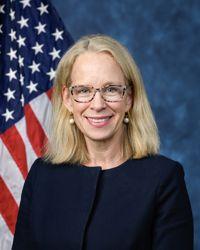
U.S. Representative for Minnesota’s 3rd district
Democrat
119th Congress, two-year term
Missed 0.3% of roll calls. Chamber median 1.9%.
The full voting recordCounts roll calls where most Democrats and most Republicans voted differently, leaving out procedural votes.
How we countFrom FEC filings, Voteview roll calls and Congress.gov.
Democrat. In Congress since 2025, 1 term in total.
Following saves Morrison to your list, which Chamber & Street keeps on its server, linked to a cookie on this browser and not to your name or email. Email alerts will come with constituent verification.
Bills and resolutions Morrison signed on to as a cosponsor. An original cosponsor signed on the day the bill was introduced. Source: govinfo bill status files, last updated Nov 6, 2026.
FAMILY Act
Sponsor Rosa DeLauro (D). Original cosponsor. 208 cosponsors. H.R. 5390 on Congress.gov
Introduced
Calling for the urgent delivery and disbursement of humanitarian aid to address the needs of civilians in Gaza.
Sponsor Pramila Jayapal (D). Joined Sep 15, 2025. 125 cosponsors. H.Res. 473 on Congress.gov(opens in a new tab)
Introduced
This resolution expresses the House of Representatives' grave concern with (1) the humanitarian crisis and acute suffering of Palestinian civilians in Gaza, and (2) the suffering of the hostages and hostage families.
The resolution also calls on the White House, the Department of State, and other relevant federal agencies to use all available diplomatic tools to bring about the release of the hostages, the disbursement of food and humanitarian aid to Palestinian civilians, and a durable end to the Gaza conflict.
Affirming the independence of the Federal Reserve System, its Chairman, and the Board of Governors.
Sponsor Nanette Barragán (D). Joined Sep 10, 2025. 26 cosponsors. H.Res. 677 on Congress.gov(opens in a new tab)
Introduced
Expressing support for the designation of September 9, 2025, as "National Firearm Suicide Prevention Day" to educate about the growing firearm suicide crisis in the United States and promote the importance of storing firearms safely and securely as an essential component of suicide prevention.
Sponsor Julia Brownley (D). Original cosponsor. 57 cosponsors. H.Res. 684 on Congress.gov(opens in a new tab)
Introduced
This resolution expresses support for the designation of National Firearm Suicide Prevention Day.
Terminating the emergency determined by the President on August 11, 2025, in the Executive Order titled "Declaring a crime emergency in the District of Columbia".
Sponsor Jamie Raskin (D). Joined Sep 8, 2025. 103 cosponsors. H.J.Res. 115 on Congress.gov(opens in a new tab)
Introduced
America's Red Rock Wilderness Act
Sponsor Melanie Stansbury (D). Joined Sep 3, 2025. 81 cosponsors. H.R. 2467 on Congress.gov(opens in a new tab)
Introduced
PHIT Act of 2025
Sponsor Mike Kelly (R). Joined Sep 3, 2025. 30 cosponsors. H.R. 2369 on Congress.gov(opens in a new tab)
Introduced
Personal Health Investment Today Act of 2025 or the PHIT Act of 2025
This bill allows a federal tax deduction of up to $1,000 ($2,000 for married individuals who file a joint federal tax return or a head of a household) for qualified sports and fitness expenses. (Conditions apply.)
Under current law, an individual may deduct unreimbursed expenses paid for medical care for themselves, their spouse, or a qualified dependent to the extent that such expenses exceed 7.5% of adjusted gross income.
Under the bill, the definition of medical care (for purposes of the tax deduction) is expanded to include qualified sports and fitness expenses. The bill defines qualified sports and fitness expenses as amounts paid exclusively for the sole purpose of participating in a physical activity, including
• fitness facility memberships,
• participation or instruction in physical exercise or activity, or
• equipment for a physical exercise or activity program.
Honoring the victims and survivors of the mass shooting at Annunciation Catholic Church and School in Minneapolis, Minnesota.
Sponsor Ilhan Omar (D). Original cosponsor. 7 cosponsors. H.Res. 669 on Congress.gov(opens in a new tab)
Introduced
Establishing the ratification of the Equal Rights Amendment.
Sponsor Ayanna Pressley (D). Joined Aug 26, 2025. 221 cosponsors. H.J.Res. 80 on Congress.gov(opens in a new tab)
Introduced
This joint resolution provides that the Equal Rights Amendment, which prohibits discrimination on the basis of sex, was ratified by three-fourths of the states and is therefore a valid constitutional amendment, regardless of any time limit that was in the original proposal.
The Equal Rights Amendment was originally proposed to the states in 1972. The original proposal included a deadline for ratification of March 22, 1979; Congress subsequently extended the deadline to June 30, 1982. Although the requisite 38 states have ratified the amendment, three of these states did so after the deadlines, and five states subsequently rescinded their ratifications. The status of the amendment has been the subject of litigation.
Proposing an amendment to the Constitution of the United States providing that there is no immunity from criminal prosecution for an act on the grounds that such act was within the constitutional authority or official duties of an individual, and providing that the President may not grant a pardon to himself or herself.
Sponsor Joseph Morelle (D). Joined Aug 26, 2025. 187 cosponsors. H.J.Res. 108 on Congress.gov(opens in a new tab)
Introduced
Protecting Health Care and Lowering Costs Act of 2025
Sponsor Adam Gray (D). Joined Aug 22, 2025. 142 cosponsors. H.R. 4849 on Congress.gov(opens in a new tab)
Introduced
Protecting Health Care and Lowering Costs Act 2025
This bill makes permanent temporary provisions that generally expand eligibility for and increase the amount of the premium tax credit. This bill also repeals multiple Medicaid, Medicare, and health-related tax provisions enacted by the One Big Beautiful Bill Act (OBBBA).
Currently, eligible taxpayers may claim the premium tax credit, which applies toward the cost of obtaining health insurance through health insurance exchanges. To qualify, a taxpayer’s household income must meet or exceed 100% of the federal poverty level (FPL) and, after 2025, may not exceed 400% of the FPL (maximum income limit). For 2021-2025, the maximum income limit is eliminated, which generally expands eligibility for the premium tax credit.
Further, under current law, the amount of the premium tax credit is partially based on the taxpayer’s household income multiplied by the applicable percentage. The applicable percentage varies depending on which of six income ranges (adjusted for inflation after 2025) the taxpayer’s household income falls within. For 2021-2025, the applicable percentages are lowered and the adjustment of the applicable percentages for inflation is eliminated, which generally increases the amount of the premium tax credit.
The bill permanently eliminates the 400% maximum income limit, lowers the applicable percentages, and eliminates the inflation adjustment for the applicable percentages.
Finally, the bill repeals multiple Medicaid, Medicare, and health-related tax provisions enacted by the OBBBA, including
• certain Medicare and Medicare eligibility and verification requirements,
• the reduced window for retroactive Medicaid coverage, and
• premium tax credit verification requirements.
Healthy H2O Act
Sponsor David Rouzer (R). Joined Aug 22, 2025. 24 cosponsors. H.R. 4721 on Congress.gov(opens in a new tab)
Introduced
Healthy Drinking Water Affordability Act or the Healthy H2O Act
This bill directs the Department of Agriculture (USDA) to establish a program under which USDA awards grants for improving the quality of drinking water in certain rural areas. Grants may be given to individuals or entities, such as home owners, renters, and licensed child-care facilities, that have demonstrated the presence of one or more health contaminants in their drinking water. Grants may also be given to nonprofit organizations to help individuals and entities test their water, analyze the results of the tests, and reduce the contamination.
Rights for the TSA Workforce Act
Sponsor Bennie Thompson (D). Joined Aug 22, 2025. 190 cosponsors. H.R. 2086 on Congress.gov(opens in a new tab)
Introduced
SUN Act
Sponsor Sam Liccardo (D). Original cosponsor. 56 cosponsors. H.R. 4998 on Congress.gov(opens in a new tab)
Introduced
To amend section 2112 of title 44, United States Code, to appropriately limit donations to Presidential Libraries and Centers.
Sponsor Jared Moskowitz (D). Joined Aug 15, 2025. 22 cosponsors. H.R. 4461 on Congress.gov(opens in a new tab)
Introduced
Health Care Affordability Act of 2025
Sponsor Lauren Underwood (D). Joined Aug 15, 2025. 165 cosponsors. H.R. 247 on Congress.gov(opens in a new tab)
Introduced
Health Care Affordability Act of 2025
This bill makes permanent temporary changes enacted by the American Rescue Plan Act of 2021 (ARPA) and the Inflation Reduction Act of 2022 (IRA) that generally expand eligibility for and increase the amount of the premium tax credit.
Currently, eligible taxpayers may be able to claim the premium tax credit, which applies toward the cost of obtaining health insurance through health insurance exchanges. To be eligible for the premium tax credit, a taxpayer’s household income must meet or exceed 100% of the federal poverty level (FPL) and, after 2025, may not exceed 400% of the FPL (maximum income limit). For 2021-2025, the ARPA and IRA eliminated the maximum income limit, which generally expands eligibility for the premium tax credit.
Further, under current law, the amount of the premium tax credit is (1) generally the plan premium (conditions apply), minus (2) the taxpayer’s household income multiplied by the applicable percentage. The applicable percentage is a specific percentage that varies depending on which of six income ranges (adjusted for inflation after 2025) the taxpayer’s household income falls within. For 2021-2025, the ARPA and IRA lowered the applicable percentages and eliminated the adjustment of the applicable percentages for inflation, which generally increases the amount of the premium tax credit.
The bill makes permanent the elimination of the 400% maximum income limit, the lower applicable percentages, and the elimination of the inflation adjustment for the applicable percentages.
Reproductive Freedom for Veterans Act
Sponsor Julia Brownley (D). Original cosponsor. 154 cosponsors. H.R. 4876 on Congress.gov(opens in a new tab)
Introduced
Born in the USA Act of 2025
Sponsor Delia Ramirez (D). Joined Aug 5, 2025. 140 cosponsors. H.R. 3368 on Congress.gov(opens in a new tab)
Introduced
Restoring Essential Healthcare Act
Sponsor Laura Friedman (D). Original cosponsor. 155 cosponsors. H.R. 4796 on Congress.gov(opens in a new tab)
Introduced
Expressing the sense of Congress that tax-exempt fraternal benefit societies have historically provided and continue to provide critical benefits to the people and communities of the United States.
Sponsor Darin LaHood (R). Joined Jul 25, 2025. 122 cosponsors. H.Con.Res. 4 on Congress.gov(opens in a new tab)
Introduced
This concurrent resolution expresses the sense of Congress that tax-exempt fraternal benefit societies serve as a private economic and social support system, providing benefits to their members is necessary to support the charitable and fraternal activities of the volunteer chapters, and their work should continue to be promoted.
AI Impersonation Prevention Act of 2025
Sponsor Yassamin Ansari (D). Original cosponsor. 6 cosponsors. H.R. 4628 on Congress.gov(opens in a new tab)
Introduced
EACH Act of 2025
Sponsor Ayanna Pressley (D). Original cosponsor. 202 cosponsors. H.R. 4611 on Congress.gov(opens in a new tab)
Introduced
No Secret Police Act of 2025
Sponsor Daniel Goldman (D). Joined Jul 21, 2025. 130 cosponsors. H.R. 4176 on Congress.gov(opens in a new tab)
Introduced
AM Radio for Every Vehicle Act of 2025
Sponsor Gus Bilirakis (R). Joined Jul 14, 2025. 317 cosponsors. H.R. 979 on Congress.gov(opens in a new tab)
Passed the House
AM Radio for Every Vehicle Act of 2025
This bill requires the Department of Transportation (DOT) to issue a rule requiring AM radio capabilities to be standard in all new passenger vehicles. (AM radio is often used to deliver emergency alerts and news and entertainment programming; some newer vehicles do not include AM equipment.)
Specifically, this bill applies to passenger vehicles (1) manufactured in the United States for sale in the United States, imported into the United States, or shipped in interstate commerce; and (2) manufactured after the rule's effective date. The rule must require all such vehicles to have devices that can receive signals and play content transmitted by AM stations or digital audio AM stations installed as standard equipment and made easily accessible to drivers.
Prior to the rule's effective date, manufacturers that do not include devices that can access AM radio as standard equipment (1) must inform purchasers of this fact through clear and conspicuous labeling, and (2) may not charge an additional or separate fee for AM radio access.
DOT may assess civil penalties for any violation of the rule. The Department of Justice may also bring a civil action to enjoin a violation.
The rule, including DOT’s authority to enforce it, must expire 10 years after the bill’s enactment.
Further, the Government Accountability Office must study and report on the dissemination of emergency alerts to the public, including by conducting an assessment of AM radio relative to other Integrated Public Alert and Warning System communication technologies.
Stopping a Rogue President on Trade Act
Sponsor Linda Sánchez (D). Joined Jul 14, 2025. 40 cosponsors. H.R. 2888 on Congress.gov(opens in a new tab)
Introduced
Stopping a Rogue President on Trade Act
This bill terminates specified executive orders imposing duties (i.e., tariffs) on certain imports into the United States. It also requires the President to receive congressional approval in order to take certain trade actions.
Specifically, the bill terminates duties imposed under the following executive orders (or any executive orders that are substantially similar to these executive orders):
• Executive Order 14257, which imposed a 10% tariff on most imports to the United States and additional duties on specified trading partners;
• Executive Order 14193, which imposed a 25% tariff on most imports from Canada (except for Canadian energy or energy resources, which have a 10% tariff); and
• Executive Order 14194, which imposed a 25% tariff on most imports from Mexico.
Additionally, the bill prohibits the President from imposing or increasing a duty, quota, or tariff-rate quota on imports entering the United States, or preventing the application of trade agreement concessions on imports, unless a joint resolution of approval is enacted into law.
The bill provides exclusions from this congressional approval requirement, such as imposing antidumping and countervailing duties under the Tariff Act of 1930. (Antidumping laws provide relief to U.S industries and workers that are materially injured or threatened with injury due to imports of like products sold in the U.S. market at less than fair value, while countervailing duty laws provide such relief from imports of products subsidized by a foreign government or public entity.)