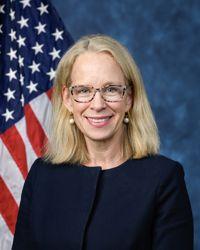
U.S. Representative for Minnesota’s 3rd district
Democrat
119th Congress, two-year term
Missed 0.3% of roll calls. Chamber median 1.9%.
The full voting recordCounts roll calls where most Democrats and most Republicans voted differently, leaving out procedural votes.
How we countFrom FEC filings, Voteview roll calls and Congress.gov.
Democrat. In Congress since 2025, 1 term in total.
Following saves Morrison to your list, which Chamber & Street keeps on its server, linked to a cookie on this browser and not to your name or email. Email alerts will come with constituent verification.
Bills and resolutions Morrison signed on to as a cosponsor. An original cosponsor signed on the day the bill was introduced. Source: govinfo bill status files, last updated Nov 6, 2026.
Directing the President, pursuant to section 5(c) of the War Powers Resolution, to remove United States Armed Forces from hostilities with presidentially designated terrorist organizations in the Western Hemisphere.
Sponsor Gregory Meeks (D). Joined Dec 15, 2025. 41 cosponsors. H.Con.Res. 61 on Congress.gov
Introduced
This concurrent resolution directs the President to remove U.S. Armed Forces from hostilities with any presidentially designated terrorist organization in the Western Hemisphere unless a declaration of war or authorization to use military force for such purpose has been enacted.
Ranked Choice Voting Act
Sponsor Jamie Raskin (D). Original cosponsor. 15 cosponsors. H.R. 6589 on Congress.gov(opens in a new tab)
Introduced
Reproductive Rights are Human Rights Act of 2025
Sponsor Julie Johnson (D). Joined Dec 10, 2025. 59 cosponsors. H.R. 4888 on Congress.gov(opens in a new tab)
Introduced
Commending State and local governments for championing reproductive rights as human rights.
Sponsor Nikema Williams (D). Original cosponsor. 116 cosponsors. H.Con.Res. 65 on Congress.gov(opens in a new tab)
Introduced
This concurrent resolution urges states to repeal laws that criminalize abortions.
Military in Law Enforcement Accountability Act
Sponsor Sam Liccardo (D). Original cosponsor. 31 cosponsors. H.R. 6533 on Congress.gov(opens in a new tab)
Introduced
Upholding Protections for Unaccompanied Children Act of 2025
Sponsor Daniel Goldman (D). Original cosponsor. 45 cosponsors. H.R. 6389 on Congress.gov(opens in a new tab)
Introduced
Right to Representation for Department of Veterans Affairs Workers Act of 2025
Sponsor Delia Ramirez (D). Joined Dec 2, 2025. 14 cosponsors. H.R. 6014 on Congress.gov(opens in a new tab)
Introduced
Food Bank Emergency Support Act of 2025
Sponsor April McClain Delaney (D). Joined Dec 1, 2025. 23 cosponsors. H.R. 6271 on Congress.gov(opens in a new tab)
Introduced
Scientific Integrity Act
Sponsor Paul Tonko (D). Joined Dec 1, 2025. 140 cosponsors. H.R. 1106 on Congress.gov(opens in a new tab)
Introduced
Scientific Integrity Act
This bill requires each federal agency that funds, conducts, or oversees scientific research to adopt and enforce a scientific integrity policy.
Under the bill, among other parameters, such policies must (1) ensure that scientific conclusions are not based on political considerations, (2) prohibit the suppression or alteration of findings, and (3) permit researchers to disseminate their findings and engage with the scientific community as appropriate. Scientific integrity policies must also include a mechanism through which stakeholders may report violations of the policy.
Agencies are required to submit their scientific integrity policies to the Office of Science and Technology Policy (OSTP) for approval. Approved policies must be made public, submitted to Congress, and periodically updated. Agencies may use their existing policies provided they satisfy the requirements of the bill. The Government Accountability Office must review implementation of the policies.
Each agency is also required to (1) appoint a Scientific Integrity Officer, (2) establish a process for dispute resolution consistent with the scientific integrity policy, and (3) establish a specified training program for current and new employees.
Amending the Rules of the House of Representatives to require a supermajority vote of Members present and voting to subject a Member, Delegate, or Resident Commissioner to the censure or disapproval of the House, or removal from committee membership.
Sponsor Donald Beyer (D). Original cosponsor. 34 cosponsors. H.Res. 906 on Congress.gov(opens in a new tab)
Introduced
Supporting the goals and principles of Transgender Day of Remembrance by recognizing the epidemic of violence toward transgender people and memorializing the lives lost this year.
Sponsor Pramila Jayapal (D). Original cosponsor. 83 cosponsors. H.Res. 899 on Congress.gov(opens in a new tab)
Introduced
Clean Cloud Act of 2025
Sponsor Steve Cohen (D). Original cosponsor. 9 cosponsors. H.R. 6179 on Congress.gov(opens in a new tab)
Introduced
Clean Cloud Act of 2025
This bill establishes an emissions standard and fee system regarding the electricity used by data centers or cryptomining facilities that exceed a specified size. Additionally, the bill appropriates collected fees for various purposes, including to fund zero-carbon electricity generation, long-duration energy storage, and grants to lower residential electricity consumer costs.
The bill requires the Environmental Protection Agency (EPA) and the Energy Information Administration to annually determine the greenhouse gas emission intensity of the total annual electricity consumed by (1) covered facilities from the electric grid, and (2) covered facilities from electricity generation assets located behind the power meter of the facilities.
The EPA must determine and publish the greenhouse gas emissions intensities of the electric grid of each region to establish a baseline for the assessment of fees. Each calendar year from 2027 through 2034, the baseline for each region is reduced by 11% of the original baseline. For 2035 and after, the baseline is set to zero emissions.
The EPA must assess a fee on (1) owners of any electric utility providing power to a covered facility that exceeds the baseline emissions in that region for that year, and (2) covered facilities with respect to the greenhouse gas emissions from electricity generation assets located behind the power meter of the facility above the baseline of the region for that year. The electric utilities may not recoup the cost of the fee by raising rates or assessing fees on customers that are not covered facilities.
Foreign Robocall Elimination Act
Sponsor Addison McDowell (R). Original cosponsor. 39 cosponsors. H.R. 6152 on Congress.gov(opens in a new tab)
Passed committee
Foreign Robocall Elimination Act
This bill modifies and expands certain Federal Communications Commission (FCC) programs targeting illegal robocalls and creates a task force to advise the federal government on foreign robocalls.
For example, the bill directs the FCC to issue rules under which certain voice service providers (i.e., phone companies) may be required to post a bond before filing required certifications in the Robocall Mitigation Database. (Under current law, providers must file annual certifications in this database regarding their compliance with illegal robocall mitigation requirements. Noncompliant providers are removed from the database and effectively blocked from the U.S. telephone network.) Providers that do not demonstrate legitimate operations, sufficient regulatory oversight, or the ability to pay fines may be subject to the bond requirement. The FCC must establish categorical exemptions for classes of legitimate providers that satisfy certain criteria.
Further, the bill makes changes related to the FCC’s traceback consortium, a group selected by the FCC to conduct private-led efforts to trace the origin of suspected illegal robocalls. Specifically, the bill protects the consortium from liability for receiving, sharing, or publishing information about suspected fraudulent, abusive, or illegal robocalls and other illegal calls. Additionally, the bill authorizes the consortium to publish a list of voice service providers based on information about providers’ transmission or origination of illegal robocalls or refusal to participate in traceback efforts. (Currently, only the FCC may publish this list.)
The bill also establishes an interagency task force on combating robocalls that originate outside the United States.
Global Respect Act
Sponsor Sarah McBride (D). Original cosponsor. 167 cosponsors. H.R. 6151 on Congress.gov(opens in a new tab)
Introduced
Restoring Food Security for American Families and Farmers Act of 2025
Sponsor Jahana Hayes (D). Original cosponsor. 206 cosponsors. H.R. 6088 on Congress.gov(opens in a new tab)
Introduced
Veterans’ Compensation Cost-of-Living Adjustment Act of 2025
Sponsor Morgan Luttrell (R). Joined Nov 17, 2025. 12 cosponsors. H.R. 2138 on Congress.gov(opens in a new tab)
Introduced
Veterans' Compensation Cost-of-Living Adjustment Act of 2025
This bill requires the Department of Veterans Affairs (VA) to increase the amounts payable for wartime disability compensation, additional compensation for dependents, the clothing allowance for certain disabled veterans, and dependency and indemnity compensation for surviving spouses and children. Specifically, the VA must increase the amounts by the same percentage as the cost-of-living increase in benefits for Social Security recipients that is effective on December 1, 2025. The bill requires the VA to publish the amounts payable, as increased, in the Federal Register.
The VA is authorized to make a similar adjustment to the rates of disability compensation payable to persons who have not received compensation for service-connected disability or death.
Barriers to Suicide Act of 2025
Sponsor Donald Beyer (D). Joined Nov 12, 2025. 45 cosponsors. H.R. 3505 on Congress.gov(opens in a new tab)
Introduced
Ethan's Law
Sponsor Rosa DeLauro (D). Joined Nov 12, 2025. 202 cosponsors. H.R. 1564 on Congress.gov(opens in a new tab)
Introduced
Ethan's Law
This bill establishes a framework to regulate the storage of firearms on residential premises at the federal, state, and tribal levels.
At the federal level, the bill establishes statutory requirements for firearms on residential premises to be safely stored if a minor is likely to gain access without permission or if a resident is ineligible to possess a firearm.
An individual who violates the requirements is subject to criminal penalties. A firearm stored in violation of the requirements is subject to seizure and forfeiture.
At the state and tribal levels, the bill requires the Department of Justice to award grants to implement functionally identical requirements for the safe storage of firearms.
VA Care and Benefits Accountability Act
Sponsor Delia Ramirez (D). Original cosponsor. 43 cosponsors. H.R. 6015 on Congress.gov(opens in a new tab)
Introduced
To amend title 38, United States Code, to direct the Secretary of Veterans Affairs to furnish an opioid antagonist to a veteran without requiring a prescription or copayment.
Sponsor Herbert Conaway (D). Original cosponsor. 4 cosponsors. H.R. 5999 on Congress.gov(opens in a new tab)
Passed committee
Supporting Apprenticeship Colleges Act of 2025
Sponsor Angie Craig (D). Joined Nov 10, 2025. 35 cosponsors. H.R. 4588 on Congress.gov(opens in a new tab)
Introduced
Supporting Apprenticeship Colleges Act of 2025
This bill directs the Department of Education to award grants to institutions of higher education that sponsor construction and manufacturing-oriented registered apprenticeship programs for (1) expanding or supporting outreach to high schools, local businesses, local workforce development boards, and apprenticeship intermediaries; and (2) providing advising and support services to students who are enrolled in these apprenticeship programs.
Original National Domestic Violence Awareness Month Resolution of 2025
Sponsor Al Green (D). Joined Nov 7, 2025. 148 cosponsors. H.Res. 846 on Congress.gov(opens in a new tab)
Introduced
Original National Domestic Violence Awareness Month Resolution of 2025
This resolution supports the goals and ideals of National Domestic Violence Awareness Month. Further, it expresses the sense that Congress should continue to raise awareness of and support programs to end domestic violence.
Keep SNAP and WIC Funded Act of 2025
Sponsor Jahana Hayes (D). Original cosponsor. 101 cosponsors. H.R. 5950 on Congress.gov(opens in a new tab)
Introduced
Keep SNAP and WIC Funded Act of 2025
This bill provides FY2026 appropriations for the Department of Agriculture (USDA) to continue operating the Supplemental Nutrition Assistance Program (SNAP); the Special Supplemental Nutrition Program for Women, Infants, and Children (WIC); and a related block grant program if there is a lapse in FY2026 appropriations for USDA.
Specifically, the bill provides appropriations to USDA for any period in which legislation to provide FY2026 interim continuing appropriations or full-year appropriations for USDA has not been enacted. If such a lapse in appropriations occurs, the bill provides the appropriations that are necessary to continue
• providing uninterrupted SNAP benefits,
• providing consolidated block grants to Puerto Rico and American Samoa for nutrition assistance programs, and
• carrying out WIC without interruption.
In addition, the bill provides appropriations to pay any benefits under these programs that were missed on or after September 30, 2025, and before this bill is enacted.
The appropriations for these purposes are available until the earlier of (1) the enactment into law of legislation to provide FY2026 appropriations for USDA (including continuing appropriations), or (2) September 30, 2026.
The bill also requires USDA to use the funds provided by this bill to reimburse state agencies for costs that were incurred to carry out these programs during a lapse in appropriations, to the extent that the programs were carried out in accordance with federal law (including regulations) during the lapse.
Restoring Access for Detainees Act
Sponsor Maxine Dexter (D). Original cosponsor. 49 cosponsors. H.R. 5941 on Congress.gov(opens in a new tab)
Introduced
Keep Air Travel Safe Act
Sponsor Debbie Dingell (D). Joined Nov 7, 2025. 34 cosponsors. H.R. 5732 on Congress.gov(opens in a new tab)
Introduced
Keep Air Travel Safe Act
This bill provides continuing appropriations for the Transportation Security Administration (TSA) during any period in which there is a lapse in appropriations for TSA. It also requires the continuing appropriations to be funded using certain unobligated funds that were provided to U.S. Immigration and Customs Enforcement by the One Big Beautiful Bill Act.
The bill provides the appropriations for TSA to continue all programs, projects, or activities (including the costs of direct loans and loan guarantees) that were funded in the preceding fiscal year.
The appropriations provided by this bill are available from the first day of a lapse in appropriations for TSA until the earlier of
• the date on which the applicable regular appropriations bill for the fiscal year becomes law or a joint resolution making continuing appropriations becomes law, or
• the date that is 180 days after the first day of a lapse in appropriations.