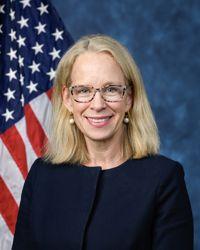
U.S. Representative for Minnesota’s 3rd district
Democrat
119th Congress, two-year term
Missed 0.3% of roll calls. Chamber median 1.9%.
The full voting recordCounts roll calls where most Democrats and most Republicans voted differently, leaving out procedural votes.
How we countFrom FEC filings, Voteview roll calls and Congress.gov.
Democrat. In Congress since 2025, 1 term in total.
Following saves Morrison to your list, which Chamber & Street keeps on its server, linked to a cookie on this browser and not to your name or email. Email alerts will come with constituent verification.
Bills and resolutions Morrison signed on to as a cosponsor. An original cosponsor signed on the day the bill was introduced. Source: govinfo bill status files, last updated Nov 6, 2026.
Condemning the Members of Congress constituting the leadership team of the House Republican Conference.
Sponsor Sylvia Garcia (D). Original cosponsor. 125 cosponsors. H.Res. 216 on Congress.gov
Introduced
Charitable Act
Sponsor Blake Moore (R). Joined Mar 11, 2025. 54 cosponsors. H.R. 801 on Congress.gov(opens in a new tab)
Introduced
Charitable Act
This bill allows an individual taxpayer who does not itemize their tax deductions to claim a tax deduction for charitable contributions and eliminates the tax penalty for overstating charitable contributions. (Some limitations apply).
Under the bill, for tax years beginning in 2026 or 2027, an individual taxpayer who does not itemize their tax deductions may deduct charitable contributions of up to one-third of the standard deduction allowed to such individual. (Under current law, an individual taxpayer generally must itemize their tax deductions to deduct charitable contributions.)
The bill also eliminates the tax penalty for an underpayment of taxes attributable to overstated charitable contributions by taxpayers who do not itemize deductions. (Under current law, taxpayers who claim a deduction under this bill may be assessed a tax penalty in the amount of 50% of the portion of an understatement of tax liability attributable to overstated charitable contributions.)
Protect Veteran Jobs Act
Sponsor Derek Tran (D). Joined Mar 11, 2025. 96 cosponsors. H.R. 1637 on Congress.gov(opens in a new tab)
Introduced
Protect Veteran Jobs Act
This bill provides reinstatement eligibility to veterans who were involuntarily removed or otherwise dismissed without cause from civil service positions from January 20, 2025, through the date of enactment of this bill. Such veterans must be eligible for reinstatement to their former positions or any other civil service positions for which they are qualified.
Each executive branch agency must regularly report through January 20, 2029, to Congress regarding veteran employees who were removed or otherwise dismissed from the agency, including the total number of employees removed and the reasons for the dismissals.
To amend the Internal Revenue Code of 1986 to modify the railroad track maintenance credit.
Sponsor Mike Kelly (R). Joined Mar 10, 2025. 183 cosponsors. H.R. 516 on Congress.gov(opens in a new tab)
Introduced
This bill increases the annual limit on the tax credit for qualified railroad track maintenance expenses (also referred to as the short line railroad tax credit) and expands eligibility for claiming the credit.
Under current law, the tax credit is limited each tax year to $3,500 multiplied by the sum of the number of miles of railroad track owned or leased by the taxpayer (miles owned or leased) and the number of railroad track miles assigned to the taxpayer by a Class II or III railroad (miles assigned). This bill increases the annual limit to $6,100 multiplied by the sum of miles owned or leased and miles assigned. The $6,100 amount used in the calculation of the tax credit limit is adjusted for inflation for tax years beginning after 2025.
The bill also expands eligibility for the tax credit to include gross expenses for maintaining railroad tracks owned or leased as of January 1, 2024. Under current law, the tax credit is limited to gross expenses for maintaining railroad tracks owned or leased as of January 1, 2015.
Richard L. Trumka Protecting the Right to Organize Act of 2025
Sponsor Robert Scott (D). Original cosponsor. 217 cosponsors. H.R. 20 on Congress.gov(opens in a new tab)
Introduced
John R. Lewis Voting Rights Advancement Act of 2025
Sponsor Terri Sewell (D). Original cosponsor. 221 cosponsors. H.R. 14 on Congress.gov(opens in a new tab)
Introduced
John R. Lewis Voting Rights Advancement Act of 2025
This bill establishes new criteria for determining which states and political subdivisions must obtain preclearance before changes to voting practices may take effect. Preclearance is the process of receiving preapproval from the Department of Justice (DOJ) or the U.S. District Court for the District of Columbia before making legal changes that would affect voting rights.
A state and all of its political subdivisions shall be subject to preclearance of voting practice changes for a 10-year period if, during the previous 25 years:
• 15 or more voting rights violations occurred in the state;
• 10 or more violations occurred, at least 1 of which was committed by the state itself; or
• 3 or more violations occurred and the state administers the elections.
A political subdivision as a separate unit shall also be subject to preclearance for a 10-year period if three or more voting rights violations occurred there during the previous 25 years.
States and political subdivisions that meet certain thresholds regarding minority groups must preclear covered practices before implementation, such as redistricting.
States and political subdivisions must notify the public of changes to voting practices.
The bill authorizes DOJ to require states or political subdivisions to provide certain documents or answers to questions for enforcing voting rights.
The bill outlines factors courts must consider when hearing challenges to voting practices, such as the extent of any history of official voting discrimination in the state or political subdivision.
Keep Americans Safe Act
Sponsor Diana DeGette (D). Original cosponsor. 145 cosponsors. H.R. 1674 on Congress.gov(opens in a new tab)
Introduced
Keep Americans Safe Act
This bill establishes a new criminal offense for the import, sale, manufacture, transfer, or possession of a large capacity ammunition feeding device (LCAFD).
The bill does not prohibit certain conduct with respect to an LCAFD, including the following:
• importation, sale, manufacture, transfer, or possession related to certain law enforcement efforts, or authorized tests or experiments;
• importation, sale, transfer, or possession related to securing nuclear materials; and
• possession by a retired law enforcement officer.
The bill permits continued possession of, but prohibits sale or transfer of, a grandfathered LCAFD.
Newly manufactured LCAFDs must display serial number identification and the date of manufacture.
Additionally, the bill allows a state or local government to use Edward Byrne Memorial Justice Assistance Grant Program funds to compensate individuals who surrender an LCAFD under a buy-back program.
Climate and Health Protection Act
Sponsor Lauren Underwood (D). Original cosponsor. 22 cosponsors. H.R. 1645 on Congress.gov(opens in a new tab)
Introduced
Climate and Health Protection Act
This bill provides statutory authority for the Climate and Health Program within the Centers for Disease Control and Prevention. This program supports the efforts of state, tribal, local, and territorial public health agencies to prepare for the health impacts of climate change.
American Dream and Promise Act of 2025
Sponsor Sylvia Garcia (D). Original cosponsor. 221 cosponsors. H.R. 1589 on Congress.gov(opens in a new tab)
Introduced
American Dream and Promise Act of 2025
This bill provides certain non-U.S. nationals (aliens under federal law) with a path to receive permanent resident status and contains other immigration-related provisions.
The Department of Homeland Security (DHS) or the Department of Justice (DOJ) shall provide conditional permanent resident status for 10 years to a qualifying individual who entered the United States as a minor and (1) is deportable or inadmissible, (2) has deferred enforced departure (DED) status or temporary protected status (TPS), or (3) is the child of certain classes of nonimmigrants. The bill imposes various qualifying requirements, such as the individual being continuously physically present in the United States since January 1, 2021, passing a background check, and being enrolled in or having completed certain educational programs.
DHS shall remove the conditions placed on permanent resident status granted under this bill if the individual applies and meets certain requirements, such as completing certain programs at an educational institution, serving in the military, or being employed.
Furthermore, DHS or DOJ shall provide lawful permanent resident status to certain individuals who had TPS, were eligible for TPS, or were eligible for DED status on certain dates. Such individuals must meet certain requirements and apply for such status within three years of this bill's enactment.
This bill also repeals a restriction that bars a state from providing higher education benefits to undocumented individuals unless those benefits are available to all U.S. nationals without regard to residency in the state.
Medicare Patient Access and Practice Stabilization Act of 2025
Sponsor Gregory Murphy (R). Joined Feb 24, 2025. 198 cosponsors. H.R. 879 on Congress.gov(opens in a new tab)
Introduced
Medicare Patient Access and Practice Stabilization Act of 2025
This bill increases certain payment adjustments under the Medicare physician fee schedule for services furnished between April 1, 2025, and January 1, 2026.
Health Care Providers Safety Act of 2025
Sponsor Veronica Escobar (D). Joined Feb 24, 2025. 72 cosponsors. H.R. 612 on Congress.gov(opens in a new tab)
Introduced
Health Care Providers Safety Act of 2025
This bill authorizes the Department of Health and Human Services to award grants to health care providers for security services and other expenses related to physical security and cybersecurity.
Freedom to Invest in Tomorrow’s Workforce Act
Sponsor Robert Wittman (R). Joined Feb 21, 2025. 203 cosponsors. H.R. 1151 on Congress.gov(opens in a new tab)
Introduced
Freedom to Invest in Tomorrow’s Workforce Act
This bill expands the expenses eligible for tax-free withdrawals from a qualified tuition program (known as a 529 plan) to include tuition, fees (including test fees), books, supplies, equipment, and other expenses related to the enrollment or attendance in a recognized postsecondary credentialing program.
Under the bill, a recognized postsecondary credentialing program includes certain programs identified by a state as providing training services, a program listed in the Web Enabled Approval Management System (WEAMS) maintained by the Department of Veterans Affairs, certain examinations required to obtain or maintain a credential, and other reputable credentialing programs.
Further, under the bill, such programs must be designed for an individual to obtain
• an industry-recognized postsecondary employment credential (e.g., project management professional certificate, advanced emergency medical technician certificate, and welding supervisor certificate),
• a certificate of completion of a registered and certified apprenticeship,
• an occupational or professional license issued or recognized by a state or the federal government (and any certification required for obtaining such license), or
• an associate or baccalaureate degree.
Office of Gun Violence Prevention Act of 2025
Sponsor Maxwell Frost (D). Original cosponsor. 136 cosponsors. H.R. 1307 on Congress.gov(opens in a new tab)
Introduced
Office of Gun Violence Prevention Act of 2025
This bill establishes an Office of Gun Violence Prevention within the Department of Justice's (DOJ's) Office of Legal Policy.
Among its duties, the office must coordinate various gun violence prevention efforts that are administered by DOJ, recommend policy options to promote evidence-based gun violence prevention strategies, and promote related data collection.
Focus on Learning Act
Sponsor Bruce Westerman (R). Original cosponsor. 7 cosponsors. H.R. 1275 on Congress.gov(opens in a new tab)
Introduced
Focus on Learning Act
This bill requires certain federal actions to address the use of mobile devices in elementary and secondary schools.
First, the bill directs the Office of the Surgeon General, in consultation with the Department of Health and Human Services (HHS), to study and report on the use of mobile devices in elementary and secondary schools nationwide. Among other elements, this study must include the impact of mobile device use on student learning and academic achievement, student educational outcomes, and student mental health.
Second, the Department of Education, in consultation with HHS, must establish a pilot program to award grants to local educational agencies (LEAs) to enable participating schools served by such LEAs to purchase secure containers and install lockers in order to create a school environment free of mobile devices.
Condemning the pardons for individuals who were found guilty of assaulting Capitol Police Officers.
Sponsor Bonnie Watson Coleman (D). Joined Feb 10, 2025. 138 cosponsors. H.Res. 116 on Congress.gov(opens in a new tab)
Introduced
This resolution disapproves of pardons for individuals who were found guilty of assaulting U.S. Capitol Police officers.
CLEAR Act
Sponsor Hillary Scholten (D). Joined Feb 7, 2025. 55 cosponsors. H.R. 1099 on Congress.gov(opens in a new tab)
Introduced
Taxpayer Data Protection Act
Sponsor Haley Stevens (D). Original cosponsor. 205 cosponsors. H.R. 1101 on Congress.gov(opens in a new tab)
Introduced
Taxpayer Data Protection Act
This bill restricts access to any public money receipt or payment system belonging to the Department of the Treasury.
Specifically, access is limited to authorized Treasury officers, employees, or contractors meeting certain performance standards who have held a qualified position for at least a year, or who hold other qualifications as provided by the bill. The bill specifically prohibits special government employees (i.e., temporary appointees hired to perform specific tasks) from having access to such systems. The bill also provides that an individual accessing such systems shall be treated as an executive branch employee for purposes of federal criminal conflict of interest laws.
Treasury's Office of Inspector General must investigate and report on each instance of unauthorized use or other access of such payment systems.
Right to Contraception Act
Sponsor Lizzie Fletcher (D). Original cosponsor. 211 cosponsors. H.R. 999 on Congress.gov(opens in a new tab)
Introduced
Right to Contraception Act
This bill sets out statutory protections for an individual's right to access and a health care provider's right to provide contraception and related information. Contraception refers to an action taken to prevent pregnancy, including the use of contraceptives (i.e., a device or medication used to prevent pregnancy), fertility-awareness based methods, and sterilization procedures.
Generally, the bill prohibits measures that single out and impede access to contraception and related information. However, a party may defend against a claim that a measure violates the bill's prohibitions by demonstrating, through clear and convincing evidence, that the measure significantly advances the safety of contraception and cannot be achieved through less restrictive means. The bill also specifies that the prohibition preempts inconsistent state and local laws and applies notwithstanding other federal laws, including the Religious Freedom Restoration Act of 1993.
The Department of Justice, individuals, or health care providers may bring a lawsuit to enforce this bill, and states are not immune from suits for violations.
Love Lives On Act of 2025
Sponsor Richard Hudson (R). Original cosponsor. 183 cosponsors. H.R. 1004 on Congress.gov(opens in a new tab)
Introduced
Love Lives On Act of 2025
This bill extends entitlement for various benefit programs and services for surviving spouses of deceased members of the Armed Forces or veterans.
The bill provides that the remarriage of a surviving spouse must not bar the furnishing of dependency and indemnity compensation or special pension benefits to such spouse.
Additionally, the Department of Defense may not terminate the payment of an annuity for a surviving spouse under the Survivor Benefit Plan solely because the surviving spouse remarries.
The bill also expands the definition of a dependent under TRICARE to include a remarried widow or widower whose subsequent marriage has ended due to death, divorce, or annulment.
Expressing strong disapproval of the President's announcement to withdraw the United States from the Paris Agreement.
Sponsor Bradley Schneider (D). Joined Feb 4, 2025. 162 cosponsors. H.Res. 68 on Congress.gov(opens in a new tab)
Introduced
Veterans Infertility Treatment Act of 2025
Sponsor Julia Brownley (D). Joined Feb 4, 2025. 83 cosponsors. H.R. 220 on Congress.gov(opens in a new tab)
Introduced
Veterans Infertility Treatment Act of 2025
This bill requires the Department of Veterans Affairs (VA) to furnish infertility treatments, standard fertility preservation services, or both to a covered veteran or partner of a covered veteran. A covered veteran is a veteran who is enrolled in the VA health care system and has infertility or is at risk of having infertility, as determined by a licensed physician.
The VA may furnish up to three completed in vitro fertilization cycles that result in live birth, or 10 attempted cycles, whichever occurs first. Additionally, the VA may furnish in vitro fertilization treatment using donated gametes or embryos.
The VA must receive consent to furnish an in vitro fertilization cycle from the covered veteran, the partner of a covered veteran, and the third-party donor (if applicable).
For purposes of paying travel expenses for treatment or services to the partner of a covered veteran, the VA must deem the partner to be a veteran receiving treatment or care.
The VA must prescribe regulations related to the provision of infertility treatments and standard fertility preservation services as required by this bill.
Prior to the enactment of such regulations, the VA must ensure that (1) counseling and treatment furnished under existing authority is available to a veteran and the veteran's partner, regardless of whether they are married; and (2) treatment under existing authority may be furnished using donated gametes or embryos.
Equal Access to Contraception for Veterans Act
Sponsor Julia Brownley (D). Joined Feb 4, 2025. 88 cosponsors. H.R. 211 on Congress.gov(opens in a new tab)
Introduced
Equal Access to Contraception for Veterans Act
This bill prohibits the Department of Veterans Affairs from requiring payment from a veteran for any contraceptive item that is required to be covered by health insurance plans without a cost-sharing requirement.
Proxy Voting for New Parents Resolution
Sponsor Brittany Pettersen (D). Joined Jan 31, 2025. 175 cosponsors. H.Res. 23 on Congress.gov(opens in a new tab)
Introduced
Proxy Voting for New Parents Resolution
This resolution authorizes proxy voting in the House of Representatives for a Member who has given birth or whose spouse has given birth and pregnant Members who are unable to travel safely or have a serious medical condition.
Under the resolution, a qualifying Member may designate a proxy to cast a vote in a committee, the Committee of the Whole, or on the House floor; however, proxies will not be counted for purposes of establishing a quorum. The proxy designation is valid for up to 12 weeks.
To designate a proxy for House and Committee of the Whole votes, the Member must submit a signed and dated letter to the Clerk stating the Member’s qualifying circumstances and the name and state of the Member who has agreed to be designated as proxy. A Member who has designated a proxy according to these requirements may also designate a proxy for committee votes. To designate a proxy for committee votes, the Member must provide the committee chair and ranking minority member with a signed and dated letter specifying another member of the committee to cast a proxy vote.
The resolution further provides that a Member may revoke the proxy authorization by (1) casting the Member’s own vote; (2) recording the Member’s own presence in the House or in the Committee of the Whole; or (3) in a committee, by submitting a signed letter to the chair and ranking minority member.
SAD Act
Sponsor Suzanne Bonamici (D). Original cosponsor. 86 cosponsors. H.R. 846 on Congress.gov(opens in a new tab)
Introduced
Stop Antiabortion Disinformation Act or the SAD Act
This bill prohibits deceptive advertising for reproductive health services.
Specifically, the bill makes it unlawful for a person (i.e., individual, partnership, corporation, association, or organization) to deceptively advertise the reproductive health services they offer, including by misrepresenting that the person (1) offers or provides contraception or abortion services (or referrals for such contraception or abortion services), or (2) employs or offers access to licensed medical personnel.
The bill provides for enforcement by the Federal Trade Commission.
In addition to any other penalty, violations are subject to a civil penalty that may not exceed the greater of $100,000 (adjusted annually for inflation) or 50% of the revenue earned during the preceding 12-month period by the ultimate parent entity of the person who violated the bill.
DOE and SBA Research Act
Sponsor Nick LaLota (R). Original cosponsor. 3 cosponsors. H.R. 788 on Congress.gov(opens in a new tab)
Passed the House
DOE and SBA Research Act
This bill requires the Department of Energy and the Small Business Administration to enter into an agreement to collaborate on research and development activities. These activities must include, as appropriate, small businesses.
The agencies must report on any collaborative research achievements and potential opportunities to expand the technical capabilities of the agencies.