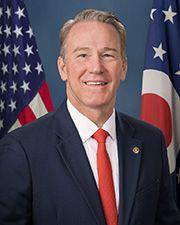
U.S. Senator for Ohio
Republican
Senate term end not loaded yet
Missed 0.0% of roll calls. Chamber median 2.1%.
The full voting recordCounts roll calls where most Democrats and most Republicans voted differently, leaving out procedural votes.
How we countFrom FEC filings, Voteview roll calls and Congress.gov.
Republican. In Congress since 2025, 1 term in total.
Following saves Husted to your list, which Chamber & Street keeps on its server, linked to a cookie on this browser and not to your name or email. Email alerts will come with constituent verification.
Bills and resolutions Husted signed on to as a cosponsor. An original cosponsor signed on the day the bill was introduced. Source: govinfo bill status files, last updated Nov 6, 2026.
Regulations from the Executive in Need of Scrutiny Act of 2025
Sponsor Rand Paul (R). Joined Mar 26, 2025. 23 cosponsors. S. 485 on Congress.gov
Introduced
Regulations from the Executive in Need of Scrutiny Act of 2025
This bill expands congressional review of federal agency rules and establishes additional procedures for major rules and agency guidance.
Specifically, the bill requires the enactment of a joint resolution for a major rule to take effect. A major rule is a rule that has resulted in or is likely to result in (1) an annual economic effect of at least $100 million; (2) a major increase in costs or prices for consumers, individual industries, government agencies, or geographic regions; or (3) significant adverse effects on competition, employment, investment, productivity, or innovation.
Additionally, major rules approved by a joint resolution under the bill expire, and are no longer effective, 10 years after the enactment of such joint resolution. Further, each agency must annually designate at least 10% of the agency’s major rules that are currently in effect for review and approval by a joint resolution of Congress. Such rules that are not approved shall no longer be in effect.
Under the bill, agency guidance documents are considered rules and certain significant guidance documents are considered major rules. Significant guidance documents include guidance anticipated to lead to an annual effect of at least $100 million, or adversely affect in a material way the economy, the environment, public health, or state or local government.
The Office of Management and Budget must establish an federal regulatory budget specifying the net amount of incremental regulatory costs allowed by the federal government for the next fiscal year.
Miracle on Ice Congressional Gold Medal Act
Sponsor Kevin Cramer (R). Joined Mar 13, 2025. 75 cosponsors. S. 94 on Congress.gov(opens in a new tab)
Introduced
Miracle on Ice Congressional Gold Medal Act
This bill provides for the award of Congressional Gold Medals to the members of the 1980 U.S. Olympic men's ice hockey team in recognition of the team's achievement at the 1980 Winter Olympic Games.
SAVE Act
Sponsor Mike Lee (R). Joined Mar 10, 2025. 49 cosponsors. S. 128 on Congress.gov(opens in a new tab)
Introduced
Safeguard American Voter Eligibility Act or the SAVE Act
This bill requires individuals to provide documentary proof of U.S. citizenship when registering to vote in federal elections.
Specifically, the bill prohibits states from accepting and processing an application to register to vote in a federal election unless the applicant presents documentary proof of U.S. citizenship. The bill specifies what documents are considered acceptable proof of U.S. citizenship, such as identification that complies with the REAL ID Act of 2005 that indicates U.S. citizenship.
Further, the bill (1) prohibits states from registering an individual to vote in a federal election unless, at the time the individual applies to register to vote, the individual provides documentary proof of U.S. citizenship; and (2) requires states to establish an alternative process under which an applicant may submit other evidence to demonstrate U.S. citizenship.
Each state must take affirmative steps on an ongoing basis to ensure that only U.S. citizens are registered to vote, which shall include establishing a program to identify individuals who are not U.S. citizens using information supplied by certain sources.
Additionally, states must remove noncitizens from their official lists of eligible voters.
The bill allows for a private right of action against an election official who registers an applicant to vote in a federal election who fails to present documentary proof of U.S. citizenship.
The bill establishes criminal penalties for certain offenses, including registering an applicant to vote in a federal election who fails to present documentary proof of U.S. citizenship.
Healthy SNAP Act of 2025
Sponsor Mike Lee (R). Joined Mar 3, 2025. 6 cosponsors. S. 561 on Congress.gov(opens in a new tab)
Introduced
Healthy SNAP Act of 2025
This bill amends the Supplemental Nutrition Assistance Program (SNAP) to redefine the foods eligible for purchase with SNAP benefits.
Under the bill, SNAP benefits may not be used for soft drinks, candy, ice cream, or prepared desserts, such as cakes, pies, cookies, or similar products.
Further, the Department of Agriculture (USDA) must designate by regulation foods and food products to include in the SNAP definition of the term food. USDA must consider food and products that (1) based on nutrition research, contain nutrients lacking in the diets of people in the United States; and (2) promote the health of the population served by SNAP, based on relevant nutrition science, public health concerns, and cultural eating patterns. USDA must also, to the maximum extent practicable, ensure that the fat, sugar, and salt content of the food and food products are appropriate. At least every five years, USDA must review and amend the list.
In addition, prepared meals purchased with SNAP benefits must have nutritional values consistent with standards developed by USDA for the list of food and food products.
A state agency may substitute different foods for food USDA designated under this bill, with USDA approval, so long as the foods are nutritionally equivalent; this is permitted to allow for different cultural eating patterns.
1071 Repeal to Protect Small Business Lending Act
Sponsor John Kennedy (R). Joined Mar 3, 2025. 15 cosponsors. S. 557 on Congress.gov(opens in a new tab)
Introduced
1071 Repeal to Protect Small Business Lending Act
This bill repeals the statute that requires financial institutions to collect data regarding applications for women-owned, minority-owned, or small business loans. Currently, financial institutions must collect and report to the Consumer Financial Protection Bureau information on (1) how many applications were received; (2) the disposition of each application; (3) the type of loan; (4) the amount applied for; (5) the amount approved; and (6) each applicant’s census tract, revenue, race, sex, and ethnicity.
No DeepSeek on Government Devices Act
Sponsor Jacky Rosen (D). Original cosponsor. 2 cosponsors. S. 765 on Congress.gov(opens in a new tab)
Introduced
Recover Fraudulent COVID Funds Act
Sponsor James Lankford (R). Joined Feb 27, 2025. 17 cosponsors. S. 121 on Congress.gov(opens in a new tab)
Introduced
Recover Fraudulent COVID Funds Act
This bill extends the statute of limitations (i.e., time limit for bringing a legal action) to 10 years for criminal and civil violations involving specified COVID-19 pandemic relief programs, such as violations involving fraudulent activity. Under current law, the statute of limitations is generally five years for violations concerning these pandemic-era programs. The Paycheck Protection Program and the Economic Injury Disaster Loan Program currently have 10-year statutes of limitations relating to program fraud.
National Plan for Epilepsy Act
Sponsor Eric Schmitt (R). Joined Feb 24, 2025. 27 cosponsors. S. 494 on Congress.gov(opens in a new tab)
Passed the Senate
National Plan for Epilepsy Act
This bill requires the Department of Health and Human Services (HHS) to establish a national plan, form an advisory council, and take other actions to address epilepsy. The requirements sunset on December 31, 2035.
Specifically, the bill requires HHS to carry out a National Plan for Epilepsy to prevent, diagnose, treat, and cure epilepsy. In carrying out the plan, HHS must implement activities such as coordinating research and services across all federal agencies and soliciting public comments.
Also, HHS must establish an Advisory Council on Epilepsy Research, Care, and Services. The advisory council must report to HHS and Congress every two years with an evaluation of federally funded efforts.
Additionally, HHS must annually report to Congress with recommended actions based on its assessments of the nation’s progress on epilepsy.
DLARA
Sponsor Ted Budd (R). Joined Feb 24, 2025. 9 cosponsors. S. 300 on Congress.gov(opens in a new tab)
Passed committee
Disaster Loan Accountability and Reform Act or the DLARA
This bill modifies the Small Business Administration (SBA) disaster loan program and requires external review of, and reporting on, the program.
First, the bill requires the SBA to report monthly on the operation of the disaster loan program. (Currently, the SBA must report only during the applicable period for a major disaster.) The report must estimate the date on which available funding for such loans will reach 10% of the most recent appropriation and the date on which the funds will be depleted.
Second, the President's annual budget must include separate statements regarding the appropriations request for SBA disaster loans and COVID-19 Economic Injury Disaster Loans (EIDL), including explanations for any difference between the amount requested and the 10-year average cost for such loans.
Third, for a period of four years, the SBA must notify Congress when the unobligated balance of amounts available for disaster loans is less than 10% of the 10-year average annual cost provided in the most recent Presidential budget. At such point, the SBA may limit disaster loans to collateralized amounts.
Finally, the bill requires additional oversight of the disaster loan program, including
• a Government Accountability Office report on the disbursement of disaster loans and the effect of specified SBA rules on home lending limits,
• an SBA Office of Inspector General review of recent funding shortfalls for disaster loans, and
• an SBA report on improvements for forecasting the cost of disaster loans.
Fair Access to Banking Act
Sponsor Kevin Cramer (R). Joined Feb 19, 2025. 47 cosponsors. S. 401 on Congress.gov(opens in a new tab)
Introduced
Fair Access to Banking Act
This bill places restrictions on certain banks, credit unions, and payment card networks if they refuse to do business with a person who complies with the law. Restrictions include prohibiting the use of electronic funds transfer systems and lending programs, termination of an institution's depository insurance, and specified civil penalties.
Banks and other specified financial institutions are allowed to deny financial services to a person only if the denial is justified by a documented failure of that person to meet quantitative, impartial, risk-based standards established in advance by the institution. This justification may not be based upon reputational risks to the institution.
The bill establishes the right for a person to bring a civil action for a violation of this bill.
GLRI Act of 2026
Sponsor Gary Peters (D). Original cosponsor. 12 cosponsors. S. 528 on Congress.gov(opens in a new tab)
Passed the Senate
Great Lakes Restoration Initiative Act of 2025 or the GLRI Act of 2025
This bill reauthorizes through FY2031 the Great Lakes Restoration Initiative, which carries out programs and projects to protect and restore the Great Lakes.
A resolution honoring the memory of the victims of the tragic mid-air collision between American Airlines Flight 5342 and United States Army Aviation Brigade Priority Air Transport 25 on January 29, 2025.
Sponsor Jerry Moran (R). Original cosponsor. 31 cosponsors. S.Res. 64 on Congress.gov(opens in a new tab)
Passed the Senate
This resolution commemorates the 67 lives lost in the collision of American Eagle Flight 5342 and the U.S. Army helicopter flying under the call sign PAT 25 near Ronald Reagan Washington National Airport on January 29, 2025.
The resolution also expresses gratitude to the law enforcement and emergency medical personnel who responded to the collision.
Constitutional Concealed Carry Reciprocity Act of 2025
Sponsor John Cornyn (R). Joined Feb 3, 2025. 49 cosponsors. S. 65 on Congress.gov(opens in a new tab)
Introduced
Constitutional Concealed Carry Reciprocity Act of 2025
This bill allows a qualified individual to carry a concealed handgun into or possess a concealed handgun in another state that allows its residents to carry concealed firearms.
A qualified individual must (1) be eligible to possess, transport, or receive a firearm under federal law; (2) carry a valid photo identification document; and (3) carry a valid state-issued concealed carry permit, or be eligible to carry a concealed firearm in his or her state of residence.
A resolution congratulating The Ohio State University football team for winning the 2025 College Football Playoff National Championship.
Sponsor Bernie Moreno (R). Original cosponsor. 1 cosponsor. S.Res. 48 on Congress.gov(opens in a new tab)
Passed the Senate
Educational Choice for Children Act of 2025
Sponsor Bill Cassidy (R). Original cosponsor. 33 cosponsors. S. 292 on Congress.gov(opens in a new tab)
Introduced
Main Street Tax Certainty Act
Sponsor Steve Daines (R). Joined Jan 27, 2025. 45 cosponsors. S. 213 on Congress.gov(opens in a new tab)
Introduced
Main Street Tax Certainty Act
This bill makes permanent the qualified business income (QBI) tax deduction.
Under current law, individuals, estates, and trusts may deduct the lower of (1) 20% of QBI from a qualified business, qualified real estate investment trust dividends, and qualified publicly traded partnership income; or (2) 20% of taxable income less net capital gain. (Some limitations apply.)
However, under current law, the QBI tax deduction expires after December 31, 2025.