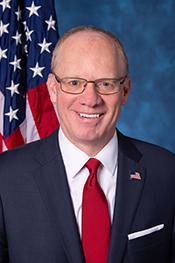
U.S. Representative for Tennessee’s 6th district
Republican
119th Congress, two-year term
Missed 5.8% of roll calls. Chamber median 1.9%.
The full voting recordCounts roll calls where most Democrats and most Republicans voted differently, leaving out procedural votes.
How we countFrom FEC filings, Voteview roll calls and Congress.gov.
Republican. In Congress since 2019, 4 terms in total.
Following saves Rose to your list, which Chamber & Street keeps on its server, linked to a cookie on this browser and not to your name or email. Email alerts will come with constituent verification.
Bills and resolutions Rose signed on to as a cosponsor. An original cosponsor signed on the day the bill was introduced. Source: govinfo bill status files, last updated Nov 6, 2026.
AM Radio for Every Vehicle Act of 2025
Sponsor Gus Bilirakis (R). Joined Apr 1, 2025. 317 cosponsors. H.R. 979 on Congress.gov
Passed the House
AM Radio for Every Vehicle Act of 2025
This bill requires the Department of Transportation (DOT) to issue a rule requiring AM radio capabilities to be standard in all new passenger vehicles. (AM radio is often used to deliver emergency alerts and news and entertainment programming; some newer vehicles do not include AM equipment.)
Specifically, this bill applies to passenger vehicles (1) manufactured in the United States for sale in the United States, imported into the United States, or shipped in interstate commerce; and (2) manufactured after the rule's effective date. The rule must require all such vehicles to have devices that can receive signals and play content transmitted by AM stations or digital audio AM stations installed as standard equipment and made easily accessible to drivers.
Prior to the rule's effective date, manufacturers that do not include devices that can access AM radio as standard equipment (1) must inform purchasers of this fact through clear and conspicuous labeling, and (2) may not charge an additional or separate fee for AM radio access.
DOT may assess civil penalties for any violation of the rule. The Department of Justice may also bring a civil action to enjoin a violation.
The rule, including DOT’s authority to enforce it, must expire 10 years after the bill’s enactment.
Further, the Government Accountability Office must study and report on the dissemination of emergency alerts to the public, including by conducting an assessment of AM radio relative to other Integrated Public Alert and Warning System communication technologies.
1071 Repeal to Protect Small Business Lending Act
Sponsor Roger Williams (R). Joined Apr 1, 2025. 52 cosponsors. H.R. 976 on Congress.gov(opens in a new tab)
Introduced
1071 Repeal to Protect Small Business Lending Act
This bill repeals the statute that requires financial institutions to collect data regarding applications for women-owned, minority-owned, or small business loans. Currently, financial institutions must collect and report to the Consumer Financial Protection Bureau information on (1) how many applications were received; (2) the disposition of each application; (3) the type of loan; (4) the amount applied for; (5) the amount approved; and (6) each applicant’s census tract, revenue, race, sex, and ethnicity.
STABLE Act of 2025
Sponsor Bryan Steil (R). Joined Apr 1, 2025. 17 cosponsors. H.R. 2392 on Congress.gov(opens in a new tab)
Introduced
Stablecoin Transparency and Accountability for a Better Ledger Economy Act of 2025 or the STABLE Act of 2025
This bill establishes a regulatory framework for payment stablecoins (digital assets which an issuer must redeem for a fixed value).
Under the bill, only permitted issuers may issue a payment stablecoin in the United States, subject to certain exceptions. Permitted issuers must be a subsidiary of an insured depository institution, a federal-qualified nonbank payment stablecoin issuer, or a state-qualified payment stablecoin issuer. Permitted issuers must be regulated by the appropriate federal or state regulator. A state regulator must certify that the state regulatory regime meets or exceeds federal requirements as established by the bill.
Permitted issuers must maintain reserves backing the stablecoin on a one-to-one basis using U.S. currency or other similarly liquid assets, as specified. Permitted issuers must also publicly disclose their redemption policy and publish monthly the details of their reserves.
The bill specifies requirements for (1) reusing reserves; (2) providing safekeeping services for stablecoins; and (3) supervisory, examination, and enforcement authority over federal-qualified issuers.
The bill places a two-year moratorium on new endogenously collateralized stablecoins (i.e., stablecoins that rely on the value of another digital asset created or maintained by the same originator to maintain the fixed price).
Under the bill, permitted payment stablecoins are not considered securities under securities law. However, permitted issuers are subject to the Bank Secrecy Act for anti-money laundering and related purposes.
Accreditation for College Excellence Act of 2025
Sponsor Burgess Owens (R). Original cosponsor. 12 cosponsors. H.R. 2516 on Congress.gov(opens in a new tab)
Introduced
SHORT Act
Sponsor Andrew Clyde (R). Original cosponsor. 76 cosponsors. H.R. 2395 on Congress.gov(opens in a new tab)
Introduced
Disapproving the action of the District of Columbia Council in approving the Insurance Regulation Amendment Act of 2024.
Sponsor Christopher Smith (R). Original cosponsor. 13 cosponsors. H.J.Res. 82 on Congress.gov(opens in a new tab)
Introduced
Aviation Workforce Development Act
Sponsor Mike Collins (R). Joined Mar 25, 2025. 27 cosponsors. H.R. 1818 on Congress.gov(opens in a new tab)
Introduced
Expressing support for the designation of March 18, 2025, as "National Agriculture Day" and celebrating the importance of agriculture as one of the most impactful industries in the United States.
Sponsor Mark Alford (R). Original cosponsor. 44 cosponsors. H.Res. 227 on Congress.gov(opens in a new tab)
Introduced
This resolution supports the designation of National Agriculture Day.
No 340B Savings for Transgender Care Act
Sponsor Dusty Johnson (R). Original cosponsor. 10 cosponsors. H.R. 2197 on Congress.gov(opens in a new tab)
Introduced
Military Spouse Hiring Act
Sponsor Donald Beyer (D). Joined Mar 18, 2025. 130 cosponsors. H.R. 2033 on Congress.gov(opens in a new tab)
Introduced
Military Spouse Hiring Act
This bill allows employers to claim a tax credit for a percentage of qualified wages paid to an employee who is a military spouse by expanding the federal Work Opportunity Tax Credit (WOTC) to add qualified military spouses as a targeted group. (The WOTC applies to employers who hire members of specific targeted groups, such as veterans, ex-felons, and long-term unemployment recipients, and is generally equal to a percentage of the wages paid to such individuals in the first year of employment, up to a maximum amount. Under current law, the wages must be paid before 2026.)
The bill defines a qualified military spouse as any individual who is certified by a state workforce agency as being (as of the hiring date) a spouse of a member of the Armed Forces.
A–PLUS Act
Sponsor Mark Alford (R). Joined Mar 18, 2025. 23 cosponsors. H.R. 1648 on Congress.gov(opens in a new tab)
Introduced
Amplifying Processing of Livestock in the United States Act or the A–PLUS Act
This bill directs the Department of Agriculture (USDA) to revise its regulations to allow certain packers to hold an ownership interest in, finance, or participate in the management or operation of a market agency selling livestock on a commission basis.
The bill applies to packers that have a cumulative slaughter capacity of (1) less than 2,000 animals per day or 700,000 animals per year with respect to cattle or sheep, and (2) less than 10,000 animals per day or 3 million animals per year with respect to hogs.
In addition, USDA must revise its regulations to include a disclosure requirement for a market agency that has an ownership interest in, finances, or participates in the management or operation of a packer. Specifically, the market agency must disclose the existence of such ownership interest, financial relationship, or participation.
Expressing support for the recognition of "Detransition Awareness Day".
Sponsor Mary Miller (R). Original cosponsor. 7 cosponsors. H.Res. 224 on Congress.gov(opens in a new tab)
Introduced
Miracle on Ice Congressional Gold Medal Act
Sponsor Pete Stauber (R). Joined Mar 11, 2025. 299 cosponsors. H.R. 452 on Congress.gov(opens in a new tab)
Became law
Miracle on Ice Congressional Gold Medal Act
This act provides for the award of Congressional Gold Medals to the members of the 1980 U.S. Olympic men's ice hockey team in recognition of the team's achievement at the 1980 Winter Olympic Games.
Recognizing the importance of stepped-up basis under section 1014 of the Internal Revenue Code of 1986 in preserving family-owned farms and small businesses.
Sponsor Tracey Mann (R). Original cosponsor. 29 cosponsors. H.Res. 206 on Congress.gov(opens in a new tab)
Introduced
This resolution supports preserving the stepped-up basis of certain inherited assets (such as land, equipment, or buildings), opposes any efforts to impose new taxes on family farms or small businesses, and recognizes the importance of generational transfers of farm and family-owned businesses.
As background, the basis for federal tax purposes of certain inherited assets is reset (or stepped up) from the original cost basis to the fair market value of the asset on the date of the previous owner’s death. Thus, any gain or loss on the subsequent sale of an inherited asset generally is calculated based on the asset’s stepped-up basis (and not the original cost basis).
Deporting Fraudsters Act of 2026
Sponsor David Taylor (R). Original cosponsor. 34 cosponsors. H.R. 1958 on Congress.gov(opens in a new tab)
Passed the House
Deporting Fraudsters Act of 2026
This bill makes certain acts related to public benefits fraud grounds for (1) barring a non-U.S. national (alien under federal law) from admission into the United States, or (2) deporting the individual. The bill also makes such an individual ineligible for immigration enforcement relief, including relief for an individual in danger of subjection to torture.
Specifically, this bill applies to individuals who have been convicted of, admit to having committed, or admit to acts which constitute certain offenses. Offenses covered by this bill include (1) fraud involving Supplemental Nutrition Assistance Program (SNAP) benefits, (2) fraud involving Social Security benefits, (3) fraud involving programs that receive federal funds, and (4) the production of fraudulent identification documents.
Deportation Compliance Act
Sponsor Chip Roy (R). Original cosponsor. 14 cosponsors. H.R. 1953 on Congress.gov(opens in a new tab)
Introduced
Anti-CBDC Surveillance State Act
Sponsor Tom Emmer (R). Original cosponsor. 135 cosponsors. H.R. 1919 on Congress.gov(opens in a new tab)
Passed the House
Anti-CBDC Surveillance State Act
This bill prohibits a Federal Reserve bank from offering products or services directly to an individual, maintaining an account on behalf of an individual, or issuing a central bank digital currency (i.e., a digital dollar). Further, the Board of Governors of the Federal Reserve System is prohibited from using a central bank digital currency to implement monetary policy or from testing, studying, creating, or implementing a central bank digital currency, with exceptions as provided by the bill.
Financial Reporting Threshold Modernization Act
Sponsor Barry Loudermilk (R). Joined Mar 6, 2025. 20 cosponsors. H.R. 1799 on Congress.gov(opens in a new tab)
Introduced
Financial Reporting Threshold Modernization Act
This bill increases the threshold amounts for certain reporting by financial institutions, adjusts these amounts periodically for inflation, and requires a review of specified financial forms and reporting requirements.
The bill increases the threshold dollar amounts above which financial institutions are required to file currency-transaction and suspicious-activity reports with the Financial Crimes Enforcement Network (FinCEN). The bill also increases the transaction threshold above which an entity must register with FinCEN as a money services business. Further, these amounts must be updated every five years to reflect the change in the consumer price index.
Treasury must review and report on the effectiveness and efficiency of the forms and requirements regarding domestic coin and currency transactions, foreign currency transactions, and anti-money laundering and combating the financing of terrorism measures, among other matters. Treasury must also make appropriate updates to such forms.
The bill also extends through 2031 the requirement that the director of FinCEN must be made annually available for testimony before congressional committees regarding certain FinCEN issues, including resources needed to implement beneficial ownership reporting requirements.
Censuring Representative Al Green of Texas.
Sponsor Dan Newhouse (R). Original cosponsor. 34 cosponsors. H.Res. 189 on Congress.gov(opens in a new tab)
Passed the House
This resolution censures Representative Al Green.
Agricultural Risk Review Act of 2025
Sponsor Frank Lucas (R). Joined Mar 5, 2025. 20 cosponsors. H.R. 1713 on Congress.gov(opens in a new tab)
Passed the House
Agricultural Risk Review Act of 2025
This bill makes changes to the Committee on Foreign Investment in the United States (CFIUS), including by requiring CFIUS to determine whether a national security review is necessary for reportable agricultural land transactions that are referred by the Department of Agriculture (USDA). (CFIUS oversees the national security risks of certain foreign investment in the United States. CFIUS has the authority to review covered transactions, which include mergers, acquisitions, and takeovers that could result in foreign control of a U.S. business; certain investments in businesses involved in critical technologies, critical infrastructure, or sensitive personal data; and certain real estate transactions.)
Specifically, the bill directs CFIUS to, after receiving notification from USDA, determine (1) whether a reportable agricultural land transaction is a covered transaction, and (2) whether CFIUS should initiate a national security review or take another action with respect to the transaction.
Reportable agricultural land transaction means a transaction (1) that USDA has reason to believe is a covered transaction, based on information from or in cooperation with the intelligence community; (2) that involves the acquisition of an interest in agricultural land by a foreign person of China, North Korea, Russia, or Iran; and (3) with respect to which a foreign person is required to submit a report to USDA regarding their agricultural land transactions.
The bill also expands CFIUS to include the Secretary of Agriculture for covered transactions that involve agricultural land, agricultural biotechnology, or the agriculture industry (e.g., agricultural transportation, storage, and processing).
Expressing the sense of Congress that tax-exempt fraternal benefit societies have historically provided and continue to provide critical benefits to the people and communities of the United States.
Sponsor Darin LaHood (R). Joined Mar 4, 2025. 122 cosponsors. H.Con.Res. 4 on Congress.gov(opens in a new tab)
Introduced
This concurrent resolution expresses the sense of Congress that tax-exempt fraternal benefit societies serve as a private economic and social support system, providing benefits to their members is necessary to support the charitable and fraternal activities of the volunteer chapters, and their work should continue to be promoted.
SAVE Act
Sponsor Chip Roy (R). Joined Mar 3, 2025. 110 cosponsors. H.R. 22 on Congress.gov(opens in a new tab)
Passed the House
Safeguard American Voter Eligibility Act or the SAVE Act
This bill requires individuals to provide documentary proof of U.S. citizenship when registering to vote in federal elections.
Specifically, the bill prohibits states from accepting and processing an application to register to vote in a federal election unless the applicant presents documentary proof of U.S. citizenship. The bill specifies what documents are considered acceptable proof of U.S. citizenship, such as identification that complies with the REAL ID Act of 2005 that indicates U.S. citizenship.
Further, the bill (1) prohibits states from registering an individual to vote in a federal election unless, at the time the individual applies to register to vote, the individual provides documentary proof of U.S. citizenship; and (2) requires states to establish an alternative process under which an applicant may submit other evidence to demonstrate U.S. citizenship.
Each state must take affirmative steps on an ongoing basis to ensure that only U.S. citizens are registered to vote, which shall include establishing a program to identify individuals who are not U.S. citizens using information supplied by certain sources.
Additionally, states must remove noncitizens from their official lists of eligible voters.
The bill allows for a private right of action against an election official who registers an applicant to vote in a federal election who fails to present documentary proof of U.S. citizenship.
The bill establishes criminal penalties for certain offenses, including registering an applicant to vote in a federal election who fails to present documentary proof of U.S. citizenship.
No Tax Dollars for the United Nation’s Immigration Invasion Act
Sponsor Lance Gooden (R). Original cosponsor. 18 cosponsors. H.R. 1792 on Congress.gov(opens in a new tab)
Introduced
Federal Firearms Licensee Protection Act of 2025
Sponsor John Rutherford (R). Original cosponsor. 145 cosponsors. H.R. 1773 on Congress.gov(opens in a new tab)
Introduced
Federal Firearms Licensee Protection Act of 2025
This bill modifies criminal penalties for an offense involving the theft of a firearm from a licensed importer, manufacturer, or dealer, or from their business premises.
Specifically, the bill does the following:
• increases from 10 to 20 years the maximum prison term, and
• creates a 3- or 5-year mandatory minimum prison term for an offense that occurs during the commission of a burglary or robbery.
An attempt to commit an offense is subject to the same penalties as a substantive offense.
Protecting Horses from Soring Act of 2025
Sponsor Scott DesJarlais (R). Original cosponsor. 1 cosponsor. H.R. 1675 on Congress.gov(opens in a new tab)
Introduced
Protecting Horses from Soring Act of 2025
This bill establishes requirements to prevent the practice of soring horses at horse events (i.e., shows, exhibitions, sales, or auctions), including by requiring soring inspections to be overseen by a new organization that is formally affiliated with the horse event industry. Generally, the soring of horses includes certain actions taken on horses' limbs to produce higher gaits that may cause pain, distress, inflammation, or lameness.
The bill directs the Animal and Plant Health Inspection Service (APHIS) of the Department of Agriculture to establish the organization. The organization must be governed by a board that is appointed by the walking horse industry. The organization must appoint inspectors for each horse event and license, train, and oversee inspectors to detect soring at horse events.
The bill also directs the management of horse events to disqualify horses for specified durations if the horses are determined to be sore by objective inspections conducted by veterinarians or veterinarian technicians using certain science-based protocols.
Currently, inspectors must be designated by the management of horse events and licensed by APHIS-certified horse industry organizations. However, an APHIS rule issued in 2024 established several requirements to increase efforts to protect horses from soring practices, including requiring inspectors to be designated by APHIS. In 2025, a court upheld the parts of the rule requiring APHIS-designated inspectors but vacated other parts of the rule relating to other requirements. APHIS subsequently delayed the effective date of the rule to December 31, 2026.