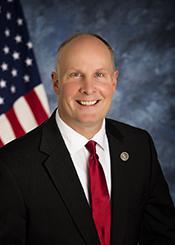
U.S. Representative for Michigan’s 2nd district
Republican
119th Congress, two-year term
Missed 0.3% of roll calls. Chamber median 1.9%.
The full voting recordCounts roll calls where most Democrats and most Republicans voted differently, leaving out procedural votes.
How we countFrom FEC filings, Voteview roll calls and Congress.gov.
Republican. In Congress since 2015, 6 terms in total.
Following saves Moolenaar to your list, which Chamber & Street keeps on its server, linked to a cookie on this browser and not to your name or email. Email alerts will come with constituent verification.
Bills and resolutions Moolenaar signed on to as a cosponsor. An original cosponsor signed on the day the bill was introduced. Source: govinfo bill status files, last updated Nov 6, 2026.
Foreign Agents Transparency Act
Sponsor Ben Cline (R). Original cosponsor. 6 cosponsors. H.R. 3229 on Congress.gov
Introduced
SOS Act of 2025
Joined May 7, 2025. 9 cosponsors. H.R. 2125 on Congress.gov(opens in a new tab)
Progress not on file
Combating Organized Retail Crime Act of 2025
Sponsor David Joyce (R). Joined May 5, 2025. 206 cosponsors. H.R. 2853 on Congress.gov(opens in a new tab)
Passed the House
Combating Organized Retail Crime Act of 2025
This bill expands federal enforcement of criminal offenses related to organized retail and supply chain crime. The term organized retail and supply chain crime includes criminal offenses involving the interstate transportation of stolen property, the sale or receipt of stolen goods, or theft from an interstate or foreign shipment that is committed by, in coordination with, or at the instruction of an organization.
First, with respect to criminal offenses involving the interstate transportation of stolen property or the sale or receipt of stolen goods, the bill broadens the scope of conduct that qualifies as offenses by allowing prosecutions to be based on the aggregate value of stolen items over a 12-month period. Additionally, the bill makes the offenses predicate offenses (i.e., underlying offenses) for prosecutions under the federal money laundering statute and authorizes the criminal forfeiture of any property obtained from the proceeds of an offense.
Second, with respect to criminal offenses involving theft from an interstate or foreign shipment, the bill also makes an offense an underlying offense for prosecution under the federal money laundering statute and authorizes the criminal forfeiture of any associated property.
Third, the bill expands the federal money laundering statute to include offenses involving general-use prepaid cards, gift certificates, or store gift cards.
Finally, the bill temporarily establishes a center within the Department of Homeland Security to coordinate federal law enforcement activities related to organized retail and supply chain crime.
REDI Act
Sponsor Brian Babin (R). Joined May 5, 2025. 133 cosponsors. H.R. 2028 on Congress.gov(opens in a new tab)
Introduced
Resident Education Deferred Interest Act or the REDI Act
This bill allows borrowers in medical or dental internships or residency programs to defer student loan payments until the completion of their programs.
ReConnecting Rural America Act of 2025
Sponsor Zachary Nunn (R). Original cosponsor. 19 cosponsors. H.R. 3119 on Congress.gov(opens in a new tab)
Introduced
NFA SBS Act
Sponsor Sheri Biggs (R). Original cosponsor. 15 cosponsors. H.R. 3034 on Congress.gov(opens in a new tab)
Introduced
Supporting the Second Amendment's guarantee that the right of the people to keep and bear arms shall not be infringed, and commending President Trump and his administration as they work to protect Second Amendment freedoms by reviewing and eliminating any of the Biden administration's infringements on American's constitutional freedoms.
Sponsor Roger Williams (R). Joined Apr 21, 2025. 21 cosponsors. H.Res. 339 on Congress.gov(opens in a new tab)
Introduced
Finding ORE Act
Sponsor Robert Wittman (R). Original cosponsor. 12 cosponsors. H.R. 2969 on Congress.gov(opens in a new tab)
Introduced
PROTECT the Second Amendment Act
Sponsor Randy Feenstra (R). Original cosponsor. 15 cosponsors. H.R. 2930 on Congress.gov(opens in a new tab)
Introduced
National Plan for Epilepsy Act
Sponsor Jim Costa (D). Joined Apr 17, 2025. 101 cosponsors. H.R. 1189 on Congress.gov(opens in a new tab)
Introduced
National Plan for Epilepsy Act
This bill requires the Department of Health and Human Services (HHS) to establish a national plan, form an advisory council, and take other actions to address epilepsy. The requirements sunset on December 31, 2035.
Specifically, the bill requires HHS to carry out a National Plan for Epilepsy to prevent, diagnose, treat, and cure epilepsy. In carrying out the plan, HHS must implement activities such as coordinating research and services across all federal agencies and soliciting public comments.
Also, HHS must establish an Advisory Council on Epilepsy Research, Care, and Services. The advisory council must report to HHS and Congress every two years with an evaluation of federally funded efforts.
Additionally, HHS must annually report to Congress with recommended actions based on its assessments of the nation’s progress on epilepsy.
Veterans for Mustangs Act
Sponsor Nancy Mace (R). Original cosponsor. 25 cosponsors. H.R. 2864 on Congress.gov(opens in a new tab)
Introduced
Homebuyers Privacy Protection Act
Sponsor John Rose (R). Original cosponsor. 89 cosponsors. H.R. 2808 on Congress.gov(opens in a new tab)
Became law
Homebuyers Privacy Protection Act
This act limits the circumstances in which credit reporting agencies may provide consumer credit reports to third parties in connection with residential mortgage transactions.
Specifically, the act prohibits a credit reporting agency from providing a consumer's credit report to a third party in connection with a residential mortgage transaction unless the transaction consists of a firm offer of credit or insurance and (1) the third party provides documentation certifying that it has the consumer's consent; or (2) the third party has originated a mortgage on behalf of the consumer, is a current mortgage loan servicer to the consumer, or has a current specified banking relationship with the consumer.
These provisions take effect 180 days after enactment.
The Government Accountability Office must study and report on the value of trigger leads (a marketing tactic facilitated by credit reporting agencies that may result in unsolicited credit offers to a consumer after a consumer applies for a separate type of credit) received by text message.
Affordable Housing Credit Improvement Act of 2025
Sponsor Darin LaHood (R). Original cosponsor. 168 cosponsors. H.R. 2725 on Congress.gov(opens in a new tab)
Introduced
Roberto Clemente Commemorative Coin Act
Sponsor Adriano Espaillat (D). Joined Apr 8, 2025. 221 cosponsors. H.R. 1787 on Congress.gov(opens in a new tab)
Introduced
Roberto Clemente Commemorative Coin Act
This bill directs the Department of the Treasury to mint and issue coins in recognition of the life of Roberto Clemente, baseball player and human rights activist. All sales of coins issued under this bill must include a surcharge to be paid to the Roberto Clemente Foundation.
Veterans National Traumatic Brain Injury Treatment Act
Sponsor Gregory Murphy (R). Joined Apr 8, 2025. 15 cosponsors. H.R. 1336 on Congress.gov(opens in a new tab)
Introduced
Veterans National Traumatic Brain Injury Treatment Act
This bill requires the Department of Veterans Affairs to implement a five-year pilot program to furnish, under the Veterans Community Care Program, hyperbaric oxygen therapy to veterans with traumatic brain injuries or post-traumatic stress disorder.
Improve Employer-Directed Skills Act
Sponsor Mariannette Miller-Meeks (R). Original cosponsor. 1 cosponsor. H.R. 2690 on Congress.gov(opens in a new tab)
Introduced
Remote Access Security Act
Sponsor Michael Lawler (R). Original cosponsor. 17 cosponsors. H.R. 2683 on Congress.gov(opens in a new tab)
Passed the House
Remote Access Security Act
This bill broadens the scope of the U.S. export control system to include remote access of items. Remote access means (1) access to an item subject to the jurisdiction of the United States by a foreign person through a network connection, including the internet or a cloud computing service, from a location other than where the item is physically located; or (2) any other form of access specified in regulations promulgated by the Department of Commerce.
The Export Control Reform Act of 2018 (ECRA), which is implemented through the Export Administration Regulations, provides a permanent statutory basis for controlling the export of dual-use goods (e.g., items with both civilian and military uses) and certain military parts and components. This bill applies export controls under ECRA to remote access of items, thereby allowing Commerce's Bureau of Industry and Security to issue licenses and impose penalties related to remote access of controlled items.
Strengthening Cyber Resilience Against State-Sponsored Threats Act
Sponsor Andrew Ogles (R). Original cosponsor. 4 cosponsors. H.R. 2659 on Congress.gov(opens in a new tab)
Passed the House
Strengthening Cyber Resilience Against State-Sponsored Threats Act
The bill creates a joint interagency task force to facilitate agency collaboration on efforts to respond to Chinese state-sponsored cyber actors, including Volt Typhoon.
The task force must be established and led by the Cybersecurity and Infrastructure Security Agency (CISA), an agency within the Department of Homeland Security (DHS). The task force must facilitate collaboration and coordination among the Sector Risk Management Agencies (SRMAs) specified in the President's National Security Memorandum- 22 (e.g., the Department of Defense, the Department of Energy, and the Department of Agriculture) to detect, analyze, and respond to Chinese state-sponsored cyber actors by ensuring that such agencies’ actions are aligned and mutually reinforcing.
The bill directs DHS, CISA, the Department of Justice, the Federal Bureau of Investigation, and specified SRMAs to provide the task force with analysis, inspections, audits, and other relevant information necessary for the task force to carry out its responsibilities. The production and use of information must comply with all applicable statutes, regulations, and executive orders, and task force members must have appropriate security clearances to access classified information.
The task force must provide annual reports and briefings to Congress detailing its assessment of cyber threats and recommendations to improve the detection and mitigation of the cybersecurity threat posed by Chinese state-sponsored cyber actors.
The first report must be provided no later than 540 days after the establishment of the task force, and additional reports must be provided annually thereafter for six years.
ACRE Act of 2025
Sponsor Randy Feenstra (R). Joined Apr 7, 2025. 63 cosponsors. H.R. 1822 on Congress.gov(opens in a new tab)
Introduced
Manifest Modernization Act of 2025
Sponsor David Schweikert (R). Original cosponsor. 8 cosponsors. H.R. 2653 on Congress.gov(opens in a new tab)
Introduced
Chiropractic Medicare Coverage Modernization Act of 2025
Sponsor W. Steube (R). Joined Apr 1, 2025. 174 cosponsors. H.R. 539 on Congress.gov(opens in a new tab)
Introduced
Chiropractic Medicare Coverage Modernization Act of 2025
This bill expands Medicare coverage of chiropractic services to include all services provided by chiropractors, rather than only subluxation corrections through manual manipulation of the spine.
Maximum Pressure Act
Sponsor Zachary Nunn (R). Original cosponsor. 55 cosponsors. H.R. 2570 on Congress.gov(opens in a new tab)
Introduced
Taiwan Allies Fund Act
Sponsor Raja Krishnamoorthi (D). Original cosponsor. 32 cosponsors. H.R. 2559 on Congress.gov(opens in a new tab)
Introduced
RIFLE Act
Sponsor Ashley Hinson (R). Original cosponsor. 33 cosponsors. H.R. 2552 on Congress.gov(opens in a new tab)
Introduced
Mikaela Naylon Give Kids a Chance Act
Sponsor Michael McCaul (R). Joined Apr 1, 2025. 313 cosponsors. H.R. 1262 on Congress.gov(opens in a new tab)
Passed the House
Give Kids a Chance Act of 2025
This bill expands the Food and Drug Administration’s (FDA’s) authority with respect to research on rare pediatric diseases, including by permitting the FDA to take enforcement action against drug sponsors that fail to satisfy pediatric study requirements and by reauthorizing programs that support pediatric research.
Specifically, the bill
• modifies requirements relating to molecularly targeted pediatric cancer investigations to permit research on new drugs in combination with active ingredients that have already been approved, provided certain conditions are met;
• permits the FDA to take enforcement action against drug sponsors that fail to comply with pediatric study requirements, if such sponsors demonstrated a lack of due diligence in satisfying the requirement;
• renews the FDA’s authority to award priority review vouchers to sponsors of new products intended to treat rare pediatric diseases through September 30, 2029; and
• reauthorizes through FY2027 certain funding for the National Institutes of Health to support priority pediatric research.
The bill also provides statutory authority for the FDA’s interpretation of the orphan drug exclusivity period. The bill specifies, consistent with FDA regulations, that the seven-year market exclusivity period for drugs for rare diseases or conditions (i.e., orphan drugs) prohibits the approval of the same drug for the same approved use or indication with respect to the disease or condition. (In Catalyst Pharmaceuticals, Inc. v. Becerra, a court rejected the FDA’s interpretation and held that orphan drug exclusivity extends to all uses or indications for the disease or condition.)