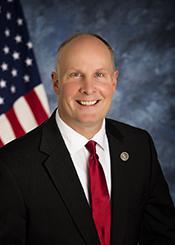
U.S. Representative for Michigan’s 2nd district
Republican
119th Congress, two-year term
Missed 0.3% of roll calls. Chamber median 1.9%.
The full voting recordCounts roll calls where most Democrats and most Republicans voted differently, leaving out procedural votes.
How we countFrom FEC filings, Voteview roll calls and Congress.gov.
Republican. In Congress since 2015, 6 terms in total.
Following saves Moolenaar to your list, which Chamber & Street keeps on its server, linked to a cookie on this browser and not to your name or email. Email alerts will come with constituent verification.
Bills and resolutions Moolenaar signed on to as a cosponsor. An original cosponsor signed on the day the bill was introduced. Source: govinfo bill status files, last updated Nov 6, 2026.
No Abortion Coverage for Medicaid Act
Sponsor Josh Brecheen (R). Original cosponsor. 20 cosponsors. H.R. 719 on Congress.gov
Introduced
No Abortion Coverage for Medicaid Act
This bill prohibits the Centers for Medicare & Medicaid Services from approving experimental, pilot, or demonstration projects under Medicaid (also known as Section 1115 Demonstrations) if the project provides federal financial assistance for abortions or for health benefits that include abortions, including expenses for related travel or lodging.
The bill's restrictions do not apply to abortions in the cases of rape or incest; treatments to address life-threatening physical disorders, injuries, or illnesses; or treatments for miscarriages or ectopic pregnancies.
Main Street Tax Certainty Act
Sponsor Lloyd Smucker (R). Original cosponsor. 192 cosponsors. H.R. 703 on Congress.gov(opens in a new tab)
Introduced
Main Street Tax Certainty Act
This bill makes permanent the qualified business income (QBI) tax deduction.
Under current law, individuals, estates, and trusts may deduct the lower of (1) 20% of QBI from a qualified business, qualified real estate investment trust dividends, and qualified publicly traded partnership income; or (2) 20% of taxable income less net capital gain. (Some limitations apply.)
However, under current law, the QBI tax deduction expires after December 31, 2025.
China Exchange Rate Transparency Act of 2025
Sponsor Daniel Meuser (R). Original cosponsor. 10 cosponsors. H.R. 692 on Congress.gov(opens in a new tab)
Passed the House
China Exchange Rate Transparency Act of 2023
This bill requires the U.S. Executive Director at the International Monetary Fund (IMF) to use the voice and vote of the United States to advocate for increased exchange rate transparency from China.
Some areas of focus for this advocacy are (1) Chinese exchange rate arrangements, including any indirect foreign exchange market intervention through Chinese financial institutions or state-owned enterprises; (2) enhanced multilateral and bilateral surveillance by the IMF; and (3) stronger consideration of China's performance as a responsible stakeholder in the international monetary system when evaluating quota and voting shares at the IMF.
The requirements of the bill expire seven years and 30 days after the date of the bill's enactment or earlier if China meets certain conditions regarding its exchange rate policies.
SAVE Moms and Babies Act of 2025
Sponsor Robert Latta (R). Original cosponsor. 85 cosponsors. H.R. 685 on Congress.gov(opens in a new tab)
Introduced
Support And Value Expectant Moms and Babies Act of 2025 or the SAVE Moms and Babies Act of 2025
This bill prohibits the Food and Drug Administration (FDA) from approving any new drug (either as a brand-name drug or a generic) intended to terminate a pregnancy and imposes additional restrictions on such drugs that are already approved.
Under the bill, an already-approved drug intended to terminate a pregnancy may be dispensed to a patient only with a prescription. Furthermore, the FDA may not approve any labeling change that would authorize (1) using the drug after 70 days of gestation, or (2) dispensing the drug by any means other than in-person administration by the prescribing health care practitioner.
The FDA must also impose additional restrictions on such already-approved drugs, including by (1) requiring the prescribing health care practitioner to receive a special certification, (2) prohibiting the practitioner from also acting as the dispensing pharmacist, and (3) requiring the practitioner to have the ability to provide surgical intervention to the patient.
The bill also rescinds any investigational use exemption already granted to such a drug if the bill would have prohibited the FDA from granting the exemption. (Currently, the FDA may grant an exemption to certain market approval requirements if a drug is intended solely for use in safety and effectiveness investigations.)
Heartbeat Protection Act of 2025
Sponsor Mike Kelly (R). Original cosponsor. 42 cosponsors. H.R. 682 on Congress.gov(opens in a new tab)
Introduced
Heartbeat Protection Act of 2025
This bill makes it a crime for a physician to knowingly perform an abortion (1) without determining whether the unborn child has a detectable heartbeat, (2) without informing the mother of the results, or (3) after determining that an unborn child has a detectable heartbeat.
A physician who performs a prohibited abortion is subject to criminal penalties—a fine, up to five years in prison, or both.
The bill provides an exception for an abortion that is necessary to save the life of a mother whose life is endangered by a physical (but not psychological or emotional) disorder, illness, or condition. It also provides exceptions for certain pregnancies that are the result of rape or incest. A physician who performs or attempts to perform an abortion under an exception must comply with specified requirements.
A woman who undergoes a prohibited abortion may not be prosecuted for violating or conspiring to violate the provisions of this bill.
To nullify the modifications made by the Food and Drug Administration in January 2023 to the risk evaluation and mitigation strategy for the abortion pill mifepristone, and for other purposes.
Sponsor Diana Harshbarger (R). Original cosponsor. 18 cosponsors. H.R. 679 on Congress.gov(opens in a new tab)
Introduced
This bill nullifies certain changes made by the Food and Drug Administration (FDA) to dispensing requirements for mifepristone. (Mifepristone is a drug that is approved to end pregnancies through 10 weeks gestation when used in conjunction with the drug misoprostol. The procedure is often referred to as medication abortion or the abortion pill.)
The FDA regulates the use of mifepristone through the Mifepristone Risk Evaluation and Mitigation Strategy (REMS) program. The program requires health care providers to comply with certain requirements in order to prescribe or dispense mifepristone to end a pregnancy; the program previously included an in-person dispensing requirement that required mifepristone to be directly dispensed to patients in clinics, medical offices, or hospitals. During the COVID-19 public health emergency, the FDA temporarily stopped enforcing the in-person dispensing requirement, which allowed mail-order pharmacies to fill and dispense mifepristone prescriptions.
In January 2023, the FDA modified program requirements so as to (1) remove the in-person dispensing requirement, and (2) require pharmacies to be certified in the program in order to dispense mifepristone. The modifications allow retail pharmacies, after receiving certification, to dispense mifepristone pursuant to prescriptions that are written by program-certified prescribers.
The bill nullifies the January 2023 changes and prohibits any similar changes in the future.
Whole Milk for Healthy Kids Act of 2025
Sponsor Glenn Thompson (R). Original cosponsor. 118 cosponsors. H.R. 649 on Congress.gov(opens in a new tab)
Introduced
Whole Milk for Healthy Kids Act of 2025
This bill revises requirements for milk provided by the National School Lunch Program of the Department of Agriculture (USDA).
Currently, schools participating in the program must provide milk that is consistent with the most recent Dietary Guidelines for Americans; USDA regulations require milk to be fat-free or low-fat and allow milk to be flavored or unflavored. The bill modifies these restrictions and instead permits schools to offer students whole, reduced-fat, low-fat, and fat-free flavored and unflavored milk. The milk that is offered may be organic or nonorganic. Further, USDA may not prohibit a participating school from offering students any of these milk choices.
Further, schools currently must provide a substitute for fluid milk, on receipt of a written statement from a licensed physician, for students whose disability restricts their diet. Under the bill, a parent or legal guardian may also provide the written statement.
In addition, schools currently participating in the program must provide meals that meet certain nutrition requirements; USDA regulations require that the average saturated fat content of the meals offered must be less than 10% of the total calories. Under the bill, fluid milk is excluded from the saturated fat content calculation; milk fat included in any fluid milk provided by the program must not be considered saturated fat for the purposes of measuring compliance with USDA regulations.
Finally, the bill prohibits schools participating in the program from purchasing or offering milk produced by Chinese state-owned enterprises.
No Taxpayer Funding for Abortion and Abortion Insurance Full Disclosure Act of 2025
Sponsor Christopher Smith (R). Original cosponsor. 133 cosponsors. H.R. 7 on Congress.gov(opens in a new tab)
Introduced
No Taxpayer Funding for Abortion and Abortion Insurance Full Disclosure Act of 2025
This bill modifies provisions relating to federal funding for, and health insurance coverage of, abortions.
Specifically, the bill prohibits the use of federal funds for abortions or for health coverage that includes abortions. Such restrictions extend to the use of funds in the budget of the District of Columbia. Additionally, abortions may not be provided in a federal health care facility or by a federal employee.
Historically, language has been included in annual appropriations bills for the Department of Health and Human Services (HHS) that prohibits the use of federal funds for abortions—such language is commonly referred to as the Hyde Amendment. Similar language is also frequently included in appropriations bills for other federal agencies and the District of Columbia. The bill makes these restrictions permanent and extends the restrictions to all federal funds (rather than specific agencies).
The bill's restrictions regarding the use of federal funds do not apply in cases of rape, incest, or where a physical disorder, injury, or illness endangers a woman's life unless an abortion is performed. The Hyde Amendment provides the same exceptions.
The bill also prohibits qualified health plans from including coverage for abortions. Currently, qualified health plans may cover abortion, but the portion of the premium attributable to abortion coverage is not eligible for subsidies.
Protecting Life on College Campus Act of 2025
Sponsor Chip Roy (R). Original cosponsor. 31 cosponsors. H.R. 632 on Congress.gov(opens in a new tab)
Introduced
Protecting Life on College Campus Act of 2025
This bill prohibits the award of federal funds to an institution of higher education (IHE) that hosts or is affiliated with a school-based service site that provides abortion drugs or abortions to its students or to employees of the IHE or the site. An IHE that hosts or is affiliated with a site must, in order to remain eligible for federal funds, annually certify that the site does not provide abortion drugs or abortions to students or employees.
Protect Funding for Women’s Health Care Act
Sponsor Robert Aderholt (R). Original cosponsor. 25 cosponsors. H.R. 599 on Congress.gov(opens in a new tab)
Introduced
Protect Funding for Women's Health Care Act
This bill prohibits federal funding of Planned Parenthood Federation of America or its affiliates, subsidiaries, successors, or clinics.
To amend the Internal Revenue Code of 1986 to modify the railroad track maintenance credit.
Sponsor Mike Kelly (R). Joined Jan 22, 2025. 183 cosponsors. H.R. 516 on Congress.gov(opens in a new tab)
Introduced
This bill increases the annual limit on the tax credit for qualified railroad track maintenance expenses (also referred to as the short line railroad tax credit) and expands eligibility for claiming the credit.
Under current law, the tax credit is limited each tax year to $3,500 multiplied by the sum of the number of miles of railroad track owned or leased by the taxpayer (miles owned or leased) and the number of railroad track miles assigned to the taxpayer by a Class II or III railroad (miles assigned). This bill increases the annual limit to $6,100 multiplied by the sum of miles owned or leased and miles assigned. The $6,100 amount used in the calculation of the tax credit limit is adjusted for inflation for tax years beginning after 2025.
The bill also expands eligibility for the tax credit to include gross expenses for maintaining railroad tracks owned or leased as of January 1, 2024. Under current law, the tax credit is limited to gross expenses for maintaining railroad tracks owned or leased as of January 1, 2015.
Proposing an amendment to the Constitution of the United States to require that the Supreme Court of the United States be composed of nine justices.
Sponsor Dusty Johnson (R). Original cosponsor. 108 cosponsors. H.J.Res. 28 on Congress.gov(opens in a new tab)
Introduced
This joint resolution proposes a constitutional amendment requiring the Supreme Court to consist of nine Justices.
Sarah’s Law
Sponsor Randy Feenstra (R). Original cosponsor. 53 cosponsors. H.R. 578 on Congress.gov(opens in a new tab)
Introduced
Sarah's Law
This bill requires the Department of Justice or the Department of Homeland Security (DHS) to detain a non-U.S. national (alien under federal law) who is unlawfully present in the United States and has been charged with, arrested for, convicted of, or admits to having committed acts that constitute the essential elements of a crime that resulted in the death or serious bodily injury of another person.
DHS must obtain information about the identity of any victims of the crimes for which the detained individual was charged or convicted. DHS shall provide the victim, or a relative or guardian of a deceased victim, with information about the detained individual, including name, date of birth, nationality, immigration status, criminal history, and a description of any related removal efforts.
No Retaining Every Gun In a System That Restricts Your Rights Act
Sponsor Michael Cloud (R). Original cosponsor. 74 cosponsors. H.R. 563 on Congress.gov(opens in a new tab)
Introduced
No Retaining Every Gun In a System That Restricts Your Rights Act
This bill modifies the retention requirements for firearm transaction records of federal firearms licensees (FFLs) that go out of business.
Current law generally requires FFLs that go out of business to deliver their firearm transaction records to the Bureau of Alcohol, Tobacco, Firearms and Explosives (ATF).
This bill removes the requirement for FFLs that go out of business to deliver their firearm transaction records to the ATF. Further, the bill requires the ATF to destroy all out-of-business records it has collected from FFLs.
Protecting Access for Hunters and Anglers Act
Sponsor Robert Wittman (R). Original cosponsor. 83 cosponsors. H.R. 556 on Congress.gov(opens in a new tab)
Passed the House
Protecting Access for Hunters and Anglers Act of 2025
This bill bars the Fish and Wildlife Service (FWS), the Bureau of Land Management (BLM), and the Forest Service from prohibiting or regulating the use of lead ammunition or tackle on federal land or water. The bill makes exceptions for specified existing regulations and where the FWS, the BLM, or the Forest Service determines that a decline in wildlife population at the specific unit of federal land or water is primarily caused by the use of lead in ammunition or tackle, based on the field data from such unit, and the state approves the regulations.
Protecting Infrastructure Investments for Rural America Act
Sponsor Brad Finstad (R). Original cosponsor. 8 cosponsors. H.R. 502 on Congress.gov(opens in a new tab)
Introduced
Protecting Infrastructure Investments for Rural America Act
This bill modifies the definition of rural area that is used for the Rural Surface Transportation Grant Program and adds provisions for small communities.
As background, the grant program supports projects that improve and expand the surface transportation infrastructure in rural areas. Eligible applicants for the grant program include states, regional transportation planning organizations, local governments, and tribal governments.
For purposes of the program, the bill defines rural area as an area outside an urbanized area that has a population of 30,000 or less. Current law requires a rural area to be outside of an urbanized area with a population of over 200,000.
The bill includes provisions for small communities (i.e., an area outside an urbanized area and that has a population of 5,000 or less). The bill sets the maximum federal cost-share at 90% for project grants carried out in a small community. The Department of Transportation (DOT) must use at least 5% of the program's annual funds to provide grants for projects in small communities. The bill also removes the prohibition against DOT using more than 10% of program funds for grants that are under $25 million.
Further, program grants may be used for highway, road, bridge, or tunnel projects that would benefit the economic development or quality of life for citizens of the local community.
The bill also specifies that the program's goals include the generation of economic growth and development in rural areas.
Miracle on Ice Congressional Gold Medal Act
Sponsor Pete Stauber (R). Joined Jan 16, 2025. 299 cosponsors. H.R. 452 on Congress.gov(opens in a new tab)
Became law
Miracle on Ice Congressional Gold Medal Act
This act provides for the award of Congressional Gold Medals to the members of the 1980 U.S. Olympic men's ice hockey team in recognition of the team's achievement at the 1980 Winter Olympic Games.
Repealing Big Brother Overreach Act
Sponsor Warren Davidson (R). Original cosponsor. 193 cosponsors. H.R. 425 on Congress.gov(opens in a new tab)
Passed committee
Repealing Big Brother Overreach Act
This bill repeals the Corporate Transparency Act. The act requires existing companies and newly created companies to report beneficial ownership information to the Department of the Treasury’s Financial Crimes Enforcement Network for purposes of addressing the financing of terrorism and money laundering.
CHILD Act of 2025
Sponsor Stephanie Bice (R). Original cosponsor. 9 cosponsors. H.R. 413 on Congress.gov(opens in a new tab)
Introduced
Combating High Inflation Limiting Daycare Act of 2025 or the CHILD Act of 2025
This bill increases the maximum annual amount that may be contributed to a dependent care assistance program (generally known as a dependent care flexible spending account [FSA]).
Under the bill, the maximum annual amount that may be contributed to a dependent care FSA increases from $5,000 ($2,500 for married taxpayers who file separate federal tax returns) to $10,000 ($5,000 for married taxpayers who file separate federal tax returns) and is adjusted annually for inflation.
To acknowledge the courage and sacrifice of veterans of the Vietnam war and formally apologize for the treatment they received upon returning home.
Sponsor Dan Crenshaw (R). Original cosponsor. 12 cosponsors. H.J.Res. 19 on Congress.gov(opens in a new tab)
Introduced
This joint resolution recognizes the sacrifice of veterans of the Vietnam War and commends them for their sacrifice to the United States. The joint resolution also urges the President to formally acknowledge the widespread mistreatment of such veterans as part of the ongoing Vietnam War Commemoration and issue a formal apology to the veterans and their families. Additionally, the joint resolution expresses urgent support for increased education to better reflect the sacrifice and treatment of Vietnam veterans.
No Taxpayer Funding for the World Health Organization Act
Sponsor Chip Roy (R). Original cosponsor. 17 cosponsors. H.R. 401 on Congress.gov(opens in a new tab)
Introduced
No Taxpayer Funding for the World Health Organization Act
This bill prohibits the United States from providing any assessed or voluntary contributions to the World Health Organization.
Expressing support for the Geneva Consensus Declaration on Promoting Women's Health and Strengthening the Family and urging that the United States rejoin this historic declaration.
Sponsor Ronny Jackson (R). Original cosponsor. 22 cosponsors. H.Con.Res. 3 on Congress.gov(opens in a new tab)
Introduced
This concurrent resolution affirms the commitments in the Geneva Consensus Declaration on Promoting Women's Health and Strengthening the Family and applauds the signatory countries for their dedication to advancing women's health, protecting life at every stage while affirming that there is no international right to abortion, and upholding the importance of the family as foundational to society.
The resolution also states that Congress will work with the executive branch to ensure that the United States does not conduct or fund abortions, abortion lobbying, or coercive family planning in foreign countries.
National Law Enforcement Officers Remembrance, Support, and Community Outreach Act
Sponsor Troy Nehls (R). Original cosponsor. 124 cosponsors. H.R. 309 on Congress.gov(opens in a new tab)
Passed the House
National Law Enforcement Officers Remembrance, Support and Community Outreach Act. [sic]
This bill temporarily directs the Department of the Interior to award a grant to the National Law Enforcement Officers Memorial Fund for the expenses associated with operating and enhancing the community outreach, public education, and officer safety and wellness programs of the National Law Enforcement Museum.
Fair Milk Pricing for Farmers Act
Sponsor Nicholas Langworthy (R). Original cosponsor. 17 cosponsors. H.R. 295 on Congress.gov(opens in a new tab)
Introduced
Fair Milk Pricing for Farmers Act
This bill requires manufacturers to report production cost and product yield information for all dairy products processed in the same facility or facilities to the Department of Agriculture (USDA) Dairy Product Mandatory Reporting Program. Further, USDA must publish a report containing the information obtained under these new requirements and publish a report every two years thereafter.
As background, under the Dairy Product Mandatory Reporting Program, USDA must collect certain dairy product sales information from manufacturers and release the data on a weekly basis.
GLRI Act of 2025
Sponsor David Joyce (R). Original cosponsor. 44 cosponsors. H.R. 284 on Congress.gov(opens in a new tab)
Introduced
Great Lakes Restoration Initiative Act of 2025 or the GLRI Act of 2025
This bill reauthorizes through FY2031 the Great Lakes Restoration Initiative, which carries out programs and projects to protect and restore the Great Lakes.