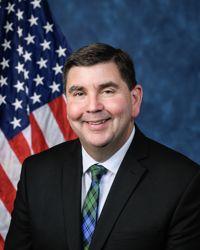
U.S. Representative for New York’s 22nd district
Democrat
119th Congress, two-year term
Missed 0.6% of roll calls. Chamber median 1.9%.
The full voting recordCounts roll calls where most Democrats and most Republicans voted differently, leaving out procedural votes.
How we countFrom FEC filings, Voteview roll calls and Congress.gov.
Democrat. In Congress since 2025, 1 term in total.
Following saves Mannion to your list, which Chamber & Street keeps on its server, linked to a cookie on this browser and not to your name or email. Email alerts will come with constituent verification.
Bills and resolutions Mannion signed on to as a cosponsor. An original cosponsor signed on the day the bill was introduced. Source: govinfo bill status files, last updated Nov 6, 2026.
Expressing support for the Iranian people's desires for a democratic, secular, and nonnuclear Republic of Iran, and condemning the Iranian regime's terrorism, regional proxy war, internal suppression, and for other purposes.
Sponsor Tom McClintock (R). Joined Mar 14, 2025. 230 cosponsors. H.Res. 166 on Congress.gov
Introduced
Condemning the Members of Congress constituting the leadership team of the House Republican Conference.
Sponsor Sylvia Garcia (D). Original cosponsor. 125 cosponsors. H.Res. 216 on Congress.gov(opens in a new tab)
Introduced
Commission To Study the Potential of a National Museum of Italian American History and Culture Act
Sponsor Thomas Suozzi (D). Joined Mar 11, 2025. 53 cosponsors. H.R. 1102 on Congress.gov(opens in a new tab)
Introduced
Richard L. Trumka Protecting the Right to Organize Act of 2025
Sponsor Robert Scott (D). Original cosponsor. 217 cosponsors. H.R. 20 on Congress.gov(opens in a new tab)
Introduced
RAISE Act of 2025
Sponsor Jahana Hayes (D). Joined Mar 5, 2025. 52 cosponsors. H.R. 1611 on Congress.gov(opens in a new tab)
Introduced
Respect, Advancement, and Increasing Support for Educators Act of 2025 or the RAISE Act of 2025
This bill establishes a refundable federal tax credit for eligible educators and increases and expands the federal tax deduction for certain classroom and professional development expenses. The bill also increases federal funding for programs that support effective instruction.
Specifically, the bill allows (1) eligible educators (elementary and secondary public school teachers and early childhood educators) to claim a tax credit of $1,000, and (2) eligible educators employed at a qualifying school to claim an additional tax credit of up to $14,000 ($9,000 for an early childhood educator without a bachelor’s degree) based on the qualifying school’s student poverty ratio.
The bill generally defines a qualifying school as
• a public elementary or secondary school served by a local education agency eligible for federal grants that support the education of disadvantaged children,
• an elementary school or secondary school funded by the Bureau of Indian Education, or
• an early childhood education program serving children who are eligible for certain financial or food assistance.
Further, the bill increases to $500 ($300 in 2025) and continues to adjust annually the above-the-line tax deduction for certain classroom and professional development expenses of educators. The bill also expands eligibility for the credit to include early childhood educators. (Above-the-line tax deductions are subtracted from gross income to calculate adjusted gross income.)
Finally, the bill provides additional funding for education programs, including teacher salary incentive grants and professional development, certificate, and credentialing programs.
John R. Lewis Voting Rights Advancement Act of 2025
Sponsor Terri Sewell (D). Original cosponsor. 221 cosponsors. H.R. 14 on Congress.gov(opens in a new tab)
Introduced
John R. Lewis Voting Rights Advancement Act of 2025
This bill establishes new criteria for determining which states and political subdivisions must obtain preclearance before changes to voting practices may take effect. Preclearance is the process of receiving preapproval from the Department of Justice (DOJ) or the U.S. District Court for the District of Columbia before making legal changes that would affect voting rights.
A state and all of its political subdivisions shall be subject to preclearance of voting practice changes for a 10-year period if, during the previous 25 years:
• 15 or more voting rights violations occurred in the state;
• 10 or more violations occurred, at least 1 of which was committed by the state itself; or
• 3 or more violations occurred and the state administers the elections.
A political subdivision as a separate unit shall also be subject to preclearance for a 10-year period if three or more voting rights violations occurred there during the previous 25 years.
States and political subdivisions that meet certain thresholds regarding minority groups must preclear covered practices before implementation, such as redistricting.
States and political subdivisions must notify the public of changes to voting practices.
The bill authorizes DOJ to require states or political subdivisions to provide certain documents or answers to questions for enforcing voting rights.
The bill outlines factors courts must consider when hearing challenges to voting practices, such as the extent of any history of official voting discrimination in the state or political subdivision.
MERIT Act
Sponsor LaMonica McIver (D). Original cosponsor. 108 cosponsors. H.R. 1835 on Congress.gov(opens in a new tab)
Introduced
To designate the facility of the United States Postal Service located at 1200 William Street, Room 200, in Buffalo, New York, as the "William J. Donovan Post Office Building".
Sponsor Timothy Kennedy (D). Original cosponsor. 26 cosponsors. H.R. 1706 on Congress.gov(opens in a new tab)
Passed the House
This bill designates the facility of the United States Postal Service located at 1200 William Street, Room 200, in Buffalo, New York, as the "William J. Donovan Post Office Building".
Protect Veteran Jobs Act
Sponsor Derek Tran (D). Original cosponsor. 96 cosponsors. H.R. 1637 on Congress.gov(opens in a new tab)
Introduced
Protect Veteran Jobs Act
This bill provides reinstatement eligibility to veterans who were involuntarily removed or otherwise dismissed without cause from civil service positions from January 20, 2025, through the date of enactment of this bill. Such veterans must be eligible for reinstatement to their former positions or any other civil service positions for which they are qualified.
Each executive branch agency must regularly report through January 20, 2029, to Congress regarding veteran employees who were removed or otherwise dismissed from the agency, including the total number of employees removed and the reasons for the dismissals.
Expressing support for the designation of the week of February 24 through February 28, 2025, as "Public Schools Week".
Sponsor Mark Pocan (D). Original cosponsor. 99 cosponsors. H.Res. 159 on Congress.gov(opens in a new tab)
Introduced
This resolution supports the designation of Public Schools Week.
To designate the facility of the United States Postal Service located at 86 Main Street in Haverstraw, New York, as the "Paul Piperato Post Office Building".
Sponsor Michael Lawler (R). Joined Feb 13, 2025. 24 cosponsors. H.R. 1009 on Congress.gov(opens in a new tab)
Passed the House
This bill designates the facility of the U.S. Postal Service located at 86 Main Street in Haverstraw, New York, as the Paul Piperato Post Office Building.
To designate the facility of the United States Postal Service located at 298 Route 292 in Holmes, New York, as the "Sheriff Adrian 'Butch' Anderson Post Office Building".
Sponsor Michael Lawler (R). Joined Feb 13, 2025. 24 cosponsors. H.R. 1008 on Congress.gov(opens in a new tab)
Passed the House
This bill designates the facility of the U.S. Postal Service located at 298 Route 292 in Holmes, New York, as the Sheriff Adrian "Butch" Anderson Post Office Building.
Honoring Our Fallen TSA Officers Act
Sponsor Julia Brownley (D). Joined Feb 11, 2025. 20 cosponsors. H.R. 1159 on Congress.gov(opens in a new tab)
Introduced
Honoring Our Fallen TSA Officers Act
This bill includes Transportation Security Administration (TSA) employees in the Public Safety Officers' Benefits (PSOB) program under certain conditions. Specifically, the bill extends PSOB program death and disability benefits to TSA employees performing official duties related to protecting the nation's transportation systems.
As background, the PSOB program provides cash benefits to federal, state, and local law enforcement officers; firefighters; employees of emergency management agencies; and members of emergency medical services agencies who are killed or permanently and totally disabled as the result of personal injuries sustained in the line of duty. PSOB death benefits are payable to the eligible spouse and children of a public safety officer. Further, the Public Safety Officers’ Educational Assistance program, a component of the PSOB program, provides higher-education assistance to the children and spouses of public safety officers who are eligible for PSOB death or disability benefits.
Department of Education Protection Act
Sponsor Jahana Hayes (D). Joined Feb 7, 2025. 132 cosponsors. H.R. 433 on Congress.gov(opens in a new tab)
Introduced
Department of Education Protection Act
This bill prohibits the use of appropriated funds made available to the Department of Education (ED) to decentralize, reduce the staffing level of, or alter the responsibilities or functionality of ED compared to its organization or operation on January 1, 2025.
To amend the Workforce Innovation and Opportunity Act to direct the Secretary of Labor to award grants to community colleges for high-quality workforce development programs.
Sponsor Lucy McBath (D). Original cosponsor. 30 cosponsors. H.R. 1132 on Congress.gov(opens in a new tab)
Introduced
Taxpayer Data Protection Act
Sponsor Haley Stevens (D). Original cosponsor. 205 cosponsors. H.R. 1101 on Congress.gov(opens in a new tab)
Introduced
Taxpayer Data Protection Act
This bill restricts access to any public money receipt or payment system belonging to the Department of the Treasury.
Specifically, access is limited to authorized Treasury officers, employees, or contractors meeting certain performance standards who have held a qualified position for at least a year, or who hold other qualifications as provided by the bill. The bill specifically prohibits special government employees (i.e., temporary appointees hired to perform specific tasks) from having access to such systems. The bill also provides that an individual accessing such systems shall be treated as an executive branch employee for purposes of federal criminal conflict of interest laws.
Treasury's Office of Inspector General must investigate and report on each instance of unauthorized use or other access of such payment systems.
Condemning the pardons for individuals who were found guilty of assaulting Capitol Police Officers.
Sponsor Bonnie Watson Coleman (D). Original cosponsor. 138 cosponsors. H.Res. 116 on Congress.gov(opens in a new tab)
Introduced
This resolution disapproves of pardons for individuals who were found guilty of assaulting U.S. Capitol Police officers.
Right to Contraception Act
Sponsor Lizzie Fletcher (D). Original cosponsor. 211 cosponsors. H.R. 999 on Congress.gov(opens in a new tab)
Introduced
Right to Contraception Act
This bill sets out statutory protections for an individual's right to access and a health care provider's right to provide contraception and related information. Contraception refers to an action taken to prevent pregnancy, including the use of contraceptives (i.e., a device or medication used to prevent pregnancy), fertility-awareness based methods, and sterilization procedures.
Generally, the bill prohibits measures that single out and impede access to contraception and related information. However, a party may defend against a claim that a measure violates the bill's prohibitions by demonstrating, through clear and convincing evidence, that the measure significantly advances the safety of contraception and cannot be achieved through less restrictive means. The bill also specifies that the prohibition preempts inconsistent state and local laws and applies notwithstanding other federal laws, including the Religious Freedom Restoration Act of 1993.
The Department of Justice, individuals, or health care providers may bring a lawsuit to enforce this bill, and states are not immune from suits for violations.
To designate the facility of the United States Postal Service located at 216 Cumberland Street in Rochester, New York, as the "Minister Franklin Florence Memorial Post Office".
Sponsor Joseph Morelle (D). Joined Feb 5, 2025. 25 cosponsors. H.R. 397 on Congress.gov(opens in a new tab)
Passed committee
This bill designates the facility of the United States Postal Service located at 216 Cumberland Street in Rochester, New York, as the "Minister Franklin Florence Memorial Post Office".
TRUST in Congress Act
Sponsor Seth Magaziner (D). Joined Feb 5, 2025. 103 cosponsors. H.R. 396 on Congress.gov(opens in a new tab)
Introduced
Transparent Representation Upholding Service and Trust in Congress Act or the TRUST in Congress Act
This bill requires a Member of Congress, as well as any spouse or dependent child of a Member, to place specified investments into a qualified blind trust (i.e., an arrangement in which certain financial holdings are placed in someone else's control to avoid a possible conflict of interest) until 180 days after the end of their tenure as a Member of Congress.
To designate the facility of the United States Postal Service located at 80 Prospect Street in Avon, New York, as the "Officer Anthony Mazurkiewicz Memorial Post Office Building".
Sponsor Claudia Tenney (R). Joined Feb 5, 2025. 24 cosponsors. H.R. 323 on Congress.gov(opens in a new tab)
Passed the House
This bill designates the facility of the United States Postal Service located at 80 Prospect Street in Avon, New York, as the "Officer Anthony Mazurkiewicz Memorial Post Office Building".
Expressing support for the Nation's local public K-12 schools and condemning any actions that would defund public education or weaken or dismantle the Department of Education.
Sponsor Suzanne Bonamici (D). Original cosponsor. 99 cosponsors. H.Res. 94 on Congress.gov(opens in a new tab)
Introduced
This resolution supports federal investment in public K-12 schools, affirms that the Department of Education (ED) plays a vital role in the public education system, and states that public education funding should not be diverted (e.g., through the use of vouchers) to privately run K-12 schools.
The resolution also rejects any claim that the executive branch has the legal authority to (1) dismantle or relocate ED or any of its major offices; or (2) reduce federal funding for public education, block federal grants for education, or transfer funding burdens for education to state and local governments.
Washington, D.C. Admission Act
Sponsor Eleanor Norton (D). Joined Feb 4, 2025. 209 cosponsors. H.R. 51 on Congress.gov(opens in a new tab)
Introduced
Washington, D.C. Admission Act
This bill provides for the establishment of the State of Washington, Douglass Commonwealth, and its admission into the United States.
The state is composed of most of the territory of the District of Columbia (DC), excluding a specified area that encompasses the U.S. Capitol, the White House, the U.S. Supreme Court building, federal monuments, and federal office buildings adjacent to the National Mall and the U.S. Capitol. The excluded territory shall be known as the Capital and serve as the seat of the government of the United States, as provided for in Article I of the Constitution. The state may not impose taxes on federal property except as Congress permits.
The bill provides for the DC Mayor to issue a proclamation for the first elections to Congress of two Senators and one Representative of the state. The bill eliminates the office of Delegate to the House of Representatives.
The bill applies current DC laws to the state. DC judicial proceedings and contractual obligations shall continue under the state’s authority. The bill also provides for specified federal obligations to transfer to the state upon its certification that it has funds and laws in place to assume the obligations. These include maintaining a retirement fund for judges and operating public defender services.
The bill establishes a commission that is generally comprised of members who are appointed by DC and federal government officials to advise on an orderly transition to statehood.
Whole Milk for Healthy Kids Act of 2025
Sponsor Glenn Thompson (R). Joined Jan 31, 2025. 118 cosponsors. H.R. 649 on Congress.gov(opens in a new tab)
Introduced
Whole Milk for Healthy Kids Act of 2025
This bill revises requirements for milk provided by the National School Lunch Program of the Department of Agriculture (USDA).
Currently, schools participating in the program must provide milk that is consistent with the most recent Dietary Guidelines for Americans; USDA regulations require milk to be fat-free or low-fat and allow milk to be flavored or unflavored. The bill modifies these restrictions and instead permits schools to offer students whole, reduced-fat, low-fat, and fat-free flavored and unflavored milk. The milk that is offered may be organic or nonorganic. Further, USDA may not prohibit a participating school from offering students any of these milk choices.
Further, schools currently must provide a substitute for fluid milk, on receipt of a written statement from a licensed physician, for students whose disability restricts their diet. Under the bill, a parent or legal guardian may also provide the written statement.
In addition, schools currently participating in the program must provide meals that meet certain nutrition requirements; USDA regulations require that the average saturated fat content of the meals offered must be less than 10% of the total calories. Under the bill, fluid milk is excluded from the saturated fat content calculation; milk fat included in any fluid milk provided by the program must not be considered saturated fat for the purposes of measuring compliance with USDA regulations.
Finally, the bill prohibits schools participating in the program from purchasing or offering milk produced by Chinese state-owned enterprises.