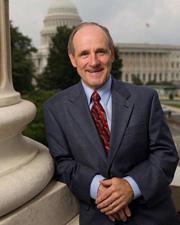
U.S. Senator for Idaho
Republican
Senate term end not loaded yet
Missed 2.8% of roll calls. Chamber median 2.1%.
The full voting recordCounts roll calls where most Democrats and most Republicans voted differently, leaving out procedural votes.
How we countFrom FEC filings, Voteview roll calls and Congress.gov.
Republican. In Congress since 2009, 3 terms in total.
Following saves Risch to your list, which Chamber & Street keeps on its server, linked to a cookie on this browser and not to your name or email. Email alerts will come with constituent verification.
Bills and resolutions Risch signed on to as a cosponsor. An original cosponsor signed on the day the bill was introduced. Source: govinfo bill status files, last updated Nov 6, 2026.
Risch also withdrew as a cosponsor from 1 bill, not listed here.
A bill to authorize an additional district judgeship for the district of Idaho.
Sponsor Mike Crapo (R). Original cosponsor. 1 cosponsor. S. 54 on Congress.gov
Introduced
This bill increases from two to three the total number of U.S. district court judgeships for the District of Idaho. The President must appoint, with the advice and consent of the Senate, one additional judge for that judicial district.
Build the Wall Act of 2025
Sponsor John Barrasso (R). Original cosponsor. 5 cosponsors. S. 42 on Congress.gov(opens in a new tab)
Introduced
Build the Wall Act of 2025
This bill establishes the Southern Border Wall Construction Fund to be used by the Department of Homeland Security to construct and maintain physical barriers along the U.S.-Mexico border. All unobligated amounts in the Coronavirus State and Local Fiscal Recovery Funds must be immediately deposited in the Southern Border Wall Construction Fund.
Protection of Women and Girls in Sports Act of 2025
Sponsor Tommy Tuberville (R). Original cosponsor. 44 cosponsors. S. 9 on Congress.gov(opens in a new tab)
Introduced
Protection of Women and Girls in Sports Act of 2025
This bill generally prohibits school athletic programs from allowing individuals whose biological sex at birth was male to participate in programs that are for women or girls.
Specifically, the bill provides that it is a violation of Title IX of the Education Amendments of 1972 for federally funded education programs or activities to operate, sponsor, or facilitate athletic programs or activities that allow individuals of the male sex to participate in programs or activities that are designated for women or girls. (Title IX prohibits discrimination on the basis of sex in federally funded education programs or activities, including in public elementary and secondary schools and in colleges and universities.) Under the bill, sex is based on an individual's reproductive biology and genetics at birth.
A bill to designate the facility of the United States Postal Service located at 154 First Avenue East in Jerome, Idaho, as the "Representative Maxine Bell Post Office".
Sponsor Mike Crapo (R). Original cosponsor. 1 cosponsor. S. 24 on Congress.gov(opens in a new tab)
Passed committee
This bill designates the facility of the U.S. Postal Service located at 154 First Avenue East in Jerome, Idaho, as the Representative Maxine Bell Post Office.
Laken Riley Act
Sponsor Katie Britt (R). Original cosponsor. 53 cosponsors. S. 5 on Congress.gov(opens in a new tab)
Became law
Laken Riley Act
This act requires the Department of Homeland Security (DHS) to detain certain non-U.S. nationals (aliens under federal law) who have been arrested for burglary, theft, larceny, shoplifting, assault of a law enforcement officer, or any crime that results in death or serious bodily injury to another person. The act also authorizes states to sue the federal government for decisions or alleged failures related to immigration enforcement.
Under this act, DHS must detain an individual who (1) is unlawfully present in the United States or did not possess the necessary documents when applying for admission; and (2) has been charged with, arrested for, convicted of, or admits to having committed acts that constitute the essential elements of the above crimes.
The act also authorizes state governments to sue for injunctive relief over certain immigration-related decisions or alleged failures by the federal government if the decision or failure caused the state or its residents harm, including financial harm of more than $100. Specifically, the state government may sue the federal government over a
• decision to release a non-U.S. national from custody;
• failure to fulfill requirements relating to inspecting individuals seeking admission into the United States, including requirements related to asylum interviews;
• failure to fulfill a requirement to stop issuing visas to nationals of a country that unreasonably denies or delays acceptance of nationals of that country;
• violation of limitations on immigration parole, such as the requirement that parole be granted only on a case-by-case basis; or
• failure to detain an individual who has been ordered removed from the United States.