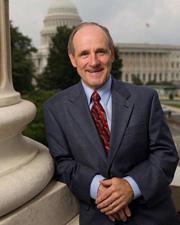
U.S. Senator for Idaho
Republican
Senate term end not loaded yet
Missed 2.8% of roll calls. Chamber median 2.1%.
The full voting recordCounts roll calls where most Democrats and most Republicans voted differently, leaving out procedural votes.
How we countFrom FEC filings, Voteview roll calls and Congress.gov.
Republican. In Congress since 2009, 3 terms in total.
Following saves Risch to your list, which Chamber & Street keeps on its server, linked to a cookie on this browser and not to your name or email. Email alerts will come with constituent verification.
Bills and resolutions Risch signed on to as a cosponsor. An original cosponsor signed on the day the bill was introduced. Source: govinfo bill status files, last updated Nov 6, 2026.
Risch also withdrew as a cosponsor from 1 bill, not listed here.
A bill to direct the Secretary of Veterans Affairs to ensure veterans may obtain a physical copy of a form for reimbursement of certain travel expenses by mail or at medical facilities of the Department of Veterans Affairs, and for other purposes.
Sponsor Rick Scott (R). Original cosponsor. 9 cosponsors. S. 812 on Congress.gov
Introduced
This bill requires the Department of Veterans Affairs (VA) to ensure that a veteran may obtain a physical copy of the form needed for travel reimbursements at any VA medical facility or, upon request, by mail. The VA must also ensure a veteran may submit the form to any VA medical facility in person or by mail. Such medical facilities must evaluate the form and process any claim associated with the form.
RTP Full Funding Act of 2025
Sponsor Amy Klobuchar (D). Original cosponsor. 6 cosponsors. S. 811 on Congress.gov(opens in a new tab)
Introduced
Guarding Readiness Resources Act
Sponsor Mike Lee (R). Original cosponsor. 22 cosponsors. S. 807 on Congress.gov(opens in a new tab)
Introduced
Guarding Readiness Resources Act
This bill modifies the treatment of funds received by the National Guard Bureau as a reimbursement from a state or other U.S. territory (e.g., Guam) for the use of military property.
Specifically, the funds must be credited to (1) the appropriation, fund, or account used in incurring the obligation; or (2) an appropriation, fund, or account currently available for the purposes of which the expenditures were made. Further, the funds may only be used by the Department of Defense for the repair, maintenance, replacement, or other similar functions related directly to assets used by National Guard units while operating under state active duty status.
Book Minimum Tax Repeal Act
Sponsor John Barrasso (R). Original cosponsor. 8 cosponsors. S. 796 on Congress.gov(opens in a new tab)
Introduced
Book Minimum Tax Repeal Act
This bill repeals the corporate alternative minimum tax (CAMT) and makes related modifications to the general business tax credit.
Under current law, a 15% CAMT is imposed on a corporation with adjusted financial statement income (also known as book income) exceeding an average of $1 billion for a consecutive three-year period (or an average of $100 million for a U.S. corporation that is part of a foreign parent multinational group if the adjusted financial statement income of such group exceeds an average of $1 billion for a consecutive three-year period). Adjusted financial statement income generally is the net income or loss reported on the corporation’s applicable financial statement for a tax year, with adjustments for specific items.
The bill repeals the CAMT and modifies a related limit on the amount of general business tax credits allowed for a corporation.
Critical Mineral Consistency Act of 2025
Sponsor Mike Lee (R). Original cosponsor. 5 cosponsors. S. 714 on Congress.gov(opens in a new tab)
Passed committee
Critical Mineral Consistency Act of 2025
This bill modifies the Energy Act of 2020 to expand the definition of critical minerals used by the U.S. Geological Survey (USGS) to include critical materials designated by the Department of Energy (DOE). It also directs USGS to update its list within 45 days of DOE adding a mineral, element, substance, or material to its critical materials list. Thus, the bill requires the lists to be treated consistently and makes critical materials eligible for the same benefits (e.g., financing support or clean energy tax credits) provided to critical minerals.
By way of background, DOE's critical materials list contains certain materials that are essential for energy, including those on the critical minerals list of the USGS. The USGS's list, which contains certain minerals that are essential to the nation's economic or national security, is currently not required to include the materials on DOE's list.
DLARA
Sponsor Ted Budd (R). Joined Feb 24, 2025. 9 cosponsors. S. 300 on Congress.gov(opens in a new tab)
Passed committee
Disaster Loan Accountability and Reform Act or the DLARA
This bill modifies the Small Business Administration (SBA) disaster loan program and requires external review of, and reporting on, the program.
First, the bill requires the SBA to report monthly on the operation of the disaster loan program. (Currently, the SBA must report only during the applicable period for a major disaster.) The report must estimate the date on which available funding for such loans will reach 10% of the most recent appropriation and the date on which the funds will be depleted.
Second, the President's annual budget must include separate statements regarding the appropriations request for SBA disaster loans and COVID-19 Economic Injury Disaster Loans (EIDL), including explanations for any difference between the amount requested and the 10-year average cost for such loans.
Third, for a period of four years, the SBA must notify Congress when the unobligated balance of amounts available for disaster loans is less than 10% of the 10-year average annual cost provided in the most recent Presidential budget. At such point, the SBA may limit disaster loans to collateralized amounts.
Finally, the bill requires additional oversight of the disaster loan program, including
• a Government Accountability Office report on the disbursement of disaster loans and the effect of specified SBA rules on home lending limits,
• an SBA Office of Inspector General review of recent funding shortfalls for disaster loans, and
• an SBA report on improvements for forecasting the cost of disaster loans.
A resolution expressing support for the designation of February 15 through February 22, 2025, as "National FFA Week", recognizing the important role of the National FFA Organization in developing the next generation of leaders who will change the world, and celebrating the 90th anniversary of New Farmers of America and the 75th anniversary of the Future Farmers of America Federal charter.
Sponsor Todd Young (R). Original cosponsor. 51 cosponsors. S.Res. 89 on Congress.gov(opens in a new tab)
Passed the Senate
This resolution supports the designation of February 15-22, 2025, as National FFA (Future Farmers of America) Week.
It also celebrates the 90th anniversary of New Farmers of America (NFA), which served Black vocational agriculture students in segregated public schools until NFA and FFA became one organization in 1965.
The resolution also commemorates the 75th anniversary of the federal charter for the Future Farmers of America.
A resolution designating March 7, 2025, as "National Speech and Debate Education Day".
Sponsor Chuck Grassley (R). Original cosponsor. 19 cosponsors. S.Res. 88 on Congress.gov(opens in a new tab)
Passed the Senate
This resolution designates March 7, 2025, as National Speech and Debate Education Day.
National Right-to-Work Act
Sponsor Rand Paul (R). Joined Feb 20, 2025. 23 cosponsors. S. 533 on Congress.gov(opens in a new tab)
Introduced
Nancy Gardner Sewell Medicare Multi-Cancer Early Detection Screening Coverage Act
Sponsor Mike Crapo (R). Joined Feb 20, 2025. 68 cosponsors. S. 339 on Congress.gov(opens in a new tab)
Introduced
Nancy Gardner Sewell Medicare Multi-Cancer Early Detection Screening Coverage Act
This bill allows, beginning in 2028, for Medicare coverage and payment for multi-cancer early detection screening tests that are approved by the Food and Drug Administration and that are used to screen for cancer across many cancer types, if the Centers for Medicare & Medicaid Services determines such coverage is appropriate. Coverage is limited to those under a certain age (age 68 in 2028, increased by one year every year thereafter) and to one test every 11 months.
Technical Correction to the Shoshone-Paiute Tribes of the Duck Valley Reservation Water Rights Settlement Act of 2025
Sponsor Catherine Cortez Masto (D). Joined Feb 19, 2025. 3 cosponsors. S. 546 on Congress.gov(opens in a new tab)
Passed the Senate
Technical Correction to the Shoshone-Paiute Tribes of the Duck Valley Reservation Water Rights Settlement Act of 2025
This bill authorizes deposit of specified interest payments into the Shoshone-Paiute Tribes Water Rights Development Fund. This fund was established in 2009 under the water rights settlement agreement for the Shoshone-Paiute Tribes of the Duck Valley Reservation.
A resolution expressing gratitude to the Joint Congressional Committee on Inaugural Ceremonies, the Architect of the Capitol, the Sergeant at Arms, the Secretary of the Senate, law enforcement officers, emergency personnel, and volunteers for their support in making the Presidential Inauguration a success.
Sponsor Mike Rounds (R). Original cosponsor. 44 cosponsors. S.Res. 80 on Congress.gov(opens in a new tab)
Passed the Senate
A joint resolution disapproving the rule submitted by the Bureau of Consumer Financial Protection relating to "Overdraft Lending: Very Large Financial Institutions".
Sponsor Tim Scott (R). Original cosponsor. 16 cosponsors. S.J.Res. 18 on Congress.gov(opens in a new tab)
Became law
This joint resolution nullifies the final rule issued by the Consumer Financial Protection Bureau titled Overdraft Lending: Very Large Financial Institutions and published on December 30, 2024. The rule revises provisions regarding charges for insufficient funds in a customer’s bank account (i.e., overdrafts) at very large financial institutions. Under the rule, these institutions must (1) cap overdraft charges at $5; (2) with justification, cap charges at a higher amount; or (3) handle overdrafts as credit and comply with applicable Truth in Lending Act disclosure requirements.
Death Tax Repeal Act of 2025
Sponsor John Thune (R). Original cosponsor. 46 cosponsors. S. 587 on Congress.gov(opens in a new tab)
Introduced
JOBS Act of 2025
Sponsor Timothy Kaine (D). Joined Feb 13, 2025. 41 cosponsors. S. 383 on Congress.gov(opens in a new tab)
Introduced
Jumpstart Our Businesses by Supporting Students Act of 2025 or the JOBS Act of 2025
This bill expands student eligibility for Pell Grants by establishing the Job Training Federal Pell Grant program.
Specifically, the bill requires the Department of Education to award a job training Pell Grant to a student who does not have a degree; attends an institution of higher education (IHE); is enrolled in a career and technical education program at an IHE that provides 150 to 600 clock hours of instructional time over a period of 8 to 15 weeks and provides training aligned with high-skill, high-wage, or in-demand industry sectors (i.e., job training programs); and meets all other eligibility requirements for a Pell Grant.
The bill also specifies that any period during which a student receives a job training Pell Grant counts toward that student's Pell Grant eligibility period.
Combating Illicit Xylazine Act
Sponsor Catherine Cortez Masto (D). Original cosponsor. 35 cosponsors. S. 545 on Congress.gov(opens in a new tab)
Passed committee
Combating Illicit Xylazine Act
This bill regulates xylazine under the Controlled Substances Act (CSA).
Xylazine, also known as tranq, is a nonopioid sedative and pain reliever that is approved for use in animals. Recently, the Drug Enforcement Administration (DEA) has reported an increase in trafficking of fentanyl mixed with xylazine.
This bill adds xylazine, including its salts, isomers, and salts of isomers, to schedule III of the CSA. Schedule III controlled substances, including anabolic steroids, buprenorphine, and ketamine, have less potential for abuse than a schedule I or II substance, have a currently accepted medical use, and have low or moderate risk of dependence if abused.
Under the bill, manufacturing, distributing, or dispensing xylazine, or possessing with intent to manufacture, distribute, or dispense xylazine for illicit use is subject to criminal penalties under the CSA. The bill also requires xylazine transactions to be tracked in the drug reporting system maintained by the DEA.
The bill exempts from registration under the CSA persons and entities that possess xylazine (1) lawfully dispensed by a veterinarian or pharmacy and (2) for an animal or for use in certain animal-control or wildlife programs.
The bill also exempts xylazine manufacturers from the CSA's physical security requirements.
Finally, the bill requires the DEA, in coordination with the Department of Health and Human Services (HHS), to provide Congress with a report on how the agencies previously determined whether xylazine should be a controlled substance, including the full text of HHS's recommendations to the DEA for scheduling xylazine.
Mining Regulatory Clarity Act
Sponsor Catherine Cortez Masto (D). Original cosponsor. 4 cosponsors. S. 544 on Congress.gov(opens in a new tab)
Passed committee
Mining Regulatory Clarity Act
This bill allows mining operators to use federal lands for activities ancillary to mining, such as waste disposal, regardless of whether those lands contain mineral deposits valuable enough to be mined (mineral validity). It also establishes the Abandoned Hardrock Mine Fund.
The bill addresses a 2022 decision in the U.S. Court of Appeals for the Ninth Circuit related to the Rosemont Copper Mine in Arizona (commonly known as the Rosemont decision, described further in CRS Report R48166). The court held that mining claims are only allowed where mineral validity has been established and that mill site claims are more appropriate means for establishing a mining waste disposal site under the Mining Act.
The bill allows a mining operator to (1) locate and include within its plan of operations as many mill site claims (e.g., areas for waste rock disposal) as are reasonably necessary for its operations, and (2) use or occupy public land in accordance with an approved plan of operations.
Additionally, the bill requires any revenue generated from fees for such mill site claims to be deposited into the Abandoned Hardrock Mine Fund. The Department of the Interior must use the fund for certain abandoned hardrock mine reclamation activities.
Protecting Access for Hunters and Anglers Act of 2025
Sponsor Steve Daines (R). Original cosponsor. 36 cosponsors. S. 537 on Congress.gov(opens in a new tab)
Introduced
Protecting Access for Hunters and Anglers Act of 2025
This bill bars the Fish and Wildlife Service (FWS), the Bureau of Land Management (BLM), and the Forest Service from prohibiting or regulating the use of lead ammunition or tackle on federal land or water. The bill makes exceptions for specified existing regulations and where the FWS, the BLM, or the Forest Service determines that a decline in wildlife population at the specific unit of federal land or water is primarily caused by the use of lead in ammunition or tackle, based on the field data from such unit, and the state approves the regulations.
Protect and Serve Act of 2025
Sponsor Thomas Tillis (R). Joined Feb 12, 2025. 25 cosponsors. S. 167 on Congress.gov(opens in a new tab)
Introduced
Protect and Serve Act of 2025
This bill establishes a new criminal offense for knowingly assaulting a law enforcement officer and causing serious bodily injury (or attempting to do so) in circumstances that affect interstate commerce.
It imposes criminal penalties—a prison term, a fine, or both—on a violator.
WEST Act of 2025
Sponsor John Barrasso (R). Original cosponsor. 8 cosponsors. S. 530 on Congress.gov(opens in a new tab)
Introduced
A joint resolution proposing an amendment to the Constitution of the United States to require that the Supreme Court of the United States be composed of nine justices.
Sponsor Ted Cruz (R). Original cosponsor. 22 cosponsors. S.J.Res. 16 on Congress.gov(opens in a new tab)
Introduced
This joint resolution proposes a constitutional amendment requiring the Supreme Court to consist of nine Justices.
Regulations from the Executive in Need of Scrutiny Act of 2025
Sponsor Rand Paul (R). Original cosponsor. 23 cosponsors. S. 485 on Congress.gov(opens in a new tab)
Introduced
Regulations from the Executive in Need of Scrutiny Act of 2025
This bill expands congressional review of federal agency rules and establishes additional procedures for major rules and agency guidance.
Specifically, the bill requires the enactment of a joint resolution for a major rule to take effect. A major rule is a rule that has resulted in or is likely to result in (1) an annual economic effect of at least $100 million; (2) a major increase in costs or prices for consumers, individual industries, government agencies, or geographic regions; or (3) significant adverse effects on competition, employment, investment, productivity, or innovation.
Additionally, major rules approved by a joint resolution under the bill expire, and are no longer effective, 10 years after the enactment of such joint resolution. Further, each agency must annually designate at least 10% of the agency’s major rules that are currently in effect for review and approval by a joint resolution of Congress. Such rules that are not approved shall no longer be in effect.
Under the bill, agency guidance documents are considered rules and certain significant guidance documents are considered major rules. Significant guidance documents include guidance anticipated to lead to an annual effect of at least $100 million, or adversely affect in a material way the economy, the environment, public health, or state or local government.
The Office of Management and Budget must establish an federal regulatory budget specifying the net amount of incremental regulatory costs allowed by the federal government for the next fiscal year.
Ski Hill Resources for Economic Development Act
Sponsor John Barrasso (R). Original cosponsor. 13 cosponsors. S. 472 on Congress.gov(opens in a new tab)
Passed committee
Ski Hill Resources for Economic Development Act
This bill allows National Forest System (NFS) units to keep the majority of ski area permit rental fees that were generated within their boundaries and outlines how revenues from those fees may be used. Such fees are collected by the Department of Agriculture (USDA) from ski area operators on NFS land.
Within the NFS unit where the fees were generated, USDA must expend (1) 60%-48% of the collected fees for activities such as administration of the ski area permit program, visitor information, or reducing the likelihood of wildfire in or adjacent to a recreation site; and (2) 20% of the collected fees for activities such as repair of a Forest Service-owned facility, habitat restoration, or search and rescue activities.
The remainder of the collected fees must be expended by USDA at any NFS unit for any of the activities specified in this bill.
Supporting Made in America Energy Act
Sponsor Steve Daines (R). Original cosponsor. 11 cosponsors. S. 460 on Congress.gov(opens in a new tab)
Introduced
Supporting Made in America Energy Act
This bill requires oil and natural gas lease sales that include certain public land and waters, prohibits lease sales in other areas, and establishes related requirements.
Beginning in FY2025, the Department of the Interior must conduct a minimum of four onshore lease sales annually in each state that has federal land available for oil and natural gas leasing. If a lease sale is canceled, delayed, or deferred, Interior must conduct a replacement sale during the same year.
Beginning in FY2026, Interior must conduct a minimum of two offshore, region-wide lease sales annually in the Gulf of Mexico Region of the Outer Continental Shelf (OCS) by specified dates. The sales must include the Central Gulf of Mexico Planning Area and the Western Gulf of Mexico Planning Area.
Interior must also conduct a minimum of six offshore lease sales of at least 1 million acres each over a 10-year period in the Cook Inlet Planning Area. The bill sets a 12.5% royalty rate for such leases.
Interior must plan and approve the subsequent OCS oil and gas leasing programs by specified deadlines.
The bill extends through 2035 a moratorium on oil and gas leasing in certain eastern and central portions of the Gulf of Mexico and expands the moratorium to include the South Atlantic Planning Area and the Straits of Florida Planning Area.
The bill also requires the President to obtain congressional approval before impeding or circumventing certain federal energy mineral leasing processes.
Expediting Forest Restoration and Recovery Act of 2025
Sponsor John Thune (R). Original cosponsor. 2 cosponsors. S. 449 on Congress.gov(opens in a new tab)
Introduced
Expediting Forest Restoration and Recovery Act of 2025
This bill excludes from environmental review certain projects that reduce the risk of damage to National Forests from wildfires or insect infestations. It also makes permanent the authority for states to retain and use revenues from good neighbor agreement timber sales for certain restoration services.
The bill exempts such projects from federal environmental review requirements if the projects are carried out in (1) insect and disease treatment areas where timber harvest activities are allowed; or (2) areas in Fire Regime Group IV, which are areas that typically burn every 35-200 years with high severity. However, the exemption does not apply to National Wilderness Preservation System lands or certain roadless areas.
The Forest Service must conduct an environmental review for such a project if it is carried out in (1) an area where significant resource concerns exist; or (2) an insect and disease treatment area larger than a certain size.
In the case of environmental reviews of other projects addressing wildfires or insect infestations, the Forest Service only must describe (1) the proposed agency action, and (2) the alternative of no agency action.
In insect and disease treatment areas, the Forest Service must prioritize reducing the risks of insect infestations and wildfires over other objectives in forest plans.