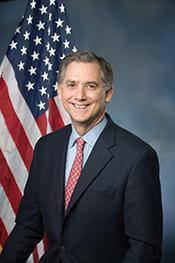
U.S. Representative for Arkansas’s 2nd district
Republican
119th Congress, two-year term
Missed 1.2% of roll calls. Chamber median 1.9%.
The full voting recordCounts roll calls where most Democrats and most Republicans voted differently, leaving out procedural votes.
How we countFrom FEC filings, Voteview roll calls and Congress.gov.
Republican. In Congress since 2015, 6 terms in total.
Following saves Hill to your list, which Chamber & Street keeps on its server, linked to a cookie on this browser and not to your name or email. Email alerts will come with constituent verification.
Bills and resolutions Hill signed on to as a cosponsor. An original cosponsor signed on the day the bill was introduced. Source: govinfo bill status files, last updated Nov 6, 2026.
Condemning the antisemitic terrorist attack in Boulder, Colorado.
Sponsor Randy Fine (R). Joined Jun 5, 2025. 30 cosponsors. H.Res. 472 on Congress.gov
Introduced
COUNTER Act
Sponsor August Pfluger (R). Joined Jun 3, 2025. 40 cosponsors. H.R. 3463 on Congress.gov(opens in a new tab)
Introduced
Freedom to Invest in Tomorrow’s Workforce Act
Sponsor Robert Wittman (R). Joined Jun 3, 2025. 203 cosponsors. H.R. 1151 on Congress.gov(opens in a new tab)
Introduced
Freedom to Invest in Tomorrow’s Workforce Act
This bill expands the expenses eligible for tax-free withdrawals from a qualified tuition program (known as a 529 plan) to include tuition, fees (including test fees), books, supplies, equipment, and other expenses related to the enrollment or attendance in a recognized postsecondary credentialing program.
Under the bill, a recognized postsecondary credentialing program includes certain programs identified by a state as providing training services, a program listed in the Web Enabled Approval Management System (WEAMS) maintained by the Department of Veterans Affairs, certain examinations required to obtain or maintain a credential, and other reputable credentialing programs.
Further, under the bill, such programs must be designed for an individual to obtain
• an industry-recognized postsecondary employment credential (e.g., project management professional certificate, advanced emergency medical technician certificate, and welding supervisor certificate),
• a certificate of completion of a registered and certified apprenticeship,
• an occupational or professional license issued or recognized by a state or the federal government (and any certification required for obtaining such license), or
• an associate or baccalaureate degree.
Condemning antisemitism and remembering Yaron Lischinsky and Sarah Milgrim.
Sponsor Addison McDowell (R). Joined May 29, 2025. 72 cosponsors. H.Res. 447 on Congress.gov(opens in a new tab)
Introduced
Water Systems PFAS Liability Protection Act
Sponsor Marie Perez (D). Joined May 23, 2025. 34 cosponsors. H.R. 1267 on Congress.gov(opens in a new tab)
Introduced
Water Systems PFAS Liability Protection Act
This bill exempts specified water management entities from liability under the Comprehensive Environmental Response, Compensation, and Liability Act of 1980 (CERCLA) for releases of certain perfluoroalkyl or polyfluoroalkyl substances, commonly referred to as PFAS. Specifically, the entities covered under the bill are public water systems, publicly or privately owned or operated treatment works, municipalities with a stormwater discharge permit, political subdivisions or special districts of a state that act as a wholesale water agency, and contractors performing the management or disposal activities for such entities.
Under the bill, the exemption only applies if a specified entity transports, treats, disposes of, or arranges for the transport, treatment or disposal of PFAS consistent with applicable laws and during and following the conveyance or treatment of water under federal or state law, such as through the management or disposal of biosolids consistent with the Federal Water Pollution Control Act.
Liability for damages or costs associated with the release of certain PFAS must not be precluded if an entity acted with gross negligence or willful misconduct.
Educational Choice for Children Act of 2025
Sponsor Adrian Smith (R). Joined May 20, 2025. 91 cosponsors. H.R. 833 on Congress.gov(opens in a new tab)
Introduced
Condemning Hamas for its premeditated, coordinated, and brutal terrorist attacks on October 7, 2023, against Israel and demanding that Hamas immediately release all remaining hostages and return them to safety, and for other purposes.
Sponsor Haley Stevens (D). Original cosponsor. 29 cosponsors. H.Res. 413 on Congress.gov(opens in a new tab)
Introduced
Congratulating His Holiness Pope Leo XIV on his historic election as the 267th pontiff of the Holy Roman Catholic Church and the first American pontiff.
Sponsor Riley Moore (R). Original cosponsor. 30 cosponsors. H.Res. 412 on Congress.gov(opens in a new tab)
Introduced
Calling upon local communities to support organizations that provide resources and aid Gold Shield Families in their time of need.
Sponsor Daniel Meuser (R). Joined May 13, 2025. 17 cosponsors. H.Res. 364 on Congress.gov(opens in a new tab)
Passed the House
This resolution encourages local communities throughout the United States to support nonprofit organizations that provide resources to Gold Shield Families during their time of need. Gold Shield Families consist of the families of fallen police officers, firefighters, emergency medical technicians, correction officers, emergency dispatch officers, and emergency service providers.
Expressing support for local law enforcement officers.
Sponsor Mike Ezell (R). Joined May 13, 2025. 35 cosponsors. H.Con.Res. 30 on Congress.gov(opens in a new tab)
Passed the House
This concurrent resolution recognizes and appreciates local law enforcement officers, extends gratitude to local law enforcement officers and their families, honors local law enforcement officers who have fallen in the line of duty, and encourages continued collaboration between local law enforcement agencies and the communities they serve.
Major Richard Star Act
Sponsor Gus Bilirakis (R). Joined Apr 29, 2025. 340 cosponsors. H.R. 2102 on Congress.gov(opens in a new tab)
Introduced
Major Richard Star Act
This bill allows a veteran with a combat-related disability to receive retirement pay, without reduction, concurrently with their disability compensation. This includes veterans with a combat-related disability and fewer than 20 years of creditable service. (Currently, veterans who receive combat-related special compensation and retirement pay are subject to an offset in retirement pay for concurrent receipt of such benefits.)
Simplifying Forms for Veterans Claims Act
Sponsor Robert Bresnahan (R). Joined Apr 28, 2025. 18 cosponsors. H.R. 1286 on Congress.gov(opens in a new tab)
Passed the House
Simplifying Forms for Veterans Claims Act
This bill requires the Department of Veterans Affairs (VA) to seek to enter an agreement with a federally funded research and development center to assess the forms that the VA sends to claimants. The center must submit a written assessment to the VA that includes recommendations on how the VA may make the forms clearer and more organized.
The VA must implement certain recommendations in the assessment within two years after the assessment is received.
Association Health Plans Act
Sponsor Tim Walberg (R). Joined Apr 24, 2025. 32 cosponsors. H.R. 2528 on Congress.gov(opens in a new tab)
Introduced
Providing congressional disapproval under chapter 8 of title 5, United States Code, of the rule submitted by the Environmental Protection Agency relating to "California State Motor Vehicle and Engine and Nonroad Engine Pollution Control Standards; The 'Omnibus' Low NOX Regulation; Waiver of Preemption; Notice of Decision".
Sponsor Jay Obernolte (R). Joined Apr 24, 2025. 32 cosponsors. H.J.Res. 89 on Congress.gov(opens in a new tab)
Became law
This joint resolution revokes the waiver granted to the California Air Resources Board regarding new emissions standards for new 2024 and subsequent model year on-road heavy-duty vehicles and engines, off-road diesel engines, and off-road diesel-fueled auxiliary power units. (Under the Clean Air Act, California may seek waivers of the preemption prohibiting states from enacting certain emission standards.)
Specifically, the joint resolution nullifies the Environmental Protection Agency notice titled California State Motor Vehicle and Engine and Nonroad Engine Pollution Control Standards; The ‘Omnibus’ Low NOX Regulation; Waiver of Preemption; Notice of Decision.
Providing congressional disapproval under chapter 8 of title 5, United States Code, of the rule submitted by the Environmental Protection Agency relating to "California State Motor Vehicle and Engine Pollution Control Standards; Advanced Clean Cars II; Waiver of Preemption; Notice of Decision".
Sponsor John Joyce (R). Joined Apr 24, 2025. 41 cosponsors. H.J.Res. 88 on Congress.gov(opens in a new tab)
Became law
This joint resolution revokes the waiver granted to the California Air Resources Board regarding its Advanced Clean Cars II (ACC II) regulations, which include new requirements for low-emission vehicles and zero-emission vehicles. (Under the Clean Air Act, California may seek waivers of the preemption prohibiting states from enacting certain emission standards.)
Specifically, the joint resolution nullifies the Environmental Protection Agency notice titled California State Motor Vehicle and Engine Pollution Control Standards; Advanced Clean Cars II; Waiver of Preemption; Notice of Decision.
Providing congressional disapproval under chapter 8 of title 5, United States Code, of the rule submitted by the Environmental Protection Agency relating to "California State Motor Vehicle and Engine Pollution Control Standards; Heavy-Duty Vehicle and Engine Emission Warranty and Maintenance Provisions; Advanced Clean Trucks; Zero Emission Airport Shuttle; Zero-Emission Power Train Certification; Waiver of Preemption; Notice of Decision".
Sponsor John James (R). Joined Apr 24, 2025. 24 cosponsors. H.J.Res. 87 on Congress.gov(opens in a new tab)
Became law
This joint resolution revokes waivers granted to the California Air Resources Board regarding several of its regulations, including the Heavy-Duty Vehicle and Engine Emission Warranty Regulations and Maintenance Provisions. (Under the Clean Air Act, California may seek waivers of the preemption prohibiting states from enacting certain emission standards.)
Specifically, the joint resolution nullifies the Environmental Protection Agency notice titled California State Motor Vehicle and Engine Pollution Control Standards; Heavy-Duty Vehicle and Engine Emission Warranty and Maintenance Provisions; Advanced Clean Trucks; Zero Emission Airport Shuttle; Zero-Emission Power Train Certification; Waiver of Preemption; Notice of Decision.
To amend title XI of the Social Security Act to equalize the negotiation period between small-molecule and biologic candidates under the Drug Price Negotiation Program.
Sponsor Gregory Murphy (R). Joined Apr 17, 2025. 68 cosponsors. H.R. 1492 on Congress.gov(opens in a new tab)
Introduced
This bill lengthens the amount of time for which drug products must have market approval in order for the products to qualify for negotiation under the Medicare Drug Price Negotiation Program.
The Medicare Drug Price Negotiation Program requires the Centers for Medicare & Medicaid Services to negotiate the prices of certain prescription drugs under Medicare beginning in 2026. Among other requirements, drugs must have had market approval for at least 7 years (for drug products) or 11 years (for biologics) to qualify for negotiation.
The bill modifies these provisions so as to require drug products to also have had at least 11 years of market approval in order to qualify for negotiation.
The bill's changes apply retroactively.
AM Radio for Every Vehicle Act of 2025
Sponsor Gus Bilirakis (R). Joined Apr 8, 2025. 317 cosponsors. H.R. 979 on Congress.gov(opens in a new tab)
Passed the House
AM Radio for Every Vehicle Act of 2025
This bill requires the Department of Transportation (DOT) to issue a rule requiring AM radio capabilities to be standard in all new passenger vehicles. (AM radio is often used to deliver emergency alerts and news and entertainment programming; some newer vehicles do not include AM equipment.)
Specifically, this bill applies to passenger vehicles (1) manufactured in the United States for sale in the United States, imported into the United States, or shipped in interstate commerce; and (2) manufactured after the rule's effective date. The rule must require all such vehicles to have devices that can receive signals and play content transmitted by AM stations or digital audio AM stations installed as standard equipment and made easily accessible to drivers.
Prior to the rule's effective date, manufacturers that do not include devices that can access AM radio as standard equipment (1) must inform purchasers of this fact through clear and conspicuous labeling, and (2) may not charge an additional or separate fee for AM radio access.
DOT may assess civil penalties for any violation of the rule. The Department of Justice may also bring a civil action to enjoin a violation.
The rule, including DOT’s authority to enforce it, must expire 10 years after the bill’s enactment.
Further, the Government Accountability Office must study and report on the dissemination of emergency alerts to the public, including by conducting an assessment of AM radio relative to other Integrated Public Alert and Warning System communication technologies.
Catch Up Act
Sponsor W. Steube (R). Original cosponsor. 1 cosponsor. H.R. 2745 on Congress.gov(opens in a new tab)
Introduced
Calling on the United Kingdom, France, and Germany (E3) to initiate the snapback of sanctions on Iran under United Nations Security Council Resolution 2231 (2015).
Sponsor Claudia Tenney (R). Joined Apr 7, 2025. 8 cosponsors. H.Res. 139 on Congress.gov(opens in a new tab)
Introduced
The resolution urges the E3 (the United Kingdom, France, and Germany) to invoke the snapback of United Nations (UN) sanctions against Iran under UN Security Council Resolution 2231 before the option expires on October 18, 2025.
This resolution also (1) recognizes that Iran's possession of a nuclear weapon would threaten U.S. and global security, (2) condemns Iran's repeated violations of certain international commitments related to nuclear weapons, and (3) reaffirms that the United States maintains the right to prevent Iran from acquiring nuclear weapons.
Sanctioning Russia Act of 2025
Sponsor Brian Fitzpatrick (R). Joined Apr 7, 2025. 155 cosponsors. H.R. 2548 on Congress.gov(opens in a new tab)
Introduced
Sanctioning Russia Act of 2025
This bill imposes penalties on certain persons (individuals and entities) if the President determines that the Russian government or a person acting at Russia's direction is involved with (1) refusing to negotiate a peace agreement with Ukraine; (2) violating a negotiated peace agreement; (3) initiating another invasion of Ukraine; or (4) overthrowing, dismantling, or seeking to subvert the Ukrainian government.
If the President makes such a determination, the bill requires certain actions including
• the President must impose visa- and property-blocking sanctions on specified persons such as the Russian president, certain Russian military commanders, and any foreign person that knowingly provides defense items to the Russian armed forces;
• the President must increase the rate of duty on all goods and services imported from Russia into the United States to at least 500% relative to the value of such goods and services;
• the President must increase the rate of duty on all goods and services imported into the United States from countries that knowingly engage in the exchange of Russian-origin uranium and petroleum products to at least 500% relative to the value of such goods and services;
• the Department of the Treasury must impose property-blocking sanctions on any financial institution organized under Russian law and owned wholly or partly by Russia, and any financial institution that engages in transactions with those entities; and
• the Department of Commerce must prohibit the export, reexport, or in-country transfer to or in Russia of any U.S.-produced energy or energy product.
Stephen Hacala Poppy Seed Safety Act
Sponsor Steve Womack (R). Original cosponsor. 5 cosponsors. H.R. 2615 on Congress.gov(opens in a new tab)
Introduced
Establishing the Select Committee to Defeat the Mexican Drug Cartels.
Sponsor Dan Crenshaw (R). Original cosponsor. 23 cosponsors. H.Res. 262 on Congress.gov(opens in a new tab)
Introduced
STABLE Act of 2025
Sponsor Bryan Steil (R). Original cosponsor. 17 cosponsors. H.R. 2392 on Congress.gov(opens in a new tab)
Introduced
Stablecoin Transparency and Accountability for a Better Ledger Economy Act of 2025 or the STABLE Act of 2025
This bill establishes a regulatory framework for payment stablecoins (digital assets which an issuer must redeem for a fixed value).
Under the bill, only permitted issuers may issue a payment stablecoin in the United States, subject to certain exceptions. Permitted issuers must be a subsidiary of an insured depository institution, a federal-qualified nonbank payment stablecoin issuer, or a state-qualified payment stablecoin issuer. Permitted issuers must be regulated by the appropriate federal or state regulator. A state regulator must certify that the state regulatory regime meets or exceeds federal requirements as established by the bill.
Permitted issuers must maintain reserves backing the stablecoin on a one-to-one basis using U.S. currency or other similarly liquid assets, as specified. Permitted issuers must also publicly disclose their redemption policy and publish monthly the details of their reserves.
The bill specifies requirements for (1) reusing reserves; (2) providing safekeeping services for stablecoins; and (3) supervisory, examination, and enforcement authority over federal-qualified issuers.
The bill places a two-year moratorium on new endogenously collateralized stablecoins (i.e., stablecoins that rely on the value of another digital asset created or maintained by the same originator to maintain the fixed price).
Under the bill, permitted payment stablecoins are not considered securities under securities law. However, permitted issuers are subject to the Bank Secrecy Act for anti-money laundering and related purposes.
To amend the Internal Revenue Code of 1986 to modify the railroad track maintenance credit.
Sponsor Mike Kelly (R). Joined Mar 24, 2025. 183 cosponsors. H.R. 516 on Congress.gov(opens in a new tab)
Introduced
This bill increases the annual limit on the tax credit for qualified railroad track maintenance expenses (also referred to as the short line railroad tax credit) and expands eligibility for claiming the credit.
Under current law, the tax credit is limited each tax year to $3,500 multiplied by the sum of the number of miles of railroad track owned or leased by the taxpayer (miles owned or leased) and the number of railroad track miles assigned to the taxpayer by a Class II or III railroad (miles assigned). This bill increases the annual limit to $6,100 multiplied by the sum of miles owned or leased and miles assigned. The $6,100 amount used in the calculation of the tax credit limit is adjusted for inflation for tax years beginning after 2025.
The bill also expands eligibility for the tax credit to include gross expenses for maintaining railroad tracks owned or leased as of January 1, 2024. Under current law, the tax credit is limited to gross expenses for maintaining railroad tracks owned or leased as of January 1, 2015.