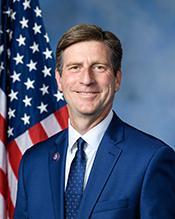
U.S. Representative for Arizona’s 4th district
Democrat
119th Congress, two-year term
Missed 2.1% of roll calls. Chamber median 1.9%.
The full voting recordCounts roll calls where most Democrats and most Republicans voted differently, leaving out procedural votes.
How we countFrom FEC filings, Voteview roll calls and Congress.gov.
Democrat. In Congress since 2019, 4 terms in total.
Following saves Stanton to your list, which Chamber & Street keeps on its server, linked to a cookie on this browser and not to your name or email. Email alerts will come with constituent verification.
Bills and resolutions Stanton signed on to as a cosponsor. An original cosponsor signed on the day the bill was introduced. Source: govinfo bill status files, last updated Nov 6, 2026.
To amend title 23, United States Code, with respect to the special rule for low emission and energy efficient vehicles facilities, and for other purposes.
Sponsor Nick LaLota (R). Original cosponsor. 11 cosponsors. H.R. 5321 on Congress.gov
Introduced
Restore Trust in Congress Act
Sponsor Chip Roy (R). Joined Sep 11, 2025. 145 cosponsors. H.R. 5106 on Congress.gov(opens in a new tab)
Introduced
FIGHT Act of 2025
Sponsor Don Bacon (R). Joined Sep 10, 2025. 150 cosponsors. H.R. 3946 on Congress.gov(opens in a new tab)
Introduced
Fair Accounting for Income Realized from Betting Earnings Taxation Act
Sponsor Dina Titus (D). Joined Sep 8, 2025. 25 cosponsors. H.R. 4304 on Congress.gov(opens in a new tab)
Introduced
FBI Animal Cruelty Taskforce Act of 2025
Sponsor Josh Gottheimer (D). Joined Sep 2, 2025. 23 cosponsors. H.R. 3683 on Congress.gov(opens in a new tab)
Introduced
Puppy Protection Act of 2025
Sponsor Brian Fitzpatrick (R). Joined Sep 2, 2025. 219 cosponsors. H.R. 2253 on Congress.gov(opens in a new tab)
Introduced
Metastatic Breast Cancer Access to Care Act
Sponsor Andrew Garbarino (R). Joined Sep 2, 2025. 271 cosponsors. H.R. 2048 on Congress.gov(opens in a new tab)
Introduced
Metastatic Breast Cancer Access to Care Act
This bill expedites payment of Social Security Disability Insurance (SSDI) benefits and eligibility for Medicare coverage for those with metastatic breast cancer (i.e., breast cancer that has spread to other sites in the body).
Specifically, the bill eliminates the 5-month waiting period for SSDI benefits and the subsequent 24-month waiting period for Medicare coverage for individuals with metastatic breast cancer. Under current law, individuals generally must wait 5 months after the onset of disability to begin receiving SSDI benefits and an additional 24 months to become eligible for Medicare.
Ally’s Act
Sponsor Joe Neguse (D). Joined Aug 29, 2025. 111 cosponsors. H.R. 4606 on Congress.gov(opens in a new tab)
Introduced
Relating to a national emergency by the President on July 30, 2025.
Sponsor Gregory Meeks (D). Original cosponsor. 7 cosponsors. H.J.Res. 117 on Congress.gov(opens in a new tab)
Introduced
Living Donor Protection Act of 2025
Sponsor Don Bacon (R). Joined Aug 26, 2025. 168 cosponsors. H.R. 4583 on Congress.gov(opens in a new tab)
Introduced
To amend the Family and Medical Leave Act of 1993 and title 5, United States Code, to clarify that organ donation surgery qualifies as a serious health condition.
Sponsor Don Bacon (R). Joined Aug 26, 2025. 168 cosponsors. H.R. 4582 on Congress.gov(opens in a new tab)
Introduced
American Decade of Sports Act
Sponsor Sydney Kamlager-Dove (D). Original cosponsor. 31 cosponsors. H.R. 5021 on Congress.gov(opens in a new tab)
Passed committee
Protect Americans from Climate Disasters Act
Sponsor Joe Neguse (D). Original cosponsor. 12 cosponsors. H.R. 5002 on Congress.gov(opens in a new tab)
Introduced
SUN Act
Sponsor Sam Liccardo (D). Original cosponsor. 56 cosponsors. H.R. 4998 on Congress.gov(opens in a new tab)
Introduced
Enduring Welcome Act of 2025
Sponsor Sydney Kamlager-Dove (D). Original cosponsor. 43 cosponsors. H.R. 4995 on Congress.gov(opens in a new tab)
Introduced
FEMA Critical Staffing Act
Sponsor Greg Casar (D). Original cosponsor. 13 cosponsors. H.R. 4992 on Congress.gov(opens in a new tab)
Introduced
Health Care Affordability Act of 2025
Sponsor Lauren Underwood (D). Joined Aug 19, 2025. 165 cosponsors. H.R. 247 on Congress.gov(opens in a new tab)
Introduced
Health Care Affordability Act of 2025
This bill makes permanent temporary changes enacted by the American Rescue Plan Act of 2021 (ARPA) and the Inflation Reduction Act of 2022 (IRA) that generally expand eligibility for and increase the amount of the premium tax credit.
Currently, eligible taxpayers may be able to claim the premium tax credit, which applies toward the cost of obtaining health insurance through health insurance exchanges. To be eligible for the premium tax credit, a taxpayer’s household income must meet or exceed 100% of the federal poverty level (FPL) and, after 2025, may not exceed 400% of the FPL (maximum income limit). For 2021-2025, the ARPA and IRA eliminated the maximum income limit, which generally expands eligibility for the premium tax credit.
Further, under current law, the amount of the premium tax credit is (1) generally the plan premium (conditions apply), minus (2) the taxpayer’s household income multiplied by the applicable percentage. The applicable percentage is a specific percentage that varies depending on which of six income ranges (adjusted for inflation after 2025) the taxpayer’s household income falls within. For 2021-2025, the ARPA and IRA lowered the applicable percentages and eliminated the adjustment of the applicable percentages for inflation, which generally increases the amount of the premium tax credit.
The bill makes permanent the elimination of the 400% maximum income limit, the lower applicable percentages, and the elimination of the inflation adjustment for the applicable percentages.
Conrad State 30 and Physician Access Reauthorization Act
Sponsor David Valadao (R). Joined Aug 19, 2025. 66 cosponsors. H.R. 1585 on Congress.gov(opens in a new tab)
Introduced
Conrad State 30 and Physician Access Reauthorization Act
This bill modifies the Conrad 30 Waiver program, which incentivizes qualified foreign physicians to serve in underserved communities. It also extends statutory authority for the program for three years from this bill's enactment.
Individuals coming to the United States under a J-1 nonimmigrant visa to receive medical training typically must leave the country and reside for two years abroad before being eligible to apply for an immigrant visa or permanent residence. The Conrad program waives this requirement for individuals who meet certain qualifications, including serving for a number of years at a health care facility in an underserved area.
The bill increases the number of waivers that a state may obtain each fiscal year from 30 to 35 if a certain number of waivers were used the previous year, and provides for further adjustments depending on demand.
A physician may be employed at an academic medical center to meet the Conrad program's employment requirements if the physician's work is in the public interest, even if the medical center is not in an underserved area.
Employment contracts for physicians under the Conrad program shall contain certain information, such as the maximum number of on-call hours per week the physician shall have to work.
Certain physicians (along with the physician's spouse and children) shall be exempt from the direct annual numerical limits on immigration, including those physicians that have met certain requirements related to visas for physicians to serve in underserved areas.
Newborn Screening Saves Lives Reauthorization Act of 2025
Sponsor Kelly Morrison (D). Joined Aug 15, 2025. 8 cosponsors. H.R. 4709 on Congress.gov(opens in a new tab)
Introduced
Newborn Screening Saves Lives Reauthorization Act of 2025
This bill reauthorizes through FY2030 and revises several programs and activities relating to newborn screening for certain conditions and diseases.
Among its changes, the bill reauthorizes and makes mandatory
• the Hunter Kelly Research Program at the National Institutes of Health, and
• national surveillance activities conducted by the Centers for Disease Control and Prevention.
The bill also provides statutory authority for current regulations that exempt federally funded research on non-identified newborn blood spots (i.e., residual blood samples used to screen for serious conditions) from regulations that govern research on human subjects.
HOV Lane Exemption Reauthorization Act
Sponsor Mark DeSaulnier (D). Original cosponsor. 33 cosponsors. H.R. 4948 on Congress.gov(opens in a new tab)
Introduced
Rights for the TSA Workforce Act
Sponsor Bennie Thompson (D). Joined Aug 12, 2025. 190 cosponsors. H.R. 2086 on Congress.gov(opens in a new tab)
Introduced
National Law Enforcement Officers Remembrance, Support, and Community Outreach Act
Sponsor Troy Nehls (R). Joined Aug 8, 2025. 124 cosponsors. H.R. 309 on Congress.gov(opens in a new tab)
Passed the House
National Law Enforcement Officers Remembrance, Support and Community Outreach Act. [sic]
This bill temporarily directs the Department of the Interior to award a grant to the National Law Enforcement Officers Memorial Fund for the expenses associated with operating and enhancing the community outreach, public education, and officer safety and wellness programs of the National Law Enforcement Museum.
Combating Organized Retail Crime Act of 2025
Sponsor David Joyce (R). Joined Aug 8, 2025. 206 cosponsors. H.R. 2853 on Congress.gov(opens in a new tab)
Passed the House
Combating Organized Retail Crime Act of 2025
This bill expands federal enforcement of criminal offenses related to organized retail and supply chain crime. The term organized retail and supply chain crime includes criminal offenses involving the interstate transportation of stolen property, the sale or receipt of stolen goods, or theft from an interstate or foreign shipment that is committed by, in coordination with, or at the instruction of an organization.
First, with respect to criminal offenses involving the interstate transportation of stolen property or the sale or receipt of stolen goods, the bill broadens the scope of conduct that qualifies as offenses by allowing prosecutions to be based on the aggregate value of stolen items over a 12-month period. Additionally, the bill makes the offenses predicate offenses (i.e., underlying offenses) for prosecutions under the federal money laundering statute and authorizes the criminal forfeiture of any property obtained from the proceeds of an offense.
Second, with respect to criminal offenses involving theft from an interstate or foreign shipment, the bill also makes an offense an underlying offense for prosecution under the federal money laundering statute and authorizes the criminal forfeiture of any associated property.
Third, the bill expands the federal money laundering statute to include offenses involving general-use prepaid cards, gift certificates, or store gift cards.
Finally, the bill temporarily establishes a center within the Department of Homeland Security to coordinate federal law enforcement activities related to organized retail and supply chain crime.
Mental Health in Aviation Act of 2025
Sponsor Sean Casten (D). Joined Aug 8, 2025. 43 cosponsors. H.R. 2591 on Congress.gov(opens in a new tab)
Passed the House
Mental Health in Aviation Act of 2025
This bill requires the Federal Aviation Administration (FAA) to review and update its regulations and policies on mental health for pilots and air traffic controllers.
The FAA must update regulations and take any other actions necessary to implement the recommendations of (1) the Aviation Workforce Mental Health Task Group, and (2) the Mental Health and Aviation Medical Clearances Aviation Rulemaking Committee (the ARC).
The FAA must also annually review and update, as appropriate, the applicable regulations and policies on mental health-related special issuance for pilots and air traffic controllers. As background, an Authorization for Special Issuance of a Medical Certificate is a discretionary document from the FAA which allows an airman with a disqualifying medical condition to fly under a restricted medical certificate.
Among other things, the review and update must
• reclassify and approve additional medications that may be safely prescribed to airmen to treat mental health conditions,
• delegate additional authority to aviation medical examiners (AMEs) consistent with the ARC recommendations, and
• improve the special issuance process for pilots and air traffic controllers.
The bill authorizes the FAA to take actions to recruit and train additional AMEs.
The bill also authorizes an FAA public information campaign or education efforts to (1) destigmatize individuals in (or interested in joining) the aviation industry who seek mental health care, (2) broaden awareness of available supportive services, and (3) establish trust with pilots and air traffic controllers.
Crime Victims Fund Stabilization Act of 2025
Sponsor Ann Wagner (R). Joined Aug 5, 2025. 327 cosponsors. H.R. 909 on Congress.gov(opens in a new tab)
Passed the House
Crime Victims Fund Stabilization Act of 2025
This bill adds a new source of revenue for the Crime Victims Fund (CVF). Specifically, the bill requires certain civil monetary penalties collected from settlements and judgments in cases involving fraud and false claims against the federal government to be deposited into the CVF through FY2029.
The CVF supports federal, state, and local programs and activities to compensate and assist victims of crimes. Currently, the CVF is funded by deposits from a variety of sources, including federal criminal fines, penalties, and assessments; forfeited bail bonds; and certain other gifts, donations, and bequests.