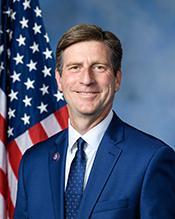
U.S. Representative for Arizona’s 4th district
Democrat
119th Congress, two-year term
Missed 2.1% of roll calls. Chamber median 1.9%.
The full voting recordCounts roll calls where most Democrats and most Republicans voted differently, leaving out procedural votes.
How we countFrom FEC filings, Voteview roll calls and Congress.gov.
Democrat. In Congress since 2019, 4 terms in total.
Following saves Stanton to your list, which Chamber & Street keeps on its server, linked to a cookie on this browser and not to your name or email. Email alerts will come with constituent verification.
Bills and resolutions Stanton signed on to as a cosponsor. An original cosponsor signed on the day the bill was introduced. Source: govinfo bill status files, last updated Nov 6, 2026.
Guard and Reserve GI Bill Parity Act of 2025
Sponsor Mike Levin (D). Original cosponsor. 57 cosponsors. H.R. 1423 on Congress.gov
Introduced
Guard and Reserve GI Bill Parity Act of 2025
This bill expands eligibility for Post-9/11 educational assistance for members of the reserve components of the Armed Forces and members of the National Guard. Specifically, the bill expands the types of activities that count towards Post-9/11 GI Bill eligibility to include active duty, inactive-duty training, annual training duty, and full-time National Guard duty or active duty. (Generally, under current law, only federal active duty counts towards educational assistance eligibility.)
ARC Act of 2025
Sponsor LaMonica McIver (D). Joined Feb 13, 2025. 44 cosponsors. H.R. 307 on Congress.gov(opens in a new tab)
Introduced
Amputation Reduction and Compassion Act of 2025 or the ARC Act of 2025
This bill provides for coverage of peripheral artery disease screening tests without cost-sharing under Medicare and Medicaid for certain at-risk individuals. It also requires the development of certain educational programs, a payment model, and Medicare quality measures to reduce amputations relating to such disease.
Protect U.S. National Security Act
Sponsor Sara Jacobs (D). Original cosponsor. 66 cosponsors. H.R. 1196 on Congress.gov(opens in a new tab)
Introduced
Scientific Integrity Act
Sponsor Paul Tonko (D). Original cosponsor. 140 cosponsors. H.R. 1106 on Congress.gov(opens in a new tab)
Introduced
Scientific Integrity Act
This bill requires each federal agency that funds, conducts, or oversees scientific research to adopt and enforce a scientific integrity policy.
Under the bill, among other parameters, such policies must (1) ensure that scientific conclusions are not based on political considerations, (2) prohibit the suppression or alteration of findings, and (3) permit researchers to disseminate their findings and engage with the scientific community as appropriate. Scientific integrity policies must also include a mechanism through which stakeholders may report violations of the policy.
Agencies are required to submit their scientific integrity policies to the Office of Science and Technology Policy (OSTP) for approval. Approved policies must be made public, submitted to Congress, and periodically updated. Agencies may use their existing policies provided they satisfy the requirements of the bill. The Government Accountability Office must review implementation of the policies.
Each agency is also required to (1) appoint a Scientific Integrity Officer, (2) establish a process for dispute resolution consistent with the scientific integrity policy, and (3) establish a specified training program for current and new employees.
Taxpayer Data Protection Act
Sponsor Haley Stevens (D). Original cosponsor. 205 cosponsors. H.R. 1101 on Congress.gov(opens in a new tab)
Introduced
Taxpayer Data Protection Act
This bill restricts access to any public money receipt or payment system belonging to the Department of the Treasury.
Specifically, access is limited to authorized Treasury officers, employees, or contractors meeting certain performance standards who have held a qualified position for at least a year, or who hold other qualifications as provided by the bill. The bill specifically prohibits special government employees (i.e., temporary appointees hired to perform specific tasks) from having access to such systems. The bill also provides that an individual accessing such systems shall be treated as an executive branch employee for purposes of federal criminal conflict of interest laws.
Treasury's Office of Inspector General must investigate and report on each instance of unauthorized use or other access of such payment systems.
Authorizing the use of the Capitol Grounds for the National Peace Officers Memorial Service and the National Honor Guard and Pipe Band Exhibition.
Sponsor Scott Perry (R). Original cosponsor. 1 cosponsor. H.Con.Res. 9 on Congress.gov(opens in a new tab)
Passed the House
This concurrent resolution authorizes the National Fraternal Order of Police to sponsor two public events on Capitol grounds: the 44th Annual National Peace Officers Memorial Service (on May 15, 2025), and the National Honor Guard and Pipe Band Exhibition (on May 14, 2025). The concurrent resolution also authorizes the Speaker of the House and the Committee on Rules and Administration of the Senate to jointly designate alternate dates.
Condemning the pardons for individuals who were found guilty of assaulting Capitol Police Officers.
Sponsor Bonnie Watson Coleman (D). Original cosponsor. 138 cosponsors. H.Res. 116 on Congress.gov(opens in a new tab)
Introduced
This resolution disapproves of pardons for individuals who were found guilty of assaulting U.S. Capitol Police officers.
Right to Contraception Act
Sponsor Lizzie Fletcher (D). Original cosponsor. 211 cosponsors. H.R. 999 on Congress.gov(opens in a new tab)
Introduced
Right to Contraception Act
This bill sets out statutory protections for an individual's right to access and a health care provider's right to provide contraception and related information. Contraception refers to an action taken to prevent pregnancy, including the use of contraceptives (i.e., a device or medication used to prevent pregnancy), fertility-awareness based methods, and sterilization procedures.
Generally, the bill prohibits measures that single out and impede access to contraception and related information. However, a party may defend against a claim that a measure violates the bill's prohibitions by demonstrating, through clear and convincing evidence, that the measure significantly advances the safety of contraception and cannot be achieved through less restrictive means. The bill also specifies that the prohibition preempts inconsistent state and local laws and applies notwithstanding other federal laws, including the Religious Freedom Restoration Act of 1993.
The Department of Justice, individuals, or health care providers may bring a lawsuit to enforce this bill, and states are not immune from suits for violations.
ACES Act
Sponsor August Pfluger (R). Joined Feb 5, 2025. 35 cosponsors. H.R. 530 on Congress.gov(opens in a new tab)
Passed the House
ACES Act
This bill requires the Department of Veterans Affairs to enter into an agreement with the National Academies of Sciences, Engineering, and Medicine to study and report on the prevalence and mortality of cancers among veterans who served on active duty as aircrew members and regularly flew in fixed-wing aircraft.
Expressing support for the Nation's local public K-12 schools and condemning any actions that would defund public education or weaken or dismantle the Department of Education.
Sponsor Suzanne Bonamici (D). Original cosponsor. 99 cosponsors. H.Res. 94 on Congress.gov(opens in a new tab)
Introduced
This resolution supports federal investment in public K-12 schools, affirms that the Department of Education (ED) plays a vital role in the public education system, and states that public education funding should not be diverted (e.g., through the use of vouchers) to privately run K-12 schools.
The resolution also rejects any claim that the executive branch has the legal authority to (1) dismantle or relocate ED or any of its major offices; or (2) reduce federal funding for public education, block federal grants for education, or transfer funding burdens for education to state and local governments.
Expressing the sense of the House of Representatives that Congress should take all appropriate measures to ensure that the United States Postal Service remains an independent establishment of the Federal Government and is not subject to privatization.
Sponsor Stephen Lynch (D). Joined Feb 4, 2025. 238 cosponsors. H.Res. 70 on Congress.gov(opens in a new tab)
Introduced
This resolution expresses the sense of the House of Representatives that Congress should ensure that the U.S. Postal Service is not privatized and remains an independent establishment of the federal government.
NO BAN Act
Sponsor Judy Chu (D). Original cosponsor. 122 cosponsors. H.R. 924 on Congress.gov(opens in a new tab)
Introduced
National Origin-Based Antidiscrimination for Nonimmigrants Act or the NO BAN Act
This bill imposes limitations on the President's authority to suspend or restrict aliens from entering the United States. It also prohibits religious discrimination in various immigration-related decisions, such as whether to issue an immigrant or nonimmigrant visa, unless there is a statutory basis for such discrimination.
The President may temporarily restrict the entry of any aliens or class of aliens after the Department of State determines that the restriction would address specific and credible facts that threaten U.S. interests such as public safety.
The bill also imposes limitations on such restrictions, such as requiring the President, State Department, and the Department of Homeland Security (DHS) to (1) only issue a restriction when required to address a compelling government interest, and (2) narrowly tailor the suspension to use the least restrictive means to achieve such an interest.
Before imposing a restriction, the State Department and DHS shall consult with Congress. The State Department and DHS shall report to Congress about the restriction within 48 hours of the restriction's imposition. If such a report is not made, the restriction shall immediately terminate.
Individuals or entities present in the United States and unlawfully harmed by such a restriction may sue in federal court.
The bill transfers the authority to suspend the entry of aliens traveling to the United States on a commercial airline that failed to comply with regulations related to detecting fraudulent travel documents from the Department of Justice to DHS.
Prevent Tariff Abuse Act
Sponsor Suzan DelBene (D). Joined Feb 4, 2025. 75 cosponsors. H.R. 407 on Congress.gov(opens in a new tab)
Introduced
Prevent Tariff Abuse Act
This bill prohibits the President from exercising authorities under the International Emergency Economic Powers Act (IEEPA) to impose duties, tariff-rate quotas, or other quotas on imports entering the United States. (IEEPA provides the President with broad authority to regulate various economic transactions following a declaration of a national emergency.)
Secretary General Jens Stoltenberg Congressional Gold Medal Act
Sponsor Neal Dunn (R). Joined Feb 4, 2025. 14 cosponsors. H.R. 269 on Congress.gov(opens in a new tab)
Introduced
Secretary General Jens Stoltenberg Congressional Gold Medal Act
This bill provides for the award of a Congressional Gold Medal to Jens Stoltenberg in recognition of his contributions to the security, unity, and defense of the North Atlantic Treaty Organization.
Lower Colorado River Multi-Species Conservation Program Amendment Act of 2025
Sponsor Ken Calvert (R). Original cosponsor. 5 cosponsors. H.R. 831 on Congress.gov(opens in a new tab)
Passed the House
Lower Colorado River Multi-Species Conservation Program Amendment Act of 2025
This bill establishes an interest-bearing account for the nonfederal contributions for the Lower Colorado River Multi-Species Conservation Program, a cooperative effort between federal and nonfederal entities in Arizona, California, and Nevada. The program works to recover multiple species listed under the Endangered Species Act.
Currently, the pace of funding exceeds the pace of work. The bill allows the nonfederal contributions deposited in the fund to be made available, without further appropriation, for the program in the future. However, amounts derived from interest earned on amounts in the fund are subject to the availability of appropriations.
Holocaust Education and Antisemitism Lessons Act
Sponsor Josh Gottheimer (D). Original cosponsor. 112 cosponsors. H.R. 768 on Congress.gov(opens in a new tab)
Introduced
Holocaust Education and Antisemitism Lessons Act
This bill directs the U.S. Holocaust Memorial Museum to study and report on Holocaust education efforts in states, local educational agencies (LEAs), and public elementary and secondary schools. Among other elements, the study must (1) determine whether states and LEAs require Holocaust education as part of the curriculum taught in public elementary and secondary schools, (2) identify the standards and requirements relating to Holocaust education, and (3) identify the types of instructional material used to teach students about the Holocaust.
Global Health, Empowerment and Rights Act
Sponsor Lois Frankel (D). Original cosponsor. 138 cosponsors. H.R. 764 on Congress.gov(opens in a new tab)
Introduced
Global Health, Empowerment and Rights Act
This bill establishes that a foreign nongovernmental organization shall not be disqualified from receiving certain U.S. international development assistance solely because the organization provides medical services (including counseling and referral services) using non-U.S. government funds if the medical services do not violate the laws of the country in which they are being provided. Such foreign organizations shall not be subject to requirements relating to their use of non-U.S. funds for advocacy or lobbying activities other than those that apply to U.S. nongovernmental organizations receiving such assistance.
Critical Mineral Consistency Act of 2025
Sponsor Juan Ciscomani (R). Original cosponsor. 13 cosponsors. H.R. 755 on Congress.gov(opens in a new tab)
Passed the House
Critical Mineral Consistency Act of 2025
This bill modifies the Energy Act of 2020 to expand the definition of critical minerals to include critical materials designated by the Department of Energy (DOE).
Under current law, DOE's critical materials list contains certain materials that are essential for energy, including those on the critical minerals list of the U.S. Geological Survey (USGS). The USGS's list, which contains certain minerals that are essential to the nation's economic or national security, is not required to include the materials on DOE's list. Currently, both lists include minerals with a high risk of supply chain disruptions, and both DOE and USGS must conduct a variety of efforts to ensure a secure and reliable supply chain of the minerals.
By expanding the definition of critical minerals, this bill requires the USGS to include on its list the materials on DOE's list. Within 45 days of DOE adding a mineral, element, substance, or material to its critical materials list, the USGS must update its list to include such mineral, element, substance, or material.
Disaster Management Costs Modernization Act
Sponsor Joe Neguse (D). Original cosponsor. 11 cosponsors. H.R. 744 on Congress.gov(opens in a new tab)
Passed committee
Expressing strong disapproval of the President's announcement to withdraw the United States from the Paris Agreement.
Sponsor Bradley Schneider (D). Original cosponsor. 162 cosponsors. H.Res. 68 on Congress.gov(opens in a new tab)
Introduced
Proxy Voting for New Parents Resolution
Sponsor Brittany Pettersen (D). Joined Jan 22, 2025. 175 cosponsors. H.Res. 23 on Congress.gov(opens in a new tab)
Introduced
Proxy Voting for New Parents Resolution
This resolution authorizes proxy voting in the House of Representatives for a Member who has given birth or whose spouse has given birth and pregnant Members who are unable to travel safely or have a serious medical condition.
Under the resolution, a qualifying Member may designate a proxy to cast a vote in a committee, the Committee of the Whole, or on the House floor; however, proxies will not be counted for purposes of establishing a quorum. The proxy designation is valid for up to 12 weeks.
To designate a proxy for House and Committee of the Whole votes, the Member must submit a signed and dated letter to the Clerk stating the Member’s qualifying circumstances and the name and state of the Member who has agreed to be designated as proxy. A Member who has designated a proxy according to these requirements may also designate a proxy for committee votes. To designate a proxy for committee votes, the Member must provide the committee chair and ranking minority member with a signed and dated letter specifying another member of the committee to cast a proxy vote.
The resolution further provides that a Member may revoke the proxy authorization by (1) casting the Member’s own vote; (2) recording the Member’s own presence in the House or in the Committee of the Whole; or (3) in a committee, by submitting a signed letter to the chair and ranking minority member.
Paws Off Act of 2025
Sponsor David Schweikert (R). Joined Jan 16, 2025. 1 cosponsor. H.R. 237 on Congress.gov(opens in a new tab)
Introduced
Paws Off Act of 2025
This bill forbids the sale of food that contains xylitol unless the food's label contains a warning about the toxic effects of xylitol for dogs if ingested.
Miracle on Ice Congressional Gold Medal Act
Sponsor Pete Stauber (R). Original cosponsor. 299 cosponsors. H.R. 452 on Congress.gov(opens in a new tab)
Became law
Miracle on Ice Congressional Gold Medal Act
This act provides for the award of Congressional Gold Medals to the members of the 1980 U.S. Olympic men's ice hockey team in recognition of the team's achievement at the 1980 Winter Olympic Games.
TRUST in Congress Act
Sponsor Seth Magaziner (D). Original cosponsor. 103 cosponsors. H.R. 396 on Congress.gov(opens in a new tab)
Introduced
Transparent Representation Upholding Service and Trust in Congress Act or the TRUST in Congress Act
This bill requires a Member of Congress, as well as any spouse or dependent child of a Member, to place specified investments into a qualified blind trust (i.e., an arrangement in which certain financial holdings are placed in someone else's control to avoid a possible conflict of interest) until 180 days after the end of their tenure as a Member of Congress.
To amend the Internal Revenue Code of 1986 to provide special rules for the taxation of certain residents of Taiwan with income from sources within the United States.
Sponsor Jason Smith (R). Joined Jan 13, 2025. 46 cosponsors. H.R. 33 on Congress.gov(opens in a new tab)
Passed the House