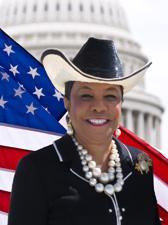
U.S. Representative for Florida’s 24th district
Democrat
119th Congress, two-year term
Missed 28.6% of roll calls. Chamber median 1.9%.
The full voting recordCounts roll calls where most Democrats and most Republicans voted differently, leaving out procedural votes.
How we countFrom FEC filings, Voteview roll calls and Congress.gov.
Democrat. In Congress since 2011, 8 terms in total.
Following saves Wilson to your list, which Chamber & Street keeps on its server, linked to a cookie on this browser and not to your name or email. Email alerts will come with constituent verification.
Bills and resolutions Wilson signed on to as a cosponsor. An original cosponsor signed on the day the bill was introduced. Source: govinfo bill status files, last updated Nov 6, 2026.
Recognizing the significance of equal pay and the disparity between wages paid to men and women.
Sponsor Lois Frankel (D). Original cosponsor. 140 cosponsors. H.Con.Res. 81 on Congress.gov
Introduced
Perinatal Workforce Act
Sponsor Gwen Moore (D). Original cosponsor. 43 cosponsors. H.R. 8089 on Congress.gov(opens in a new tab)
Introduced
Perinatal Workforce Act
This bill establishes programs and requires research to diversify the perinatal workforce and advance respectful maternal care delivery models.
Specifically, the Department of Health and Human Services (HHS) must award grants to education and training programs to grow and diversify the professions that make up the perinatal workforce. HHS must also disseminate guidance on respectful maternal care delivery. This guidance must cover, among other topics, recruiting and retaining maternity care providers from diverse backgrounds and incorporating trained midwives and other perinatal health workers into maternity care teams.
In addition, the National Institutes of Health must study best practices for culturally and linguistically congruent maternity care. This is care that is in agreement with the preferred cultural values, beliefs, languages, worldview, and practices of health care consumers and other stakeholders.
The Government Accountability Office must also report on certain aspects of perinatal health care professions. The reporting must focus on barriers to entering those professions for low-income and minority women.
Data to Save Moms Act
Sponsor Sharice Davids (D). Original cosponsor. 45 cosponsors. H.R. 8080 on Congress.gov(opens in a new tab)
Introduced
Kira Johnson Act
Sponsor Alma Adams (D). Original cosponsor. 62 cosponsors. H.R. 8074 on Congress.gov(opens in a new tab)
Introduced
Kira Johnson Act
This bill establishes various grants for establishing or expanding programs to advance maternal health equity.
Specifically, the Department of Health and Human Services (HHS) must award grants for
• community-based programs to improve maternal health outcomes for demographic groups with elevated rates of maternal mortality and morbidity, maternal health disparities, and other adverse outcomes;
• training for health care providers and others who work in maternity care settings on reducing and preventing racism, bias, and discrimination; and
• programs in hospitals, health systems, and other maternity care settings to establish processes to identify and address instances of racism or evidence of bias in maternity care (i.e., respectful maternity care compliance programs).
Also, HHS must contract with the National Academies of Sciences, Engineering, and Medicine to study issues related to the training programs, and the Government Accountability Office must study issues related to the respectful maternity care compliance programs.
Recognizing the duty of Congress to meet the needs of working women.
Sponsor LaMonica McIver (D). Original cosponsor. 26 cosponsors. H.Con.Res. 80 on Congress.gov(opens in a new tab)
Introduced
Extending WIC for New Moms Act
Sponsor Lucy McBath (D). Original cosponsor. 90 cosponsors. H.R. 8055 on Congress.gov(opens in a new tab)
Introduced
Extending WIC for New Moms Act
This bill amends the Special Supplemental Nutrition Program for Women, Infants, and Children (WIC) to extend the eligibility periods for breastfeeding and postpartum women.
Specifically, a state program may elect to certify a breastfeeding woman for up to 24 months (currently 1 year) postpartum. The bill also expands the eligibility period for postpartum women to up to 24 months after termination of pregnancy (currently 6 months).
The Department of Agriculture must submit a report to Congress evaluating the effect of these changes to the program on (1) maternal and infant health outcomes, (2) breastfeeding rates, and (3) qualitative evaluations of family experiences under WIC.
Providing for congressional disapproval under chapter 8 of title 5, United States Code, of the rule submitted by the Department of Veterans Affairs relating to "Reproductive Health Services".
Sponsor Julia Brownley (D). Joined Mar 24, 2026. 155 cosponsors. H.J.Res. 144 on Congress.gov(opens in a new tab)
Introduced
Social Determinants for Moms Act
Sponsor Jahana Hayes (D). Original cosponsor. 43 cosponsors. H.R. 8008 on Congress.gov(opens in a new tab)
Introduced
Social Determinants for Moms Act
This bill requires the Department of Health and Human Services (HHS) to establish a task force and a grant program to address social determinants of maternal health. These are nonmedical factors that impact maternal health outcomes, such as transportation, food security, and economic security.
The task force, composed of federal and nonfederal stakeholders, must develop strategies and coordinate efforts to eliminate preventable maternal mortality, severe maternal morbidity, and maternal health disparities.
Additionally, HHS must award grants to community-based organizations, nonprofits, tribal organizations, public health departments, or consortia of these entities to address social determinants of maternal health and eliminate disparities in maternal health outcomes.
Energy Bills Relief Act
Sponsor Sean Casten (D). Original cosponsor. 163 cosponsors. H.R. 7977 on Congress.gov(opens in a new tab)
Introduced
Momnibus Act
Sponsor Lauren Underwood (D). Original cosponsor. 214 cosponsors. H.R. 7973 on Congress.gov(opens in a new tab)
Introduced
Ending Homelessness Act of 2025
Sponsor Maxine Waters (D). Joined Mar 18, 2026. 26 cosponsors. H.R. 4872 on Congress.gov(opens in a new tab)
Introduced
Expressing support for the designation of the third week of March as "National CACFP Week".
Sponsor Suzanne Bonamici (D). Original cosponsor. 5 cosponsors. H.Res. 1118 on Congress.gov(opens in a new tab)
Introduced
This resolution recognizes the role of the Child and Adult Care Food Program (commonly referred to as CACFP) in improving the health of the country's most vulnerable children and adults in Head Start programs, child care programs, family day care homes, emergency shelters, adult day care programs, and after-school care by providing nutritious meals and snacks.
It also supports the designation of National CACFP Week.
Fair Wages for Home Care Workers Act
Sponsor Alexandria Ocasio-Cortez (D). Original cosponsor. 85 cosponsors. H.R. 7917 on Congress.gov(opens in a new tab)
Introduced
Expressing support for the recognition of March 10, 2026, as "Abortion Provider Appreciation Day".
Sponsor Ayanna Pressley (D). Original cosponsor. 23 cosponsors. H.Con.Res. 78 on Congress.gov(opens in a new tab)
Introduced
Infant Formula Safety Modernization Act of 2026
Sponsor Rosa DeLauro (D). Original cosponsor. 47 cosponsors. H.R. 7867 on Congress.gov(opens in a new tab)
Introduced
Infant Formula Safety Modernization Act of 2026
This bill directs the Food and Drug Administration (FDA) to expand requirements for the testing of infant formula and formula manufacturing facilities for pathogens and microorganisms.
Current regulations generally require manufacturers to test finished formula products for Cronobacter and Salmonella. The FDA tests manufacturing facilities for these contaminants in regular inspections, but manufacturers are not required to test their own facilities.
Within 90 days of the bill's enactment, the FDA must issue a final rule requiring manufacturers to test their facilities and finished formula products for certain pathogens and microorganisms, including Clostridium botulinum (which causes botulism). These regulations must include a recommended frequency for facilities testing, including requirements for testing different areas based on their proximity to formula products.
Manufacturers must notify the FDA within one business day of any positive result for one of the specified pathogens or microorganisms in a finished formula product, even if the product is still in the manufacturer’s possession. (Currently, notice is required only if the affected product has left the manufacturer’s facilities.) Manufacturers must also retain records of any positive result (from a test of formula or facilities).
The FDA must notify Congress within one business day of
• receiving notice of a positive test result for a finished formula product, or
• recommending official corrective action to address the findings of a facility inspection.
Finally, the regulations must explicitly require the FDA to enforce consistent inspection and compliance standards for all formula products, including imported products.
Supporting the goals and ideals of National Women and Girls HIV/AIDS Awareness Day.
Sponsor Maxine Waters (D). Original cosponsor. 18 cosponsors. H.Res. 1109 on Congress.gov(opens in a new tab)
Introduced
This resolution expresses support for the goals and ideals of National Women and Girls HIV/AIDS Awareness Day. It recognizes domestic and global progress towards ending the HIV epidemic and calls for additional efforts, with a particular focus on reducing HIV-related vulnerabilities of women and girls.
Memorializing Rev. Jesse Jackson by flying the flag of the United States at halfstaff.
Sponsor Joyce Beatty (D). Original cosponsor. 168 cosponsors. H.Res. 1107 on Congress.gov(opens in a new tab)
Introduced
Fair Housing for Survivors Act of 2026
Sponsor Debbie Wasserman Schultz (D). Original cosponsor. 49 cosponsors. H.R. 7856 on Congress.gov(opens in a new tab)
Introduced
WELLS Act
Sponsor Robin Kelly (D). Original cosponsor. 31 cosponsors. H.R. 7830 on Congress.gov(opens in a new tab)
Introduced
Disaster Aid Without Delay Act of 2026
Sponsor Pablo Hernández (D). Original cosponsor. 14 cosponsors. H.R. 7829 on Congress.gov(opens in a new tab)
Introduced
Honoring the life and legacy of Rev. Jesse Louis Jackson, Sr.
Sponsor Maxine Waters (D). Original cosponsor. 115 cosponsors. H.Res. 1106 on Congress.gov(opens in a new tab)
Introduced
DISCLOSE Act of 2026
Sponsor Chris Pappas (D). Original cosponsor. 189 cosponsors. H.R. 7802 on Congress.gov(opens in a new tab)
Introduced
Democracy Is Strengthened by Casting Light On Spending in Elections Act of 2026 or the DISCLOSE Act of 2026
This bill addresses campaign finance, including by expanding the prohibition on campaign spending by foreign nationals, requiring additional disclosures of campaign expenditures, and requiring additional disclosures regarding certain political advertisements.
Specifically, the bill expands existing foreign money prohibitions to include disbursements for paid web-based or digital communications and federal judicial nomination communications. It also prohibits foreign nationals from contributing to campaigns related to ballot initiatives and referenda.
The Government Accountability Office must, for each four-year election cycle, study and report on the incidence of illicit foreign money in federal elections.
Next, the bill makes it unlawful to establish or use a corporation, company, or other entity with the intent to conceal an election contribution or donation by a foreign national. A violator is subject to criminal penalties—a fine, a prison term of up to five years, or both.
Covered organizations (e.g., corporations, labor organizations, and political organizations) must, within 24 hours, file reports with the Federal Election Commission to disclose campaign expenditures of more than $10,000 during an election cycle.
The bill also requires organizations to provide additional disclosures regarding political advertisements, including the donors who contributed the most money to that organization in the last year.
To amend the Internal Revenue Code of 1986 to modify the railroad track maintenance credit.
Sponsor Mike Kelly (R). Joined Mar 4, 2026. 183 cosponsors. H.R. 516 on Congress.gov(opens in a new tab)
Introduced
This bill increases the annual limit on the tax credit for qualified railroad track maintenance expenses (also referred to as the short line railroad tax credit) and expands eligibility for claiming the credit.
Under current law, the tax credit is limited each tax year to $3,500 multiplied by the sum of the number of miles of railroad track owned or leased by the taxpayer (miles owned or leased) and the number of railroad track miles assigned to the taxpayer by a Class II or III railroad (miles assigned). This bill increases the annual limit to $6,100 multiplied by the sum of miles owned or leased and miles assigned. The $6,100 amount used in the calculation of the tax credit limit is adjusted for inflation for tax years beginning after 2025.
The bill also expands eligibility for the tax credit to include gross expenses for maintaining railroad tracks owned or leased as of January 1, 2024. Under current law, the tax credit is limited to gross expenses for maintaining railroad tracks owned or leased as of January 1, 2015.
Stop Militarizing Law Enforcement Act
Sponsor Henry Johnson (D). Original cosponsor. 22 cosponsors. H.R. 7766 on Congress.gov(opens in a new tab)
Introduced
Office of Small Farms Establishment Act of 2026
Sponsor Marilyn Strickland (D). Joined Mar 3, 2026. 5 cosponsors. H.R. 7562 on Congress.gov(opens in a new tab)
Introduced
Office of Small Farms Establishment Act of 2026
This bill requires the Department of Agriculture (USDA) to establish the Office of Small Farms within the farm production and conservation mission area.
The office must coordinate, review, and implement various programs and activities related to small farms, ranches, and forest operations. Under the bill, a small farm, ranch, or forest operation (1) is less than 180 acres or meets another USDA-determined, acreage-based definition of small; and (2) has an annual gross cash farm income of less than $350,000.
Among other things, the activities of the office related to small farms, ranches, and forest operations must include
• coordinating USDA efforts to improve support for these operators;
• providing or coordinating technical assistance for these operators for USDA grant, cost-share, and loan programs; and
• providing grants of not more than $25,000 to these operators directly or through cooperative agreements with other entities for areas including equipment and infrastructure repairs and upgrades, uninsured losses, business planning, and conservation practice adoption.
In addition, the Office of Small Farms must designate a small farms coordinator in each state.