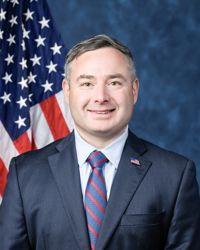
U.S. Representative for Virginia’s 7th district
Democrat
119th Congress, two-year term
Missed 0.7% of roll calls. Chamber median 1.9%.
The full voting recordCounts roll calls where most Democrats and most Republicans voted differently, leaving out procedural votes.
How we countFrom FEC filings, Voteview roll calls and Congress.gov.
Democrat. In Congress since 2025, 1 term in total.
Following saves Vindman to your list, which Chamber & Street keeps on its server, linked to a cookie on this browser and not to your name or email. Email alerts will come with constituent verification.
Bills and resolutions Vindman signed on to as a cosponsor. An original cosponsor signed on the day the bill was introduced. Source: govinfo bill status files, last updated Nov 6, 2026.
IMPACT to Save Moms Act
Sponsor Janice Schakowsky (D). Joined Jul 20, 2026. 72 cosponsors. H.R. 8907 on Congress.gov
Introduced
Innovative Maternal Payment and Coverage To Save Moms Act or the IMPACT to Save Moms Act
This bill requires the Centers for Medicare & Medicaid Services to establish the Perinatal Care Alternative Payment Model Demonstration Project through FY2031 to allow states to test payment models for maternity care, including postpartum care, under Medicaid and the Children's Health Insurance Program (CHIP).
Connected Vehicle Security Act of 2026
Sponsor John Moolenaar (R). Joined Jul 20, 2026. 146 cosponsors. H.R. 8730 on Congress.gov(opens in a new tab)
Introduced
Connected Vehicle Security Act of 2026
This bill prohibits the importation, manufacture, sale, resale, or introduction into U.S. interstate commerce of connected vehicles and related software and hardware components associated with China, Russia, Iran, or North Korea.
Connected vehicle means a vehicle that (1) integrates onboard networked hardware with automotive software systems to communicate with any other network or device using certain methods (e.g., wireless spectrum connectivity); or (2) is designed, manufactured, or originally equipped to communicate via such methods, regardless of whether such capability is enabled, disabled, or removed at the time the vehicle enters the United States.
Current regulations administered by the Department of Commerce's Bureau of Industry and Security (BIS) prohibit transactions involving vehicle connectivity system hardware and covered software designed, developed, manufactured, or supplied by persons owned by, controlled by, or subject to the jurisdiction or direction of China or Russia.
The bill expands the BIS regulatory framework, including by (1) expanding the countries covered by the prohibition to include China, Russia, Iran, and North Korea (Current BIS regulations apply only to China and Russia.); and (2) specifying that certain artificial intelligence components are covered by the prohibition.
By January 1, 2027, BIS must publish a list of items that are authorized for the importation, manufacture, sale, resale, or introduction into U.S. interstate commerce and would otherwise be subject to the bill's prohibition.
The bill also includes enforcement mechanisms, including that BIS must assess civil penalties for violations of the prohibition.
STOP Suicide Act
Sponsor Jamie Raskin (D). Joined Jul 16, 2026. 5 cosponsors. H.R. 8124 on Congress.gov(opens in a new tab)
Introduced
Improving Access to Medicare Coverage Act of 2025
Sponsor Joe Courtney (D). Joined Jul 15, 2026. 49 cosponsors. H.R. 3954 on Congress.gov(opens in a new tab)
Introduced
Improving Access to Medicare Coverage Act of 2025
This bill deems an individual receiving outpatient observation services in a hospital as an inpatient for purposes of satisfying the three-day inpatient hospital-stay requirement with respect to Medicare coverage of skilled nursing facility (SNF) services. (Generally, individuals must have been an inpatient at a hospital for at least three days in order to qualify for SNF services. An individual's time spent under observation at a hospital for purposes of determining whether the individual should be admitted does not count towards this requirement.)
Expressing support for the designation of July 10th as Journeyman Lineworkers Recognition Day.
Sponsor Linda Sánchez (D). Original cosponsor. 146 cosponsors. H.Res. 1427 on Congress.gov(opens in a new tab)
Introduced
Advanced Transmission Technology to Reduce Rates Act
Sponsor Craig Goldman (R). Joined Jul 13, 2026. 2 cosponsors. H.R. 9335 on Congress.gov(opens in a new tab)
Passed committee
Military CARE Act
Sponsor Steven Horsford (D). Joined Jul 13, 2026. 23 cosponsors. H.R. 6796 on Congress.gov(opens in a new tab)
Introduced
Broadband Grant Tax Treatment Act
Sponsor Mike Kelly (R). Joined Jul 13, 2026. 15 cosponsors. H.R. 1873 on Congress.gov(opens in a new tab)
Introduced
Broadband Grant Tax Treatment Act
This bill excludes from gross income (for federal tax purposes) certain grants received for broadband deployment.
As background, contributions of capital to a corporation generally are not taxable income. However, under an exception enacted in 2017 by the Tax Cuts and Jobs Act, grants from a government or civic organization are not contributions to capital and, thus, treated as taxable income. Prior to the Tax Cuts and Jobs Act, the Internal Revenue Service (IRS) considered certain grants from a government or civic organization contributions of capital and, thus, not taxable income.
The bill specifically excludes from gross income grants received for broadband deployment from the
• National Telecommunications and Information Administration (NTIA) Broadband Equity, Access, and Deployment Program;
• NTIA State Digital Equity Capacity Grant Program;
• NTIA Digital Equity Competitive Grant Program;
• NTIA Enabling Middle Mile Broadband Infrastructure Program;
• Department of Agriculture ReConnect Program;
• Coronavirus State and Local Fiscal Recovery Funds and the Coronavirus Capital Projects Fund; and
• NTIA Tribal Broadband Connectivity Program and the Broadband Infrastructure Program.
The bill also requires the IRS to issue guidance on the exclusion from gross income of such grants.
The bill applies to funds received in tax years ending after March 11, 2023.
Pell Grant Preservation and Expansion Act of 2026
Sponsor Mark Pocan (D). Joined Jul 9, 2026. 54 cosponsors. H.R. 9414 on Congress.gov(opens in a new tab)
Introduced
Affordable Innovation for the Grid Act
Sponsor Diana Harshbarger (R). Joined Jul 9, 2026. 6 cosponsors. H.R. 9339 on Congress.gov(opens in a new tab)
Passed the House
Affordable Innovation for the Grid Act
This bill directs the Department of Energy to assess and report on the use of artificial intelligence and high-performance computing technologies to enhance the capacity, reliable operation, and operational efficiency of the bulk-power system.
Load Forecasting Enhancement Act
Sponsor Troy Balderson (R). Joined Jul 9, 2026. 6 cosponsors. H.R. 9332 on Congress.gov(opens in a new tab)
Passed the House
Load Forecasting Enhancement Act
This bill requires the Federal Energy Regulatory Commission (FERC) to establish regional boards to study and recommend best practices for electric load forecasting, which is the process of predicting the demand for electricity at a particular time. It also requires states to consider adopting the recommendations.
Specifically, the bill directs FERC to establish regional boards to study electric load forecasting, chair the boards, and run them jointly with each state public utility commission in the regions. The boards must (1) study issues relevant to identifying best practices for electric load forecasting that enhance the reliability and affordability of electric service to customers, and (2) identify such best practices. FERC must make recommendations to Congress for the consistent use across states of such best practices by electric utilities.
The bill also modifies provisions under the Public Utility Regulatory Policies Act to require state public utility commissions to consider adopting those recommendations.
It also modifies the Energy Policy and Conservation Act to make federal assistance for state energy conservation plans contingent upon the plan including procedures and programs to improve the accuracy, oversight, and transparency to stakeholders of the forecasting of electric loads by electric utilities.
Keep Public Funds in Public Schools Act of 2026
Sponsor Gwen Moore (D). Joined Jul 9, 2026. 112 cosponsors. H.R. 9289 on Congress.gov(opens in a new tab)
Introduced
Protecting Families from AI Data Center Energy Costs Act
Sponsor Greg Landsman (D). Joined Jul 9, 2026. 25 cosponsors. H.R. 6529 on Congress.gov(opens in a new tab)
Passed committee
Protecting Consumers from Deceptive AI Act
Sponsor Valerie Foushee (D). Joined Jul 6, 2026. 5 cosponsors. H.R. 8893 on Congress.gov(opens in a new tab)
Passed committee
Protecting Consumers from Deceptive AI Act
This bill requires the National Institute of Standards and Technology (NIST) to establish task forces to support the development of technical standards and guidelines for identifying content created using artificial intelligence (AI).
Specifically, the task forces must address (1) identifying and labeling audio, visual, or text-based content created or substantially modified using generative AI; and (2) providing content provenance metadata, watermarking, digital fingerprinting, and other relevant technical measures. (Content provenance is information about the origin and history of digital content.)
The task forces must consider issuing guidance for online platforms on storing and displaying content provenance data and metadata in a manner that preserves privacy (e.g., by informing users when they are sharing content that contains content provenance data or metadata).
To the extent possible, the output of these task forces should inform the development of technical standards by private, consensus organizations.
The task forces must report to NIST within a specified period with recommendations related to relevant technical standards and guidance. They must also periodically report to Congress on their activities.
Keeping All Students Safe Act
Sponsor Donald Beyer (D). Joined Jul 6, 2026. 53 cosponsors. H.R. 6617 on Congress.gov(opens in a new tab)
Introduced
Keeping All Students Safe Act
This bill prohibits the use of seclusion and limits the use of physical restraint in schools and Head Start programs that receive federal funding.
Specifically, the bill prohibits the use of seclusion, which is the involuntary confinement of a student alone in a room or area from which the student is physically prevented from leaving. The term does not include a time out, which may involve separating the student from others in a non-locked setting.
The bill prohibits the use of mechanical or chemical restraints or physical restraints that restrict breathing or are life threatening.
The bill outlines the requirements for the use of physical restraint, including that the student's behavior must pose an imminent danger of serious physical injury to the student or other individual. Each state must ensure that a sufficient number of program personnel are trained and certified by a state-approved crisis intervention training program. Additionally, each program must establish procedures to follow after an incident involving physical restraint.
Further, the bill establishes enforcement provisions, including a private right of action for a student who has been subjected to unlawful seclusion or restraint. The Department of Education and the Department of Health and Human Services must withhold payments from a program for unlawful seclusion or restraint.
Finally, the bill requires each state educational agency (SEA) to establish, implement, and enforce policies and procedures required by the bill. It also creates a grant program to assist SEAs with these activities.
No Corporate Crooks Act
Sponsor Christopher Deluzio (D). Joined Jul 6, 2026. 10 cosponsors. H.R. 3680 on Congress.gov(opens in a new tab)
Introduced
To amend the Higher Education Act of 1965 to provide for additional uses of funds for grants to strengthen historically Black colleges and universities, and for other purposes.
Sponsor Alma Adams (D). Joined Jul 6, 2026. 22 cosponsors. H.R. 2664 on Congress.gov(opens in a new tab)
Introduced
Protecting America’s Herds Act
Sponsor Gabe Vasquez (D). Joined Jul 2, 2026. 19 cosponsors. H.R. 9377 on Congress.gov(opens in a new tab)
Introduced
Mass Timber Federal Buildings Act of 2026
Sponsor Glenn Thompson (R). Joined Jul 2, 2026. 5 cosponsors. H.R. 9080 on Congress.gov(opens in a new tab)
Introduced
Mammography Access for Veterans Act of 2025
Sponsor Glenn Thompson (R). Joined Jul 2, 2026. 14 cosponsors. H.R. 7411 on Congress.gov(opens in a new tab)
Introduced
Veterans STAND Act
Sponsor Jack Bergman (R). Joined Jul 2, 2026. 21 cosponsors. H.R. 6835 on Congress.gov(opens in a new tab)
Introduced
No Profiting from Public Service Act
Sponsor Kristen McDonald Rivet (D). Original cosponsor. 3 cosponsors. H.R. 9560 on Congress.gov(opens in a new tab)
Introduced
LIHEAP Staffing Support Act
Sponsor Josh Gottheimer (D). Joined Jun 30, 2026. 48 cosponsors. H.R. 3876 on Congress.gov(opens in a new tab)
Introduced
Improving Travel for Military Members Act
Sponsor Sheri Biggs (R). Joined Jun 29, 2026. 2 cosponsors. H.R. 9328 on Congress.gov(opens in a new tab)
Passed the House
Improving Travel for Military Members Act
This bill allows the Transportation Security Administration (TSA) to establish a pilot program to expedite access to security screening for traveling active-duty military personnel and accompanying family members.
In selecting airports to participate in the pilot program, TSA must give priority to airports in proximity to certain military installations.
Defenders of Bataan and Corregidor Congressional Gold Medal Act
Sponsor Teresa Leger Fernandez (D). Original cosponsor. 68 cosponsors. H.R. 9473 on Congress.gov(opens in a new tab)
Introduced