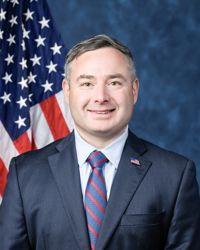
U.S. Representative for Virginia’s 7th district
Democrat
119th Congress, two-year term
Missed 0.7% of roll calls. Chamber median 1.9%.
The full voting recordCounts roll calls where most Democrats and most Republicans voted differently, leaving out procedural votes.
How we countFrom FEC filings, Voteview roll calls and Congress.gov.
Democrat. In Congress since 2025, 1 term in total.
Following saves Vindman to your list, which Chamber & Street keeps on its server, linked to a cookie on this browser and not to your name or email. Email alerts will come with constituent verification.
Bills and resolutions Vindman signed on to as a cosponsor. An original cosponsor signed on the day the bill was introduced. Source: govinfo bill status files, last updated Nov 6, 2026.
Federal Firefighters Families First Act
Joined Mar 21, 2025. 77 cosponsors. H.R. 759 on Congress.gov
Progress not on file
Freedom to Invest in Tomorrow’s Workforce Act
Sponsor Robert Wittman (R). Joined Mar 21, 2025. 203 cosponsors. H.R. 1151 on Congress.gov(opens in a new tab)
Introduced
Freedom to Invest in Tomorrow’s Workforce Act
This bill expands the expenses eligible for tax-free withdrawals from a qualified tuition program (known as a 529 plan) to include tuition, fees (including test fees), books, supplies, equipment, and other expenses related to the enrollment or attendance in a recognized postsecondary credentialing program.
Under the bill, a recognized postsecondary credentialing program includes certain programs identified by a state as providing training services, a program listed in the Web Enabled Approval Management System (WEAMS) maintained by the Department of Veterans Affairs, certain examinations required to obtain or maintain a credential, and other reputable credentialing programs.
Further, under the bill, such programs must be designed for an individual to obtain
• an industry-recognized postsecondary employment credential (e.g., project management professional certificate, advanced emergency medical technician certificate, and welding supervisor certificate),
• a certificate of completion of a registered and certified apprenticeship,
• an occupational or professional license issued or recognized by a state or the federal government (and any certification required for obtaining such license), or
• an associate or baccalaureate degree.
Miracle on Ice Congressional Gold Medal Act
Sponsor Pete Stauber (R). Joined Mar 18, 2025. 299 cosponsors. H.R. 452 on Congress.gov(opens in a new tab)
Became law
Miracle on Ice Congressional Gold Medal Act
This act provides for the award of Congressional Gold Medals to the members of the 1980 U.S. Olympic men's ice hockey team in recognition of the team's achievement at the 1980 Winter Olympic Games.
Public Safety Employer-Employee Cooperation Act
Sponsor Pete Stauber (R). Joined Mar 18, 2025. 66 cosponsors. H.R. 1505 on Congress.gov(opens in a new tab)
Introduced
Postal Processing Protection Act
Sponsor Harriet Hageman (R). Joined Mar 18, 2025. 3 cosponsors. H.R. 1473 on Congress.gov(opens in a new tab)
Introduced
Condemning the Members of Congress constituting the leadership team of the House Republican Conference.
Sponsor Sylvia Garcia (D). Original cosponsor. 125 cosponsors. H.Res. 216 on Congress.gov(opens in a new tab)
Introduced
Washington, D.C. Admission Act
Sponsor Eleanor Norton (D). Joined Mar 11, 2025. 209 cosponsors. H.R. 51 on Congress.gov(opens in a new tab)
Introduced
Washington, D.C. Admission Act
This bill provides for the establishment of the State of Washington, Douglass Commonwealth, and its admission into the United States.
The state is composed of most of the territory of the District of Columbia (DC), excluding a specified area that encompasses the U.S. Capitol, the White House, the U.S. Supreme Court building, federal monuments, and federal office buildings adjacent to the National Mall and the U.S. Capitol. The excluded territory shall be known as the Capital and serve as the seat of the government of the United States, as provided for in Article I of the Constitution. The state may not impose taxes on federal property except as Congress permits.
The bill provides for the DC Mayor to issue a proclamation for the first elections to Congress of two Senators and one Representative of the state. The bill eliminates the office of Delegate to the House of Representatives.
The bill applies current DC laws to the state. DC judicial proceedings and contractual obligations shall continue under the state’s authority. The bill also provides for specified federal obligations to transfer to the state upon its certification that it has funds and laws in place to assume the obligations. These include maintaining a retirement fund for judges and operating public defender services.
The bill establishes a commission that is generally comprised of members who are appointed by DC and federal government officials to advise on an orderly transition to statehood.
Public Safety Free Speech Act
Sponsor Jefferson Van Drew (R). Joined Mar 11, 2025. 18 cosponsors. H.R. 1443 on Congress.gov(opens in a new tab)
Introduced
FARMLAND Act of 2025
Sponsor Randy Feenstra (R). Joined Mar 10, 2025. 19 cosponsors. H.R. 1920 on Congress.gov(opens in a new tab)
Introduced
Foreign Agricultural Restrictions to Maintain Local Agriculture and National Defense Act of 2025 or the FARMLAND Act of 2025
This bill expands federal authority and oversight over foreign investments in the U.S. agricultural industry.
The bill expands the authority of the Committee on Foreign Investment in the United States (CFIUS) to include the review of land transactions (involving foreign entities) that exceed $5 million or 320 acres of land over the preceding three years. This applies to land that is primarily used for agriculture, the extraction of energy sources, or the extraction of critical precursor materials for biological technology industries, information technology components, or national defense technologies. Further, the bill adds the Secretary of Agriculture and the Commissioner of Food and Drugs to CFIUS membership. As background, CFIUS is an interagency committee that oversees the national security risks of certain foreign direct investment in the U.S. economy, including by reviewing certain real estate transactions.
Further, the bill expands enforcement of the Agricultural Foreign Investment Disclosure Act (AFIDA). The Department of Agriculture (USDA) must appoint a Chief of Operations of Investigative Actions to (1) monitor AFIDA compliance, and (2) conduct investigations on efforts to steal agricultural knowledge and technology and to disrupt the U.S. agricultural base.
The bill prohibits foreign persons who own or operate land from participating in Farm Service Agency programs and establishes penalties for violators.
The bill also requires USDA and the Department of Homeland Security to jointly develop a database of agricultural land owned by foreign persons.
9/11 Responder and Survivor Health Funding Correction Act of 2025
Sponsor Andrew Garbarino (R). Joined Mar 10, 2025. 133 cosponsors. H.R. 1410 on Congress.gov(opens in a new tab)
Introduced
9/11 Responder and Survivor Health Funding Correction Act of 2025
This bill modifies the World Trade Center Health Program (WTCHP), including by updating the formula for determining the program’s annual funding amounts and authorizing mental health providers to provide certain evaluations under the program.
The WTCHP is a federal health care program (terminating in FY2090) providing responders and survivors with monitoring and treatment of certified medical conditions related to the terrorist attacks that occurred on September 11, 2001. Under current law, the program’s annual federal funding is determined based on the amount specifically appropriated in the previous fiscal year, adjusted for inflation.
The bill establishes a new federal funding formula for FY2026-FY2090 that is generally based on annual changes in the number of enrollees. The bill also increases the amounts the program may spend annually on medical research and activities relating to data collection. The bill requires the National Institute for Occupational Safety and Health (NIOSH), which administers the program, to submit a report to Congress on the program’s projected budgetary needs and expenditures.
In addition, the bill authorizes licensed mental health providers to perform initial health evaluations with respect to mental health conditions for purposes of determining eligibility under the WTCHP. NIOSH must issue regulations specifying the categories of mental health providers that may perform these activities.
Richard L. Trumka Protecting the Right to Organize Act of 2025
Sponsor Robert Scott (D). Original cosponsor. 217 cosponsors. H.R. 20 on Congress.gov(opens in a new tab)
Introduced
John R. Lewis Voting Rights Advancement Act of 2025
Sponsor Terri Sewell (D). Original cosponsor. 221 cosponsors. H.R. 14 on Congress.gov(opens in a new tab)
Introduced
John R. Lewis Voting Rights Advancement Act of 2025
This bill establishes new criteria for determining which states and political subdivisions must obtain preclearance before changes to voting practices may take effect. Preclearance is the process of receiving preapproval from the Department of Justice (DOJ) or the U.S. District Court for the District of Columbia before making legal changes that would affect voting rights.
A state and all of its political subdivisions shall be subject to preclearance of voting practice changes for a 10-year period if, during the previous 25 years:
• 15 or more voting rights violations occurred in the state;
• 10 or more violations occurred, at least 1 of which was committed by the state itself; or
• 3 or more violations occurred and the state administers the elections.
A political subdivision as a separate unit shall also be subject to preclearance for a 10-year period if three or more voting rights violations occurred there during the previous 25 years.
States and political subdivisions that meet certain thresholds regarding minority groups must preclear covered practices before implementation, such as redistricting.
States and political subdivisions must notify the public of changes to voting practices.
The bill authorizes DOJ to require states or political subdivisions to provide certain documents or answers to questions for enforcing voting rights.
The bill outlines factors courts must consider when hearing challenges to voting practices, such as the extent of any history of official voting discrimination in the state or political subdivision.
Crime Victims Fund Stabilization Act of 2025
Sponsor Ann Wagner (R). Joined Mar 3, 2025. 327 cosponsors. H.R. 909 on Congress.gov(opens in a new tab)
Passed the House
Crime Victims Fund Stabilization Act of 2025
This bill adds a new source of revenue for the Crime Victims Fund (CVF). Specifically, the bill requires certain civil monetary penalties collected from settlements and judgments in cases involving fraud and false claims against the federal government to be deposited into the CVF through FY2029.
The CVF supports federal, state, and local programs and activities to compensate and assist victims of crimes. Currently, the CVF is funded by deposits from a variety of sources, including federal criminal fines, penalties, and assessments; forfeited bail bonds; and certain other gifts, donations, and bequests.
PAST Act of 2025
Sponsor Brian Fitzpatrick (R). Original cosponsor. 207 cosponsors. H.R. 1684 on Congress.gov(opens in a new tab)
Introduced
Prevent All Soring Tactics Act of 2025 or the PAST Act of 2025
This bill increases protections for horses at shows, exhibitions, sales, or auctions (horse events) to prevent the practice of soring horses. Generally, the soring of horses includes certain actions taken on horses' limbs to produce higher gaits that may cause pain, distress, inflammation, or lameness.
Specifically, the bill expands existing soring prohibitions under the Horse Protection Act, including by banning the use of certain action devices (e.g., nonprotective boots) on specified horse breeds.
The bill also requires soring inspectors at horse events to be assigned by the Animal and Plant Health Inspection Service (APHIS) of the Department of Agriculture rather than appointed by the management of horse events. APHIS must also license, train, and oversee inspectors to detect and diagnose soring at such events.
Additionally, the bill increases penalties for violations of the act. It also directs APHIS to disqualify horses found to be sore from being shown or exhibited for specified periods. Further, APHIS may permanently disqualify violators from participating in horse events after the third or any subsequent violation.
By way of background, APHIS issued a rule in 2024 to increase efforts to protect horses from soring practices. However, in 2025, a court vacated parts of the rule as exceeding APHIS' statutory authority (e.g., prohibiting the use of certain action devices) while deeming other parts acceptable (e.g., establishing APHIS-designated inspectors). APHIS subsequently delayed the effective date of the rule to December 31, 2026.
Redesignating the Robert E. Lee Memorial as the "Arlington House National Historic Site".
Sponsor Donald Beyer (D). Original cosponsor. 175 cosponsors. H.J.Res. 63 on Congress.gov(opens in a new tab)
Introduced
This joint resolution redesignates the memorial to Robert. E. Lee in Arlington National Cemetery as the Arlington House National Historic Site.
Protect Veteran Jobs Act
Sponsor Derek Tran (D). Original cosponsor. 96 cosponsors. H.R. 1637 on Congress.gov(opens in a new tab)
Introduced
Protect Veteran Jobs Act
This bill provides reinstatement eligibility to veterans who were involuntarily removed or otherwise dismissed without cause from civil service positions from January 20, 2025, through the date of enactment of this bill. Such veterans must be eligible for reinstatement to their former positions or any other civil service positions for which they are qualified.
Each executive branch agency must regularly report through January 20, 2029, to Congress regarding veteran employees who were removed or otherwise dismissed from the agency, including the total number of employees removed and the reasons for the dismissals.
American Dream and Promise Act of 2025
Sponsor Sylvia Garcia (D). Original cosponsor. 221 cosponsors. H.R. 1589 on Congress.gov(opens in a new tab)
Introduced
American Dream and Promise Act of 2025
This bill provides certain non-U.S. nationals (aliens under federal law) with a path to receive permanent resident status and contains other immigration-related provisions.
The Department of Homeland Security (DHS) or the Department of Justice (DOJ) shall provide conditional permanent resident status for 10 years to a qualifying individual who entered the United States as a minor and (1) is deportable or inadmissible, (2) has deferred enforced departure (DED) status or temporary protected status (TPS), or (3) is the child of certain classes of nonimmigrants. The bill imposes various qualifying requirements, such as the individual being continuously physically present in the United States since January 1, 2021, passing a background check, and being enrolled in or having completed certain educational programs.
DHS shall remove the conditions placed on permanent resident status granted under this bill if the individual applies and meets certain requirements, such as completing certain programs at an educational institution, serving in the military, or being employed.
Furthermore, DHS or DOJ shall provide lawful permanent resident status to certain individuals who had TPS, were eligible for TPS, or were eligible for DED status on certain dates. Such individuals must meet certain requirements and apply for such status within three years of this bill's enactment.
This bill also repeals a restriction that bars a state from providing higher education benefits to undocumented individuals unless those benefits are available to all U.S. nationals without regard to residency in the state.
Expressing condolences to the families, friends, and loved ones of the victims of the crash of American Eagle Flight 5342 and PAT 25, and for other purposes.
Sponsor Ron Estes (R). Original cosponsor. 93 cosponsors. H.Res. 153 on Congress.gov(opens in a new tab)
Passed the House
This resolution expresses condolences to the families, friends, and loved ones of the victims of the crash of American Eagle Flight 5342 and the U.S. Army helicopter flying under the call sign PAT 25 near Ronald Reagan Washington National Airport on January 29, 2025.
The resolution also commends the heroic actions of the first responders, emergency services personnel, and all those who aided in the recovery efforts.
QUIET Act
Sponsor Eric Sorensen (D). Joined Feb 24, 2025. 28 cosponsors. H.R. 1027 on Congress.gov(opens in a new tab)
Introduced
Quashing Unwanted and Interruptive Electronic Telecommunications Act or the QUIET Act
This bill establishes a disclosure requirement for robocalls that use artificial intelligence (AI) to emulate a human being and increases forfeiture and fine amounts for certain violations of the Telephone Consumer Protection Act (TCPA). (The TCPA prohibits certain telemarketing calls made without the recipient’s consent and using specified automated technologies.)
Specifically, any robocall that uses AI to emulate a human being must include a disclosure at the beginning of the message indicating that AI is being used. Under the bill, robocalls are defined as calls made or text messages sent (1) using automatic dialing technology, or (2) using an artificially generated message or an artificial or prerecorded voice. Calls or texts that are made or sent using equipment that requires substantial human intervention are excluded.
Further, the bill doubles the maximum forfeiture penalty and criminal fine that may be imposed for certain violations of the TCPA involving the use of AI to impersonate an individual or entity with the intent to defraud, cause harm, or wrongfully obtain anything of value. This provision applies to violations that occur after the bill’s enactment.
No DeepSeek on Government Devices Act
Sponsor Josh Gottheimer (D). Original cosponsor. 32 cosponsors. H.R. 1121 on Congress.gov(opens in a new tab)
Introduced
No DeepSeek on Government Devices Act
This bill directs the Office of Management and Budget to develop standards and guidance requiring removal of the DeepSeek application from federal agency information technology. Such standards and guidance also apply to any successor application developed or provided by High Flyer or entities owned by High Flyer.
DeepSeek is an artificial intelligence start-up founded in 2023 and based in Hangzhou, China. DeepSeek's chief executive officer also created High Flyer, a hedge fund that is reportedly the sole funder of DeepSeek.
MEGOBARI Act
Sponsor Joe Wilson (R). Joined Feb 6, 2025. 18 cosponsors. H.R. 36 on Congress.gov(opens in a new tab)
Passed the House
Mobilizing and Enhancing Georgia’s Options for Building Accountability, Resilience, and Independence Act or the MEGOBARI Act
This bill requires the President to impose sanctions on certain foreign persons, including Georgian government officials, who are undermining Georgia's security or stability.
Specifically, the bill requires the President to impose visa-blocking sanctions and authorizes the President to impose property-blocking sanctions on any foreign person the President determines is involved with actions or policies to undermine Georgia's security or stability. Immediate family members of a sanctioned individual are also subject to these sanctions if they benefited from the sanctioned individual's conduct.
The bill also requires the President to impose visa-blocking sanctions on the following foreign persons if the President determines such persons knowingly engaged in significant acts of corruption or acts of violence or intimidation in relation to the blocking of Euro-Atlantic integration in Georgia:
• any individual who served as a member of the Georgian parliament or as a senior official of a Georgian political party on or after January 1, 2014;
• any individual who is serving as an official in a leadership position on behalf of the Georgian government; and
• any immediate family member of such officials who benefited from their conduct.
Additionally, for the purpose of potential imposition of sanctions under the International Emergency Economic Powers Act, the President must determine whether there are foreign persons who, on or after the bill's enactment, have engaged in (1) significant corruption in Georgia, or (2) acts to undermine Georgia's security or stability.
Taxpayer Data Protection Act
Sponsor Haley Stevens (D). Original cosponsor. 205 cosponsors. H.R. 1101 on Congress.gov(opens in a new tab)
Introduced
Taxpayer Data Protection Act
This bill restricts access to any public money receipt or payment system belonging to the Department of the Treasury.
Specifically, access is limited to authorized Treasury officers, employees, or contractors meeting certain performance standards who have held a qualified position for at least a year, or who hold other qualifications as provided by the bill. The bill specifically prohibits special government employees (i.e., temporary appointees hired to perform specific tasks) from having access to such systems. The bill also provides that an individual accessing such systems shall be treated as an executive branch employee for purposes of federal criminal conflict of interest laws.
Treasury's Office of Inspector General must investigate and report on each instance of unauthorized use or other access of such payment systems.
Expressing the sense of the House of Representatives that Congress should take all appropriate measures to ensure that the United States Postal Service remains an independent establishment of the Federal Government and is not subject to privatization.
Sponsor Stephen Lynch (D). Joined Feb 5, 2025. 238 cosponsors. H.Res. 70 on Congress.gov(opens in a new tab)
Introduced
This resolution expresses the sense of the House of Representatives that Congress should ensure that the U.S. Postal Service is not privatized and remains an independent establishment of the federal government.
Right to Contraception Act
Sponsor Lizzie Fletcher (D). Original cosponsor. 211 cosponsors. H.R. 999 on Congress.gov(opens in a new tab)
Introduced
Right to Contraception Act
This bill sets out statutory protections for an individual's right to access and a health care provider's right to provide contraception and related information. Contraception refers to an action taken to prevent pregnancy, including the use of contraceptives (i.e., a device or medication used to prevent pregnancy), fertility-awareness based methods, and sterilization procedures.
Generally, the bill prohibits measures that single out and impede access to contraception and related information. However, a party may defend against a claim that a measure violates the bill's prohibitions by demonstrating, through clear and convincing evidence, that the measure significantly advances the safety of contraception and cannot be achieved through less restrictive means. The bill also specifies that the prohibition preempts inconsistent state and local laws and applies notwithstanding other federal laws, including the Religious Freedom Restoration Act of 1993.
The Department of Justice, individuals, or health care providers may bring a lawsuit to enforce this bill, and states are not immune from suits for violations.
Saving the Civil Service Act
Joined Jan 21, 2025. 112 cosponsors. H.R. 492 on Congress.gov(opens in a new tab)
Progress not on file
Saving the Civil Service Act
This bill generally prohibits changes to the classification of positions in the competitive service and excepted service unless certain conditions are met. (Competitive service positions are subject to competitive examination while excepted service positions are appointed under one of five schedules. Competitive service positions have notice and appeal requirements for adverse actions that are not applicable to most excepted positions, including those of a confidential, policy-determining, policy-making, or policy-advocating character under Schedule C.)
On October 21, 2020, President Donald Trump issued an executive order that placed executive agency positions that are of a confidential, policy-determining, policy-making, or policy-advocating character, and that are not normally subject to change as a result of a presidential transition, under a new Schedule F in the excepted service. The order was subsequently revoked by President Joe Biden.
The bill prohibits executive agency positions in the competitive service from being placed in the excepted service, unless such positions are placed in a schedule in the excepted service as in effect on September 30, 2020. The bill also prohibits positions in the excepted service from being placed in any schedule other than the aforementioned schedules.
Additionally, agencies may not (1) transfer occupied positions from the competitive or excepted service into Schedule C without the consent of the Office of Personnel Management, or (2) transfer employees in the excepted service to another schedule or transfer employees in the competitive service to the excepted service without employee consent.