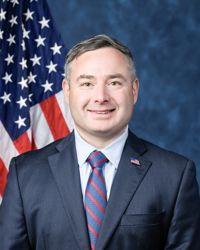
U.S. Representative for Virginia’s 7th district
Democrat
119th Congress, two-year term
Missed 0.7% of roll calls. Chamber median 1.9%.
The full voting recordCounts roll calls where most Democrats and most Republicans voted differently, leaving out procedural votes.
How we countFrom FEC filings, Voteview roll calls and Congress.gov.
Democrat. In Congress since 2025, 1 term in total.
Following saves Vindman to your list, which Chamber & Street keeps on its server, linked to a cookie on this browser and not to your name or email. Email alerts will come with constituent verification.
Bills and resolutions Vindman signed on to as a cosponsor. An original cosponsor signed on the day the bill was introduced. Source: govinfo bill status files, last updated Nov 6, 2026.
Supporting Veteran Families in Need Act
Sponsor Nick LaLota (R). Joined May 7, 2025. 10 cosponsors. H.R. 585 on Congress.gov
Introduced
Supporting Veteran Families in Need Act
This bill permanently extends authorization for the Supportive Services for Veteran Families program of the Department of Veterans Affairs, which provides supportive services to very low-income veterans (and their families) occupying or transitioning to permanent housing.
CAREERS Act
Sponsor Nicholas Langworthy (R). Joined May 7, 2025. 5 cosponsors. H.R. 291 on Congress.gov(opens in a new tab)
Introduced
Creating Access to Rural Employment and Education for Resilience and Success Act or the CAREERS Act
This bill reauthorizes the Rural Innovation Stronger Economy (RISE) Grant Program and expands the program to include support for career pathway programs or industry or sector partnerships in industries in rural communities.
As background, this Department of Agriculture (USDA) program offers grant assistance to create and augment high-wage jobs, accelerate the formation of new businesses, support industry clusters, and maximize the use of local productive assets in eligible low-income rural areas.
Under the bill, RISE grant program funds may be used to support career pathway programs (i.e., a combination of rigorous and high-quality education, training, and other services) or industry or sector partnerships in industries in rural communities. These industries may include public utilities (i.e., telecommunications, broadband, water, wastewater, disposal, and electric supply services), conservation practices and management, health care, child care, manufacturing, and agribusiness.
The bill removes the current requirement that the program provide grants (to the maximum extent practicable) for job accelerators in at least 25 states. Instead, USDA must ensure the regional diversity of grant recipients or participants in providing for job accelerators, career pathway programs, and industry or sector partnerships.
The bill also includes additional reporting requirements for career pathway programs and industry or sector partnership grant recipients.
Homebuyers Privacy Protection Act
Sponsor John Rose (R). Joined May 7, 2025. 89 cosponsors. H.R. 2808 on Congress.gov(opens in a new tab)
Became law
Homebuyers Privacy Protection Act
This act limits the circumstances in which credit reporting agencies may provide consumer credit reports to third parties in connection with residential mortgage transactions.
Specifically, the act prohibits a credit reporting agency from providing a consumer's credit report to a third party in connection with a residential mortgage transaction unless the transaction consists of a firm offer of credit or insurance and (1) the third party provides documentation certifying that it has the consumer's consent; or (2) the third party has originated a mortgage on behalf of the consumer, is a current mortgage loan servicer to the consumer, or has a current specified banking relationship with the consumer.
These provisions take effect 180 days after enactment.
The Government Accountability Office must study and report on the value of trigger leads (a marketing tactic facilitated by credit reporting agencies that may result in unsolicited credit offers to a consumer after a consumer applies for a separate type of credit) received by text message.
HELPER Act of 2025
Sponsor John Rutherford (R). Joined May 7, 2025. 154 cosponsors. H.R. 2094 on Congress.gov(opens in a new tab)
Introduced
Homes for Every Local Protector, Educator, and Responder Act of 2025 or the HELPER Act of 2025
This bill establishes a program administered by the Department of Housing and Urban Development to provide mortgage assistance to law enforcement officers, elementary and secondary school teachers, firefighters, or other first responders. Specifically, these individuals may be eligible for a first-time mortgage on a primary family residence with no down payment. Instead, the mortgage is subject to a one-time, up-front mortgage insurance premium.
Simplifying Veterans Assistance Act of 2025
Sponsor Glenn Thompson (R). Joined May 7, 2025. 11 cosponsors. H.R. 1960 on Congress.gov(opens in a new tab)
Introduced
Simplifying Veterans Assistance Act of 2025
This bill requires the Department of Veterans Affairs to provide specified guidance to entities seeking grants for the provision of comprehensive service programs to homeless veterans (e.g., rehabilitative services). Specifically, the VA must provide guidance and best practices on a publicly available VA website. Additionally, after the announcement of a funding notice and before the application deadline, the VA must offer at least two online information sessions for entities seeking grants.
Collision Avoidance Systems Act of 2025
Sponsor Daniel Webster (R). Joined May 7, 2025. 47 cosponsors. H.R. 1361 on Congress.gov(opens in a new tab)
Introduced
Collision Avoidance Systems Act of 2025
This bill allows for the use of a pulsating light system for vehicle braking.
Specifically, Federal Motor Vehicle Safety Standard Number 108 (Standard 108) must be deemed to allow for the use of a pulsating light system on covered vehicles (i.e., passenger cars, multipurpose passenger vehicles, trucks, buses, trailers, and motorcycles). The Department of Transportation must issue regulations to update Standard 108 to (1) include performance-based standards for pulsating light systems, and (2) allow for the use of the systems on motor vehicles.
As background, Standard 108 regulates all automotive lighting, signaling, and reflective devices. Under the bill, a pulsating light system includes a system for a high-mounted stop lamp in which the lamp pulses rapidly no more than four times and for no more than 1.2 seconds when the brake of the vehicle is applied and then converts to a continuous light (as a normal stop lamp) until the brake is released.
Enhanced Iran Sanctions Act of 2025
Sponsor Michael Lawler (R). Joined May 5, 2025. 295 cosponsors. H.R. 1422 on Congress.gov(opens in a new tab)
Passed the House
Enhanced Iran Sanctions Act of 2025
This bill imposes sanctions on certain foreign persons (individuals and entities) that are involved in Iran's petroleum sector as well as certain associated persons. The bill also requires or authorizes actions to facilitate the enforcement of sanctions on Iran.
Specifically, the bill requires the President to impose visa- and property-blocking sanctions on any foreign person that, after the bill's enactment, knowingly engages in any transaction related to the processing, export, or sale of oil, condensates, gas, liquefied natural gas, or other petrochemical products in whole or in part from Iran. The President must also impose sanctions on certain foreign persons associated with a sanctioned individual or entity. For example, the President must sanction the subsidiaries and corporate officers of a sanctioned business.
The bill provides certain exceptions to these sanctions, including specifying that sanctions do not apply to the importation of goods or to conducting or facilitating transactions for humanitarian assistance.
The Department of State must establish an interagency working group that shall seek to establish a multilateral contact group to coordinate international efforts to enforce sanctions on Iran.
The bill expands the State Department rewards program to authorize a reward payment to any individual who furnishes information leading to the identification of a person (1) subject to sanctions under this bill, or (2) that has attempted or is attempting to evade sanctions under this bill.
United States-Israel Defense Partnership Act of 2025
Sponsor Joe Wilson (R). Joined May 5, 2025. 178 cosponsors. H.R. 1229 on Congress.gov(opens in a new tab)
Introduced
United States-Israel Defense Partnership Act of 2025
This bill requires or authorizes certain actions to increase defense-related cooperation between the United States and Israel.
Specifically, the bill requires the Department of Defense (DOD) to
• establish a cooperative program, with the concurrence of Israel's Ministry of Defense (MOD), to develop and deploy advanced technologies for countering unmanned systems that threaten the United States and Israel;
• establish in Israel an office of the Defense Innovation Unit (an organization that focuses on rapidly fielding and scaling commercial technology across the U.S. military); and
• seek to engage Israel's MOD on the ascension of Israel into the national technology and industrial base (currently defined in law as the persons and organizations engaged in research, development, production, integration, services, or information technology activities conducted within the United States, the United Kingdom, Australia, New Zealand, and Canada).
The bill authorizes DOD, upon request of Israel's MOD, to jointly conduct research, development, test, and evaluation (RDT&E) of emerging technologies such as artificial intelligence and robotics to meet defense challenges.
Additionally, the bill extends the authority for DOD to (1) carry out RDT&E on a joint basis with Israel to establish anti-tunnel and counter unmanned aerial systems capabilities through 2028, and (2) transfer defense articles intended for use as reserve stocks for Israel through January 1, 2029.
Expediting Federal Broadband Deployment Reviews Act
Sponsor Gabe Evans (R). Joined Apr 29, 2025. 2 cosponsors. H.R. 1681 on Congress.gov(opens in a new tab)
Passed the House
Expediting Federal Broadband Deployment Reviews Act
This bill establishes an interagency strike force to support federal land management agencies' review of requests for communications use authorizations. (A communications use authorization is required to modify or locate communications facilities on public lands.)
The strike force must (1) conduct periodic calls with strike force members to ensure that each agency prioritizes the review of requests for communications use authorizations, (2) establish goals for the review of the requests, and (3) monitor and facilitate agency accountability for meeting the established goals.
The bill specifies that the strike force must include the head of the National Telecommunications and Information Administration, the head of each federal land management agency, and other members designated by the Department of Agriculture and the Department of the Interior. The bill also requires the strike force to report to Congress regarding its effectiveness.
Equality Act
Sponsor Mark Takano (D). Original cosponsor. 218 cosponsors. H.R. 15 on Congress.gov(opens in a new tab)
Introduced
Equality Act
This bill prohibits discrimination based on sex, sexual orientation, or gender identity with respect to businesses, employment, housing, federally funded programs, and other settings.
Specifically, the bill expands Title II and Title VI of the Civil Rights Act of 1964 to prohibit public accommodations and federally funded programs, respectively, from discriminating based on sex, sexual orientation, or gender identity. It also includes stores, transit services, recreational facilities, and establishments that provide health care, accounting, or legal services as public accommodations under Title II.
The bill also expands Title IV (desegregation of public schools) and Title VII (employment discrimination) to specifically include sexual orientation and gender identity. (The Supreme Court held in Bostock v. Clayton County that Title VII's prohibition of employment discrimination based on sex also prohibits employment discrimination based on sexual orientation or gender identity.)
The bill similarly expands the Fair Housing Act (discrimination in public and private housing) to include sexual orientation and gender identity. It also prohibits discrimination based on sexual orientation or gender identity by creditors and with respect to jury selection.
The bill defines sex for purposes of the aforementioned provisions to include sex stereotypes, pregnancy, childbirth, sexual orientation, gender identity, and sex characteristics.
Alpha-gal Allergen Inclusion Act
Sponsor Jefferson Van Drew (R). Joined Apr 28, 2025. 46 cosponsors. H.R. 1178 on Congress.gov(opens in a new tab)
Introduced
Alpha-gal Allergen Inclusion Act
This bill expands the definition of major food allergen to include galactose-alpha-1,3-galactose (commonly known as alpha-gal). Under current law, food labels generally must identify each major food allergen found in labeled food products.
(Certain tick bites cause an allergic condition known as alpha-gal syndrome that can result in an allergy to the alpha-gal molecule, which is found in red meat and other products made from mammals.)
Puppy Protection Act of 2025
Sponsor Brian Fitzpatrick (R). Joined Apr 24, 2025. 219 cosponsors. H.R. 2253 on Congress.gov(opens in a new tab)
Introduced
Postal Police Reform Act of 2025
Sponsor Andrew Garbarino (R). Joined Apr 24, 2025. 46 cosponsors. H.R. 2095 on Congress.gov(opens in a new tab)
Introduced
Mikaela Naylon Give Kids a Chance Act
Sponsor Michael McCaul (R). Joined Apr 24, 2025. 313 cosponsors. H.R. 1262 on Congress.gov(opens in a new tab)
Passed the House
Give Kids a Chance Act of 2025
This bill expands the Food and Drug Administration’s (FDA’s) authority with respect to research on rare pediatric diseases, including by permitting the FDA to take enforcement action against drug sponsors that fail to satisfy pediatric study requirements and by reauthorizing programs that support pediatric research.
Specifically, the bill
• modifies requirements relating to molecularly targeted pediatric cancer investigations to permit research on new drugs in combination with active ingredients that have already been approved, provided certain conditions are met;
• permits the FDA to take enforcement action against drug sponsors that fail to comply with pediatric study requirements, if such sponsors demonstrated a lack of due diligence in satisfying the requirement;
• renews the FDA’s authority to award priority review vouchers to sponsors of new products intended to treat rare pediatric diseases through September 30, 2029; and
• reauthorizes through FY2027 certain funding for the National Institutes of Health to support priority pediatric research.
The bill also provides statutory authority for the FDA’s interpretation of the orphan drug exclusivity period. The bill specifies, consistent with FDA regulations, that the seven-year market exclusivity period for drugs for rare diseases or conditions (i.e., orphan drugs) prohibits the approval of the same drug for the same approved use or indication with respect to the disease or condition. (In Catalyst Pharmaceuticals, Inc. v. Becerra, a court rejected the FDA’s interpretation and held that orphan drug exclusivity extends to all uses or indications for the disease or condition.)
Air America Act of 2025
Sponsor Glenn Grothman (R). Joined Apr 21, 2025. 178 cosponsors. H.R. 2192 on Congress.gov(opens in a new tab)
Introduced
Credit for Caring Act of 2025
Sponsor Mike Carey (R). Joined Apr 21, 2025. 145 cosponsors. H.R. 2036 on Congress.gov(opens in a new tab)
Introduced
Dr. Lorna Breen Health Care Provider Protection Reauthorization Act
Sponsor Debbie Dingell (D). Joined Apr 17, 2025. 85 cosponsors. H.R. 929 on Congress.gov(opens in a new tab)
Introduced
Chesapeake Bay Conservation Acceleration Act of 2025
Sponsor Robert Wittman (R). Joined Apr 17, 2025. 6 cosponsors. H.R. 2091 on Congress.gov(opens in a new tab)
Introduced
REPAIR Act
Sponsor Neal Dunn (R). Joined Apr 17, 2025. 44 cosponsors. H.R. 1566 on Congress.gov(opens in a new tab)
Introduced
Doctors in our Borders Act
Sponsor Michael Lawler (R). Joined Apr 17, 2025. 12 cosponsors. H.R. 1201 on Congress.gov(opens in a new tab)
Introduced
Doctors in our Borders Act
This bill increases the number of Conrad 30 waivers available each year from 30 to 100.
Typically, a J-1 visa holder (nonimmigrant exchange visitor) must leave the United States for two years after finishing the exchange visitor program, including J-1 visa holders who entered the United States to receive graduate medical training. The Conrad 30 waiver program waives this requirement for eligible foreign medical graduates who agree to practice medicine in an underserved area or for an underserved population in the United States.
Protect Our Letter Carriers Act of 2025
Sponsor Brian Fitzpatrick (R). Joined Apr 17, 2025. 231 cosponsors. H.R. 1065 on Congress.gov(opens in a new tab)
Introduced
Protect Our Letter Carriers Act of 2025
This bill requires or authorizes certain actions related to the U.S. Postal Service (USPS).
The bill requires the Department of Justice to appoint an assistant U.S. attorney in each judicial district to coordinate and supervise the investigation and prosecution of various crimes related to postal services (for example, assault on a postal service employee, breaking into a post office, or obstruction of mails).
The bill also requires the U.S. Sentencing Commission to amend sentencing guidelines to provide that the assault or robbery of a postal employee shall be treated the same as the assault of a law enforcement officer.
Additionally, the bill authorizes appropriations for the USPS to install high security collection boxes and replace older versions of the universal mailbox key with electronic versions.
Stop Tax Penalties on American Hostages Act of 2025
Sponsor J. Hill (R). Joined Apr 14, 2025. 14 cosponsors. H.R. 1868 on Congress.gov(opens in a new tab)
Introduced
Stop Tax Penalties on American Hostages Act of 2025
This bill extends certain federal tax deadlines for U.S. nationals who are unlawfully or wrongfully detained abroad or held hostage abroad and their spouses. The bill also allows for an abatement and refund of additional taxes, interest, and penalties assessed to such individuals for failing to meet a federal tax deadline during a period of detention.
Specifically, under the bill, the time period during which a U.S. national is unlawfully or wrongfully detained abroad or held hostage abroad is disregarded in determining certain federal tax deadlines, including deadlines for
• filing a return for and paying federal income, estate, gift, employment, or excise taxes;
• a tax credit or refund claim; and
• the determination, assessment, and collection of additional taxes, interest, or penalties.
The bill requires the Department of State and the Department of Justice to annually provide the Internal Revenue Service (IRS) with lists to identify U.S. nationals who qualify for an extension.
The bill also requires the IRS to (1) abate and refund additional taxes, interest, and penalties assessed for any tax year ending during a period of detention for which an extension of a federal tax deadline is permitted; and (2) establish a program allowing U.S. nationals unlawfully or wrongfully detained abroad or taken hostage abroad (or their spouse or dependent) to claim a refund of additional taxes, interest, and penalties assessed for any tax year ending during a period of detention from 2021 to the bill’s enactment date.
CONSTRUCTS Act of 2025
Sponsor Juan Ciscomani (R). Joined Apr 14, 2025. 33 cosponsors. H.R. 1055 on Congress.gov(opens in a new tab)
Introduced
Love Lives On Act of 2025
Sponsor Richard Hudson (R). Joined Apr 14, 2025. 183 cosponsors. H.R. 1004 on Congress.gov(opens in a new tab)
Introduced
Love Lives On Act of 2025
This bill extends entitlement for various benefit programs and services for surviving spouses of deceased members of the Armed Forces or veterans.
The bill provides that the remarriage of a surviving spouse must not bar the furnishing of dependency and indemnity compensation or special pension benefits to such spouse.
Additionally, the Department of Defense may not terminate the payment of an annuity for a surviving spouse under the Survivor Benefit Plan solely because the surviving spouse remarries.
The bill also expands the definition of a dependent under TRICARE to include a remarried widow or widower whose subsequent marriage has ended due to death, divorce, or annulment.
American Family Act
Sponsor Rosa DeLauro (D). Original cosponsor. 215 cosponsors. H.R. 2763 on Congress.gov(opens in a new tab)
Introduced