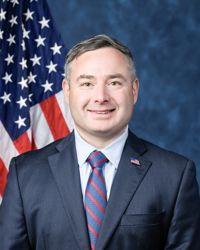
U.S. Representative for Virginia’s 7th district
Democrat
119th Congress, two-year term
Missed 0.7% of roll calls. Chamber median 1.9%.
The full voting recordCounts roll calls where most Democrats and most Republicans voted differently, leaving out procedural votes.
How we countFrom FEC filings, Voteview roll calls and Congress.gov.
Democrat. In Congress since 2025, 1 term in total.
Following saves Vindman to your list, which Chamber & Street keeps on its server, linked to a cookie on this browser and not to your name or email. Email alerts will come with constituent verification.
Bills and resolutions Vindman signed on to as a cosponsor. An original cosponsor signed on the day the bill was introduced. Source: govinfo bill status files, last updated Nov 6, 2026.
SOAR Act of 2025
Sponsor David Valadao (R). Joined May 29, 2025. 70 cosponsors. H.R. 2902 on Congress.gov
Introduced
Supplemental Oxygen Access Reform Act of 2025 or the SOAR Act of 2025
This bill establishes certain requirements with respect to the payment and provision of supplemental oxygen and related services under Medicare.
For example, the bill provides for separate payments, indexed to inflation, of oxygen and related equipment, supplies, and services under Medicare (rather than under the competitive acquisition program). It also specifically covers services that are provided by respiratory therapists under Medicare and provides for an additional payment adjustment for these services.
Additionally, the bill (1) requires the Centers for Medicare & Medicaid Services to develop an electronic template for providers to use when prescribing oxygen and related equipment, supplies, and services; and (2) establishes certain rights for beneficiaries receiving these items and services, such as the right to choose their suppliers and to receive clear communications and be informed about the services provided.
Housing Supply Frameworks Act
Sponsor Mike Flood (R). Joined May 29, 2025. 25 cosponsors. H.R. 2840 on Congress.gov(opens in a new tab)
Introduced
Improving Disclosure for Investors Act of 2025
Sponsor Bill Huizenga (R). Joined May 29, 2025. 7 cosponsors. H.R. 2441 on Congress.gov(opens in a new tab)
Introduced
Improving Disclosure for Investors Act of 2025
This bill requires the Securities and Exchange Commission (SEC) to propose and finalize rules to allow entities to deliver regulatory documents to investors electronically. The SEC must establish a mechanism for investors to opt out of electronic delivery and receive paper documents instead. If the SEC does not finalize rules within one year after enactment, the bill allows for electronic delivery of these documents.
Improving Measurements for Loneliness and Isolation Act of 2025
Sponsor Mike Flood (R). Joined May 29, 2025. 5 cosponsors. H.R. 1305 on Congress.gov(opens in a new tab)
Introduced
Improving Measurements for Loneliness and Isolation Act of 2025
This bill requires the Department of Health and Human Services to establish a Working Group on Unifying Loneliness Research. The working group must recommend standardized measurements of loneliness and social isolation for use in research and educating the public. The working group must report to Congress on its work and recommendations and make this information publicly available online. The working group sunsets on December 31, 2027.
Blind Americans Return to Work Act of 2025
Sponsor Pete Sessions (R). Joined May 29, 2025. 54 cosponsors. H.R. 1175 on Congress.gov(opens in a new tab)
Introduced
Blind Americans Return to Work Act of 2025
This bill requires the Social Security Administration to carry out a demonstration project during which blind Social Security Disability Insurance (SSDI) beneficiaries receive reduced benefits commensurate with income above certain thresholds.
Under current law, only individuals who earn under a specified monthly income, known as the substantial gainful activity (SGA) threshold, are considered disabled and thereby eligible for SSDI benefits. For blind workers, this limit is $2,700 per month in 2025. SSDI beneficiaries may earn beyond the SGA threshold for a limited period of time, known as the trial work period, before their benefits are suspended and ultimately terminate.
The bill establishes a 20-year demonstration project during which individuals who are entitled to SSDI benefits by reason of blindness and who earn above the SGA threshold continue to receive benefits at an amount gradually reduced commensurate with their earnings beyond a specified amount.
During this period, blind workers’ SSDI benefits must be reduced by $1 for every $2 that a worker earns above the sum of (1) the SGA threshold, and (2) the worker’s expenses reasonably attributable to their work. The SGA threshold may not be used to determine whether an individual is disabled during this period, and blind workers’ SSDI benefits may not be terminated due to work-related earnings. The trial work period also must not apply.
After 10 years, affected beneficiaries may opt out of the modified benefits structure.
Small Entity Update Act
Sponsor Ann Wagner (R). Joined May 21, 2025. 7 cosponsors. H.R. 3382 on Congress.gov(opens in a new tab)
Passed the House
Small Entity Update Act
This bill requires the Securities and Exchange Commission (SEC) to study approaches to reduce the impact of SEC rules on small businesses and other small entities, make appropriate recommendations, and revise applicable rules.
Specifically, the bill requires the SEC to evaluate the current definition of small entity with respect to SEC rules.
Under the bill, the SEC must provide specific and detailed recommendations to Congress on how the SEC can revise the definition of small entity to (1) align with specified statutory goals, including reducing unnecessary burdens on small entities; and (2) expand the number of entities covered. In addition, the SEC must adjust for inflation every five years any dollar amounts used to define small entities.
The SEC must also revise the applicable rules to implement these recommendations.
Chief Herbert D. Proffitt Act of 2025
Sponsor Andy Barr (R). Joined May 21, 2025. 34 cosponsors. H.R. 1236 on Congress.gov(opens in a new tab)
Introduced
Expanding Access to Capital for Rural Job Creators Act
Sponsor Troy Downing (R). Joined May 21, 2025. 5 cosponsors. H.R. 1190 on Congress.gov(opens in a new tab)
Passed the House
Expanding Access to Capital for Rural Job Creators Act
This bill requires the Office of the Advocate for Small Business Capital Formation within the Securities and Exchange Commission to report on issues encountered by rural-area small businesses.
Retirement Fairness for Charities and Educational Institutions Act of 2025
Sponsor Frank Lucas (R). Joined May 21, 2025. 24 cosponsors. H.R. 1013 on Congress.gov(opens in a new tab)
Introduced
Retirement Fairness for Charities and Educational Institutions Act of 2025
This bill allows 403(b) retirement plans (i.e., retirement plans designed for certain employees of public schools, charities, and churches) to invest in collective investment trusts, which are a group of pooled investment assets held by a bank or trust company, and in insurance company separate accounts.
PRECEPT Nurses Act
Sponsor Jennifer Kiggans (R). Joined May 20, 2025. 26 cosponsors. H.R. 392 on Congress.gov(opens in a new tab)
Introduced
Providing Real-world Education and Clinical Experience by Precepting Tomorrow's Nurses Act or the PRECEPT Nurses Act
This bill establishes a new, nonrefundable tax credit for eligible nurse preceptors, subject to limitations. The bill also requires the Internal Revenue Service (IRS) to report to Congress certain information about the tax credit for nurse preceptors.
Under the bill, a nonrefundable tax credit of $2,000 is allowed for an eligible nurse preceptor through 2032. An eligible nurse preceptor is defined as an individual who provides at least 200 certified hours of supervision and personalized experiential learning, training, instruction, and mentoring in the clinical practice of nursing to a nursing student, advanced practice registered nursing student, or newly hired licensed nurse in a community designated as a health professional shortage area.
The bill also requires the IRS to report to Congress
• the number of taxpayers that claim the tax credit for nurse preceptors each year and the geographic distribution of such taxpayers,
• aggregated and averaged data on the preceptorships served by taxpayers as an eligible nurse preceptor, and
• the effectiveness of the tax credit in increasing the number of nurse preceptors in the United States.
Lieutenant Osvaldo Albarati Stopping Prison Contraband Act
Sponsor Laurel Lee (R). Joined May 20, 2025. 9 cosponsors. H.R. 3353 on Congress.gov(opens in a new tab)
Introduced
Lieutenant Osvaldo Albarati Stopping Prison Contraband Act
This bill increases federal criminal penalties for providing or attempting to provide a cell phone to an individual who is incarcerated at a prison.
Protect and Serve Act of 2025
Sponsor John Rutherford (R). Joined May 19, 2025. 120 cosponsors. H.R. 1551 on Congress.gov(opens in a new tab)
Introduced
Protecting Our Constitution and Communities Act
Sponsor Sam Liccardo (D). Original cosponsor. 41 cosponsors. H.R. 3454 on Congress.gov(opens in a new tab)
Introduced
National Law Enforcement Officers Remembrance, Support, and Community Outreach Act
Sponsor Troy Nehls (R). Joined May 14, 2025. 124 cosponsors. H.R. 309 on Congress.gov(opens in a new tab)
Passed the House
National Law Enforcement Officers Remembrance, Support and Community Outreach Act. [sic]
This bill temporarily directs the Department of the Interior to award a grant to the National Law Enforcement Officers Memorial Fund for the expenses associated with operating and enhancing the community outreach, public education, and officer safety and wellness programs of the National Law Enforcement Museum.
Expressing support for the Iranian people's desires for a democratic, secular, and nonnuclear Republic of Iran, and condemning the Iranian regime's terrorism, regional proxy war, internal suppression, and for other purposes.
Sponsor Tom McClintock (R). Joined May 13, 2025. 230 cosponsors. H.Res. 166 on Congress.gov(opens in a new tab)
Introduced
No Tax on Tips Act
Sponsor Vern Buchanan (R). Joined May 13, 2025. 27 cosponsors. H.R. 482 on Congress.gov(opens in a new tab)
Introduced
No Tax on Tips Act
This bill establishes a new tax deduction of up to $25,000 for tips, subject to limitations. The bill also expands the business tax credit for the portion of payroll taxes an employer pays on certain tips to include payroll taxes paid on tips received in connection with certain beauty services.
Under the bill, the new tax deduction for tips is limited to cash tips (1) received by an employee during the course of employment in an occupation that customarily receives tips, and (2) reported by the employee to the employer for purposes of withholding payroll taxes. (Under current law, an employee is required to report tips exceeding $20 per month to their employer.)
Further, an employee with compensation exceeding a specified threshold ($160,000 in 2025 and adjusted annually for inflation) in the prior tax year may not claim the new tax deduction for tips.
Finally, the bill expands the business tax credit for the portion of payroll taxes that an employer pays on certain tips to include payroll taxes paid on tips received in connection with barbering and hair care, nail care, esthetics, and body and spa treatments. (Under current law, an employer is allowed a business tax credit for the amount of payroll taxes paid on certain tips received by an employee in connection with providing, delivering, or serving food or beverages.)
Recycling Infrastructure and Accessibility Act of 2025
Sponsor Mariannette Miller-Meeks (R). Joined May 13, 2025. 31 cosponsors. H.R. 2145 on Congress.gov(opens in a new tab)
Passed committee
Rural Veterans Transportation to Care Act
Sponsor Marie Perez (D). Joined May 13, 2025. 20 cosponsors. H.R. 1733 on Congress.gov(opens in a new tab)
Introduced
Rural Veterans Transportation to Care Act
This bill expands and makes permanent the Department of Veterans Affairs (VA) grant program that provides transportation options to veterans for medical purposes.
First, the bill expands the program to cover transportation for veterans in rural areas, in addition to veterans in highly rural areas (who are already eligible under the program).
The bill also authorizes the VA to award such grants to county veterans service organizations and tribal organizations to assist veterans with transportation for medical care.
Further, the bill increases the maximum grant amount to $60,000. However, if a grant recipient is required to purchase a vehicle to comply with the Americans with Disabilities Act of 1990, such grant amount may be increased to not more than $80,000.
Finally, the bill defines rural and highly rural in the same manner as the terms are given under the Rural-Urban Commuting Areas (RUCA) coding system of the Department of Agriculture. RUCA uses population density and commuting patterns to assign designations.
American Victims of Terrorism Compensation Act
Sponsor Michael Lawler (R). Joined May 13, 2025. 73 cosponsors. H.R. 1530 on Congress.gov(opens in a new tab)
Introduced
Access Technology Affordability Act of 2025
Sponsor Mike Kelly (R). Joined May 13, 2025. 78 cosponsors. H.R. 1529 on Congress.gov(opens in a new tab)
Introduced
Access Technology Affordability Act of 2025
This bill allows a refundable federal tax credit, through 2030, equal to the amounts paid for qualified access technology for use by a blind individual who is the taxpayer, the taxpayer's spouse, or a dependent of the taxpayer. (Limits apply.)
The bill defines qualified access technology as hardware, software, or other information technology with the primary function of converting or adapting information that is visually represented into forms or formats usable by blind individuals.
The tax credit is limited to (1) amounts paid that are not compensated by insurance or otherwise, and (2) an aggregate amount of $2,000 (adjusted for inflation) per blind individual in any period of three consecutive taxable years.
Combating Organized Retail Crime Act of 2025
Sponsor David Joyce (R). Joined May 8, 2025. 206 cosponsors. H.R. 2853 on Congress.gov(opens in a new tab)
Passed the House
Combating Organized Retail Crime Act of 2025
This bill expands federal enforcement of criminal offenses related to organized retail and supply chain crime. The term organized retail and supply chain crime includes criminal offenses involving the interstate transportation of stolen property, the sale or receipt of stolen goods, or theft from an interstate or foreign shipment that is committed by, in coordination with, or at the instruction of an organization.
First, with respect to criminal offenses involving the interstate transportation of stolen property or the sale or receipt of stolen goods, the bill broadens the scope of conduct that qualifies as offenses by allowing prosecutions to be based on the aggregate value of stolen items over a 12-month period. Additionally, the bill makes the offenses predicate offenses (i.e., underlying offenses) for prosecutions under the federal money laundering statute and authorizes the criminal forfeiture of any property obtained from the proceeds of an offense.
Second, with respect to criminal offenses involving theft from an interstate or foreign shipment, the bill also makes an offense an underlying offense for prosecution under the federal money laundering statute and authorizes the criminal forfeiture of any associated property.
Third, the bill expands the federal money laundering statute to include offenses involving general-use prepaid cards, gift certificates, or store gift cards.
Finally, the bill temporarily establishes a center within the Department of Homeland Security to coordinate federal law enforcement activities related to organized retail and supply chain crime.
Improving VA Training for Military Sexual Trauma Claims Act
Sponsor Young Kim (R). Joined May 8, 2025. 5 cosponsors. H.R. 2201 on Congress.gov(opens in a new tab)
Passed the House
Improving VA Training for Military Sexual Trauma Claims Act
This bill expands training requirements and assistance provided by the Department of Veterans Affairs (VA) in relation to claims for covered mental health conditions (e.g., post-traumatic stress disorder) based on military sexual trauma.
Specifically, the bill requires VA employees who process claims for covered mental health conditions based on military sexual trauma to receive annual sensitivity training. Such training must be updated by the VA at least once a year.
The VA must annually report on (1) the training it provides, and (2) any plans to expand and update such training.
In providing assistance with such claims related to military sexual trauma, the VA must obtain the service medical record of the claimant and, if there is not credible supporting evidence of a military sexual trauma in the record, obtain the service personnel record of the claimant.
Additionally, the VA must report to Congress regarding (1) sensitivity training required for health care professionals (including schedulers) who are contracted under a VA pilot program to perform examinations of veterans who make claims related to military sexual trauma, and (2) the VA’s plan to improve such training and ensure veterans are not retraumatized during such an examination.
CHIP IN for Veterans Act of 2025
Sponsor Don Bacon (R). Joined May 8, 2025. 6 cosponsors. H.R. 217 on Congress.gov(opens in a new tab)
Passed the House
Communities Helping Invest through Property and Improvements Needed for Veterans Act or the CHIP IN for Veterans Act
This bill makes permanent, starting December 16, 2026, the pilot program under which the Department of Veterans Affairs (VA) may accept donations of property or facilities from certain nonfederal entities (e.g., state authorities or private entities). The bill also removes the limit on the number of donations that the VA may accept under the program.
Automotive Support Services to Improve Safe Transportation Act of 2025
Sponsor Tom Barrett (R). Joined May 8, 2025. 7 cosponsors. H.R. 1364 on Congress.gov(opens in a new tab)
Passed the House
Automotive Support Services to Improve Safe Transportation Act of 2025 or the ASSIST Act of 2025
This bill expands the definition of medical services for purposes of veterans’ benefits to include additional medically necessary automobile adaptations. Under the bill, the Department of Veterans Affairs may provide funding for ramp and kneeling systems, lowered floors, mobility device lifts, non-articulating trailers, and ingress or egress accessibility modifications.
Protecting Veteran Access to Telemedicine Services Act of 2025
Sponsor Steve Womack (R). Joined May 8, 2025. 28 cosponsors. H.R. 1107 on Congress.gov(opens in a new tab)
Passed the House
Protecting Veteran Access to Telemedicine Services Act of 2025
This bill permanently authorizes certain Department of Veterans Affairs (VA) health care professionals to use telemedicine to deliver, distribute, or dispense controlled substances that are prescription drugs to patients who are eligible for VA health care, regardless of whether the health care professional has conducted an in-person medical examination. The health care professional must be (1) authorized to prescribe the basic class of such controlled substance under an active, current, full, and unrestricted license or certification; (2) acting in the usual course of professional practice; and (3) delivering, distributing, or dispensing the substance for a legitimate medical purpose.