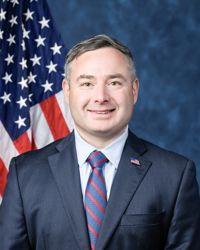
U.S. Representative for Virginia’s 7th district
Democrat
119th Congress, two-year term
Missed 0.7% of roll calls. Chamber median 1.9%.
The full voting recordCounts roll calls where most Democrats and most Republicans voted differently, leaving out procedural votes.
How we countFrom FEC filings, Voteview roll calls and Congress.gov.
Democrat. In Congress since 2025, 1 term in total.
Following saves Vindman to your list, which Chamber & Street keeps on its server, linked to a cookie on this browser and not to your name or email. Email alerts will come with constituent verification.
Bills and resolutions Vindman signed on to as a cosponsor. An original cosponsor signed on the day the bill was introduced. Source: govinfo bill status files, last updated Nov 6, 2026.
SHIPS for America Act of 2025
Sponsor Trent Kelly (R). Joined Sep 3, 2025. 146 cosponsors. H.R. 3151 on Congress.gov
Introduced
National Biotechnology Initiative Act of 2025
Sponsor Stephanie Bice (R). Joined Sep 3, 2025. 23 cosponsors. H.R. 2756 on Congress.gov(opens in a new tab)
Introduced
Trucker Bathroom Access Act
Sponsor Troy Nehls (R). Joined Sep 3, 2025. 18 cosponsors. H.R. 2514 on Congress.gov(opens in a new tab)
Introduced
Trucker Bathroom Access Act
This bill expands access to restroom facilities for certain commercial truck drivers, including drayage truck operators.
Drayage truck operator means the driver of any in-use on-road vehicle with a gross vehicle weight rating of greater than 33,000 pounds operating on or transgressing through port or intermodal rail yard property for the purpose of loading, unloading, or transporting cargo, including containerized, bulk, or break-bulk goods.
Specifically, the bill requires certain retailers, warehouses, and other establishments to give commercial truck drivers access to existing restroom facilities when they are loading or delivering cargo, or waiting to load or transport cargo.
Further, operators of marine terminals, including port authorities, must provide drayage truck operators with (1) access to existing restrooms, (2) additional restrooms if necessary, and (3) parking while accessing such restrooms.
Farmers’ Market Expansion Act of 2025
Sponsor Barry Moore (R). Joined Sep 3, 2025. 2 cosponsors. H.R. 2379 on Congress.gov(opens in a new tab)
Introduced
Farmers’ Market Expansion Act of 2025
This bill includes tree nuts (including shelled tree nuts) as one of the eligible foods under the Senior Farmers' Market Nutrition Program (SFMNP).
The Department of Agriculture's SFMNP provides grants to participating states to provide low-income seniors with coupons/vouchers that may be used at farmers’ markets, roadside stands, and community supported agriculture programs to purchase eligible foods (i.e., fresh, nutritious, unprepared, locally-grown fruits, vegetables, honey, and herbs).
Truck Parking Safety Improvement Act
Sponsor Mike Bost (R). Joined Sep 3, 2025. 54 cosponsors. H.R. 1659 on Congress.gov(opens in a new tab)
Introduced
Truck Parking Safety Improvement Act
This bill directs the Department of Transportation (DOT) to provide competitive grants for projects that provide public parking for commercial motor vehicles and improve the safety of commercial motor vehicle drivers. States, metropolitan planning organizations, tribal governments, and local governments are eligible for these grants.
The grants must be used for projects on federal-aid highways or a facility with reasonable access to such a highway or a freight facility.
A grant recipient may not charge a fee to a commercial motor vehicle driver to access a public parking facility that is constructed, opened, maintained, or improved with a grant under this program.
In providing grants, DOT must determine that
• there is a shortage of commercial motor vehicle parking capacity in the project's corridor;
• the eligible entity has consulted motor carriers, commercial motor vehicle drivers, public safety officials, and private providers of commercial motor vehicle parking regarding the project;
• the project will likely increase the availability or utilization of commercial motor vehicle parking, facilitate the efficient movement of freight, or improve highway safety, traffic congestion, and air quality; and
• the eligible entity has demonstrated the ability to provide for the facility's maintenance and operation.
To the maximum extent practicable, DOT must select grant projects that maximize the geographic dispersion of new commercial motor vehicle parking capacity across the United States.
New Era of Preventing End-Stage Kidney Disease Act
Sponsor Gus Bilirakis (R). Joined Sep 3, 2025. 64 cosponsors. H.R. 1518 on Congress.gov(opens in a new tab)
Introduced
New Era of Preventing End-Stage Kidney Disease Act
This bill establishes regional centers of excellence, postgraduate fellowships, and training for health professionals relating to the diagnosis and treatment of rare kidney disease. It also requires the Department of Health and Human Services (HHS) to conduct various studies on rare kidney disease.
Specifically, it authorizes the National Institute of Diabetes and Digestive and Kidney Diseases to award funding to public and private nonprofit entities for establishing regional centers of excellence that will increase public awareness, conduct research, and develop resources for diagnosing and treating rare kidney diseases. A center may receive such funding for up to five years, unless extended by the institute.
The bill also requires health professions schools receiving a grant from the Health Resources and Services Administration (HRSA) Centers of Excellence program to award fellowships for training on preventing, diagnosing, and treating rare kidney disease in disproportionately impacted populations.
Also, the bill expands the priorities of HRSA’s Primary Care Training and Enhancement program to include training for health care workers to care for individuals with kidney disease.
Additionally, HHS must conduct several studies and report to Congress on topics such as treating rare kidney disease in disproportionately affected populations, eliminating the need for dialysis or kidney transplants, and increasing public awareness of rare kidney disease.
Ensuring Veterans’ Final Resting Place Act of 2025
Sponsor Rudy Yakym (R). Joined Sep 2, 2025. 17 cosponsors. H.R. 647 on Congress.gov(opens in a new tab)
Introduced
Ensuring Veterans’ Final Resting Place Act of 2025
This bill provides that the provision of an urn or commemorative plaque does not prohibit an individual from receiving a headstone or marker or other burial benefits (i.e., interment at a national cemetery) from the Department of Veterans Affairs. Under current law, individuals who request an urn or plaque do so in lieu of being furnished a headstone or burial benefit.
Counseling for Career Choice Act
Sponsor Glenn Thompson (R). Joined Sep 2, 2025. 7 cosponsors. H.R. 4965 on Congress.gov(opens in a new tab)
Introduced
Words Matter Act of 2025
Sponsor Pete Sessions (R). Joined Sep 2, 2025. 15 cosponsors. H.R. 3420 on Congress.gov(opens in a new tab)
Passed committee
Words Matter Act of 2025
This bill removes outdated terminology in specified statutes by replacing references to mentally retarded and mental retardation with intellectual disability.
National Earthquake Hazards Reduction Program Reauthorization Act of 2025
Sponsor David Valadao (R). Joined Sep 2, 2025. 4 cosponsors. H.R. 3168 on Congress.gov(opens in a new tab)
Passed committee
National Earthquake Hazards Reduction Program Reauthorization Act of 2025
This bill reauthorizes through FY2030 the activities of the U.S. Geological Survey (USGS) under the National Earthquake Hazards Reduction Program (NEHRP). It also expands certain USGS activities under NEHRP relating to earthquake warnings and mapping and expands other NEHRP activities.
NEHRP is a coordinated earthquake hazards reduction program administered by four federal agencies: the National Institute of Standards and Technology, USGS, the Federal Emergency Management Agency, and the National Science Foundation. Under NEHRP, USGS is responsible for monitoring and early warnings (including operating the Advanced National Seismic System, a nationwide network of seismic stations), hazard assessments and mapping, and research regarding earthquakes. The bill reauthorizes such USGS activities through FY2030.
Additionally, the bill requires USGS to
• coordinate with the Federal Communications Commission to ensure alerts and early warnings are broadcast as rapidly as possible for maximum warning time,
• expand the early warning system to additional high-risk areas,
• issue forecasts for aftershocks following significant earthquakes, and
• include tsunamis and other hazards associated with earthquakes in seismic hazard maps.
Also, NEHRP activities to develop building codes and standards must include recovery objectives addressing post-earthquake occupancy and functionality of infrastructure.
Safe Drinking Water for Disadvantaged Communities Act
Sponsor Zachary Nunn (R). Joined Aug 29, 2025. 2 cosponsors. H.R. 4816 on Congress.gov(opens in a new tab)
Introduced
Removing Burdens From Organ Donation Act
Sponsor Beth Van Duyne (R). Joined Aug 29, 2025. 8 cosponsors. H.R. 4470 on Congress.gov(opens in a new tab)
Introduced
Justice for America’s Veterans and Survivors Act of 2025
Sponsor Chuck Edwards (R). Joined Aug 29, 2025. 7 cosponsors. H.R. 3627 on Congress.gov(opens in a new tab)
Introduced
Justice for America’s Veterans and Survivors Act of 2025
This bill requires the Department of Veterans Affairs to annually report on causes of death among veterans.
PLAN for School Safety Act of 2025
Sponsor John Rutherford (R). Joined Aug 29, 2025. 27 cosponsors. H.R. 2577 on Congress.gov(opens in a new tab)
Introduced
The White Oak Resilience Act
Sponsor Andy Barr (R). Joined Aug 29, 2025. 8 cosponsors. H.R. 2405 on Congress.gov(opens in a new tab)
Introduced
To reauthorize the Integrated Coastal and Ocean Observation System Act of 2009.
Sponsor Mike Ezell (R). Joined Aug 29, 2025. 25 cosponsors. H.R. 2294 on Congress.gov(opens in a new tab)
Passed the House
This bill reauthorizes and modifies the National Oceanic and Atmospheric Administration's Integrated Ocean Observation System (IOOS). (The IOOS is made up of radar, gliders, buoys, vessels, and different models and forecasts that collect data points to monitor and report on conditions along the nation's coasts and in marine waters.)
Specifically, the bill reauthorizes the IOOS through FY2030. The bill also directs the Interagency Ocean Observation Committee (which coordinates interagency planning, budgeting, and assessments for the system) to develop requirements and processes for regional offices and federally funded projects of the agencies of the committee to collaborate with the regional coastal observing systems for data sharing at regional levels.
Delivering for Rural Seniors Act of 2025
Sponsor Zachary Nunn (R). Joined Aug 29, 2025. 27 cosponsors. H.R. 1538 on Congress.gov(opens in a new tab)
Introduced
Delivering for Rural Seniors Act of 2025
This bill directs the Food and Nutrition Service (FNS) to award competitive grants to state agencies under a home delivery pilot program for participants in the Commodity Supplemental Food Program (CSFP).
As background, the CSFP works to improve the health of low-income persons at least 60 years of age by supplementing their diets with nutritious Department of Agriculture foods.
Under the pilot program, a state agency must distribute grant funds to an eligible entity (i.e., a local agency or subdistributing agency) to operate projects that facilitate home delivery of commodities to CSFP participants. Grant funds may be used for costs associated with
• transportation and distribution of commodities to CSFP participants,
• staffing required to operate home delivery services, and
• home delivery outreach to CSFP participants or potential participants.
A state agency must prioritize eligible entities that serve CSFP participants who reside in rural areas.
A state agency must also submit an annual report to FNS about the project, including best practices regarding the use of home delivery to improve the effectiveness of the CSFP.
I CAN Act
Sponsor David Joyce (R). Joined Aug 29, 2025. 36 cosponsors. H.R. 1317 on Congress.gov(opens in a new tab)
Introduced
Improving Care and Access to Nurses Act or the I CAN Act
This bill allows other health care providers besides physicians (e.g., nurses) to provide certain services under Medicare and Medicaid.
Among other changes, the bill (1) allows a nurse practitioner or physician assistant to fulfill documentation requirements for Medicare coverage of special shoes for diabetic individuals; (2) expedites the ability of physician assistants, nurse practitioners, and clinical nurse specialists to supervise Medicare cardiac, intensive cardiac, and pulmonary rehabilitation programs; and (3) allows nurse practitioners to certify the need for inpatient hospital services under Medicare and Medicaid.
Disaster Survivors Fairness Act of 2025
Sponsor Chuck Edwards (R). Joined Aug 29, 2025. 8 cosponsors. H.R. 1245 on Congress.gov(opens in a new tab)
Introduced
Disaster Survivors Fairness Act of 2025
This bill establishes a unified application system for disaster assistance, expands disaster assistance for individuals and households, and requires related studies and reporting.
The Federal Emergency Management Agency (FEMA) must establish an interagency electronic information sharing system known as the unified disaster application system to carry out disaster assistance, including administration of a universal application for federal disaster assistance for individuals.
The bill expands FEMA's assistance to individuals and households by (1) changing the eligibility standard for housing assistance from residences rendered uninhabitable to residences damaged by a disaster, (2) allowing direct (i.e., non-financial) assistance for home repair and hazard mitigation for residences, and (3) allowing hazard mitigation assistance for residences separate from assistance for home repairs.
FEMA may (1) provide funding for state agencies to establish websites to provide information on post-disaster recovery resources; and (2) reimburse state, tribal, or local governments for certain costs relating to sheltering emergency response personnel.
The bill extends FEMA's authority to implement state-managed housing assistance as a pilot program.
FEMA must establish an online dashboard displaying certain information relating to the Individual Assistance program for each major disaster declaration.
FEMA must also conduct a study and report to Congress on challenges for renters seeking disaster assistance.
The Government Accountability Office must report on (1) identity theft and fraud in federal disaster assistance, (2) preliminary damage assessment practices under the Individual Assistance program, and (3) challenges in obtaining assistance under Public Assistance alternative procedures.
To designate the facility of the United States Postal Service located at 46164 Westlake Drive in Sterling, Virginia, as the "Firefighter Trevor Brown Post Office Building".
Sponsor Suhas Subramanyam (D). Original cosponsor. 10 cosponsors. H.R. 5058 on Congress.gov(opens in a new tab)
Passed the House
This bill designates the facility of the United States Postal Service located at 46164 Westlake Drive in Sterling, Virginia, as the "Firefighter Trevor Brown Post Office Building".
FORWARD Act
Sponsor Jennifer Kiggans (R). Joined Aug 26, 2025. 12 cosponsors. H.R. 4996 on Congress.gov(opens in a new tab)
Introduced
CLEAN Pacific Act of 2025
Sponsor James Moylan (R). Joined Aug 26, 2025. 8 cosponsors. H.R. 4955 on Congress.gov(opens in a new tab)
Introduced
To amend the Food Security Act of 1985 with respect to the feral swine eradication and control program, and for other purposes.
Sponsor Barry Moore (R). Joined Aug 26, 2025. 4 cosponsors. H.R. 3457 on Congress.gov(opens in a new tab)
Introduced
This bill establishes a permanent Feral Swine Eradication and Control Program.
Under the current feral swine pilot program, the Natural Resources Conservation Service (NRCS) and the Animal and Plant Health Inspection Service (APHIS) respond to the threat that feral swine pose to agriculture, native ecosystems, and human and animal health.
Under the bill, NRCS and APHIS must continue the program. Among other things, this program (1) develops methods to eradicate or control feral swine or to restore damage caused by feral swine, and (2) may provide financial assistance to agricultural producers for these purposes.
The bill directs NRCS and APHIS to contract with one or more land-grant colleges or universities to provide educational support and assistance with the control and eradication efforts under the program.
The bill also provides funding for the program (through the Commodity Credit Corporation) through FY2030, with 40% of the funds allocated to NRCS and 60% to APHIS. Currently, the funds are evenly allocated between NRCS and APHIS.
Mobile Mammography Promotion Act of 2025
Sponsor Tim Moore (R). Joined Aug 26, 2025. 7 cosponsors. H.R. 2875 on Congress.gov(opens in a new tab)
Introduced
PLAN for Broadband Act
Sponsor Tim Walberg (R). Joined Aug 26, 2025. 3 cosponsors. H.R. 2805 on Congress.gov(opens in a new tab)
Passed committee
Proper Leadership to Align Networks for Broadband Act or the PLAN for Broadband Act
This bill requires the National Telecommunications and Information Administration (NTIA) to develop and implement a national strategy to improve the coordination and management of federal broadband programs to meet the goal of providing high-speed, affordable broadband internet access services to all individuals in the United States. The strategy must also address barriers, costs, and administrative burdens for state, local, and tribal governments participating in these programs.
The NTIA must also develop and publish for public comment a plan for the implementation of the national strategy. Among other requirements, the implementation plan must (1) describe the roles and responsibilities of relevant agencies and interagency mechanisms, and (2) provide a plan for holding agencies accountable for objectives identified in the strategy.
The NTIA must submit the strategy and implementation plan to Congress and must periodically brief Congress on implementation progress.
Finally, the Government Accountability Office must submit a report to Congress that assesses the efficacy of the strategy and implementation plan and makes recommendations for improving them.