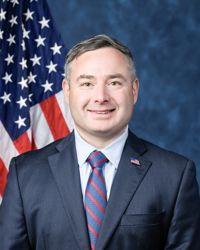
U.S. Representative for Virginia’s 7th district
Democrat
119th Congress, two-year term
Missed 0.7% of roll calls. Chamber median 1.9%.
The full voting recordCounts roll calls where most Democrats and most Republicans voted differently, leaving out procedural votes.
How we countFrom FEC filings, Voteview roll calls and Congress.gov.
Democrat. In Congress since 2025, 1 term in total.
Following saves Vindman to your list, which Chamber & Street keeps on its server, linked to a cookie on this browser and not to your name or email. Email alerts will come with constituent verification.
Bills and resolutions Vindman signed on to as a cosponsor. An original cosponsor signed on the day the bill was introduced. Source: govinfo bill status files, last updated Nov 6, 2026.
SAFE Act
Sponsor Carol Miller (R). Joined Sep 15, 2025. 54 cosponsors. H.R. 1171 on Congress.gov
Introduced
Stopping Addiction and Falls for the Elderly Act or the SAFE Act
This bill incorporates risk assessments and prevention services for falls into annual wellness visits and initial preventive physical exams under Medicare, as well as associated services provided by physical therapists and occupational therapists.
Public and Private Sector Ransomware Response Coordination Act of 2025
Sponsor Zachary Nunn (R). Joined Sep 11, 2025. 2 cosponsors. H.R. 807 on Congress.gov(opens in a new tab)
Introduced
Public and Private Sector Ransomware Response Coordination Act of 2025
This bill requires the Department of the Treasury to report on the coordination between the public and private sectors and among government agencies in response to, and for the prevention of, a ransomware attack on a financial institution.
Congressional MRA Act
Sponsor Jodey Arrington (R). Original cosponsor. 3 cosponsors. H.R. 5305 on Congress.gov(opens in a new tab)
Introduced
Congressional Money Returned to America Act or the Congressional MRA Act
This bill requires funds that were provided to House offices for the Members' Representational Allowance (MRA) and remain in the MRA account after all payments for the year are made to be deposited in the Treasury and used for deficit or debt reduction.
The MRA is an allowance that Members of the House of Representatives receive each year to operate their offices. It must be used to support official and representational duties and may not be used for personal or campaign purposes.
Annual appropriations acts that fund the legislative branch have generally included a provision that requires unused amounts remaining in the MRA to be used for deficit reduction or to reduce the federal debt. This bill makes this requirement permanent.
Preserving Patient Access to Long-Term Care Pharmacies Act
Sponsor Beth Van Duyne (R). Joined Sep 11, 2025. 46 cosponsors. H.R. 5031 on Congress.gov(opens in a new tab)
Introduced
Specialty Crop Domestic Market Promotion and Development Program Act of 2025
Sponsor David Valadao (R). Joined Sep 11, 2025. 9 cosponsors. H.R. 5030 on Congress.gov(opens in a new tab)
Introduced
Specialty Crop Domestic Market Promotion and Development Program Act of 2025
This bill directs the Agricultural Marketing Service to establish a grant program to encourage the development, maintenance, and expansion of the commercial domestic market for domestically produced specialty crop commodities (e.g., for advertising or other demand-oriented, generic domestic promotion activities).
Organizations eligible for the grant program include those that promote U.S. produced and grown specialty crop sales and are (1) U.S. agricultural trade organizations or regional state-related organizations that do not profit directly from U.S. specialty crop sales, (2) cooperative organizations or state agencies, or (3) certain private organizations. Specialty crop organizations operating under federal marketing orders are also eligible for the grant program.
Afghan Adjustment Act
Sponsor Mariannette Miller-Meeks (R). Joined Sep 11, 2025. 21 cosponsors. H.R. 4895 on Congress.gov(opens in a new tab)
Introduced
U.S.-Taiwan Defense Innovation Partnership Act
Sponsor Zachary Nunn (R). Joined Sep 11, 2025. 6 cosponsors. H.R. 4860 on Congress.gov(opens in a new tab)
Introduced
Biochar Research Network Act of 2025
Sponsor Mariannette Miller-Meeks (R). Joined Sep 11, 2025. 13 cosponsors. H.R. 4764 on Congress.gov(opens in a new tab)
Introduced
Biochar Research Network Act of 2025
This bill directs the Agricultural Research Service (ARS) to establish a biochar research network of not more than 20 research sites or facilities to test the impact of biochar across various soil types, application methods, and climates to learn more about its potential to benefit agriculture, forestry, and the environment.
Eligible entities for the research network include (1) state agriculture and forestry experiment stations; and (2) research facilities of the ARS, the Forest Service, and the Departments of Energy, Commerce, and the Interior.
Biochar is created by heating biomass (e.g., wood, grass, and manure) in a low-oxygen environment and can be applied to soil to sequester carbon and improve soil health.
Cooper Davis and Devin Norring Act
Sponsor Mariannette Miller-Meeks (R). Joined Sep 11, 2025. 10 cosponsors. H.R. 4518 on Congress.gov(opens in a new tab)
Introduced
Cooper Davis and Devin Norring Act
This bill requires electronic communication service providers and remote computing service providers to report knowledge of offenses involving the creation, manufacture, distribution, or dispensing of counterfeit controlled substances (including counterfeit prescription drugs), fentanyl, methamphetamine, or prescription pain medications or stimulants to the Drug Enforcement Administration. Providers are subject to criminal and civil penalties for failing to comply with these requirements.
Fisher House Availability Act of 2026
Sponsor Mariannette Miller-Meeks (R). Joined Sep 11, 2025. 3 cosponsors. H.R. 3726 on Congress.gov(opens in a new tab)
Passed the House
Fisher House Availability Act of 2026
This bill expands eligibility for temporary lodging at a Fisher House to additional individuals receiving medical care or treatment at a Department of Veteran Affairs (VA) or non-VA facility or those accompanying individuals receiving such treatment. (Fisher Houses are where the VA furnishes no-cost lodging to veterans and other eligible individuals when receiving treatment or accompanying an individual receiving treatment.)
Specifically, the bill authorizes the VA to provide lodging at a Fisher House on a space-available basis to
• members of the uniformed services performing active duty (i.e., covered beneficiaries) who must travel a significant distance to receive care or services;
• family members and others accompanying such covered beneficiaries to receive care or services;
• veterans, members of a veteran's family, and others who must travel a significant distance for a member of a veteran's family to receive care or services; and
• covered beneficiaries, members of a covered beneficiary’s family, and others who must travel a significant distance for a member of a beneficiary’s family to receive care or services.
Finally, the bill extends the limitation on pension amounts for certain hospitalized or institutionalized veterans through July 31, 2033.
FDA Modernization Act 3.0
Sponsor Earl Carter (R). Joined Sep 11, 2025. 41 cosponsors. H.R. 2821 on Congress.gov(opens in a new tab)
Passed the House
FDA Modernization Act 3.0
This bill requires the Food and Drug Administration (FDA) to publish an interim final rule implementing a provision of the Consolidated Appropriations Act of 2023 that authorized the use of certain alternatives to animal testing to support investigational use of a new drug.
The rule must replace references to animal tests, data, studies, models, and research with references to nonclinical tests, data, studies, models, and research throughout the FDA’s regulations governing investigational new drug applications.
The rule must be published within one year of the bill’s enactment, and must take immediate effect as an interim final rule.
Improving Care in Rural America Reauthorization Act of 2025
Sponsor Earl Carter (R). Joined Sep 11, 2025. 5 cosponsors. H.R. 2493 on Congress.gov(opens in a new tab)
Passed the House
Improving Care in Rural America Reauthorization Act of 2025
This bill reauthorizes through FY2030 grant programs administered by the Health Resources and Services Administration (HRSA) that provide funding to health care service providers and related entities in rural areas.
Specifically, the bill reauthorizes grants for
• expanding the delivery of health care services in rural areas,
• developing integrated health care networks (i.e., collaborative groups of local health care organizations) in rural areas, and
• improving the quality of services provided by small health care providers in rural areas.
Also, the bill requires HRSA to ensure that grant funds for expanding services or developing health care networks are used to (1) meet the health care needs of underserved populations, and (2) engage such populations in the planning and implementation of related activities.
CREATE AI Act of 2025
Sponsor Jay Obernolte (R). Joined Sep 11, 2025. 36 cosponsors. H.R. 2385 on Congress.gov(opens in a new tab)
Passed committee
Creating Resources for Every American To Experiment with Artificial Intelligence Act of 2025 or the CREATE AI Act of 2025
This bill establishes a national program to provide U.S. researchers, educators, and students with access to artificial intelligence (AI) data, computational resources, educational tools and services, and testbeds.
The program, to be known as the National Artificial Intelligence Research Resource (NAIRR), must be established by the National Science Foundation (NSF) to improve U.S. AI research capacity and spur the strategic development of AI capabilities. NAIRR may accept and use donated resources from the private sector and federal agencies.
Those eligible to use NAIRR resources are (1) researchers, educators, and students based in the United States and affiliated with a U.S. institution of higher education, nonprofit, executive agency, or other specified entity; and (2) employees of U.S. executive agencies or federally funded research and development centers with a demonstrable mission need.
NSF must select a nongovernmental organization to operate NAIRR (i.e., an operating entity) through a competitive and transparent process. The operating entity must ensure that a significant percentage of the annual allotment of computational resources is provided to projects primarily focused on AI privacy, ethics, safety, security, risk mitigation, or trustworthiness. The operating entity must also establish minimum security requirements for all individuals interacting with NAIRR.
The operating entity may establish a fee schedule for access to NAIRR, which must include a free tier of access and must ensure that the primary purpose of NAIRR is to support research.
To designate the facility of the United States Postal Service located at 1200 William Street, Room 200, in Buffalo, New York, as the "William J. Donovan Post Office Building".
Sponsor Timothy Kennedy (D). Joined Sep 11, 2025. 26 cosponsors. H.R. 1706 on Congress.gov(opens in a new tab)
Passed the House
This bill designates the facility of the United States Postal Service located at 1200 William Street, Room 200, in Buffalo, New York, as the "William J. Donovan Post Office Building".
Alternatives to PAIN Act
Sponsor Mariannette Miller-Meeks (R). Joined Sep 11, 2025. 116 cosponsors. H.R. 1227 on Congress.gov(opens in a new tab)
Introduced
Alternatives to Prevent Addiction In the Nation Act or the Alternatives to PAIN Act
This bill reduces cost-sharing and prohibits the imposition of certain utilization requirements under the Medicare prescription drug benefit for certain non-opioid pain management drugs.
Specifically, the bill requires such drugs to be covered without a deductible and to be placed on the lowest cost-sharing tier (if any). The bill also prohibits the imposition of prior authorization requirements (i.e., requiring prior approval from a plan) or step therapy requirements (i.e., requiring the use of alternative drugs before a drug is covered under a plan) with respect to such drugs.
Service-Disabled Veteran Opportunities in Small Business Act
Sponsor Nick LaLota (R). Joined Sep 10, 2025. 9 cosponsors. H.R. 865 on Congress.gov(opens in a new tab)
Introduced
Service-Disabled Veteran Opportunities in Small Business Act
This bill requires the Small Business Administration (SBA) to provide employees at any federal agency that has not met the goal of awarding at least 3% of its prime contracts and subcontracts to small businesses owned by service-disabled veterans with training to increase the number of such contracts awarded.
For each fiscal year, the SBA must report a list of each agency that did not meet the contracting goal and the number of trainings the SBA provided.
Cybersecurity Hiring Modernization Act
Sponsor Nancy Mace (R). Joined Sep 10, 2025. 2 cosponsors. H.R. 5000 on Congress.gov(opens in a new tab)
Passed committee
Streamlining Rural Housing Act of 2025
Sponsor Marlin Stutzman (R). Joined Sep 10, 2025. 15 cosponsors. H.R. 4989 on Congress.gov(opens in a new tab)
Introduced
AIRFARE Act
Sponsor W. Steube (R). Joined Sep 10, 2025. 7 cosponsors. H.R. 4940 on Congress.gov(opens in a new tab)
Introduced
Accommodating Individuals Requesting Familial Assistance in Riding Efficiently Act or the AIRFARE Act
This bill directs the Transportation Security Administration (TSA) to allow caregivers, parents, and guardians to accompany minors and passengers needing assistance to their flights.
Specifically, the TSA must establish a system to expedite gate passes and flight access procedures for these individuals.
The system must ensure that
• air carriers may offer up to two gate passes to caregivers, parents, and guardians who are accompanying a minor or a passenger needing assistance to a departing flight; and
• these individuals may apply their existing TSA PreCheck privileges to such gate passes.
The TSA PreCheck program expedites traveler screening through participating TSA security checkpoints.
Rural 340B Access Act of 2025
Sponsor Jack Bergman (R). Joined Sep 10, 2025. 6 cosponsors. H.R. 44 on Congress.gov(opens in a new tab)
Introduced
Rural 340B Access Act of 2025
This bill makes rural emergency hospitals (REHs) eligible to purchase drugs from manufacturers at discounted prices by participating in the Health Resources and Services Administration’s (HRSA’s) 340B drug pricing program. HRSA’s 340B program requires drug manufacturers that participate in the Medicaid program to sell certain outpatient drugs at discounted prices to entities listed as eligible under current law. Additionally, in 2020, Congress established REHs as a new Medicare provider designation for hospitals in rural areas providing emergency department services, observation care, and other outpatient medical and health services for which the annual per patient average length of stay does not exceed 24 hours. The bill adds qualifying REHs to the list of entities that are eligible to participate in the 340B program.
PFC Joseph P. Dwyer Peer Support Program Act
Sponsor Nick LaLota (R). Joined Sep 10, 2025. 32 cosponsors. H.R. 438 on Congress.gov(opens in a new tab)
Introduced
PFC Joseph P. Dwyer Peer Support Program Act
This bill requires the Department of Veterans Affairs (VA) to establish the PFC Joseph P. Dwyer Peer Support Program to make grants to eligible entities for peer-to-peer mental health programs for veterans.
Eligible entities include (1) a nonprofit organization that has historically served the mental health needs of veterans; (2) a congressionally chartered veteran service organization; or (3) a state, local, or tribal veteran service agency, director, or commissioner.
The VA shall establish an advisory committee to create appropriate program standards.
CROP for Farming Act
Sponsor Michael Lawler (R). Joined Sep 10, 2025. 7 cosponsors. H.R. 4296 on Congress.gov(opens in a new tab)
Introduced
Foundation for America’s Public Lands Reauthorization Act
Sponsor Blake Moore (R). Joined Sep 10, 2025. 8 cosponsors. H.R. 4044 on Congress.gov(opens in a new tab)
Introduced
Accelerating Access to Dementia and Alzheimer’s Provider Training Act
Sponsor Troy Balderson (R). Joined Sep 10, 2025. 97 cosponsors. H.R. 3747 on Congress.gov(opens in a new tab)
Passed the House
Accelerating Access to Dementia and Alzheimer’s Provider Training Act or the AADAPT Act
This bill reauthorizes through FY2031 and revises the Technology-enabled Collaborative Learning Program, which is administered by the Health Resources and Services Administration. This program provides grants to support the use of technology that connects different health care professionals to improve access to health care, including specialty care, for certain rural and medically underserved populations.
The bill explicitly adds dementia care to the types of specialty care that the program may address.
Healthy Dog Importation Act
Sponsor Dusty Johnson (R). Joined Sep 10, 2025. 11 cosponsors. H.R. 3349 on Congress.gov(opens in a new tab)
Introduced
Healthy Dog Importation Act
This bill expands Department of Agriculture (USDA) requirements for the importation of live dogs.
Prior to a dog's arrival into the United States, USDA must receive electronic documentation about the dog's health. The documentation must demonstrate that the dog (1) is in good health; (2) has received all necessary vaccinations and parasite treatments and demonstrated negative test results as evidenced by a certificate from a licensed veterinarian; and (3) is officially identified by a permanent method approved by USDA. Additionally, a dog entering the United States for transfer (e.g., for sale, adoption, exchange, or donation) must be at least six months old and accompanied by a USDA permit.
USDA must promulgate regulations to, among other things, deny entry of any dog in violation of the new requirements, require USDA to maintain a centralized database of imported dogs, and establish fees for verifying required documentation and issuing transfer permits.
USDA must provide an exception to any requirements under the bill for dogs that are transferred
• as a personal pet of U.S. origin returning to the United States;
• as a U.S. military working dog;
• for research purposes;
• for veterinary treatment under certain conditions, including appropriate quarantining; or
• for lawful importation into the state of Hawaii (from the British Isles, Australia, Guam, or New Zealand) if the dog is less than six months old and is not transported out of Hawaii for transfer at less than six months old.
USDA also has enforcement authority under the bill.