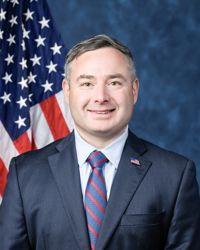
U.S. Representative for Virginia’s 7th district
Democrat
119th Congress, two-year term
Missed 0.7% of roll calls. Chamber median 1.9%.
The full voting recordCounts roll calls where most Democrats and most Republicans voted differently, leaving out procedural votes.
How we countFrom FEC filings, Voteview roll calls and Congress.gov.
Democrat. In Congress since 2025, 1 term in total.
Following saves Vindman to your list, which Chamber & Street keeps on its server, linked to a cookie on this browser and not to your name or email. Email alerts will come with constituent verification.
Bills and resolutions Vindman signed on to as a cosponsor. An original cosponsor signed on the day the bill was introduced. Source: govinfo bill status files, last updated Nov 6, 2026.
Deescalation Drone Pilot Program Act of 2025
Sponsor Troy Nehls (R). Joined Oct 3, 2025. 24 cosponsors. H.R. 3598 on Congress.gov
Introduced
Websites and Software Applications Accessibility Act of 2025
Sponsor Pete Sessions (R). Joined Oct 3, 2025. 11 cosponsors. H.R. 3417 on Congress.gov(opens in a new tab)
Introduced
Racehorse Health and Safety Act of 2025
Sponsor Clay Higgins (R). Joined Oct 3, 2025. 4 cosponsors. H.R. 3378 on Congress.gov(opens in a new tab)
Introduced
Modernizing Access to Our Public Oceans Act
Sponsor Russell Fry (R). Joined Oct 3, 2025. 15 cosponsors. H.R. 3340 on Congress.gov(opens in a new tab)
Introduced
Modernizing Access to Our Public Oceans Act
This bill directs the National Oceanic and Atmospheric Administration (NOAA) to publish geospatial data related to public recreational use of federal waterways (e.g., boating and fishing).
Under the bill, NOAA must consult with relevant stakeholders (including state and local governments, Indian tribes, and Native Hawaiian organizations) to develop and adopt standards for the coordination and dissemination of geospatial data relating to fishing restrictions and recreational vessels' use of federal waterways, including the exclusive economic zone of the United States (EEZ). (The EEZ generally includes waters between 3 and 200 miles seaward from the U.S. coastline.)
Within four years after the bill is enacted, NOAA must provide geographic information system data on a public website that identifies and describes the locations where and conditions under which certain recreational activities are restricted in federal waterways. Specifically, the website must identify (1) locations where fishing restrictions are imposed, (2) areas in the EEZ with restrictions on specified recreational vessel types, and (3) federally protected areas (e.g., National Marine Sanctuaries). NOAA must also continue to provide digitized navigation information related to the EEZ and make the information available on the website to the extent practicable.
The bill allows NOAA to coordinate and partner with nonfederal entities to carry out this bill. It also directs NOAA to work with other federal agencies to ensure compatibility and interoperability among federal databases with respect to collecting and disseminating geospatial data related to the public outdoor recreational use of the EEZ.
Organ Donation Referral Improvement Act
Sponsor Robert Wittman (R). Joined Oct 3, 2025. 15 cosponsors. H.R. 330 on Congress.gov(opens in a new tab)
Introduced
Organ Donation Referral Improvement Act
This bill requires the Office of the Assistant Secretary for Planning and Evaluation (ASPE) in the Department of Health and Human Services to conduct a study on hospitals’ use of electronic automated referrals for organ donations. The bill defines electronic automated referral as an electronic system that uses electronic health records to identify patients who are potential organ donors and automatically refers those patients to organ procurement organizations.
The ASPE must include specified components in the study, including identifying benefits, reviewing best practices, and developing recommendations for the use of electronic automated referrals for organ donations.
Farm Workforce Modernization Act of 2025
Sponsor Zoe Lofgren (D). Joined Oct 3, 2025. 11 cosponsors. H.R. 3227 on Congress.gov(opens in a new tab)
Introduced
Farm Workforce Modernization Act of 2025
This bill establishes a new certified agricultural worker (CAW) visa status for foreign farmworkers, heightens requirements under the current H-2A temporary worker program, and provides for mandatory employment eligibility verification for the agricultural workforce.
The Department of Homeland Security (DHS) may grant CAW status to an applying non-U.S. national (alien under federal law) who meets certain requirements, such as hours worked in agricultural labor during a specified time period and having a continuous presence in the United States.
The bill establishes a path to lawful permanent resident status for those with CAW status.
CAW status shall be valid for 5.5 years and may be extended. The applicant's spouse or children may receive CAW dependent status.
A CAW applicant may not be detained or removed by DHS and shall be authorized for employment until DHS makes a final decision on the application.
The bill also modifies the H-2A visa program, which allows employers to hire foreign workers for temporary or seasonal agricultural work. The changes include (1) requiring H-2A employers to guarantee certain minimum work hours, and (2) making the program available for agricultural work that is not temporary or seasonal.
DHS must also establish an electronic system patterned on the E-Verify Program for employers to verify an individual's identity and employment authorization. Employers hiring individuals for agricultural employment must use the system.
The bill extends through FY2030 and codifies the Multifamily Housing Preservation and Revitalization program for rural and farmworker housing.
Precision Agriculture Loan Program Act of 2025
Sponsor Randy Feenstra (R). Joined Oct 3, 2025. 2 cosponsors. H.R. 3211 on Congress.gov(opens in a new tab)
Introduced
Precision Agriculture Loan Program Act of 2025
This bill establishes a loan program within the Farm Service Agency to assist agricultural producers in purchasing precision agriculture equipment and technology, such as geospatial mapping, data management and analytics software, and network connectivity products and solutions. Under this program, the maximum aggregate loan amount of a precision agriculture loan is $500,000.
Precision agriculture refers to managing, tracking, or reducing crop or livestock production inputs, including seed, feed, fertilizer, chemicals, water, and time, at a heightened level of spatial and temporal granularity to improve efficiencies, reduce waste, and maintain environmental quality.
Holocaust Insurance Accountability Act of 2025
Sponsor David Kustoff (R). Joined Oct 3, 2025. 2 cosponsors. H.R. 3008 on Congress.gov(opens in a new tab)
Introduced
Fair Milk Pricing for Farmers Act
Sponsor Nicholas Langworthy (R). Joined Oct 3, 2025. 17 cosponsors. H.R. 295 on Congress.gov(opens in a new tab)
Introduced
Fair Milk Pricing for Farmers Act
This bill requires manufacturers to report production cost and product yield information for all dairy products processed in the same facility or facilities to the Department of Agriculture (USDA) Dairy Product Mandatory Reporting Program. Further, USDA must publish a report containing the information obtained under these new requirements and publish a report every two years thereafter.
As background, under the Dairy Product Mandatory Reporting Program, USDA must collect certain dairy product sales information from manufacturers and release the data on a weekly basis.
GLRI Act of 2025
Sponsor David Joyce (R). Joined Oct 3, 2025. 44 cosponsors. H.R. 284 on Congress.gov(opens in a new tab)
Introduced
Great Lakes Restoration Initiative Act of 2025 or the GLRI Act of 2025
This bill reauthorizes through FY2031 the Great Lakes Restoration Initiative, which carries out programs and projects to protect and restore the Great Lakes.
Special District Fairness and Accessibility Act
Sponsor Pat Fallon (R). Joined Oct 3, 2025. 28 cosponsors. H.R. 2766 on Congress.gov(opens in a new tab)
Passed committee
To direct the Secretary of Transportation to develop and implement a comprehensive Campus Modernization Plan for the United States Merchant Marine Academy, and for other purposes.
Sponsor Andrew Garbarino (R). Joined Oct 3, 2025. 17 cosponsors. H.R. 2429 on Congress.gov(opens in a new tab)
Introduced
Taiwan Travel and Tourism Coordination Act
Sponsor Young Kim (R). Joined Oct 3, 2025. 5 cosponsors. H.R. 2370 on Congress.gov(opens in a new tab)
Introduced
John W. Walsh Alpha-1 Home Infusion Act of 2025
Sponsor Maria Salazar (R). Joined Oct 3, 2025. 61 cosponsors. H.R. 2343 on Congress.gov(opens in a new tab)
Introduced
John W. Walsh Alpha-1 Home Infusion Act of 2025
This bill provides for Medicare coverage of treatment for alpha-1 antitrypsin (AAT) deficiency (a protein deficiency that raises the risk of lung and other diseases). Specifically, the bill provides for coverage of at-home augmentation therapy for beneficiaries with emphysema as a result of severe hereditary AAT deficiency. Treatment must be provided through qualified home infusion therapy suppliers; beneficiaries must be under the care of a physician, nurse practitioner, or physician assistant.
National Strategy for School Security Act of 2025
Joined Oct 3, 2025. 9 cosponsors. H.R. 2259 on Congress.gov(opens in a new tab)
Progress not on file
National Strategy for School Security Act of 2025
This bill requires the Department of Homeland Security (DHS) to develop a national strategy to secure elementary and secondary schools from acts of terrorism. DHS must submit this strategy to Congress, annually update the strategy (if appropriate) through 2033, and provide annual briefings to Congress on those updates.
Innovative FEED Act of 2025
Sponsor Nicholas Langworthy (R). Joined Oct 3, 2025. 53 cosponsors. H.R. 2203 on Congress.gov(opens in a new tab)
Introduced
Innovative Feed Enhancement and Economic Development Act of 2025 or the Innovative FEED Act of 2025
This bill provides for the regulation of zootechnical animal food substances as food additives.
The bill defines zootechnical animal food substance as a substance that is added to the food or drinking water of animals and that affects only the animal's gastrointestinal tract, with the intended purpose of affecting the byproducts of the animal's digestion, reducing foodborne pathogens, or altering the animal's gastrointestinal biome.
The definition does not include substances that are used to treat or prevent diseases in animals, hormones, or active ingredients of animal drugs. Labels for zootechnical animal food substances must include a disclaimer that the substance may not be used to treat or prevent diseases in animals.
Maintaining and Enhancing Hydroelectricity and River Restoration Act
Sponsor Adrian Smith (R). Joined Oct 3, 2025. 19 cosponsors. H.R. 2160 on Congress.gov(opens in a new tab)
Introduced
Maintaining and Enhancing Hydroelectricity and River Restoration Act
This bill establishes a new investment tax credit in the amount of 30% of the basis of any hydropower improvement property.
The bill defines hydropower improvement property as property that
• adds or improves fish passage at a qualified dam;
• maintains or improves the quality of the water retained or released by a qualified dam;
• promotes downstream sediment transport and habitat maintenance;
• upgrades, repairs, or reconstructs a qualified dam to meet safety and security standards;
• improves public uses of, and access to, public waterways impacted by a qualified dam;
• removes an obsolete river obstruction; or
• places into service an approved remote dam.
Further, written approval for hydropower improvement property must be obtained from the Federal Energy Regulatory Commission or state or local officials prior to January 1, 2032.
The bill also allows an election to claim the investment tax credit for qualified progress expenses for some types of hydropower improvement property in advance of such property being placed into service. Any investment tax credit amount claimed for qualified progress expenses reduces the amount of the investment tax credit that may be claimed once the hydropower improvement property is placed into service.
The bill authorizes certain entities, including tax-exempt and governmental entities, to treat the investment tax credit for hydropower improvement property as a payment of tax and receive a refund of any overpayment (also known as elective pay).
Finally, the investment tax credit for hydropower improvement property may be transferred (i.e., sold).
Veterans Patient Advocacy Act
Sponsor John Moolenaar (R). Joined Oct 3, 2025. 6 cosponsors. H.R. 2068 on Congress.gov(opens in a new tab)
Introduced
Veterans Patient Advocacy Act
This bill requires the Office of Patient Advocacy within the Veterans Health Administration to ensure that rural veterans may access the services of patient advocates. The bill also requires the Government Accountability Office to report on the implementation of such policies.
Medicare Home Health Accessibility Act
Sponsor Lloyd Smucker (R). Joined Oct 3, 2025. 31 cosponsors. H.R. 2013 on Congress.gov(opens in a new tab)
Introduced
Medicare Home Health Accessibility Act
This bill allows individuals to receive occupational therapy as a home health service under Medicare without the need for other services. Currently, individuals may only receive occupational therapy as a home health service if they first qualify for home health services based on other needs (e.g., physical therapy).
ACRE Act of 2025
Sponsor Randy Feenstra (R). Joined Oct 3, 2025. 63 cosponsors. H.R. 1822 on Congress.gov(opens in a new tab)
Introduced
Improper Payments Transparency Act
Sponsor Rudy Yakym (R). Joined Oct 3, 2025. 7 cosponsors. H.R. 1771 on Congress.gov(opens in a new tab)
Introduced
Improper Payments Transparency Act
This bill requires the President's annual budget to include specified information regarding improper payment amounts and rates for programs and activities at certain federal agencies. (An improper payment is any payment that should not have been made or that was made in an incorrect amount, including an overpayment or underpayment, under a statutory, contractual, administrative, or other legally applicable requirement.)
Specifically, the President's budget must include (1) a narrative description, including a detailed explanation of why any improper payment amounts and rates occurred and related trends for programs and activities; and (2) corrective actions and steps the agencies will take to address improper payment amount and rate issues.
Protecting American Agriculture from Foreign Adversaries Act of 2025
Sponsor Dan Newhouse (R). Joined Oct 3, 2025. 60 cosponsors. H.R. 1576 on Congress.gov(opens in a new tab)
Introduced
Protecting American Agriculture from Foreign Adversaries Act of 2025
This bill makes changes to the Committee on Foreign Investment in the United States (CFIUS), including by requiring CFIUS to determine whether a national security review is necessary for reportable agricultural land transactions that are referred by the Department of Agriculture (USDA). (CFIUS oversees the national security risks of certain foreign investment in the United States. CFIUS has the authority to review covered transactions, which include mergers, acquisitions, and takeovers that could result in foreign control of a U.S. business; certain investments in businesses involved in critical technologies, critical infrastructure, or sensitive personal data; and certain real estate transactions.)
Specifically, the bill directs CFIUS to, after receiving notification from USDA, determine (1) whether a reportable agricultural land transaction is a covered transaction, and (2) whether CFIUS should initiate a national security review or take another action with respect to the transaction.
Reportable agricultural land transaction means a transaction (1) that USDA has reason to believe is a covered transaction; (2) that involves the acquisition of an interest in agricultural land by a foreign person of China, North Korea, Russia, or Iran; and (3) with respect to which a foreign person is required to submit a report to USDA regarding their agricultural land transactions.
The bill also expands the membership of CFIUS to include the Secretary of Agriculture for covered transactions that involve agricultural land, agricultural biotechnology, or the agriculture industry (e.g., agricultural transportation, storage, and processing).
Make American Flags in America Act of 2025
Sponsor Nicholas Langworthy (R). Joined Oct 3, 2025. 53 cosponsors. H.R. 1421 on Congress.gov(opens in a new tab)
Introduced
Freight RAILCAR Act of 2025
Sponsor Darin LaHood (R). Joined Oct 3, 2025. 68 cosponsors. H.R. 1200 on Congress.gov(opens in a new tab)
Introduced
Improve and Enhance the Work Opportunity Tax Credit Act
Sponsor Lloyd Smucker (R). Joined Oct 3, 2025. 17 cosponsors. H.R. 1177 on Congress.gov(opens in a new tab)
Introduced
Improve and Enhance the Work Opportunity Tax Credit Act
This bill increases the work opportunity tax credit (WOTC) for wages paid during the first year of employment to certain employees. The bill also eliminates the maximum age limit applicable to Supplemental Nutrition Assistance Program (SNAP) benefit recipients for purposes of the WOTC.
Under current law, an employer generally may claim a WOTC in the amount of 40% of up to $6,000 (or of up to $24,000 for certain veterans, $3,000 for summer youth employees, and $10,000 for long-term family aid recipients) of qualified wages paid during the first year of employment to an employee who is a member of a targeted group. (Exceptions and limitations apply.)
The bill increases the WOTC to (1) 50% of up to $6,000 (or of up to $24,000 for certain veterans) of qualified first-year wages paid to an employee who is a member of a targeted group (other than a summer youth employee or recipient of long-term family aid), and (2) 50% of up to $12,000 (or of up to $48,000 for certain veterans) of qualified wages paid during the first year of employment to such employee if the employee works at least 400 hours during the year.
Finally, the bill eliminates the maximum age limit applicable to SNAP benefit recipients and, thus, allows an employer to claim the WOTC for qualified first-year wages paid to an employee who is at least 18 years old and receiving SNAP benefits for a certain period of time.