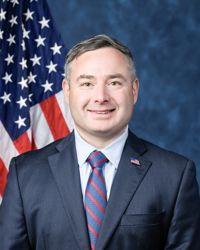
U.S. Representative for Virginia’s 7th district
Democrat
119th Congress, two-year term
Missed 0.7% of roll calls. Chamber median 1.9%.
The full voting recordCounts roll calls where most Democrats and most Republicans voted differently, leaving out procedural votes.
How we countFrom FEC filings, Voteview roll calls and Congress.gov.
Democrat. In Congress since 2025, 1 term in total.
Following saves Vindman to your list, which Chamber & Street keeps on its server, linked to a cookie on this browser and not to your name or email. Email alerts will come with constituent verification.
Bills and resolutions Vindman signed on to as a cosponsor. An original cosponsor signed on the day the bill was introduced. Source: govinfo bill status files, last updated Nov 6, 2026.
Housing Supply Expansion Act of 2025
Sponsor John Rose (R). Joined Dec 10, 2025. 11 cosponsors. H.R. 6293 on Congress.gov
Introduced
PACE Act
Sponsor Claudia Tenney (R). Joined Dec 10, 2025. 2 cosponsors. H.R. 2900 on Congress.gov(opens in a new tab)
Introduced
Promoting Affordable Childcare for Everyone Act or the PACE Act
This bill increases and makes refundable the tax credit for qualified child and dependent care expenses. The bill also increases the exclusion from gross income for employer-provided child and dependent care benefits.
Under current law, a nonrefundable tax credit is allowed for up to 35% (maximum tax credit percentage) of qualified child and dependent care expenses incurred by an individual to work or look for work, up to a maximum amount. The percentage of such expenses allowed as a tax credit may be reduced, but not below 20% (minimum tax credit percentage), based on an individual’s adjusted gross income.
The bill generally increases the tax credit for qualified child and dependent care expenses by
• increasing the maximum tax credit percentage to 50%,
• increasing the minimum tax credit percentage to 35%, and
• adjusting the maximum credit amounts annually for inflation.
The bill also makes the tax credit for qualified child and dependent care expenses refundable.
Finally, the bill increases and adjusts for inflation the amount that may be excluded from gross income for employer-sponsored child and dependent care benefits (e.g., dependent care flexible spending arrangements) to $7,500 (from $5,000).
To amend title XVIII of the Social Security Act to expand practitioners eligible to furnish telehealth services under the Medicare program.
Sponsor Mike Kelly (R). Joined Dec 10, 2025. 10 cosponsors. H.R. 1614 on Congress.gov(opens in a new tab)
Introduced
This bill permanently allows audiologists, physical therapists, occupational therapists, and speech-language pathologists to furnish telehealth services under Medicare.
Supporting the goals and ideals of "National Rural Health Day".
Sponsor Diana Harshbarger (R). Joined Dec 9, 2025. 38 cosponsors. H.Res. 891 on Congress.gov(opens in a new tab)
Introduced
This resolution supports the designation of National Rural Health Day.
Taiwan Interpol Endorsement and Inclusion Act
Sponsor Lance Gooden (R). Joined Dec 9, 2025. 8 cosponsors. H.R. 6262 on Congress.gov(opens in a new tab)
Introduced
No Fentanyl on Social Media Act
Sponsor Gabe Evans (R). Joined Dec 9, 2025. 8 cosponsors. H.R. 6259 on Congress.gov(opens in a new tab)
Introduced
Foreign Robocall Elimination Act
Sponsor Addison McDowell (R). Joined Dec 9, 2025. 39 cosponsors. H.R. 6152 on Congress.gov(opens in a new tab)
Passed committee
Foreign Robocall Elimination Act
This bill modifies and expands certain Federal Communications Commission (FCC) programs targeting illegal robocalls and creates a task force to advise the federal government on foreign robocalls.
For example, the bill directs the FCC to issue rules under which certain voice service providers (i.e., phone companies) may be required to post a bond before filing required certifications in the Robocall Mitigation Database. (Under current law, providers must file annual certifications in this database regarding their compliance with illegal robocall mitigation requirements. Noncompliant providers are removed from the database and effectively blocked from the U.S. telephone network.) Providers that do not demonstrate legitimate operations, sufficient regulatory oversight, or the ability to pay fines may be subject to the bond requirement. The FCC must establish categorical exemptions for classes of legitimate providers that satisfy certain criteria.
Further, the bill makes changes related to the FCC’s traceback consortium, a group selected by the FCC to conduct private-led efforts to trace the origin of suspected illegal robocalls. Specifically, the bill protects the consortium from liability for receiving, sharing, or publishing information about suspected fraudulent, abusive, or illegal robocalls and other illegal calls. Additionally, the bill authorizes the consortium to publish a list of voice service providers based on information about providers’ transmission or origination of illegal robocalls or refusal to participate in traceback efforts. (Currently, only the FCC may publish this list.)
The bill also establishes an interagency task force on combating robocalls that originate outside the United States.
ASAP Act
Sponsor Vern Buchanan (R). Joined Dec 9, 2025. 235 cosponsors. H.R. 6130 on Congress.gov(opens in a new tab)
Passed committee
Alzheimer's Screening and Prevention Act of 2025 or the ASAP Act
This bill provides for Medicare coverage of blood tests to screen for the early stages of Alzheimer’s disease or related dementias. Specifically, the bill provides for coverage of genomic sequencing blood or blood product tests, or other equivalent tests, that are approved by the Food and Drug Administration.
Agricultural Cooperative Energy Savings Act of 2025
Sponsor Dusty Johnson (R). Joined Dec 9, 2025. 9 cosponsors. H.R. 6093 on Congress.gov(opens in a new tab)
Introduced
Water Infrastructure Modernization Act of 2025
Sponsor Robert Bresnahan (R). Joined Dec 9, 2025. 22 cosponsors. H.R. 6075 on Congress.gov(opens in a new tab)
Introduced
Bringing Assistance for Rural Needs During Shutdowns Act
Sponsor Tony Wied (R). Joined Dec 9, 2025. 8 cosponsors. H.R. 6018 on Congress.gov(opens in a new tab)
Introduced
Bringing Assistance for Rural Needs During Shutdowns Act
This bill requires Farm Service Agency (FSA) officers and employees to continue to work during a government shutdown.
As background, under an exception in the Antideficiency Act, an employee whose duties involve the safety of human life or the protection of property may be required to work during a government shutdown (i.e., lapse in appropriations).
Under this bill, any services by an FSA officer or employee are deemed to be for an emergency involving the safety of human life or the protection of property. Thus, if a lapse in FSA appropriations occurs, FSA officers and employees may be required to continue working.
Stamp Out Veterans Medical Debt Act
Sponsor Mike Flood (R). Joined Dec 9, 2025. 4 cosponsors. H.R. 5946 on Congress.gov(opens in a new tab)
Introduced
Stamp Out Veterans Medical Debt Act
This bill requires the U.S. Postal Service to issue and sell a Veterans Medical Debt Relief Stamp to help pay medical debt incurred by veterans for hospital care, medicals services, and extended care services furnished by the Department of Veterans Affairs, including through the Veterans Community Care Program.
Community Investment and Prosperity Act
Sponsor Michael Lawler (R). Joined Dec 9, 2025. 8 cosponsors. H.R. 5913 on Congress.gov(opens in a new tab)
Introduced
21st Century Dyslexia Act
Sponsor Erin Houchin (R). Joined Dec 9, 2025. 8 cosponsors. H.R. 5769 on Congress.gov(opens in a new tab)
Introduced
21st Century Dyslexia Act
This bill addresses the education of children with disabilities, with a particular focus on children with dyslexia.
Currently, dyslexia is listed as one of the disabilities under the definition of specific learning disability in the Individuals with Disabilities Education Act (IDEA). This bill instead removes dyslexia from the definition of specific learning disability and establishes a stand-alone definition for dyslexia within the IDEA.
Specifically, the bill defines dyslexia for purposes of the IDEA as an unexpected difficulty in reading for an individual who has the intelligence to be a much better reader, most commonly caused by a difficulty in the phonological processing (the appreciation of the individual sounds of spoken language), which affects the ability of an individual to speak, read, and spell.
Additionally, the bill requires a local educational agency or other agency, in determining eligibility for or providing an accommodation or service under the IDEA, to provide equal access to (1) children from low-income families, (2) children from families with low socioeconomic status, and (3) children who are limited English proficient.
To expand the sharing of information with respect to suspected violations of intellectual property rights in trade.
Sponsor Blake Moore (R). Joined Dec 9, 2025. 6 cosponsors. H.R. 4930 on Congress.gov(opens in a new tab)
Passed the House
This bill expands the authority of U.S. Customs and Border Protection (CBP) to provide information to certain persons (e.g., trademark or copyright owners) regarding suspected violations of intellectual property rights in trade.
Under current law, if CBP suspects that merchandise is being imported in violation of certain trademark and copyright laws, it may request assistance from specified persons when determining whether the merchandise is imported in violation of these laws. To permit the party to conduct examination and testing, CBP must provide them with specified information that appears on the merchandise and its packaging and labels.
This bill (1) expands the definition of person to allow CBP to request assistance from any other appropriate party with an interest in the imported merchandise, and (2) expands the scope of information that CBP is authorized to share with others to include information on and images of packing materials and containers.
The bill allows CBP to request this assistance if it has a reasonable suspicion (currently, suspects) that the merchandise being imported is in violation of certain trademark and copyright laws.
Additionally, CBP may provide a person with nonpublic information about the imported merchandise that was generated by an online marketplace or similar market platform, express consignment operator, freight forwarder, or any other entity that plays a role in the sale, importation, or facilitation of the merchandise into the United States and has been provided to, shared with, or obtained by CBP. CBP must provide the person with notification of the transmitted information.
Small Nonprofit Retirement Security Act of 2025
Sponsor Vern Buchanan (R). Joined Dec 9, 2025. 13 cosponsors. H.R. 4548 on Congress.gov(opens in a new tab)
Introduced
Prescription Information Modernization Act of 2025
Sponsor Diana Harshbarger (R). Joined Dec 9, 2025. 16 cosponsors. H.R. 4132 on Congress.gov(opens in a new tab)
Introduced
FISH Act of 2025
Sponsor Dan Crenshaw (R). Joined Dec 9, 2025. 6 cosponsors. H.R. 3756 on Congress.gov(opens in a new tab)
Passed committee
Medicaid Empowerment Act of 2025
Sponsor Michael Rulli (R). Joined Dec 9, 2025. 4 cosponsors. H.R. 3079 on Congress.gov(opens in a new tab)
Introduced
Medicaid Empowerment Act of 2025
This bill allows state Medicaid programs to renew home- and community-based services waivers (also known as Section 1915(c) waivers) in 10-year periods. Currently, these waivers may be extended in five-year periods; waivers allow state Medicaid programs to cover long-term care services that are provided in home or community settings rather than in institutional settings.
Prison Staffing Reform Act of 2025
Sponsor Jay Obernolte (R). Joined Dec 9, 2025. 7 cosponsors. H.R. 2879 on Congress.gov(opens in a new tab)
Introduced
Prison Staffing Reform Act of 2025
This bill requires the Bureau of Prisons (BOP) to (1) complete (through an external entity) a comprehensive review of staffing across the BOP, and (2) implement a plan for filling vacancies.
DETERRENCE Act
Sponsor Ann Wagner (R). Joined Dec 9, 2025. 4 cosponsors. H.R. 2394 on Congress.gov(opens in a new tab)
Introduced
Deterring External Threats and Ensuring Robust Responses to Egregious and Nefarious Criminal Endeavors Act or the DETERRENCE Act
This bill establishes sentencing enhancements for various federal criminal offenses if the offenses are directed by or coordinated with a foreign government.
Lulu’s Law
Sponsor Gary Palmer (R). Joined Dec 9, 2025. 3 cosponsors. H.R. 2076 on Congress.gov(opens in a new tab)
Introduced
Lulu’s Law
This bill requires the Federal Communications Commission to issue an order explicitly permitting the transmission of wireless emergency alerts to mobile phones in the event of a shark attack.
(Under current regulations, authorized government authorities are permitted to send wireless emergency alerts regarding public safety emergencies, including severe weather, missing children, and other threats to life or property.)
Countering Online Radicalization and Terrorism Act
Sponsor August Pfluger (R). Joined Dec 9, 2025. 6 cosponsors. H.R. 1212 on Congress.gov(opens in a new tab)
Introduced
TRICARE Transition Transparency Act of 2025
Sponsor Jennifer Kiggans (R). Joined Dec 4, 2025. 15 cosponsors. H.R. 5586 on Congress.gov(opens in a new tab)
Introduced
Whistleblower Protection Act of 2025
Sponsor Monica De La Cruz (R). Joined Dec 4, 2025. 7 cosponsors. H.R. 4646 on Congress.gov(opens in a new tab)
Passed the House
Whistleblower Protection Act of 2025
This bill expands existing whistleblower protections for employees of federal contractors or grant recipients to apply to all contracts and grants funded by the Department of Housing and Urban Development (HUD) regardless of the date of execution.
Current law protects employees of federal contractors or grant recipients from a reprisal (i.e., discharge, demotion, or discrimination) for disclosing evidence to Congress or another appropriate official of certain misconduct involving federal contracts, grants, or funds. This provision currently applies only to contracts and grants signed or modified after the law took effect in 2013. The bill expands these protections to apply to HUD contracts and grants signed before the law was enacted.