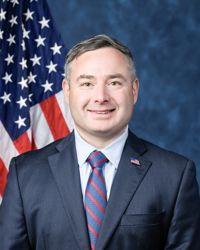
U.S. Representative for Virginia’s 7th district
Democrat
119th Congress, two-year term
Missed 0.7% of roll calls. Chamber median 1.9%.
The full voting recordCounts roll calls where most Democrats and most Republicans voted differently, leaving out procedural votes.
How we countFrom FEC filings, Voteview roll calls and Congress.gov.
Democrat. In Congress since 2025, 1 term in total.
Following saves Vindman to your list, which Chamber & Street keeps on its server, linked to a cookie on this browser and not to your name or email. Email alerts will come with constituent verification.
Bills and resolutions Vindman signed on to as a cosponsor. An original cosponsor signed on the day the bill was introduced. Source: govinfo bill status files, last updated Nov 6, 2026.
Click to Cancel Act of 2025
Sponsor Brad Sherman (D). Joined Feb 9, 2026. 19 cosponsors. H.R. 4819 on Congress.gov
Introduced
VISIBLE Act
Sponsor Vicente Gonzalez (D). Joined Feb 9, 2026. 38 cosponsors. H.R. 4667 on Congress.gov(opens in a new tab)
Introduced
Stop ICE from Kidnapping U.S. Citizens Act
Sponsor Pramila Jayapal (D). Joined Feb 9, 2026. 58 cosponsors. H.R. 4456 on Congress.gov(opens in a new tab)
Introduced
GRAD Act
Sponsor Jennifer McClellan (D). Original cosponsor. 14 cosponsors. H.R. 7341 on Congress.gov(opens in a new tab)
Introduced
No Delay in Representation Act
Sponsor Adelita Grijalva (D). Joined Feb 3, 2026. 37 cosponsors. H.R. 7101 on Congress.gov(opens in a new tab)
Introduced
Disability and Age in Jury Service Nondiscrimination Act
Sponsor Lateefah Simon (D). Joined Feb 3, 2026. 16 cosponsors. H.R. 5096 on Congress.gov(opens in a new tab)
Introduced
Disability and Age in Jury Service Nondiscrimination Act
This bill prohibits the exclusion of individuals from jury service on the basis of their disability or age.
Further, the bill prohibits the disqualification of individuals from jury service who fail to meet certain qualifications (e.g., adequate proficiency in English) on the basis of their disability if reasonable accommodations can be made.
True Shutdown Fairness Act
Sponsor James Walkinshaw (D). Original cosponsor. 37 cosponsors. H.R. 7322 on Congress.gov(opens in a new tab)
Introduced
Safe Schools Improvement Act
Sponsor Linda Sánchez (D). Joined Feb 2, 2026. 218 cosponsors. H.R. 1810 on Congress.gov(opens in a new tab)
Introduced
Safe Schools Improvement Act
This bill requires states to direct their local educational agencies (LEAs) to establish policies that prevent and prohibit bullying and harassment of elementary and secondary school students. In particular, these policies must prohibit bullying and harassment based on race, color, national origin, disability, religion, or sex. Sex includes sexual orientation, gender identity, and sex characteristics (including intersex traits).
Further, LEAs must provide (1) students, parents, and educational professionals with annual notice of the conduct prohibited in their disciplinary policies; (2) students and parents with grievance procedures that target such conduct; and (3) the public with annual data on the incidence and frequency of that conduct at the school and LEA level.
The Department of Education must conduct and report on an independent biennial evaluation of programs and policies to combat bullying and harassment in elementary and secondary schools. The National Center for Education Statistics must collect state data to determine the incidence and frequency of the conduct prohibited by LEA disciplinary policies.
SAFE Drugs Act of 2025
Sponsor Rudy Yakym (R). Joined Jan 30, 2026. 20 cosponsors. H.R. 6509 on Congress.gov(opens in a new tab)
Introduced
Safeguarding Americans from Fraudulent and Experimental Drugs Act of 2025 or the SAFE Drugs Act of 2025
This bill provides for increased oversight of drug compounding and imposes statutory limits on compounded drugs that are essentially copies of commercially available drugs.
Currently, subject to certain requirements, compounded drugs (i.e., drugs that are mixed or altered to meet patient needs) do not require Food and Drug Administration (FDA) approval. Additional limits apply to the compounding of drugs that are essentially copies of commercially available drug products.
Under the bill, a compounded drug is essentially a copy of a commercially available drug product if (1) the compounded drug contains any active ingredient found in a commercially available drug product, and (2) there is no change made for an individual patient that results in a significant difference between the compounded drug and the commercially available drug. (The FDA’s current definition of the term also addresses dosage strength and route of administration.)
The bill increases the frequency at which a licensed pharmacist or physician may compound a drug that is essentially a copy of a commercially available drug to 20 times per month. Current FDA policy allows four such prescriptions per month.
The bill also imposes annual reporting requirements on physicians, facilities, and pharmacies (except hospital-based pharmacies) that compound certain drug products for out-of-state patients more than 20 times per month. Further, the bill subjects certain large-scale outsourcing facilities (i.e., FDA-registered facilities that compound in bulk) to regular inspection and reporting requirements.
CONNECT for Health Act of 2025
Sponsor Mike Thompson (D). Joined Jan 30, 2026. 248 cosponsors. H.R. 4206 on Congress.gov(opens in a new tab)
Introduced
Runaway and Homeless Youth and Trafficking Prevention Act of 2025
Sponsor Suzanne Bonamici (D). Joined Jan 30, 2026. 24 cosponsors. H.R. 3856 on Congress.gov(opens in a new tab)
Introduced
Impeaching Kristi Lynn Arnold Noem, Secretary of Homeland Security, for high crimes and misdemeanors.
Sponsor Robin Kelly (D). Joined Jan 27, 2026. 187 cosponsors. H.Res. 996 on Congress.gov(opens in a new tab)
Introduced
Health Tech Investment Act
Sponsor John Joyce (R). Joined Jan 27, 2026. 7 cosponsors. H.R. 6197 on Congress.gov(opens in a new tab)
Introduced
Farm and Family Relief Act
Sponsor Angie Craig (D). Original cosponsor. 30 cosponsors. H.R. 7206 on Congress.gov(opens in a new tab)
Introduced
Protecting Taxpayers from Risky Investments in Venezuela Act
Sponsor Mike Levin (D). Joined Jan 21, 2026. 22 cosponsors. H.R. 7038 on Congress.gov(opens in a new tab)
Introduced
To direct the Secretary of Defense to establish a pilot program to provide certain members of the Armed Forces with timely and relevant information via text message, and for other purposes.
Sponsor Chrissy Houlahan (D). Joined Jan 21, 2026. 8 cosponsors. H.R. 6490 on Congress.gov(opens in a new tab)
Introduced
Promoting Physical Activity for Americans Act
Sponsor Blake Moore (R). Joined Jan 21, 2026. 11 cosponsors. H.R. 6121 on Congress.gov(opens in a new tab)
Introduced
Promoting Physical Activity for Americans Act
This bill requires the Department of Health and Human Services (HHS) to continue issuing at least every 10 years physical-activity guidelines based on the most current scientific and medical knowledge.
HHS must also publish updated reports that detail evidence-based practices and highlight continuing physical-activity issues between iterations of the guidelines.
Baltic Security Assessment Act of 2025
Sponsor Wesley Bell (D). Joined Jan 21, 2026. 101 cosponsors. H.R. 5543 on Congress.gov(opens in a new tab)
Passed committee
EQIP Improvement Act of 2025
Sponsor Jahana Hayes (D). Joined Jan 21, 2026. 5 cosponsors. H.R. 4133 on Congress.gov(opens in a new tab)
Introduced
EQIP Improvement Act of 2025
This bill modifies payment limitations and reduces the federal cost share and required payments for certain projects authorized under the Environmental Quality Incentives Program (EQIP). As background, this Department of Agriculture program provides technical and financial assistance to agricultural producers and forest landowners to address natural resource concerns.
Specifically, the bill limits the total payments available to a person or legal entity under EQIP to $150,000 over a specified five-year period. (A $450,000 statutory limit was in effect for FY2019-FY2024, and a regulatory contract limit of $450,000 currently applies.)
The bill also reduces the maximum federal cost share to 40% (from 75%) for the costs associated with planning, installation, or maintenance for specified conservation practices (e.g., access roads, dams, and waste storage facilities) and removes a requirement that 50% of EQIP funding for payments go to practices related to livestock production.
GUARD VA Benefits Act
Sponsor Chris Pappas (D). Joined Jan 21, 2026. 137 cosponsors. H.R. 1732 on Congress.gov(opens in a new tab)
Introduced
Governing Unaccredited Representatives Defrauding VA Benefits Act or the GUARD VA Benefits Act
This bill imposes fines on individuals for soliciting, contracting for, charging, or receiving any unauthorized fee or compensation with respect to the preparation, presentation, or prosecution of any claim for Department of Veterans Affairs benefits. The attempted commission of such offenses is also punishable by fine.
Ally’s Act
Sponsor Joe Neguse (D). Joined Jan 20, 2026. 111 cosponsors. H.R. 4606 on Congress.gov(opens in a new tab)
Introduced
LET’S Protect Workers Act
Sponsor Robert Scott (D). Joined Jan 14, 2026. 80 cosponsors. H.R. 6597 on Congress.gov(opens in a new tab)
Introduced
Same Day Registration Act of 2025
Sponsor Julia Brownley (D). Joined Jan 13, 2026. 25 cosponsors. H.R. 5906 on Congress.gov(opens in a new tab)
Introduced
American Energy Independence and Affordability Act
Sponsor Mike Thompson (D). Joined Jan 13, 2026. 129 cosponsors. H.R. 5862 on Congress.gov(opens in a new tab)
Introduced
Workplace Violence Prevention for Health Care and Social Service Workers Act
Sponsor Joe Courtney (D). Joined Jan 13, 2026. 134 cosponsors. H.R. 2531 on Congress.gov(opens in a new tab)
Introduced
Workplace Violence Prevention for Health Care and Social Service Workers Act
This bill requires the Department of Labor to address workplace violence in health care, social service, and similar sectors.
Specifically, Labor must issue an occupational safety and health standard that requires certain employers to take actions to protect workers and other personnel from workplace violence. The standard applies to employers in the health care sector, in the social service sector, and in sectors that conduct activities similar to those in the health care and social service sectors. Among other elements, the standard must require each employer to (1) develop a workplace violence prevention plan, (2) promptly investigate incidents of workplace violence, and (3) provide relevant training and education to employees.
The bill requires certain hospitals and skilled nursing facilities to comply with this standard as a condition of Medicare participation.