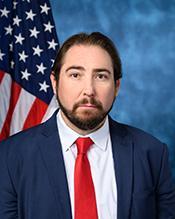
U.S. Representative for Arizona’s 2nd district
Republican
119th Congress, two-year term
Missed 2.2% of roll calls. Chamber median 1.9%.
The full voting recordCounts roll calls where most Democrats and most Republicans voted differently, leaving out procedural votes.
How we countFrom FEC filings, Voteview roll calls and Congress.gov.
Republican. In Congress since 2023, 2 terms in total.
Following saves Crane to your list, which Chamber & Street keeps on its server, linked to a cookie on this browser and not to your name or email. Email alerts will come with constituent verification.
Bills and resolutions Crane signed on to as a cosponsor. An original cosponsor signed on the day the bill was introduced. Source: govinfo bill status files, last updated Nov 6, 2026.
To repeal the authorizations for use of military force against Iraq.
Sponsor Gregory Meeks (D). Original cosponsor. 37 cosponsors. H.R. 1488 on Congress.gov
Introduced
LIABLE Act
Sponsor Chip Roy (R). Original cosponsor. 11 cosponsors. H.R. 1432 on Congress.gov(opens in a new tab)
Introduced
Let Injured Americans Be Legally Empowered Act or the LIABLE Act
This bill prohibits COVID-19 vaccine manufacturers from being immune under federal law from lawsuits relating to their vaccines.
Specifically, the bill prohibits any federal law from providing immunity for COVID-19 vaccine manufacturers from civil suits or liability, or limiting liability, with respect to the administration or use of their vaccines. Additionally, individuals may not be precluded from bringing a civil suit against a COVID-19 vaccine manufacturer because the individual sought or received compensation through specified federal vaccine injury compensation programs, nor does the bill preclude individuals from seeking compensation through these programs.
The bill applies to vaccine administrations that occur before, on, or after the bill's date of enactment.
Protect America’s Lands Act
Original cosponsor. 22 cosponsors. H.R. 1309 on Congress.gov(opens in a new tab)
Progress not on file
Protect America’s Lands Act
This bill prohibits national securities exchanges from allowing the trade of securities issued by natural asset companies. Natural asset companies are companies that oversee land for conservation, restoration, or for the sustainable management of the natural resources and ecosystem services on that land.
Death Tax Repeal Act
Sponsor Randy Feenstra (R). Original cosponsor. 182 cosponsors. H.R. 1301 on Congress.gov(opens in a new tab)
Introduced
Reorganizing Government Act of 2025
Sponsor James Comer (R). Original cosponsor. 19 cosponsors. H.R. 1295 on Congress.gov(opens in a new tab)
Introduced
Reorganizing Government Act of 2025
This bill revives expedited congressional consideration of certain Presidential plans to reorganize the executive branch, expands permissible plan purposes, and changes the prohibitions on plan content.
The bill reauthorizes through 2026 a currently expired authority that requires expedited congressional consideration of certain executive branch reorganization plans submitted by the President.
The bill also expands the purposes for which such reorganization plans may be undertaken, to include
• reducing the number of federal employees;
• eliminating unnecessary and burdensome rules, regulations, and other requirements; and
• eliminating government operations that do not serve the public interest.
The bill removes the following prohibitions on the contents of such plans:
• creating new executive departments or renaming existing executive departments;
• abolishing or transferring executive departments or independent regulatory agencies or all of their functions; and
• consolidating executive departments or independent regulatory agencies or all of their functions.
The bill also adds a new prohibition on content, specifying that any such plan may not create a net increase in federal workers or expenditures.
To amend title 38, United States Code, to modify the rate of pay for care or services provided under the Community Care Program of the Department of Veterans Affairs based on the location at which such care or services were provided, and for other purposes.
Sponsor Richard McCormick (R). Joined Feb 11, 2025. 1 cosponsor. H.R. 874 on Congress.gov(opens in a new tab)
Introduced
To amend title 10, United States Code, to modify the rate of pay for care or services provided under the TRICARE program based on the location at which such care or services were provided.
Sponsor Richard McCormick (R). Joined Feb 11, 2025. 2 cosponsors. H.R. 873 on Congress.gov(opens in a new tab)
Introduced
MERIT Act of 2025
Sponsor Barry Loudermilk (R). Joined Feb 11, 2025. 24 cosponsors. H.R. 687 on Congress.gov(opens in a new tab)
Introduced
To repeal the Impoundment Control Act of 1974.
Sponsor Andrew Clyde (R). Original cosponsor. 25 cosponsors. H.R. 1180 on Congress.gov(opens in a new tab)
Introduced
This bill repeals the Impoundment Control Act of 1974 (ICA). The ICA generally limits the authority of the President to impound (i.e., withhold from obligation or expenditure) funds that have been appropriated by Congress and establishes related procedures. It also establishes expedited legislative procedures that Congress may use to consider legislation to enact rescissions proposed by the President.
MACARTHUR Act
Sponsor Keith Self (R). Joined Feb 10, 2025. 1 cosponsor. H.R. 700 on Congress.gov(opens in a new tab)
Introduced
Maintaining Academy Culture and Assuring Retention of Tradition, Honor, and Unity of the Republic Act or the MACARTHUR Act
This bill requires the Department of the Army to amend the mission statement of the United States Military Academy to include the phrase “Duty, Honor, Country.”
LASSO Act
Sponsor Paul Gosar (R). Joined Feb 10, 2025. 16 cosponsors. H.R. 34 on Congress.gov(opens in a new tab)
Introduced
Land And Social Security Optimization Act or the LASSO Act
This bill requires 10% of revenue generated by public lands, including submerged lands on the Outer Continental Shelf, under the jurisdiction of the Department of the Interior and the Forest Service to be deposited into the Federal Old-Age and Survivors Insurance Trust Fund, which is used to pay Social Security benefits to retirees and their families and to survivors of deceased workers.
Abolish the ATF Act
Sponsor Eric Burlison (R). Joined Feb 10, 2025. 34 cosponsors. H.R. 221 on Congress.gov(opens in a new tab)
Introduced
Abolish the ATF Act
This bill abolishes the Bureau of Alcohol, Tobacco, Firearms and Explosives.
Proposing an amendment to the Constitution of the United States to require that the Supreme Court of the United States be composed of nine justices.
Sponsor Dusty Johnson (R). Joined Feb 10, 2025. 108 cosponsors. H.J.Res. 28 on Congress.gov(opens in a new tab)
Introduced
This joint resolution proposes a constitutional amendment requiring the Supreme Court to consist of nine Justices.
Emergency Border Control Resolution
Sponsor Andy Harris (R). Original cosponsor. 10 cosponsors. H.Con.Res. 10 on Congress.gov(opens in a new tab)
Introduced
Emergency Border Control Resolution
This concurrent resolution establishes the congressional budget for the federal government for FY2025, sets forth budgetary levels for FY2026-FY2034, and provides reconciliation instructions for legislation that increases or decreases the deficit and increases the statutory debt limit by specified amounts.
The resolution recommends levels and amounts for FY2025-FY2034 for
• federal revenues,
• new budget authority,
• budget outlays,
• deficits (on-budget),
• debt subject to limit,
• debt held by the public, and
• the major functional categories of spending.
The resolution includes reconciliation instructions that direct several House committees to submit legislation that will increase or decrease the deficit and increase the statutory debt limit by specified amounts. The committees must submit the legislation to the House Budget Committee by February 27, 2025.
(Under current law, reconciliation bills are considered by Congress using expedited legislative procedures that prevent a filibuster and restrict amendments in the Senate.)
Finally, the resolution specifies that it is the policy of this resolution that (1) federal spending levels should be restored to the levels that existed prior to the COVID-19 pandemic, adjusted to protect current Social Security and Medicare spending and reflect existing debt service obligations; and (2) it shall be the objective of the House to reach total budget outlays of $6.057 trillion or less this fiscal year.
To abolish the United States Agency for International Development, and for other purposes.
Original cosponsor. 17 cosponsors. H.R. 1123 on Congress.gov(opens in a new tab)
Progress not on file
Protection of Women in Olympic and Amateur Sports Act of 2026
Sponsor W. Steube (R). Joined Feb 7, 2025. 73 cosponsors. H.R. 1028 on Congress.gov(opens in a new tab)
Introduced
Protection of Women in Olympic and Amateur Sports Act
This bill requires certified national governing bodies (NGBs) of amateur sports (e.g., USA Gymnastics) to prohibit a person whose sex is male from participating in an amateur athletic competition that is designated for females, women, or girls.
Under the bill, male means an individual who has, had, will have—or would have, but for a developmental or genetic anomaly or historical accident—the reproductive system that at some point produces, transports, and utilizes sperm for fertilization.
PLCAA Federal Jurisdiction Act
Sponsor Harriet Hageman (R). Original cosponsor. 4 cosponsors. H.R. 1068 on Congress.gov(opens in a new tab)
Introduced
Veterans Access to Direct Primary Care Act
Sponsor Chip Roy (R). Original cosponsor. 3 cosponsors. H.R. 961 on Congress.gov(opens in a new tab)
Introduced
Veterans Access to Direct Primary Care Act
This bill requires the Department of Veterans Affairs (VA) to implement a five-year pilot program to provide veterans who are enrolled in the VA health care system with the option to receive primary care services from a non-VA health care provider under a direct primary care service arrangement and pay using a veteran health savings account.
To terminate the Department of Education.
Sponsor Thomas Massie (R). Original cosponsor. 37 cosponsors. H.R. 899 on Congress.gov(opens in a new tab)
Introduced
This bill terminates the Department of Education on December 31, 2026.
No Regulation Through Litigation Act of 2025
Sponsor Michael Cloud (R). Original cosponsor. 7 cosponsors. H.R. 849 on Congress.gov(opens in a new tab)
Introduced
No Regulation Through Litigation Act of 2025
This bill specifies that a federal agency may not enter into a consent decree that exceeds the authority of the court that enters the order related to the decree. It also limits the inclusion of attorney fees or litigation costs in consent decrees or settlement agreements that result in a regulation or guidance document.
Pet and Livestock Protection Act
Sponsor Lauren Boebert (R). Original cosponsor. 37 cosponsors. H.R. 845 on Congress.gov(opens in a new tab)
Passed the House
Pet and Livestock Protection Act of 2025
This bill directs the Department of the Interior to remove protections for the gray wolf under the Endangered Species Act of 1973 (ESA). Specifically, the bill requires Interior to reissue the final rule titled Endangered and Threatened Wildlife and Plants; Removing the Gray Wolf (Canis lupus) From the List of Endangered and Threatened Wildlife and published on November 3, 2020.
The rule removed the gray wolf in the lower 48 United States, except for the Mexican wolf (C. l. baileyi) subspecies, from the endangered and threatened species list. However, the U.S. District Court for the Northern District of California vacated the rule on February 10, 2022. As a result, the gray wolf reattained the protection status it had prior to the rule's promulgation.
The bill also prohibits the reissuance of the rule from being subject to judicial review.
Personalized Care Act of 2025
Sponsor Chip Roy (R). Original cosponsor. 12 cosponsors. H.R. 810 on Congress.gov(opens in a new tab)
Introduced
Personalized Care Act of 2025
This bill expands health saving account (HSA) eligibility, increases HSA contribution limits, and makes other HSA-related changes. The bill also expands the definition of medical care for purposes of the itemized tax deduction for unreimbursed medical expenses.
The bill eliminates the requirement that an individual must be covered by a high-deductible health plan to establish and contribute to an HSA. Under the bill, an eligible individual is defined as (1) a health care sharing ministry participant, or (2) individual covered under
• a group or individual health plan;
• health insurance (including a short-term limited duration and medical indemnity plan); or
• a government plan (including Medicare Part A and B, Medicaid, the Children’s Health Insurance Program, certain military and government employee health benefit programs, and the Indian Health Service and tribal organization programs).
The bill increases annual HSA contribution limits to $10,800 (from $4,300 in 2025) for self-only coverage and $29,500 (from $8,550 in 2025) for family coverage, adjusted annually for inflation.
The bill expands the qualified medical expenses that may be paid for with HSA distributions to include health insurance payments (e.g., premiums), direct care fees, and certain amounts paid by health care sharing ministry participants.
The bill decreases the penalty to 10% (from 20%) for nonqualified HSA distributions.
Finally, under the bill, direct care fees and fees paid for membership in a health care sharing ministry qualify as medical care for purposes of the itemized tax deduction for unreimbursed medical expenses.
Critical Mineral Consistency Act of 2025
Sponsor Juan Ciscomani (R). Original cosponsor. 13 cosponsors. H.R. 755 on Congress.gov(opens in a new tab)
Passed the House
Critical Mineral Consistency Act of 2025
This bill modifies the Energy Act of 2020 to expand the definition of critical minerals to include critical materials designated by the Department of Energy (DOE).
Under current law, DOE's critical materials list contains certain materials that are essential for energy, including those on the critical minerals list of the U.S. Geological Survey (USGS). The USGS's list, which contains certain minerals that are essential to the nation's economic or national security, is not required to include the materials on DOE's list. Currently, both lists include minerals with a high risk of supply chain disruptions, and both DOE and USGS must conduct a variety of efforts to ensure a secure and reliable supply chain of the minerals.
By expanding the definition of critical minerals, this bill requires the USGS to include on its list the materials on DOE's list. Within 45 days of DOE adding a mineral, element, substance, or material to its critical materials list, the USGS must update its list to include such mineral, element, substance, or material.
Life at Conception Act
Sponsor Eric Burlison (R). Original cosponsor. 116 cosponsors. H.R. 722 on Congress.gov(opens in a new tab)
Introduced
Life at Conception Act
This bill declares that the right to life guaranteed by the Constitution is vested in each human being at all stages of life, including the moment of fertilization, cloning, or other moment at which an individual comes into being.
Nothing in this bill shall be construed to authorize the prosecution of any woman for the death of her unborn child.
Heartbeat Protection Act of 2025
Sponsor Mike Kelly (R). Original cosponsor. 42 cosponsors. H.R. 682 on Congress.gov(opens in a new tab)
Introduced
Heartbeat Protection Act of 2025
This bill makes it a crime for a physician to knowingly perform an abortion (1) without determining whether the unborn child has a detectable heartbeat, (2) without informing the mother of the results, or (3) after determining that an unborn child has a detectable heartbeat.
A physician who performs a prohibited abortion is subject to criminal penalties—a fine, up to five years in prison, or both.
The bill provides an exception for an abortion that is necessary to save the life of a mother whose life is endangered by a physical (but not psychological or emotional) disorder, illness, or condition. It also provides exceptions for certain pregnancies that are the result of rape or incest. A physician who performs or attempts to perform an abortion under an exception must comply with specified requirements.
A woman who undergoes a prohibited abortion may not be prosecuted for violating or conspiring to violate the provisions of this bill.