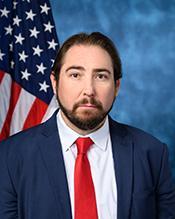
U.S. Representative for Arizona’s 2nd district
Republican
119th Congress, two-year term
Missed 2.2% of roll calls. Chamber median 1.9%.
The full voting recordCounts roll calls where most Democrats and most Republicans voted differently, leaving out procedural votes.
How we countFrom FEC filings, Voteview roll calls and Congress.gov.
Republican. In Congress since 2023, 2 terms in total.
Following saves Crane to your list, which Chamber & Street keeps on its server, linked to a cookie on this browser and not to your name or email. Email alerts will come with constituent verification.
Bills and resolutions Crane signed on to as a cosponsor. An original cosponsor signed on the day the bill was introduced. Source: govinfo bill status files, last updated Nov 6, 2026.
Iranian Terror Prevention Act
Sponsor W. Steube (R). Original cosponsor. 35 cosponsors. H.R. 2581 on Congress.gov
Introduced
Removing James E. Boasberg, Chief Judge of the United States District Court for the District of Columbia, for failure to remain in good behavior pursuant to section 1 of article III of the Constitution.
Sponsor Andy Biggs (R). Original cosponsor. 6 cosponsors. H.Res. 270 on Congress.gov(opens in a new tab)
Introduced
National Right-to-Work Act
Sponsor Joe Wilson (R). Joined Mar 31, 2025. 129 cosponsors. H.R. 1232 on Congress.gov(opens in a new tab)
Introduced
SHORT Act
Sponsor Andrew Clyde (R). Original cosponsor. 76 cosponsors. H.R. 2395 on Congress.gov(opens in a new tab)
Introduced
REAL Meat Act of 2025
Sponsor Warren Davidson (R). Joined Mar 25, 2025. 6 cosponsors. H.R. 1116 on Congress.gov(opens in a new tab)
Introduced
Right to Eat Authentic and Legitimate Meat Act of 2025 or the REAL Meat Act of 2025
This bill prohibits the use of federal funds to support, directly or indirectly, the production, advancement, or enhancement of cell-cultured meat. Under the bill, cell-cultured meat means meat that is sourced from the cells of animals and artificially produced in a laboratory.
The bill includes an exemption for federal funds of the National Aeronautics and Space Administration (NASA) that are used for activities related to cell-cultured meat that is intended for off-planet consumption.
Impeaching John James McConnell Jr., Chief Judge of the United States District Court for the District of Rhode Island, for high crimes and misdemeanors.
Sponsor Andrew Clyde (R). Original cosponsor. 9 cosponsors. H.Res. 241 on Congress.gov(opens in a new tab)
Introduced
LAND Act
Sponsor Brandon Gill (R). Joined Mar 24, 2025. 10 cosponsors. H.R. 2124 on Congress.gov(opens in a new tab)
Introduced
Land And National Defense Act or the LAND Act
This bill requires that a foreign purchaser of agricultural land be subject to (1) the same restrictions and limitations as a U.S. citizen or national would be subject to when purchasing agricultural land in the foreign purchaser's home country, and (2) any restrictions and limitations that apply under state law with respect to the purchase.
The bill applies to all foreign purchasers, including U.S. citizens who are also a citizen of one or more other countries (e.g., a dual citizen).
For a foreign company purchasing agricultural land, a country is treated as the company's home country if (1) it has the most restrictive laws with respect to the purchasing of agricultural land, and (2) the citizens of the country hold at least 5% of the company.
The seller of the agricultural land to a foreign purchaser must report the sale to the Department of Agriculture (USDA). Further, USDA must notify certain Members of Congress of the sale, including (1) the Senators from the state in which the agricultural land is located, and (2) the Representative from the congressional district where the land is located.
In addition, the bill establishes the U.S. Land Protection Task Force, chaired by the Secretary of Agriculture, to identify violations of these restrictions on foreign agricultural land purchasers.
The task force must submit a report to Congress every six months, which must include specific information on the sale of agricultural land to foreign purchasers.
Uranium for Energy Independence Act of 2025
Sponsor John McGuire (R). Joined Mar 21, 2025. 7 cosponsors. H.R. 1622 on Congress.gov(opens in a new tab)
Introduced
Uranium for Energy Independence Act of 2025
This bill includes uranium on the critical minerals list. In 2018, the U.S. Geological Survey (USGS) published a list of critical minerals, including uranium, in response to an executive order that called for a federal strategy to ensure secure and reliable supplies of critical minerals. The USGS updates the list every three years and includes certain minerals that are essential to economic or national security and have a supply chain vulnerable to disruption. In 2022, USGS removed uranium from the list. The bill reinstates uranium as a critical mineral and requires uranium to be treated as if it were included on that list at the time of publication.
Impeaching James E. Boasberg, United States District Court Chief Judge for the District of Columbia, for high crimes and misdemeanors.
Sponsor Brandon Gill (R). Original cosponsor. 24 cosponsors. H.Res. 229 on Congress.gov(opens in a new tab)
Introduced
FOCA Act of 2025
Sponsor Clay Higgins (R). Original cosponsor. 107 cosponsors. H.R. 2126 on Congress.gov(opens in a new tab)
Introduced
Fair and Open Competition Act of 2025 or the FOCA Act of 2025
This bill requires that federal contracts for construction projects neither require nor prohibit a bidder, offeror, contractor, or subcontractor from entering into agreements with one or more labor organizations with respect to such projects or related projects.
Under the bill, the controlling documents for federal construction contracts (such as bid specifications and project agreements) may not require or prohibit a bidder, offeror, contractor, or subcontractor from entering into or adhering to such labor agreements. Additionally, the controlling documents may not discriminate against or give preference to a bidder, offeror, contractor, or subcontractor who signs or refuses to sign such a labor agreement.
These requirements also apply to any (1) construction manager acting on behalf of the federal government with respect to such contract, (2) recipient of a federal grant or financial assistance for construction projects or construction manager acting on the recipient's behalf, and (3) party to a federal cooperative agreement for construction projects or construction managers acting on the party's behalf.
An agency may exempt a project from this prohibition to avert an imminent threat to public health or safety or to serve the national security.
Enhanced Iran Sanctions Act of 2025
Sponsor Michael Lawler (R). Joined Mar 14, 2025. 295 cosponsors. H.R. 1422 on Congress.gov(opens in a new tab)
Passed the House
Enhanced Iran Sanctions Act of 2025
This bill imposes sanctions on certain foreign persons (individuals and entities) that are involved in Iran's petroleum sector as well as certain associated persons. The bill also requires or authorizes actions to facilitate the enforcement of sanctions on Iran.
Specifically, the bill requires the President to impose visa- and property-blocking sanctions on any foreign person that, after the bill's enactment, knowingly engages in any transaction related to the processing, export, or sale of oil, condensates, gas, liquefied natural gas, or other petrochemical products in whole or in part from Iran. The President must also impose sanctions on certain foreign persons associated with a sanctioned individual or entity. For example, the President must sanction the subsidiaries and corporate officers of a sanctioned business.
The bill provides certain exceptions to these sanctions, including specifying that sanctions do not apply to the importation of goods or to conducting or facilitating transactions for humanitarian assistance.
The Department of State must establish an interagency working group that shall seek to establish a multilateral contact group to coordinate international efforts to enforce sanctions on Iran.
The bill expands the State Department rewards program to authorize a reward payment to any individual who furnishes information leading to the identification of a person (1) subject to sanctions under this bill, or (2) that has attempted or is attempting to evade sanctions under this bill.
Protecting Life and Integrity in Research Act of 2025
Sponsor Robert Onder (R). Original cosponsor. 33 cosponsors. H.R. 2075 on Congress.gov(opens in a new tab)
Introduced
Northeastern Arizona Indian Water Rights Settlement Act of 2025
Sponsor Juan Ciscomani (R). Original cosponsor. 6 cosponsors. H.R. 2025 on Congress.gov(opens in a new tab)
Introduced
Northeastern Arizona Indian Water Rights Settlement Act of 2025
This bill recognizes and settles certain water rights claims in Arizona of the Navajo Nation, the Hopi Tribe, and the San Juan Southern Paiute Tribe. It also provides funding for a water pipeline and three settlement trust funds.
Specifically, the bill authorizes, ratifies, and confirms a specified water rights settlement agreement entered into by the tribes, the United States, Arizona, and others, thus satisfying claims to water rights in Arizona (including with respect to the Little Colorado River and the Colorado River).
Additionally, the bill outlines the water rights of the tribes. For example, the bill allocates and assigns Colorado River water from Arizona's share to the Navajo Nation and the Hopi Tribe.
The bill establishes and provides funding for an implementation fund account for the Bureau of Reclamation to plan, design, and construct a pipeline to deliver water to the tribes.
Further, the bill establishes and provides funding for the Navajo Nation Water Settlement Trust Fund, the Hopi Tribe Water Settlement Trust Fund, and the San Juan Southern Paiute Tribe Water Settlement Trust Fund.
The bill also establishes a reservation consisting of approximately 5,400 acres of land in Arizona and Utah for the San Juan Southern Paiute Tribe by ratifying and confirming the treaty entered into by the Navajo Nation and the San Juan Southern Paiute Tribe.
The bill outlines waivers, releases, and retention of claims by the tribes and the United States under the settlement agreement.
Proposing an amendment to the Constitution of the United States to limit the number of terms that a Member of Congress may serve.
Sponsor Ralph Norman (R). Joined Mar 10, 2025. 116 cosponsors. H.J.Res. 12 on Congress.gov(opens in a new tab)
Introduced
This joint resolution proposes an amendment to the Constitution establishing term limits for individuals serving in the Senate and the House of Representatives.
The proposed amendment makes an individual who has served two terms in the Senate ineligible for appointment or election to the Senate and an individual who has served three terms as a Member of the House of Representatives ineligible for election to the House of Representatives.
The joint resolution provides that the amendment shall be valid when ratified by the legislatures of three-fourths of the states within seven years after the date of its submission for ratification.
Under Article V of the Constitution, both chambers of Congress may propose an amendment by a vote of two-thirds of all Members present for such vote. A proposed amendment must be ratified by the states as prescribed in Article V and as specified by Congress.
Sanctuary City Accountability Act
Sponsor Darrell Issa (R). Original cosponsor. 7 cosponsors. H.R. 1928 on Congress.gov(opens in a new tab)
Introduced
CLEAR Act of 2025
Sponsor Darrell Issa (R). Original cosponsor. 4 cosponsors. H.R. 1927 on Congress.gov(opens in a new tab)
Introduced
Clear Law Enforcement for Criminal Alien Removal Act of 2025 or the CLEAR Act of 2025
This bill establishes requirements and programs related to the detention of individuals unlawfully present in the United States and facing removal, including the role of state and local governments in this process.
The bill provides that state and local governments have the authority to assist in the enforcement of federal immigration laws, including by apprehending individuals and transferring them to federal custody. Jurisdictions that prohibit such cooperation are barred from receiving certain federal funding.
The Department of Homeland Security (DHS) must within 48 hours of a request by a state or local authority take custody of an individual unlawfully present in the United States. The bill also establishes requirements for state or local detention and provides for reimbursement for reasonable expenses. The Government Accountability Office must also audit such reimbursements.
DHS must also construct 20 additional detention facilities in the United States for individuals facing removal.
The bill also (1) extends certain federal immunity from liability to state and local law enforcement officers, (2) provides immunity to state or local law enforcement agencies from certain money damages, and (3) requires states to participate in programs to expedite the removal of individuals subject to removal who are serving criminal sentences.
The bill also establishes a grant program, provides for the development of state and local law enforcement training materials, and requires state and local governments to provide information about certain detained individuals.
Anti-CBDC Surveillance State Act
Sponsor Tom Emmer (R). Original cosponsor. 135 cosponsors. H.R. 1919 on Congress.gov(opens in a new tab)
Passed the House
Anti-CBDC Surveillance State Act
This bill prohibits a Federal Reserve bank from offering products or services directly to an individual, maintaining an account on behalf of an individual, or issuing a central bank digital currency (i.e., a digital dollar). Further, the Board of Governors of the Federal Reserve System is prohibited from using a central bank digital currency to implement monetary policy or from testing, studying, creating, or implementing a central bank digital currency, with exceptions as provided by the bill.
Federal Reserve Board Abolition Act
Sponsor Thomas Massie (R). Original cosponsor. 11 cosponsors. H.R. 1846 on Congress.gov(opens in a new tab)
Introduced
No Tax Dollars for the United Nation’s Immigration Invasion Act
Sponsor Lance Gooden (R). Original cosponsor. 18 cosponsors. H.R. 1792 on Congress.gov(opens in a new tab)
Introduced
Forest Service Accountability Act
Sponsor Ryan Zinke (R). Original cosponsor. 11 cosponsors. H.R. 1762 on Congress.gov(opens in a new tab)
Introduced
Expressing support for the Iranian people's desires for a democratic, secular, and nonnuclear Republic of Iran, and condemning the Iranian regime's terrorism, regional proxy war, internal suppression, and for other purposes.
Sponsor Tom McClintock (R). Original cosponsor. 230 cosponsors. H.Res. 166 on Congress.gov(opens in a new tab)
Introduced
Protecting Life on College Campus Act of 2025
Sponsor Chip Roy (R). Joined Feb 26, 2025. 31 cosponsors. H.R. 632 on Congress.gov(opens in a new tab)
Introduced
Protecting Life on College Campus Act of 2025
This bill prohibits the award of federal funds to an institution of higher education (IHE) that hosts or is affiliated with a school-based service site that provides abortion drugs or abortions to its students or to employees of the IHE or the site. An IHE that hosts or is affiliated with a site must, in order to remain eligible for federal funds, annually certify that the site does not provide abortion drugs or abortions to students or employees.
SCREEN Act
Sponsor Mary Miller (R). Original cosponsor. 27 cosponsors. H.R. 1623 on Congress.gov(opens in a new tab)
Introduced
Shielding Children's Retinas from Egregious Exposure on the Net Act or the SCREEN Act
This bill establishes age-verification requirements for commercial interactive computer services (e.g., websites) that make available content that is harmful to minors (e.g., content that appeals to the prurient interest in nudity or sex, is obscene, or is child pornography).
Specifically, the bill requires such services to adopt and utilize technology verification measures to ensure that (1) users of the service are not minors, and (2) minors are prevented from accessing any content on the service that is harmful to minors.
Additionally, such services must (1) use the technology to verify a user's age; (2) publish the verification process that the service uses; and (3) subject users' Internet Protocol (IP) addresses, including known virtual proxy network (VPN) IP addresses, to the technology verification measures, unless the service determines a user is not located within the United States.
Covered services also must implement data security measures to protect information about individuals collected through the verification process.
The Federal Trade Commission must conduct regular audits of such services, issue guidance, and otherwise enforce the requirements of this bill.
DEFUND Act of 2025
Sponsor Chip Roy (R). Original cosponsor. 17 cosponsors. H.R. 1498 on Congress.gov(opens in a new tab)
Introduced
Disengaging Entirely From the United Nations Debacle Act of 2025 or the DEFUND Act of 2025
This bill directs the President to terminate U.S. membership in the United Nations (U.N.) and all formally affiliated bodies. It also ends U.S. participation in all U.N. conventions and agreements.
Funds may be appropriated to facilitate U.S. withdrawal from the U.N. No funds may be made available for contributions or payments to any U.N. body.
The bill prohibits U.S. participation in any U.N. peacekeeping operation.
The bill also repeals diplomatic immunity for officers and employees of the U.N. and for officers and employees of foreign government missions to the U.N.
The bill repeals various acts related to the U.N., including the United Nations Participation Act of 1945, the United Nations Headquarters Agreement Act, and a joint resolution establishing U.S. membership in the World Health Organization.
The United States may not rejoin the U.N. or any formally affiliated body without the advice and consent of the Senate. Any agreement to rejoin the U.N. or a formally affiliated body must include the right of the United States to withdraw from the agreement.
NIH Reform Act
Sponsor Chip Roy (R). Original cosponsor. 6 cosponsors. H.R. 1497 on Congress.gov(opens in a new tab)
Introduced
NIH Reform Act
This bill separates the National Institute of Allergy and Infectious Diseases (NIAID) into three separate institutes: the National Institute of Allergic Diseases, the National Institute of Infectious Diseases, and the National Institute of Immunologic Diseases.
The bill also requires that the President appoint the directors of the new institutes (under current law, the Director of NIAID is appointed by the Director of the National Institutes of Health). It further requires that the Senate confirm the appointment of the directors of the new institutes and the National Cancer Institute.