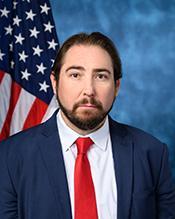
U.S. Representative for Arizona’s 2nd district
Republican
119th Congress, two-year term
Missed 2.2% of roll calls. Chamber median 1.9%.
The full voting recordCounts roll calls where most Democrats and most Republicans voted differently, leaving out procedural votes.
How we countFrom FEC filings, Voteview roll calls and Congress.gov.
Republican. In Congress since 2023, 2 terms in total.
Following saves Crane to your list, which Chamber & Street keeps on its server, linked to a cookie on this browser and not to your name or email. Email alerts will come with constituent verification.
Bills and resolutions Crane signed on to as a cosponsor. An original cosponsor signed on the day the bill was introduced. Source: govinfo bill status files, last updated Nov 6, 2026.
Veterans Health Care Freedom Act
Sponsor Andy Biggs (R). Original cosponsor. 13 cosponsors. H.R. 71 on Congress.gov
Introduced
Veterans Health Care Freedom Act
This bill requires the Center for Innovation for Care and Payment within the Department of Veterans Affairs (VA) to implement a three-year pilot program to improve the ability of veterans who are enrolled in the VA health care system to access hospital care, medical services, and extended care services through the covered care system by providing such veterans with the ability to choose health care providers. Under the bill, the covered care system includes VA medical facilities, health care providers participating in the Veterans Community Care Program (VCCP), and eligible entities or providers that have entered into a Veterans Care Agreement.
A veteran participating in the program may elect to receive care at any provider in the covered care system.
The pilot program removes certain requirements (e.g., location of the veteran) to access care at VA and non-VA facilities. After four years, the bill permanently phases out the requirements for accessing care under the VCCP and Veterans Care Agreements and requires the VA to provide such care under the same conditions of the pilot program. Additionally, after four years, veterans may receive care at a VA medical facility regardless of whether the facility is in the same Veterans Integrated Service Network as the veteran.
Freedom to Petition the Government Act
Sponsor Andy Biggs (R). Original cosponsor. 2 cosponsors. H.R. 69 on Congress.gov(opens in a new tab)
Introduced
Freedom to Petition the Government Act
This bill allows outside nonprofit organizations to meet with federal officials in the District of Columbia (DC) on federal property without having to register as businesses in DC.
Currently, entities that are formed outside of DC, including nonprofit organizations, must generally register with DC before doing business in DC. Under the bill, outside nonprofit organizations may meet with federal government officials at federally leased or owned buildings in DC without having to register.
Modernizing Retrospective Regulatory Review
Sponsor Andy Biggs (R). Original cosponsor. 1 cosponsor. H.R. 67 on Congress.gov(opens in a new tab)
Passed committee
Modernizing Retrospective Regulatory Review Act
This bill requires the Office of Information and Regulatory Affairs (OIRA) to issue guidance for using technology to retrospectively review existing federal regulations and, in consultation with relevant agencies, report on the progress of the federal government in making agency regulations available in a machine-readable format.
Specifically, the OIRA report must (1) assess whether regulations of agencies have been made available to the public in a machine-readable format, and (2) provide information about the recognition by the Administrative Committee of the Federal Register of the Electronic Code of Federal Regulations (eCFR) as an official legal edition of the Code of Federal Regulations. Currently, the content of the eCFR is authoritative but unofficial.
Additionally, not later than 18 months after the enactment of this bill, the OIRA must issue guidance about how a federal agency can use technology to retrospectively review the agency's existing regulations. Each agency must plan and implement a strategy to comply with the OIRA's guidance for the retrospective review.
ALVIN Act
Sponsor Andy Biggs (R). Original cosponsor. 3 cosponsors. H.R. 63 on Congress.gov(opens in a new tab)
Introduced
Accountability for Lawless Violence In our Neighborhoods Act or the ALVIN Act
This bill prohibits federal funds from being awarded or otherwise made available to the Manhattan District Attorney’s Office in New York.
The bill also (1) rescinds any unobligated funds that were allocated for or otherwise made available to the office, and (2) directs the Department of Justice to require the office to reimburse the federal government for all funds that were expended for the office after January 1, 2022.
WILLIS Act
Sponsor Andy Biggs (R). Original cosponsor. 2 cosponsors. H.R. 62 on Congress.gov(opens in a new tab)
Introduced
Withholding Investments from Lawless Litigators In States Act or the WILLIS Act
This bill prohibits federal funds from being awarded or otherwise made available to the Fulton County District Attorney’s Office in Georgia.
The bill also (1) rescinds any unobligated funds that were allocated for or otherwise made available to the office, and (2) directs the Department of Justice to require the office to reimburse the federal government for all funds that were expended for the office after January 1, 2021.
Ensuring United Families at the Border Act
Sponsor Andy Biggs (R). Original cosponsor. 3 cosponsors. H.R. 61 on Congress.gov(opens in a new tab)
Introduced
Ensuring United Families at the Border Act
This bill addresses the treatment of children who are non-U.S. nationals (aliens under federal law), including by statutorily establishing that there is no presumption that such a child (other than an unaccompanied child) should not be detained for immigration purposes.
Specifically, the bill states that the detention of such minors shall be governed by specified sections of the Immigration and Nationality Act and not any other provision of law, judicial ruling, or settlement agreement.
(A 1997 settlement agreement, commonly known as the Flores agreement, imposes requirements relating to the treatment of detained alien minors, including requiring such minors to be released or placed in a nonsecure facility after a certain amount of time in detention.)
If an adult enters the United States unlawfully with their child, the Department of Homeland Security must detain the adult and child together if the only criminal charge against the adult is a misdemeanor for unlawful entry.
This bill also prohibits states from imposing licensing requirements on immigration detention facilities used to detain minors or families with minors.
Secret Service Prioritization Act of 2025
Sponsor Andy Biggs (R). Original cosponsor. 1 cosponsor. H.R. 56 on Congress.gov(opens in a new tab)
Introduced
Secret Service Prioritization Act of 2025
This bill transfers most investigative authorities of the U.S. Secret Service to the Federal Bureau of Investigation (FBI).
Specifically, the bill transfers to the FBI the Secret Service's authority to investigate federal criminal offenses involving (1) certain misconduct in connection with government transportation requests, federal farm loans, and the Federal Deposit Insurance Corporation; (2) coins, obligations, and securities of the United States and foreign governments, including counterfeiting of U.S. currency; and (3) financial and computer-based crimes, including identity theft, electronic access fraud, computer fraud, and electronic benefits transfer fraud.
Under the bill, the Secret Service retains the authority to investigate two categories of federal criminal offenses: (1) threats against the President, President-elect, Vice President, or Vice President-elect; and (2) threats against former Presidents and certain other persons.
WHO Withdrawal Act
Sponsor Andy Biggs (R). Original cosponsor. 22 cosponsors. H.R. 54 on Congress.gov(opens in a new tab)
Introduced
WHO Withdrawal Act
This bill requires the President to immediately withdraw the United States from the World Health Organization (WHO) and prohibits using any federal funds to provide for U.S. participation in the WHO.
The bill also repeals the 1948 act authorizing the United States to join the WHO.
Stop Woke Investing Act
Sponsor Andy Biggs (R). Original cosponsor. 2 cosponsors. H.R. 52 on Congress.gov(opens in a new tab)
Introduced
Stop Woke Investing Act
This bill requires the Securities and Exchange Commission (SEC) to amend regulations to limit the inclusion of shareholder proposals in proxy statements. A proxy statement is provided to shareholders prior to a public company holding a shareholder meeting and contains information relevant to a shareholder vote. Under current SEC rules, certain qualifying shareholder proposals must be included on a company's proxy statement, including proposals that raise significant social policy issues.
Under the bill, a shareholder proposal must have a material effect on the financial performance of the company to be included in a proxy statement. The bill also establishes a cap on the number of shareholder proposals required to be included in a shareholder meeting, depending on the size and type of the company. In addition, a proposal submitted by a member of the board of directors is prohibited from inclusion as a shareholder proposal.
KAMALA Act
Sponsor Andy Biggs (R). Original cosponsor. 3 cosponsors. H.R. 50 on Congress.gov(opens in a new tab)
Introduced
Keeping Aid for Municipalities And Localities Accountable Act or the KAMALA Act
This bill prohibits the use of Community Development Block Grant (CDBG) funding to assist non-U.S. nationals (aliens under federal law) who are not lawfully admitted permanent residents. The CDBG program is administered by the Department of Housing and Urban Development (HUD) and provides states, local governments, and Indian tribes with funds for economic and community development.
The bill also specifically prohibits HUD from making a CDBG grant to any state, local government, or Indian tribe that carries out a housing or community development program that assists such individuals.
FIND Act
Sponsor Jack Bergman (R). Original cosponsor. 154 cosponsors. H.R. 45 on Congress.gov(opens in a new tab)
Introduced
Firearm Industry Non-Discrimination Act or the FIND Act
This bill prohibits the federal government from entering into contracts with an entity that discriminates against firearm trade associations or businesses that deal in firearms, ammunition, or related products.
Specifically, the bill requires a federal agency to include in each contract for the procurement of goods or services awarded by the agency a clause requiring the prime contractor to certify that it (1) has no policy, practice, guidance, or directive that discriminates against a firearm entity or firearm trade association; and (2) will not adopt a policy, practice, guidance, or directive that discriminates against a firearm entity or firearm trade association during the term of the contract.
The bill establishes (1) a similar requirement with respect to subcontracts, and (2) penalties for violations.
The bill makes such prohibition inapplicable to a contract for the procurement of goods or services that is a sole-source contract.
Constitutional Concealed Carry Reciprocity Act of 2025
Sponsor Richard Hudson (R). Original cosponsor. 189 cosponsors. H.R. 38 on Congress.gov(opens in a new tab)
Introduced
Constitutional Concealed Carry Reciprocity Act
This bill establishes a federal statutory framework to regulate the carry or possession of concealed firearms across state lines.
Specifically, an individual who is eligible to carry a concealed firearm in one state may carry or possess a concealed handgun (other than a machine gun or destructive device) in another state that allows its residents to carry concealed firearms.
It sets forth requirements for lawful concealed carry across state lines. The bill preempts most state and local laws related to concealed carry and establishes a private right of action for a person adversely affected by interference with a concealed-carry right established by this bill.
Federal Reserve Transparency Act of 2025
Sponsor Thomas Massie (R). Original cosponsor. 46 cosponsors. H.R. 24 on Congress.gov(opens in a new tab)
Introduced
Federal Reserve Transparency Act of 2025
This bill directs the Government Accountability Office (GAO) to complete, within 12 months, an audit of the Federal Reserve Board and Federal Reserve banks. In addition, the bill allows the GAO to audit the Federal Reserve Board and Federal Reserve banks with respect to (1) international financial transactions; (2) deliberations, decisions, or actions on monetary policy matters; (3) transactions made under the direction of the Federal Open Market Committee; and (4) discussions or communications among Federal Reserve officers, board members, and employees regarding any of these matters.
Illegitimate Court Counteraction Act
Sponsor Chip Roy (R). Original cosponsor. 38 cosponsors. H.R. 23 on Congress.gov(opens in a new tab)
Passed the House
Illegitimate Court Counteraction Act
This bill imposes sanctions against foreign persons (individuals and entities) who assist the International Criminal Court (ICC) in investigating, arresting, detaining, or prosecuting certain individuals.
The bill categorizes as protected persons (1) any U.S. individual, U.S. entity, or person in the United States, unless the United States is a state party to the Rome Statute of the ICC and provides formal consent to ICC jurisdiction; and (2) any foreign person that is a citizen or lawful resident of a U.S. ally that is not a state party to the Rome Statute or has not consented to ICC jurisdiction.
If the ICC attempts to investigate, arrest, detain or prosecute a protected person, the President must impose visa- and property-blocking sanctions against the foreign persons that engaged in or materially assisted in such actions, as well as against foreign persons owned by, controlled by, or acting on behalf of such foreign persons. The President must also apply visa-blocking sanctions to the immediate family members of those sanctioned.
Upon enactment, the bill rescinds all funds appropriated for the ICC and prohibits the subsequent use of appropriated funds for the ICC.
SAVE Act
Sponsor Chip Roy (R). Original cosponsor. 110 cosponsors. H.R. 22 on Congress.gov(opens in a new tab)
Passed the House
Safeguard American Voter Eligibility Act or the SAVE Act
This bill requires individuals to provide documentary proof of U.S. citizenship when registering to vote in federal elections.
Specifically, the bill prohibits states from accepting and processing an application to register to vote in a federal election unless the applicant presents documentary proof of U.S. citizenship. The bill specifies what documents are considered acceptable proof of U.S. citizenship, such as identification that complies with the REAL ID Act of 2005 that indicates U.S. citizenship.
Further, the bill (1) prohibits states from registering an individual to vote in a federal election unless, at the time the individual applies to register to vote, the individual provides documentary proof of U.S. citizenship; and (2) requires states to establish an alternative process under which an applicant may submit other evidence to demonstrate U.S. citizenship.
Each state must take affirmative steps on an ongoing basis to ensure that only U.S. citizens are registered to vote, which shall include establishing a program to identify individuals who are not U.S. citizens using information supplied by certain sources.
Additionally, states must remove noncitizens from their official lists of eligible voters.
The bill allows for a private right of action against an election official who registers an applicant to vote in a federal election who fails to present documentary proof of U.S. citizenship.
The bill establishes criminal penalties for certain offenses, including registering an applicant to vote in a federal election who fails to present documentary proof of U.S. citizenship.
Inflation Reduction Act of 2025
Sponsor Andrew Ogles (R). Original cosponsor. 15 cosponsors. H.R. 191 on Congress.gov(opens in a new tab)
Introduced
Inflation Reduction Act of 2025
This bill repeals the Inflation Reduction Act of 2022 and rescinds any unobligated funds made available by the act.
First Amendment Accountability Act
Sponsor Harriet Hageman (R). Original cosponsor. 15 cosponsors. H.R. 162 on Congress.gov(opens in a new tab)
Introduced
First Amendment Accountability Act
This bill creates a new federal cause of action for the deprivation of any rights, privileges, or immunities secured by the First Amendment by a federal employee acting under color of any statute, ordinance, custom, or usage of the United States.
The term federal employee means an individual, other than the President or Vice President, who occupies a position in the Executive Branch.