
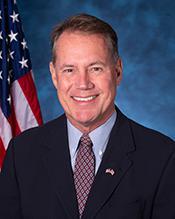
U.S. Representative for Hawaii’s 1st district
Democrat
119th Congress, two-year term
Missed 0.5% of roll calls. Chamber median 1.9%.
The full voting recordCounts roll calls where most Democrats and most Republicans voted differently, leaving out procedural votes.
How we countFrom FEC filings, Voteview roll calls and Congress.gov.
Democrat. In Congress since 2003, 6 terms in total.
Following saves Case to your list, which Chamber & Street keeps on its server, linked to a cookie on this browser and not to your name or email. Email alerts will come with constituent verification.
Bills and resolutions where Case is the primary sponsor. Most bills never leave committee; that is normal for every member. Source: Congress.gov, last updated Oct 29, 2026.
21 of 33 have at least one cosponsor from the other party.
To oppose the permitting of deep seabed mining and exploration for deep seabed mining, and for other purposes.
Introduced Jan 23, 2025. 4 cosponsors, 1 from the other party. H.R. 663 on Congress.gov
Introduced
Noncontiguous Shipping Competition Act
Introduced Jan 23, 2025. 2 cosponsors, 1 from the other party. H.R. 665 on Congress.gov(opens in a new tab)
Introduced
Noncontiguous Shipping Competition Act
This bill revises coastwise laws, commonly known as the Jones Act, that govern domestic transportation of merchandise or passengers by vessels.
The Jones Act generally requires that a vessel transporting merchandise or passengers from one U.S. point to another U.S. point be (1) built in the United States, (2) at least 75% owned by U.S. citizens, and (3) mostly crewed by U.S. citizens. The act also includes several exemptions and exceptions.
The bill exempts carriage on a route in noncontiguous trade from Jones Act requirements unless (1) at least three owners or operators of coastwise qualified vessels regularly operate such a vessel on the route, (2) each of such owners or operators transports at least 20% of the volume of goods on that route, and (3) none of such owners or operators are under common ownership. (Generally, noncontiguous trade is trade between two U.S. points where at least one of the points is in Alaska, Hawaii, Puerto Rico, or an insular territory or U.S. possession.)
BLUE Pacific Act
Introduced Jan 20, 2025. 14 cosponsors, 4 from the other party. H.R. 562 on Congress.gov(opens in a new tab)
Introduced
Boosting Long-term U.S. Engagement in the Pacific Act or the BLUE Pacific Act
This bill requires or authorizes activities to strengthen U.S. relations with Pacific Islands countries, which include the Cook Islands, Fiji, the Marshall Islands, Papua New Guinea, and Vanuatu.
The bill authorizes various activities in the Pacific Islands, including to
• assist in improving public health outcomes and build public health capacity;
• assist in promoting the dissemination of free and accurate information;
• promote educational and professional development for young adult leaders and professionals;
• provide assistance to promote sustainable and quality basic education;
• assist with workforce development;
• build the capacity of local civilian and national security institutions;
• expand trade and promote regional development;
• enhance preparedness for and resilience to natural disasters and other emergencies;
• support sustainable fisheries policies and marine biodiversity conservation;
• support expanded access to broadband and telecommunications infrastructure; and
• support cybersecurity, including by assisting with development and implementation of incident response plans.
The bill also requires (1) the Department of State to help Pacific Island countries access development support from international organizations, (2) the U.S. International Development Finance Corporation to prioritize efforts to enter into investment incentive agreements with Pacific Islands countries, and (3) the Department of Commerce to expand the presence of the U.S. Commercial Service and increase the number foreign commercial service officers in the Pacific Islands.
The President may extend certain diplomatic privileges, exemptions, and immunities to the Pacific Islands Forum, an international organization of 18 countries in the Pacific.
Hawaii Invasive Species Protection Act
Introduced Jan 16, 2025. 1 cosponsor. H.R. 487 on Congress.gov(opens in a new tab)
Introduced
Hawaii Invasive Species Protection Act
This bill directs the Animal and Plant Health Inspection Service (APHIS) to conduct preclearance quarantine inspections for high-risk invasive species and agricultural materials on persons, baggage, cargo, and any other articles destined for direct movement to or from the state of Hawaii. The visual, x-ray, and canine inspections must be conducted at airports, ports, and postal sorting facilities.
APHIS must also consult with the state of Hawaii to develop and publish a list of items subject to inspection for high-risk invasive species and agricultural materials.
User fees must be prescribed and collected to cover the cost of the inspections.
Affordable Shipping for All Act
Introduced Jan 14, 2025. 5 cosponsors, 3 from the other party. H.R. 380 on Congress.gov(opens in a new tab)
Introduced
Affordable Shipping for All Act
This bill limits shipping services from excluding service or charging higher prices to noncontiguous areas of the United States.
Specifically, private shipping services (e.g., FedEx) and the U.S. Postal Service are prohibited from charging a higher rate to ship a consumer product or producer good (e.g., raw material) to a noncontiguous area of the United States than they charge to ship the same product to and from a location within the contiguous United States. Under the bill, a noncontiguous area includes Alaska and Hawaii and any commonwealth, territory, or possession of the United States (including Puerto Rico, Guam, the U.S. Virgin Islands, American Samoa, and the Northern Mariana Islands).
Additionally, such shipping services may not exclude services to such a noncontiguous location.
Consumer products or producer goods valued at more than $10,000 are exempt from the requirements of this bill.
Sustainable Budget Act of 2025
Introduced Jan 7, 2025. 7 cosponsors, 6 from the other party. H.R. 222 on Congress.gov(opens in a new tab)
Introduced
Sustainable Budget Act of 2025
This bill establishes the National Commission on Fiscal Responsibility and Reform within the legislative branch to identify policies to improve the fiscal situation in the medium term and achieve fiscal sustainability over the long term.
The commission must propose recommendations that (1) are designed to balance the budget, excluding interest payments on the debt, within 10 years; and (2) meaningfully improve the long-term fiscal outlook, including changes to address the growth of entitlement spending and the gap between projected federal revenues and expenditures.
Congress must consider the commission's recommendations using specified expedited legislative procedures.