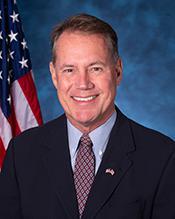
U.S. Representative for Hawaii’s 1st district
Democrat
119th Congress, two-year term
Missed 0.5% of roll calls. Chamber median 1.9%.
The full voting recordCounts roll calls where most Democrats and most Republicans voted differently, leaving out procedural votes.
How we countFrom FEC filings, Voteview roll calls and Congress.gov.
Democrat. In Congress since 2003, 6 terms in total.
Following saves Case to your list, which Chamber & Street keeps on its server, linked to a cookie on this browser and not to your name or email. Email alerts will come with constituent verification.
Bills and resolutions Case signed on to as a cosponsor. An original cosponsor signed on the day the bill was introduced. Source: govinfo bill status files, last updated Nov 6, 2026.
Affirming the role of the United States in improving access to quality, inclusive public education and improving learning outcomes for children and adolescents, particularly for girls, around the world.
Sponsor Grace Meng (D). Original cosponsor. 31 cosponsors. H.Res. 66 on Congress.gov
Introduced
This resolution commends the role of the U.S. government in improving access to quality, inclusive education, and improved learning outcomes for the poorest and most marginalized children and adolescents around the world. The resolution calls on the Department of State and the U.S. Agency for International Development to use all diplomatic, humanitarian, and developmental means to promote access to such quality education.
Inaugural Fund Integrity Act
Sponsor Mary Gay Scanlon (D). Joined Jan 22, 2025. 13 cosponsors. H.R. 535 on Congress.gov(opens in a new tab)
Introduced
Inaugural Fund Integrity Act
This bill limits donations to inaugural committees and requires these committees to disclose donations and disbursements.
Specifically, inaugural committees may not solicit, accept, or receive donations from corporations or foreign nationals. An individual may not make a donation in the name of another individual or authorize his or her name to be used to make such a donation. In addition, foreign nationals may not make donations or make promises to make donations to inaugural committees.
Further, the bill caps the amount an individual may donate to an inaugural committee.
Donations to inaugural committees may not be converted to personal use.
Finally, inaugural committees must report certain information on donations and disbursements to the Federal Election Commission.
Improving Menopause Care for Veterans Act of 2025
Sponsor Julia Brownley (D). Joined Jan 22, 2025. 40 cosponsors. H.R. 219 on Congress.gov(opens in a new tab)
Introduced
Improving Menopause Care for Veterans Act of 2025
This bill requires the Government Accountability Office (GAO) to study and report on the medical services furnished by the Department of Veterans Affairs (VA) for veterans experiencing perimenopause, genitourinary syndrome of menopause, and menopause stages. The VA must also report to Congress on a strategic plan to (1) implement any recommendations GAO makes in its report, (2) improve the quality of menopause care, and (3) improve the access of veterans to menopause care.
Supporting Veteran Families in Need Act
Sponsor Nick LaLota (R). Original cosponsor. 10 cosponsors. H.R. 585 on Congress.gov(opens in a new tab)
Introduced
Supporting Veteran Families in Need Act
This bill permanently extends authorization for the Supportive Services for Veteran Families program of the Department of Veterans Affairs, which provides supportive services to very low-income veterans (and their families) occupying or transitioning to permanent housing.
BRAVE Act
Sponsor Robert Wittman (R). Original cosponsor. 8 cosponsors. H.R. 553 on Congress.gov(opens in a new tab)
Introduced
Be Ready to Assist Veterans in Extremis Act or the BRAVE Act
This bill requires the Department of Veterans Affairs (VA) to establish a patient outreach system under which it must ensure that veterans who are enrolled in the VA health care system and have experienced a traumatic or highly stressful event may elect to receive information and resources relating to mental health and available mental health care services.
The VA must coordinate the system with the Transition Assistance Program of the Department of Defense.
South Pacific Tuna Treaty Act of 2025
Sponsor Aumua Amata Radewagen (R). Original cosponsor. 1 cosponsor. H.R. 531 on Congress.gov(opens in a new tab)
Passed the House
South Pacific Tuna Treaty Act of 2025
This bill revises federal requirements for U.S. commercial fishing vessels operating in the South Pacific. The changes reflect amendments to the South Pacific Tuna Treaty that were agreed to at Nadi, Fiji, on December 3, 2016. The treaty details mutual obligations of the United States and 16 Pacific Island countries when U.S. fishing vessels operate in the region.
Young Americans Financial Literacy Act
Sponsor André Carson (D). Original cosponsor. 50 cosponsors. H.R. 486 on Congress.gov(opens in a new tab)
Introduced
Young Americans Financial Literacy Act
This bill requires the Consumer Financial Protection Bureau to award competitive grants to eligible institutions for the establishment of financial literacy education programs for young people and families.
An eligible institution is a partnership among two or more of the following:
• an institution of higher education;
• a state or local government agency specializing in financial education;
• a nonprofit agency, organization, or association;
• a financial institution; or
• another small organization.
Authorized grant funded activities shall include
• developing and implementing comprehensive, research based, financial-literacy education programs for young people;
• developing and supporting the delivery of professional development programs in financial literacy education;
• developing educational programs to reduce student loan default rates; and
• conducting ongoing research and evaluation of financial literacy education programs.
The grant program shall terminate after FY2029.
Supporting the goals and ideals of Korean American Day.
Sponsor Jimmy Gomez (D). Original cosponsor. 72 cosponsors. H.Res. 33 on Congress.gov(opens in a new tab)
Introduced
This resolution expresses support for the goals and ideals of Korean American Day and honors the 122nd anniversary of the arrival of the first Korean immigrants to the United States.
Continued Rapid Ohia Death Response Act of 2025
Sponsor Jill Tokuda (D). Original cosponsor. 1 cosponsor. H.R. 375 on Congress.gov(opens in a new tab)
Passed the House
Continued Rapid Ohia Death Response Act of 2025
This bill establishes requirements to research and control Rapid Ohia Death, which is the disease caused by the fungal pathogen known as Ceratocystis fimbriata that affects the tree of the species Metrosideros polymorpha.
Specifically, the Department of the Interior must partner with the Department of Agriculture (USDA) and Hawaii to control and address Rapid Ohia Death.
In addition, the U.S. Geological Survey and the Forest Service Institute of Pacific Islands Forestry must continue to research Rapid Ohia Death vectors and transmission.
The U.S. Fish and Wildlife Service must continue to partner with USDA, Hawaii, and local stakeholders to manage ungulates (e.g., certain mammals such as deer) in Rapid Ohia Death control areas on federal, state, and private land, with the consent of private landowners.
Finally, the Forest Service must provide (1) financial assistance to prevent the spread of the fungus and to restore the native forests of Hawaii, and (2) staff and necessary infrastructure funding to the Institute of Pacific Islands Forestry to research the fungus.
Recognizing the 125th anniversary of organized Okinawan immigration to the United States.
Sponsor Jill Tokuda (D). Original cosponsor. 5 cosponsors. H.Res. 29 on Congress.gov(opens in a new tab)
Introduced
This resolution recognizes the historic contributions of Okinawan Americans to the United States and urges the people of the United States to honor the 125th anniversary of Okinawan immigration to the United States.
Washington, D.C. Admission Act
Sponsor Eleanor Norton (D). Original cosponsor. 209 cosponsors. H.R. 51 on Congress.gov(opens in a new tab)
Introduced
Washington, D.C. Admission Act
This bill provides for the establishment of the State of Washington, Douglass Commonwealth, and its admission into the United States.
The state is composed of most of the territory of the District of Columbia (DC), excluding a specified area that encompasses the U.S. Capitol, the White House, the U.S. Supreme Court building, federal monuments, and federal office buildings adjacent to the National Mall and the U.S. Capitol. The excluded territory shall be known as the Capital and serve as the seat of the government of the United States, as provided for in Article I of the Constitution. The state may not impose taxes on federal property except as Congress permits.
The bill provides for the DC Mayor to issue a proclamation for the first elections to Congress of two Senators and one Representative of the state. The bill eliminates the office of Delegate to the House of Representatives.
The bill applies current DC laws to the state. DC judicial proceedings and contractual obligations shall continue under the state’s authority. The bill also provides for specified federal obligations to transfer to the state upon its certification that it has funds and laws in place to assume the obligations. These include maintaining a retirement fund for judges and operating public defender services.
The bill establishes a commission that is generally comprised of members who are appointed by DC and federal government officials to advise on an orderly transition to statehood.