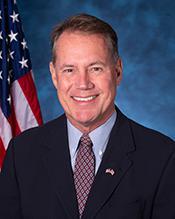
U.S. Representative for Hawaii’s 1st district
Democrat
119th Congress, two-year term
Missed 0.5% of roll calls. Chamber median 1.9%.
The full voting recordCounts roll calls where most Democrats and most Republicans voted differently, leaving out procedural votes.
How we countFrom FEC filings, Voteview roll calls and Congress.gov.
Democrat. In Congress since 2003, 6 terms in total.
Following saves Case to your list, which Chamber & Street keeps on its server, linked to a cookie on this browser and not to your name or email. Email alerts will come with constituent verification.
Bills and resolutions Case signed on to as a cosponsor. An original cosponsor signed on the day the bill was introduced. Source: govinfo bill status files, last updated Nov 6, 2026.
Promoting American Competition in Aquaculture Research Act
Sponsor Jill Tokuda (D). Joined Sep 8, 2025. 3 cosponsors. H.R. 5164 on Congress.gov
Introduced
Quiet Communities Act of 2025
Sponsor Grace Meng (D). Joined Sep 8, 2025. 26 cosponsors. H.R. 5151 on Congress.gov(opens in a new tab)
Introduced
Ocean Regional Opportunity and Innovation Act of 2025
Sponsor Chellie Pingree (D). Joined Sep 8, 2025. 9 cosponsors. H.R. 3048 on Congress.gov(opens in a new tab)
Introduced
Trade Review Act of 2025
Sponsor Don Bacon (R). Joined Sep 8, 2025. 8 cosponsors. H.R. 2665 on Congress.gov(opens in a new tab)
Introduced
Trade Review Act of 2025
This bill requires congressional notification and review of new or increased duties (i.e., tariffs) imposed by the President on articles imported into the United States.
Specifically, the President must notify Congress within 48 hours of imposing or increasing a duty on articles imported into the United States. This notification must include (1) the rationale for imposing or increasing the duty, and (2) an assessment of the duty's potential impact on U.S. businesses and consumers. The bill limits the duration of a duty to 60 days, unless a joint resolution of approval is enacted into law.
A duty shall cease to have force or effect if a joint resolution of disapproval is enacted into law.
Affirming the independence of the Federal Reserve System, its Chairman, and the Board of Governors.
Sponsor Nanette Barragán (D). Original cosponsor. 26 cosponsors. H.Res. 677 on Congress.gov(opens in a new tab)
Introduced
Specialty Crop Domestic Market Promotion and Development Program Act of 2025
Sponsor David Valadao (R). Joined Sep 3, 2025. 9 cosponsors. H.R. 5030 on Congress.gov(opens in a new tab)
Introduced
Specialty Crop Domestic Market Promotion and Development Program Act of 2025
This bill directs the Agricultural Marketing Service to establish a grant program to encourage the development, maintenance, and expansion of the commercial domestic market for domestically produced specialty crop commodities (e.g., for advertising or other demand-oriented, generic domestic promotion activities).
Organizations eligible for the grant program include those that promote U.S. produced and grown specialty crop sales and are (1) U.S. agricultural trade organizations or regional state-related organizations that do not profit directly from U.S. specialty crop sales, (2) cooperative organizations or state agencies, or (3) certain private organizations. Specialty crop organizations operating under federal marketing orders are also eligible for the grant program.
United States Trade Leadership in the Indo-Pacific Act
Sponsor Carol Miller (R). Joined Sep 2, 2025. 8 cosponsors. H.R. 953 on Congress.gov(opens in a new tab)
Introduced
United States Trade Leadership in the Indo-Pacific Act
This bill requires certain actions related to trade in the Indo-Pacific region.
Specifically, the bill directs the U.S. International Trade Commission to investigate the effects of existing Indo-Pacific regional trade agreements (e.g., the Regional Comprehensive Economic Partnership and the Comprehensive and Progressive Agreement for Trans-Pacific Partnership) on U.S. exporters and competitiveness in the region.
Additionally, the bill establishes the Indo-Pacific Trade Strategy Commission to develop findings and recommendations for a comprehensive trade strategy for the Indo-Pacific region.
HOV Lane Exemption Reauthorization Act
Sponsor Mark DeSaulnier (D). Joined Sep 2, 2025. 33 cosponsors. H.R. 4948 on Congress.gov(opens in a new tab)
Introduced
TRAVEL Act of 2025
Sponsor Kimberlyn King-Hinds (R). Joined Sep 2, 2025. 12 cosponsors. H.R. 3400 on Congress.gov(opens in a new tab)
Passed the House
The Territorial Response and Access to Veterans' Essential Lifecare Act or the TRAVEL Act of 2025
This bill authorizes the Department of Veterans Affairs (VA) to assign a physician who has been appointed in the Veterans Health Administration to serve as a traveling physician for a period of not more than one year. Such physician must provide health care to veterans at VA facilities located in American Samoa, Guam, the Northern Mariana Islands, Puerto Rico, the U.S. Virgin Islands, and any other territory or possession of the United States.
Traveling physicians must coordinate with non-VA providers when necessary to ensure high quality and coordinated care for veterans receiving hospital care and medical services.
The VA must provide a relocation or retention bonus to traveling physicians.
Resident Physician Shortage Reduction Act of 2025
Sponsor Terri Sewell (D). Joined Aug 29, 2025. 139 cosponsors. H.R. 4731 on Congress.gov(opens in a new tab)
Introduced
Resident Physician Shortage Reduction Act of 2025
This bill increases the number of residency positions eligible for graduate medical education payments under Medicare for qualifying hospitals, including hospitals in rural areas and health professional shortage areas.
The bill provides for an additional increase of 2,000 positions per fiscal year from FY2026-FY2032; during this period, each hospital may receive up to 75 additional positions in total under the bill and current law. Additionally, one-third of the positions that are made available under the bill must be allocated to hospitals that are already operating above applicable resident limits.
The bill also requires the Government Accountability Office to report on strategies to increase the diversity of the health professional workforce, including with respect to representation from rural, low-income, and minority communities.
Defense Workforce Integration Act of 2025
Sponsor Jennifer Kiggans (R). Joined Aug 29, 2025. 23 cosponsors. H.R. 3241 on Congress.gov(opens in a new tab)
Introduced
To amend title XVIII of the Social Security Act to expand practitioners eligible to furnish telehealth services under the Medicare program.
Sponsor Mike Kelly (R). Joined Aug 26, 2025. 10 cosponsors. H.R. 1614 on Congress.gov(opens in a new tab)
Introduced
This bill permanently allows audiologists, physical therapists, occupational therapists, and speech-language pathologists to furnish telehealth services under Medicare.
Terminating the emergency determined by the President on August 11, 2025, in the Executive Order titled "Declaring a crime emergency in the District of Columbia".
Sponsor Jamie Raskin (D). Joined Aug 22, 2025. 103 cosponsors. H.J.Res. 115 on Congress.gov(opens in a new tab)
Introduced
PFAS National Drinking Water Standard Act of 2025
Sponsor Brian Fitzpatrick (R). Joined Aug 19, 2025. 15 cosponsors. H.R. 4168 on Congress.gov(opens in a new tab)
Introduced
AID Youth Employment Act
Sponsor Robin Kelly (D). Joined Aug 19, 2025. 4 cosponsors. H.R. 2506 on Congress.gov(opens in a new tab)
Introduced
To amend section 2112 of title 44, United States Code, to appropriately limit donations to Presidential Libraries and Centers.
Sponsor Jared Moskowitz (D). Joined Aug 15, 2025. 22 cosponsors. H.R. 4461 on Congress.gov(opens in a new tab)
Introduced
CLEAN Pacific Act of 2025
Sponsor James Moylan (R). Original cosponsor. 8 cosponsors. H.R. 4955 on Congress.gov(opens in a new tab)
Introduced
Leveling the Playing Field 2.0 Act
Sponsor Beth Van Duyne (R). Joined Aug 12, 2025. 103 cosponsors. H.R. 1548 on Congress.gov(opens in a new tab)
Introduced
Leveling the Playing Field 2.0 Act
This bill addresses unfair trade practices by making various changes to U.S. antidumping and countervailing duty laws. Antidumping laws provide relief to U.S industries and workers that are materially injured or threatened with injury due to imports of like products sold in the U.S. market at less than fair value, while countervailing duty laws provide such relief from imports of products subsidized by a foreign government or public entity.
Specifically, the bill establishes a process for successive antidumping and countervailing duty investigations. Successive investigations may be concurrent (an ongoing investigation of the same product) or recently completed (not more than two years before the date of the initiation of the successive investigation). Further, the bill establishes a timeline for the Department of Commerce to issue determinations in successive investigations.
Among other provisions, the bill authorizes Commerce to
• apply countervailing duty law to subsidies provided by a foreign government or public entity to a company operating in a different country,
• use another method for calculating the cost of production in specific circumstances, and
• require importers to certify that the imported merchandise is not subject to an antidumping or countervailing duty order.
Additionally, the bill statutorily establishes procedures for Commerce to conduct circumvention inquiries, including by specifying the deadlines for preliminary and final determinations.
The bill also provides statutory authority for Commerce to investigate currency undervaluation as a countervailable subsidy.
Living Donor Protection Act of 2025
Sponsor Don Bacon (R). Joined Aug 8, 2025. 168 cosponsors. H.R. 4583 on Congress.gov(opens in a new tab)
Introduced
To amend the Family and Medical Leave Act of 1993 and title 5, United States Code, to clarify that organ donation surgery qualifies as a serious health condition.
Sponsor Don Bacon (R). Joined Aug 8, 2025. 168 cosponsors. H.R. 4582 on Congress.gov(opens in a new tab)
Introduced
Commemorating the 69th anniversary of the continuous operations of the Mauna Loa Observatory.
Sponsor Jill Tokuda (D). Original cosponsor. 1 cosponsor. H.Res. 637 on Congress.gov(opens in a new tab)
Introduced
FIRE Act of 2025
Sponsor Judy Chu (D). Joined Aug 5, 2025. 18 cosponsors. H.R. 753 on Congress.gov(opens in a new tab)
Introduced
Fire Information and Reaction Enhancement Act of 2025 or the FIRE Act of 2025
This bill establishes certain programs to improve wildfire forecasting and detection within the National Oceanic and Atmospheric Administration (NOAA).
Specifically, NOAA is directed to establish one or more weather research testbeds with industry and academic partners. (Testbeds are collaborative spaces where researchers and forecasters work together to integrate new observation systems into models, test and streamline data assimilation methods, and otherwise improve weather products and services for the benefit of the public.)
Further, NOAA is directed to establish an additional program to develop and extend accurate wildfire forecasts and warnings in order to reduce injury, loss of life, and property damage. Through this program, NOAA may develop, test, and deploy satellite detection, fuel moisture and danger assessments, and atmosphere and fire modeling, among other tools.
Expanding the VOTE Act
Sponsor Nikema Williams (D). Original cosponsor. 72 cosponsors. H.R. 4917 on Congress.gov(opens in a new tab)
Introduced
Expanding the Voluntary Opportunities for Translations in Elections Act or the Expanding the VOTE Act
This bill expands access to voting materials for individuals with limited proficiency in the English language.
Section 203 of the Voting Rights Act of 1965 (VRA) requires covered states and political subdivisions to provide voting materials and other language assistance to persons who are American Indian, Asian American, Alaskan Natives, or of Spanish heritage and whose ability to speak or understand English limits electoral participation. A state or political subdivision that is subject to Section 203 is prohibited from providing English-only voting materials in an election. Among other requirements, this bill (1) requires the Department of Justice to issue a notice of prohibition, including the trigger threshold at which the prohibition applies, to certain states and political subdivisions; and (2) requires covered states and political subdivisions to provide written translations of all voting materials, with the consent of any applicable tribal government, to election workers.
Additionally, the bill requires the Election Assistance Commission to make incentive grants for states and political subdivisions to provide translated voting materials.
The bill also directs the Government Accountability Office to study and report on the impact of (1) reducing the threshold requirement under Section 203 of the VRA, and (2) expanding the definition of language minorities to include native speakers of additional languages.
Election Mail Act
Sponsor Nikema Williams (D). Original cosponsor. 54 cosponsors. H.R. 4915 on Congress.gov(opens in a new tab)
Introduced
Election Mail Act
This bill addresses the delivery and processing of election mail for federal elections, including by establishing certain standards for mail-in ballots.
Specifically, the bill requires the U.S. Postal Service (USPS) to
• ensure (to the maximum extent practicable) same-day processing of mail-in ballots,
• postmark each ballot,
• carry election mail (e.g., voter registration applications and mail-in ballots) as first-class mail that is free of postage,
• appoint an election mail coordinator at each area office and district office, and
• consult annually with Indian tribes regarding barriers to voting for eligible voters living on Indian lands.
The bill prohibits the USPS, within 120 days of a federal election, from making any operational change that would restrict the prompt and reliable delivery of election mail.
Each state and jurisdiction must provide with each mail-in ballot a return envelope with an intelligent mail barcode. This requirement does not apply to a state or jurisdiction that uses an alternative system that enables voters to track the ballot through the mail.
The bill requires election officials to count mail-in ballots that are postmarked by election day and arrive within seven days after the election.
Voters on the Move Registration Act of 2025
Sponsor Nikema Williams (D). Original cosponsor. 52 cosponsors. H.R. 4909 on Congress.gov(opens in a new tab)
Introduced