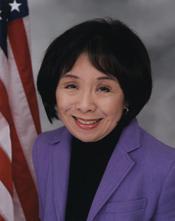
U.S. Representative for California’s 7th district
Democrat
119th Congress, two-year term
Missed 0.0% of roll calls. Chamber median 1.9%.
The full voting recordCounts roll calls where most Democrats and most Republicans voted differently, leaving out procedural votes.
How we countFrom FEC filings, Voteview roll calls and Congress.gov.
Democrat. In Congress since 2005, 11 terms in total.
Following saves Matsui to your list, which Chamber & Street keeps on its server, linked to a cookie on this browser and not to your name or email. Email alerts will come with constituent verification.
Bills and resolutions Matsui signed on to as a cosponsor. An original cosponsor signed on the day the bill was introduced. Source: govinfo bill status files, last updated Nov 6, 2026.
Reduction in Force Review Act
Sponsor Maxine Waters (D). Original cosponsor. 15 cosponsors. H.R. 3171 on Congress.gov
Introduced
Ensuring Community Access to Pharmacist Services Act
Sponsor Adrian Smith (R). Original cosponsor. 144 cosponsors. H.R. 3164 on Congress.gov(opens in a new tab)
Passed committee
Ensuring Community Access to Pharmacist Services Act
This bill provides for permanent coverage under Medicare of certain pharmacist services.
Specifically, the bill provides for permanent coverage of testing and treatment services provided by pharmacists relating to (1) COVID-19, influenza, respiratory syncytial virus (RSV), and streptococcal pharyngitis (strep throat); and (2) other public health needs in relation to a declared public health emergency. (Similar authorities were temporarily granted during the COVID-19 public health emergency.) Such services must be provided in accordance with the applicable state laws governing pharmacists' scope of practice.
Protect our Public Health Workforce Act
Sponsor Nanette Barragán (D). Original cosponsor. 8 cosponsors. H.R. 3136 on Congress.gov(opens in a new tab)
Introduced
Assault Weapons Ban of 2025
Sponsor Lucy McBath (D). Original cosponsor. 194 cosponsors. H.R. 3115 on Congress.gov(opens in a new tab)
Introduced
Assault Weapons Ban of 2025
This bill makes it a crime to knowingly import, sell, manufacture, transfer, or possess a semiautomatic assault weapon (SAW) or large capacity ammunition feeding device (LCAFD).
The prohibition does not apply to a firearm that is (1) manually operated by bolt, pump, lever, or slide action, except for certain shotguns; (2) permanently inoperable; (3) an antique; (4) only capable of firing rimfire ammunition; or (5) a rifle or shotgun specifically identified by make and model.
The bill also exempts from the prohibition the following, with respect to a SAW or LCAFD:
• importation, sale, manufacture, transfer, or possession related to certain law enforcement efforts, or authorized tests or experiments;
• importation, sale, transfer, or possession related to securing nuclear materials; and
• possession by a retired law enforcement officer.
The bill permits continued possession, sale, or transfer of a grandfathered SAW, which must be securely stored. A licensed gun dealer must conduct a background check prior to the sale or transfer of a grandfathered SAW between private parties.
The bill permits continued possession of, but prohibits sale or transfer of, a grandfathered LCAFD.
Newly manufactured LCAFDs must display serial number identification. Newly manufactured SAWs and LCAFDs must display the date of manufacture.
The bill also allows a state or local government to use Edward Byrne Memorial Justice Assistance Grant Program funds to compensate individuals who surrender a SAW or LCAFD under a buy-back program.
Arctic Refuge Protection Act
Sponsor Jared Huffman (D). Original cosponsor. 109 cosponsors. H.R. 3067 on Congress.gov(opens in a new tab)
Introduced
Equality Act
Sponsor Mark Takano (D). Original cosponsor. 218 cosponsors. H.R. 15 on Congress.gov(opens in a new tab)
Introduced
Equality Act
This bill prohibits discrimination based on sex, sexual orientation, or gender identity with respect to businesses, employment, housing, federally funded programs, and other settings.
Specifically, the bill expands Title II and Title VI of the Civil Rights Act of 1964 to prohibit public accommodations and federally funded programs, respectively, from discriminating based on sex, sexual orientation, or gender identity. It also includes stores, transit services, recreational facilities, and establishments that provide health care, accounting, or legal services as public accommodations under Title II.
The bill also expands Title IV (desegregation of public schools) and Title VII (employment discrimination) to specifically include sexual orientation and gender identity. (The Supreme Court held in Bostock v. Clayton County that Title VII's prohibition of employment discrimination based on sex also prohibits employment discrimination based on sexual orientation or gender identity.)
The bill similarly expands the Fair Housing Act (discrimination in public and private housing) to include sexual orientation and gender identity. It also prohibits discrimination based on sexual orientation or gender identity by creditors and with respect to jury selection.
The bill defines sex for purposes of the aforementioned provisions to include sex stereotypes, pregnancy, childbirth, sexual orientation, gender identity, and sex characteristics.
Protect America's Workforce Act
Sponsor Jared Golden (D). Joined Apr 28, 2025. 226 cosponsors. H.R. 2550 on Congress.gov(opens in a new tab)
Passed the House
Protect America's Workforce Act
This bill nullifies the Executive Order titled Exclusions from Federal Labor-Management Relations Programs (issued on March 27, 2025), which excludes specified executive agencies and subdivisions from the Federal Service Labor-Management Relations Statute. The statute authorizes federal employees' participation in collective bargaining and enforces collective bargaining rights.
The bill also specifies that a covered collective bargaining agreement in place as of March 26, 2025, shall have full force and effect through the stated term of the agreement.
YOUNG Act of 2025
Sponsor Yassamin Ansari (D). Original cosponsor. 4 cosponsors. H.R. 2971 on Congress.gov(opens in a new tab)
Introduced
Protect National Service Act
Sponsor Chrissy Houlahan (D). Joined Apr 21, 2025. 9 cosponsors. H.R. 2933 on Congress.gov(opens in a new tab)
Introduced
California Clean Coast Act of 2025
Sponsor Salud Carbajal (D). Joined Apr 21, 2025. 37 cosponsors. H.R. 2820 on Congress.gov(opens in a new tab)
Introduced
Clean Energy Victory Bond Act of 2025
Sponsor Zoe Lofgren (D). Original cosponsor. 1 cosponsor. H.R. 2946 on Congress.gov(opens in a new tab)
Introduced
Hammers' Law
Sponsor Don Bacon (R). Original cosponsor. 3 cosponsors. H.R. 2922 on Congress.gov(opens in a new tab)
Introduced
Enhanced Iran Sanctions Act of 2025
Sponsor Michael Lawler (R). Joined Apr 17, 2025. 295 cosponsors. H.R. 1422 on Congress.gov(opens in a new tab)
Passed the House
Enhanced Iran Sanctions Act of 2025
This bill imposes sanctions on certain foreign persons (individuals and entities) that are involved in Iran's petroleum sector as well as certain associated persons. The bill also requires or authorizes actions to facilitate the enforcement of sanctions on Iran.
Specifically, the bill requires the President to impose visa- and property-blocking sanctions on any foreign person that, after the bill's enactment, knowingly engages in any transaction related to the processing, export, or sale of oil, condensates, gas, liquefied natural gas, or other petrochemical products in whole or in part from Iran. The President must also impose sanctions on certain foreign persons associated with a sanctioned individual or entity. For example, the President must sanction the subsidiaries and corporate officers of a sanctioned business.
The bill provides certain exceptions to these sanctions, including specifying that sanctions do not apply to the importation of goods or to conducting or facilitating transactions for humanitarian assistance.
The Department of State must establish an interagency working group that shall seek to establish a multilateral contact group to coordinate international efforts to enforce sanctions on Iran.
The bill expands the State Department rewards program to authorize a reward payment to any individual who furnishes information leading to the identification of a person (1) subject to sanctions under this bill, or (2) that has attempted or is attempting to evade sanctions under this bill.
West Coast Ocean Protection Act of 2025
Sponsor Jared Huffman (D). Original cosponsor. 39 cosponsors. H.R. 2849 on Congress.gov(opens in a new tab)
Introduced
American Family Act
Sponsor Rosa DeLauro (D). Original cosponsor. 215 cosponsors. H.R. 2763 on Congress.gov(opens in a new tab)
Introduced
Raise the Wage Act of 2025
Sponsor Robert Scott (D). Original cosponsor. 177 cosponsors. H.R. 2743 on Congress.gov(opens in a new tab)
Introduced
Affordable Housing Credit Improvement Act of 2025
Sponsor Darin LaHood (R). Original cosponsor. 168 cosponsors. H.R. 2725 on Congress.gov(opens in a new tab)
Introduced
Tax Fairness for Workers Act
Sponsor Brendan Boyle (D). Original cosponsor. 176 cosponsors. H.R. 2671 on Congress.gov(opens in a new tab)
Introduced
NTIA Reauthorization Act of 2025
Sponsor Robert Latta (R). Original cosponsor. 1 cosponsor. H.R. 2482 on Congress.gov(opens in a new tab)
Passed the House
National Telecommunications and Information Administration Reauthorization Act of 2025 or the NTIA Reauthorization Act of 2025
This bill reauthorizes the National Telecommunications and Information Administration (NTIA) through FY2026 and makes certain changes to its leadership structure.
Specifically, the bill promotes the head of the NTIA, currently the Assistant Secretary of Commerce for Communications and Information, to the role of Under Secretary of Commerce for Communications and Information. The bill also promotes the Deputy Assistant Secretary of Commerce for Communications and Information to Deputy Under Secretary of Commerce for Communications and Information.
Further, the bill provides statutory authority for two existing offices within NTIA—the Office of Spectrum Management and the Office of International Affairs.
The bill also repeals certain outdated or expired NTIA reporting requirements and consolidates certain remaining reporting requirements into one annual report to Congress.
Finally, the bill extends the obligation of the Office of the Inspector General for the Department of Commerce to audit the Connecting Minority Communities Pilot Program through FY2024.
Health Care Affordability Act of 2025
Sponsor Lauren Underwood (D). Joined Mar 31, 2025. 165 cosponsors. H.R. 247 on Congress.gov(opens in a new tab)
Introduced
Health Care Affordability Act of 2025
This bill makes permanent temporary changes enacted by the American Rescue Plan Act of 2021 (ARPA) and the Inflation Reduction Act of 2022 (IRA) that generally expand eligibility for and increase the amount of the premium tax credit.
Currently, eligible taxpayers may be able to claim the premium tax credit, which applies toward the cost of obtaining health insurance through health insurance exchanges. To be eligible for the premium tax credit, a taxpayer’s household income must meet or exceed 100% of the federal poverty level (FPL) and, after 2025, may not exceed 400% of the FPL (maximum income limit). For 2021-2025, the ARPA and IRA eliminated the maximum income limit, which generally expands eligibility for the premium tax credit.
Further, under current law, the amount of the premium tax credit is (1) generally the plan premium (conditions apply), minus (2) the taxpayer’s household income multiplied by the applicable percentage. The applicable percentage is a specific percentage that varies depending on which of six income ranges (adjusted for inflation after 2025) the taxpayer’s household income falls within. For 2021-2025, the ARPA and IRA lowered the applicable percentages and eliminated the adjustment of the applicable percentages for inflation, which generally increases the amount of the premium tax credit.
The bill makes permanent the elimination of the 400% maximum income limit, the lower applicable percentages, and the elimination of the inflation adjustment for the applicable percentages.
America's Red Rock Wilderness Act
Sponsor Melanie Stansbury (D). Original cosponsor. 81 cosponsors. H.R. 2467 on Congress.gov(opens in a new tab)
Introduced
Support UNFPA Funding Act
Sponsor Chrissy Houlahan (D). Original cosponsor. 51 cosponsors. H.R. 2439 on Congress.gov(opens in a new tab)
Introduced
CREATE AI Act of 2025
Sponsor Jay Obernolte (R). Joined Mar 27, 2025. 36 cosponsors. H.R. 2385 on Congress.gov(opens in a new tab)
Passed committee
Creating Resources for Every American To Experiment with Artificial Intelligence Act of 2025 or the CREATE AI Act of 2025
This bill establishes a national program to provide U.S. researchers, educators, and students with access to artificial intelligence (AI) data, computational resources, educational tools and services, and testbeds.
The program, to be known as the National Artificial Intelligence Research Resource (NAIRR), must be established by the National Science Foundation (NSF) to improve U.S. AI research capacity and spur the strategic development of AI capabilities. NAIRR may accept and use donated resources from the private sector and federal agencies.
Those eligible to use NAIRR resources are (1) researchers, educators, and students based in the United States and affiliated with a U.S. institution of higher education, nonprofit, executive agency, or other specified entity; and (2) employees of U.S. executive agencies or federally funded research and development centers with a demonstrable mission need.
NSF must select a nongovernmental organization to operate NAIRR (i.e., an operating entity) through a competitive and transparent process. The operating entity must ensure that a significant percentage of the annual allotment of computational resources is provided to projects primarily focused on AI privacy, ethics, safety, security, risk mitigation, or trustworthiness. The operating entity must also establish minimum security requirements for all individuals interacting with NAIRR.
The operating entity may establish a fee schedule for access to NAIRR, which must include a free tier of access and must ensure that the primary purpose of NAIRR is to support research.
Raise the Age Act of 2025
Sponsor Glenn Ivey (D). Original cosponsor. 176 cosponsors. H.R. 2368 on Congress.gov(opens in a new tab)
Introduced
Raise the Age Act of 2025
This bill establishes new restrictions on the sale or transfer of certain semiautomatic firearms to individuals under 21 years of age.
Specifically, this bill makes it unlawful for a licensed gun dealer, importer, manufacturer, or collector to sell or deliver a semiautomatic center-fire rifle or semiautomatic center-fire shotgun that has (or has the capacity to accept) an ammunition feeding device with a capacity of more than five rounds to an individual who the licensee knows or has reasonable cause to believe is under age 21.
The prohibition does not apply if the individual under age 21 is a full-time law enforcement officer or active-duty member of the Armed Forces.
The bill also requires the Federal Bureau of Investigation to report on the operation of its public access line, including a description of information sharing protocols and recommendations for improving such protocols.
To designate the facility of the United States Postal Service located at 130 South Patterson Avenue in Santa Barbara, California, as the "Brigadier General Frederick R. Lopez Post Office Building".
Sponsor Salud Carbajal (D). Joined Mar 26, 2025. 51 cosponsors. H.R. 2175 on Congress.gov(opens in a new tab)
Passed the House
This bill designates the facility of the United States Postal Service located at 130 South Patterson Avenue in Santa Barbara, California, as the "Brigadier General Frederick R. Lopez Post Office Building".