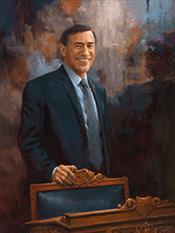
U.S. Representative for California’s 48th district
Republican
119th Congress, two-year term
Missed 1.0% of roll calls. Chamber median 1.9%.
The full voting recordCounts roll calls where most Democrats and most Republicans voted differently, leaving out procedural votes.
How we countFrom FEC filings, Voteview roll calls and Congress.gov.
Republican. In Congress since 2001, 12 terms in total.
Following saves Issa to your list, which Chamber & Street keeps on its server, linked to a cookie on this browser and not to your name or email. Email alerts will come with constituent verification.
Bills and resolutions Issa signed on to as a cosponsor. An original cosponsor signed on the day the bill was introduced. Source: govinfo bill status files, last updated Nov 6, 2026.
Prohibiting Adversarial Patents Act of 2026
Sponsor Scott Fitzgerald (R). Original cosponsor. 3 cosponsors. H.R. 9142 on Congress.gov
Introduced
Robert Lodge Medal of Honor Act
Sponsor August Pfluger (R). Original cosponsor. 9 cosponsors. H.R. 9106 on Congress.gov(opens in a new tab)
Introduced
Roberto Clemente Commemorative Coin Act
Sponsor Adriano Espaillat (D). Joined Jun 2, 2026. 221 cosponsors. H.R. 1787 on Congress.gov(opens in a new tab)
Introduced
Roberto Clemente Commemorative Coin Act
This bill directs the Department of the Treasury to mint and issue coins in recognition of the life of Roberto Clemente, baseball player and human rights activist. All sales of coins issued under this bill must include a surcharge to be paid to the Roberto Clemente Foundation.
Free Speech Fairness Act
Sponsor Mark Harris (R). Joined Apr 27, 2026. 38 cosponsors. H.R. 2501 on Congress.gov(opens in a new tab)
Introduced
Rejecting the Erasure of Afghan Women and Girls Act
Sponsor Sydney Kamlager-Dove (D). Joined Apr 22, 2026. 10 cosponsors. H.R. 7669 on Congress.gov(opens in a new tab)
Passed committee
BIS Licensing Efficiency Act of 2026
Sponsor Gregory Meeks (D). Original cosponsor. 3 cosponsors. H.R. 8289 on Congress.gov(opens in a new tab)
Passed committee
BIS Licensing Efficiency Act of 2026
This bill establishes a timeline for the Department of Commerce's Bureau of Industry and Security (BIS) to make decisions on applications for export licenses and establishes certain reporting requirements.
Specifically, the bill directs BIS to make a decision on whether to approve an application for an export license and notify the applicant of the decision within 90 days of receiving the application.
If no licensing decision is made within 120 days of submission of the application, BIS must notify the applicant of the status of the application, the reason a decision has not been made, and request any additional information necessary to make a decision.
BIS must submit quarterly reports to specified congressional committees on the processing of license applications and other requests for authorization for the export, reexport, release, and in-country transfer of controlled items.
The bill also requires the Government Accountability Office to audit and report to specified congressional committees on the license review process of BIS.
Semiconductor Controls Effectiveness Act of 2026
Sponsor Greg Stanton (D). Original cosponsor. 6 cosponsors. H.R. 8287 on Congress.gov(opens in a new tab)
Passed committee
To designate the facility of the United States Postal Service located at 340 East 1st Street in Tustin, California, as the "Ursula Ellen Kennedy Post Office Building".
Sponsor Young Kim (R). Joined Mar 5, 2026. 12 cosponsors. H.R. 3350 on Congress.gov(opens in a new tab)
Passed the House
This bill designates the facility of the United States Postal Service located at 340 East 1st Street in Tustin, California, as the "Ursula Ellen Kennedy Post Office Building".
Reaffirming Iran remains the largest state sponsor of terrorism.
Sponsor Brian Mast (R). Original cosponsor. 2 cosponsors. H.Res. 1099 on Congress.gov(opens in a new tab)
Passed the House
This resolution states that the House of Representatives declares it is the policy of the United States that Iran continues to be the largest state sponsor of terrorism.
Stopping the Theft and Destruction of Broadband Act of 2025
Sponsor Laurel Lee (R). Joined Mar 3, 2026. 27 cosponsors. H.R. 2784 on Congress.gov(opens in a new tab)
Introduced
Generating Retirement Ownership through Long-Term Holding
Sponsor Beth Van Duyne (R). Joined Mar 3, 2026. 130 cosponsors. H.R. 2089 on Congress.gov(opens in a new tab)
Introduced
PAST Act of 2025
Sponsor Brian Fitzpatrick (R). Joined Mar 3, 2026. 207 cosponsors. H.R. 1684 on Congress.gov(opens in a new tab)
Introduced
Prevent All Soring Tactics Act of 2025 or the PAST Act of 2025
This bill increases protections for horses at shows, exhibitions, sales, or auctions (horse events) to prevent the practice of soring horses. Generally, the soring of horses includes certain actions taken on horses' limbs to produce higher gaits that may cause pain, distress, inflammation, or lameness.
Specifically, the bill expands existing soring prohibitions under the Horse Protection Act, including by banning the use of certain action devices (e.g., nonprotective boots) on specified horse breeds.
The bill also requires soring inspectors at horse events to be assigned by the Animal and Plant Health Inspection Service (APHIS) of the Department of Agriculture rather than appointed by the management of horse events. APHIS must also license, train, and oversee inspectors to detect and diagnose soring at such events.
Additionally, the bill increases penalties for violations of the act. It also directs APHIS to disqualify horses found to be sore from being shown or exhibited for specified periods. Further, APHIS may permanently disqualify violators from participating in horse events after the third or any subsequent violation.
By way of background, APHIS issued a rule in 2024 to increase efforts to protect horses from soring practices. However, in 2025, a court vacated parts of the rule as exceeding APHIS' statutory authority (e.g., prohibiting the use of certain action devices) while deeming other parts acceptable (e.g., establishing APHIS-designated inspectors). APHIS subsequently delayed the effective date of the rule to December 31, 2026.
Expressing support for the designation of February 21 through February 28, 2026, as "National FFA Week", recognizing the important role of the National Future Farmers of America (FFA) Organization in developing the next generation of globally conscious leaders who will change the world, and celebrating the 50th anniversary of the chartering of the State of Alaska as a State FFA Association.
Sponsor Tracey Mann (R). Original cosponsor. 69 cosponsors. H.Res. 1073 on Congress.gov(opens in a new tab)
Introduced
This resolution supports the designation of National FFA (Future Farmers of America) Week.
It also celebrates the 50th anniversary of the chartering of Alaska as a State FFA Association of the National FFA Organization.
Tribal Warrant Fairness Act
Sponsor Tom Cole (R). Original cosponsor. 4 cosponsors. H.R. 7490 on Congress.gov(opens in a new tab)
Introduced
Tribal Warrant Fairness Act
This bill authorizes the U.S. Marshals Service (USMS) to assist with certain tribal law enforcement activities and allows tribal law enforcement agencies to participate in regional fugitive task forces.
Specifically, the bill authorizes the USMS, upon the request of an Indian tribe, to investigate tribal fugitive matters. The USMS may investigate tribal fugitive matters both within and outside the United States, as directed by the Department of Justice (DOJ).
Additionally, the USMS, upon the request of tribal law enforcement agencies, may assist these agencies in locating and recovering missing children.
The bill also allows tribal law enforcement agencies to participate in regional fugitive task forces. DOJ must consult with tribes when establishing new task forces. (The USMS oversees regional fugitive task forces. Currently, these task forces combine the efforts of federal, state, and local law enforcement agencies to locate and apprehend fugitives.)
To amend the Federal Food, Drug, and Cosmetic Act to exempt the premium cigar industry from certain regulations.
Sponsor Byron Donalds (R). Joined Feb 9, 2026. 16 cosponsors. H.R. 2111 on Congress.gov(opens in a new tab)
Introduced
Air America Act of 2025
Sponsor Glenn Grothman (R). Joined Feb 3, 2026. 178 cosponsors. H.R. 2192 on Congress.gov(opens in a new tab)
Introduced
To designate the facility of the United States Postal Service located at 3817 Marysville Boulevard in Sacramento, California, as the "Grantland Johnson Post Office".
Sponsor Ami Bera (D). Joined Jan 22, 2026. 50 cosponsors. H.R. 2488 on Congress.gov(opens in a new tab)
Passed committee
This bill designates the facility of the United States Postal Service located at 3817 Marysville Boulevard in Sacramento, California, as the "Grantland Johnson Post Office".
MACV–SOG Congressional Gold Medal Act
Sponsor Mark Alford (R). Joined Jan 9, 2026. 9 cosponsors. H.R. 5993 on Congress.gov(opens in a new tab)
Introduced
Condemning the Government of Iran's state-sponsored persecution of the Baha'i minority in Iran and the continued violation of the Universal Declaration of Human Rights and the International Covenant on Civil and Political Rights.
Sponsor Janice Schakowsky (D). Joined Dec 11, 2025. 49 cosponsors. H.Res. 925 on Congress.gov(opens in a new tab)
Introduced
This resolution condemns Iran's state-sponsored persecution of the Baha'i religious minority and Iran's continued violation of international human rights treaties. The resolution calls on Iran to (1) immediately release Baha'is and others imprisoned or detained solely on account of religion, (2) end its state-sponsored campaign of hate propaganda against the Baha'is, and (3) reverse certain policies that discriminate against Baha'is and other religious minorities. The resolution also urges the President and the Department of State to impose sanctions on Iranian officials and others who are responsible for serious human rights abuses, including abuses against Iran's Baha'i community.
To implement a strategy to relocate the headquarters of the United Nations, and for other purposes.
Sponsor Ronny Jackson (R). Original cosponsor. 3 cosponsors. H.R. 6395 on Congress.gov(opens in a new tab)
Introduced
Repealing Big Brother Overreach Act
Sponsor Warren Davidson (R). Joined Nov 19, 2025. 193 cosponsors. H.R. 425 on Congress.gov(opens in a new tab)
Passed committee
Repealing Big Brother Overreach Act
This bill repeals the Corporate Transparency Act. The act requires existing companies and newly created companies to report beneficial ownership information to the Department of the Treasury’s Financial Crimes Enforcement Network for purposes of addressing the financing of terrorism and money laundering.
Protection of Lawful Commerce in Stone Slab Products Act
Sponsor Tom McClintock (R). Joined Nov 12, 2025. 16 cosponsors. H.R. 5437 on Congress.gov(opens in a new tab)
Passed committee
Protection of Lawful Commerce in Stone Slab Products Act
This bill prohibits civil actions in federal or state court against manufacturers or sellers of certain stone slab products. The term stone slab product includes a product made with quartz, mineral, crystal, glass, porcelain, or other stone, ceramic or similar material, that has been shipped or transported in interstate or foreign commerce.
Specifically, the bill prohibits a civil action against a manufacturer or seller of a stone slab product for injuries arising from or related to the fabrication of the stone slab product by another party, including injuries caused by exposure to respirable silica or other substances.
The bill requires any such civil action that is pending on the date of enactment to be dismissed.
Shutdown Fairness Act
Sponsor Dusty Johnson (R). Original cosponsor. 17 cosponsors. H.R. 5801 on Congress.gov(opens in a new tab)
Introduced
Shutdown Fairness Act
This bill provides appropriations to pay federal employees who work during a government shutdown.
Specifically, the bill provides appropriations for federal agencies to provide standard rates of pay, allowances, pay differentials, benefits, and other payments to excepted employees for work performed during any period in which interim continuing appropriations or full-year appropriations are not in effect for a fiscal year (i.e., a government shutdown). An excepted employee is an employee who is required to work during a government shutdown.
Under current law, excepted employees are not paid until the government shutdown is over. This bill provides appropriations to pay excepted employees during a government shutdown. The bill also specifies that the term excepted employee includes certain contractors who support federal employees during a government shutdown and members of the Armed Forces who are on active duty.
A federal agency may not use the funds provided by this bill during any period in which continuing appropriations are in effect for the purpose of paying excepted employees of the agency.
The bill must take effect as if it had been enacted on September 30, 2025.
Federal Firearms Licensee Protection Act of 2025
Sponsor John Rutherford (R). Joined Oct 17, 2025. 145 cosponsors. H.R. 1773 on Congress.gov(opens in a new tab)
Introduced
Federal Firearms Licensee Protection Act of 2025
This bill modifies criminal penalties for an offense involving the theft of a firearm from a licensed importer, manufacturer, or dealer, or from their business premises.
Specifically, the bill does the following:
• increases from 10 to 20 years the maximum prison term, and
• creates a 3- or 5-year mandatory minimum prison term for an offense that occurs during the commission of a burglary or robbery.
An attempt to commit an offense is subject to the same penalties as a substantive offense.
Fair Access to Banking Act
Sponsor Andy Barr (R). Joined Oct 6, 2025. 151 cosponsors. H.R. 987 on Congress.gov(opens in a new tab)
Introduced
Fair Access to Banking Act
This bill places restrictions on certain banks, credit unions, and payment card networks if they refuse to do business with a person who complies with the law. Restrictions include prohibiting the use of electronic funds transfer systems and lending programs, termination of an institution's depository insurance, and specified civil penalties.
Banks and other specified financial institutions are allowed to deny financial services to a person only if the denial is justified by a documented failure of that person to meet quantitative, impartial, risk-based standards established in advance by the institution. This justification may not be based upon reputational risks to the institution.
The bill establishes the right for a person to bring a civil action for a violation of this bill.