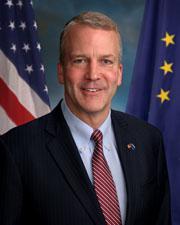
U.S. Senator for Alaska
Republican
Senate term end not loaded yet
Missed 3.1% of roll calls. Chamber median 2.1%.
The full voting recordCounts roll calls where most Democrats and most Republicans voted differently, leaving out procedural votes.
How we countFrom FEC filings, Voteview roll calls and Congress.gov.
Republican. In Congress since 2015, 2 terms in total.
Following saves Sullivan to your list, which Chamber & Street keeps on its server, linked to a cookie on this browser and not to your name or email. Email alerts will come with constituent verification.
Bills and resolutions where Sullivan is the primary sponsor. Most bills never leave committee; that is normal for every member. Source: Congress.gov, last updated Oct 29, 2026.
37 of 73 have at least one cosponsor from the other party.
A bill to amend the Small Business Act to eliminate certain requirements relating to the award of construction subcontracts within the county or State of performance.
Introduced Mar 12, 2025. 2 cosponsors, 1 from the other party. S. 991 on Congress.gov
Introduced
This bill eliminates a requirement that, to the maximum extent practicable, certain construction subcontracts awarded by the Small Business Administration must be awarded within the county or state where the work is to be performed.
Pay Our Military Act of 2025
Introduced Mar 6, 2025. 2 cosponsors. S. 876 on Congress.gov(opens in a new tab)
Introduced
Pay Our Military Act of 2025
This bill provides continuing appropriations for military pay for any period during which interim or full-year appropriations for FY2025 are not in effect (i.e., a government shutdown).
Specifically, the bill provides FY2025 continuing appropriations for the pay and allowances of (1) members of the Armed Forces, including reserve components, who perform active service during the period; and (2) civilian personnel and contractors of the Department of Defense (and the Department of Homeland Security in the case of the Coast Guard) who are providing support to such members of the Armed Forces.
If a government shutdown occurs, the bill provides the continuing appropriations until the earlier of (1) the enactment into law of specified appropriations legislation, or (2) January 1, 2026.
REP VA Act
Introduced Mar 4, 2025. 1 cosponsor, 1 from the other party. S. 831 on Congress.gov(opens in a new tab)
Passed committee
Representing VA with Accuracy Act or the REP VA Act
This bill requires the Department of Veterans Affairs (VA) to ensure that any call made to a veteran by a VA employee or contractor regarding VA services or benefits is made from a single, well-known telephone number and uses caller identification that indicates the call is from or on behalf of the VA.
The VA must also ensure the Veterans Health Administration has at least one call center in each time zone in the United States to address concerns regarding appointments and referrals for health care.
Alaska Native Vietnam Era Veterans Land Allotment Extension Act
Introduced Feb 27, 2025. 1 cosponsor. S. 785 on Congress.gov(opens in a new tab)
Introduced
Alaska Native Vietnam Era Veterans Land Allotment Extension Act
This bill extends for an additional five years the time period during which an eligible Alaska Native veteran may apply for a land allotment under the Alaska Native Vietnam Era Veterans Land Allotment Program. The program makes Alaska Native veterans who served in the Armed Forces in Vietnam between August 5, 1964, and December 31, 1971, or their heirs eligible to receive up to 160 acres of federal land in Alaska.
Under the current program, the Department of the Interior's Bureau of Land Management may accept applications through December 29, 2025. This bill extends this time period for an additional five years to December 29, 2030.
Fighting Foreign Illegal Seafood Harvests Act of 2025
Introduced Feb 24, 2025. 9 cosponsors, 4 from the other party. S. 688 on Congress.gov(opens in a new tab)
Passed the Senate
A resolution designating February 16, 2025, as "National Elizabeth Peratrovich Day".
Introduced Feb 24, 2025. 1 cosponsor. S.Res. 92 on Congress.gov(opens in a new tab)
Passed the Senate
This resolution designates February 16, 2025, as National Elizabeth Peratrovich Day. It also encourages the people of the United States and Members of Congress to commemorate the life and civil rights advocacy of Elizabeth Wanamaker Peratrovich by continuing the important work of ensuring equality for Alaska Natives and Native Americans.
Enhanced Iran Sanctions Act of 2025
Introduced Feb 12, 2025. 51 cosponsors, 16 from the other party. S. 556 on Congress.gov(opens in a new tab)
Introduced
United States-Israel Defense Partnership Act of 2025
Introduced Feb 12, 2025. 32 cosponsors, 12 from the other party. S. 554 on Congress.gov(opens in a new tab)
Introduced
United States-Israel Defense Partnership Act of 2025
This bill requires or authorizes certain actions to increase defense-related cooperation between the United States and Israel.
Specifically, the bill requires the Department of Defense (DOD) to
• establish a cooperative program, with the concurrence of Israel's Ministry of Defense (MOD), to develop and deploy advanced technologies for countering unmanned systems that threaten the United States and Israel;
• establish in Israel an office of the Defense Innovation Unit (an organization that focuses on rapidly fielding and scaling commercial technology across the U.S. military); and
• seek to engage Israel's MOD on the ascension of Israel into the national technology and industrial base (currently defined in law as the persons and organizations engaged in research, development, production, integration, services, or information technology activities conducted within the United States, the United Kingdom, Australia, New Zealand, and Canada).
The bill authorizes DOD, upon request of Israel's MOD, to jointly conduct research, development, test, and evaluation (RDT&E) of emerging technologies such as artificial intelligence and robotics to meet defense challenges.
Additionally, the bill extends the authority for DOD to (1) carry out RDT&E on a joint basis with Israel to establish anti-tunnel and counter unmanned aerial systems capabilities through 2028, and (2) transfer defense articles intended for use as reserve stocks for Israel through January 1, 2029.
CRITICAL Act
Introduced Feb 12, 2025. 1 cosponsor, 1 from the other party. S. 552 on Congress.gov(opens in a new tab)
Introduced
Comprehensive Reimbursement Initiative Targeting Investment and Care in rural Locations or the CRITICAL Act
This bill increases the Medicare payment rate by 4% for services provided by critical access hospitals in Alaska and Hawaii.
Ensuring Outpatient Quality for Rural States Act
Introduced Feb 12, 2025. 2 cosponsors, 1 from the other party. S. 551 on Congress.gov(opens in a new tab)
Introduced
Ensuring Outpatient Quality for Rural States Act
This bill allows Medicare payments for covered hospital outpatient services in Alaska or Hawaii to include certain cost-of-living adjustments.
SOLES Act
Introduced Feb 12, 2025. 2 cosponsors, 1 from the other party. S. 553 on Congress.gov(opens in a new tab)
Introduced
Save our Lone Emergency Services Act or the SOLES Act
This bill requires Medicare payments to sole community hospitals in Alaska or Hawaii to cover at least 94% of the reasonable costs of covered outpatient services.
Stop the ICC Act
Introduced Feb 10, 2025. 1 cosponsor. S. 493 on Congress.gov(opens in a new tab)
Introduced
ADS for Mental Health Services Act
Introduced Feb 5, 2025. 1 cosponsor, 1 from the other party. S. 414 on Congress.gov(opens in a new tab)
Passed the Senate
INFORM Act
Introduced Feb 5, 2025. 1 cosponsor, 1 from the other party. S. 417 on Congress.gov(opens in a new tab)
Introduced
A bill to amend title 10, United States Code, to modify the organization and authorities of the Assistant Secretaries of Defense with duties relating to industrial base policy and homeland defense.
Introduced Feb 5, 2025. 0 cosponsors. S. 436 on Congress.gov(opens in a new tab)
Introduced
This bill modifies the organization and responsibilities of the Assistant Secretaries of Defense (ASDs). Current law provides for 19 ASDs, with some of these positions established in statute and others specified by the Department of Defense (DOD).
First, the bill establishes in statute an ASD for International Industrial Base Development and Engagement, whose main duty is to strengthen the U.S. defense industrial base through cooperation with security partners and allies, including Taiwan.
Next, the bill establishes in statute an ASD for Strategy, Plans, Capabilities, and Homeland Defense. The principal duty of such ASD is to advise the Secretary of Defense and others on national security issues and defense strategy, policy and planning oversight of various issues, and advancing and representing priority issues. This position replaces the DOD-specified ASD for Strategy, Plans, and Capabilities.
The bill eliminates the DOD-specified ASD for Homeland Defense and Hemispheric Affairs.
Finally, the bill expands the responsibilities of the DOD-specified ASD for International Security Affairs to include Western Hemisphere affairs.
IRONDOME Act of 2025
Introduced Feb 5, 2025. 2 cosponsors. S. 435 on Congress.gov(opens in a new tab)
Introduced
Increasing Response Options and Deterrence of Missile Engagements Act of 2025 or the IRONDOME Act of 2025
This bill requires the Department of Defense (DOD) and other entities to take specified actions to support U.S. missile defense capabilities, particularly with respect to the U.S. homeland.
DOD must submit to Congress a multi-year phased plan to transfer operations and sustainment responsibility for missile defense from the Missile Defense Agency to the appropriate military departments to allow the Missile Defense Agency to focus on research, development, and prototyping and testing.
Additionally, among other elements, the bill requires
• the United States Northern Command and the Space Development Agency within DOD to use a specified acquisition process to conduct rapid testing and development of certain drone and satellite systems;
• each commander of a combatant command to include the missile defense interceptor and sensor requirements of the command in annual budget requests;
• DOD to use all authorities available to accelerate the development, production, and modernization of various defense systems and technology, including certain space-based interceptors; and
• the Department of the Army to procure and field airships in support of the missile defense of the U.S. homeland from drones and ballistic, hypersonic, and cruise missiles.
On January 27, 2025, President Trump signed an executive order titled The Iron Dome for America. The order directs DOD to develop plans for a next-generation missile defense shield to protect the U.S. homeland from ballistic, hypersonic, and advanced cruise missiles, and other next-generation aerial attacks.
PRO Veterans Act of 2025
Introduced Feb 5, 2025. 13 cosponsors. S. 423 on Congress.gov(opens in a new tab)
Became law
This bill requires the Department of Veterans Affairs (VA) to provide quarterly budget briefings to Congress, prohibits the VA from providing specified pay incentives to senior-level employees, and establishes an office to carry out customer service initiatives of the VA.
Protecting Regular Order for Veterans Act of 2025 or the PRO Veterans Act of 2025
(Sec. 1) This section requires the VA to provide quarterly budget briefings to Congress, which must include information on any budget shortfalls the VA may be experiencing. The VA must present its plans to address or mitigate shortfalls during such briefings.
Next, the section prohibits the VA from providing certain senior-level employees with a critical skill incentive, which is generally a payment bonus for employees possessing a high-demand skill or skill that is at a shortage. Specifically, the VA may not provide such an incentive to an employee in a Senior Executive Service position or other comparable position in the VA Central Office, regardless of the actual location where the employee performs the functions of the position. Senior-level employees whose positions are primarily in the VA Central Office but perform some portion of their job function based out of non-Central Office VA facilities are eligible for an incentive for their non-Central Office work.
The section also provides that an incentive may only be provided to senior-level employees on an individual basis and upon approval by specified officers (e.g., the Under Secretary for Health).
The VA must report to Congress annually regarding senior-level employees who were provided a critical skill incentive.
Improving Veterans’ Experience Act of 2025
(Sec. 2) This section establishes the Veterans Experience Office through FY2028 to carry out the key customer experience initiatives of the VA relating to veteran and beneficiary satisfaction with and usage of VA benefits and services.
The Government Accountability Office must complete an analysis of and report on the methodology, effectiveness, and implementation of findings and feedback of veterans and beneficiaries used by the VA, including the Veterans Experience Office, to improve customer experience and satisfaction.
ARTIST Act
Introduced Jan 24, 2025. 1 cosponsor. S. 254 on Congress.gov(opens in a new tab)
Became law
Alaska’s Right to Ivory Sales and Tradition Act or the ARTIST Act
This act prohibits states from imposing bans on marine mammal products produced by Alaska Natives.
Specifically, states may not prohibit the interstate commerce, importation, sale, transfer, trade, barter, or possession of marine mammal ivory, marine mammal bone, or baleen legally produced by an Alaska Native as an authentic Alaska Native article of handicrafts and clothing.
Archie Cavanaugh Migratory Bird Treaty Amendment Act
Introduced Jan 24, 2025. 1 cosponsor. S. 255 on Congress.gov(opens in a new tab)
Introduced
Archie Cavanaugh Migratory Bird Treaty Amendment Act
This bill states that nothing in the Migratory Bird Treaty Act of 1918 (MBTA) prohibits possessing, selling, bartering, purchasing, shipping, or transporting any authentic Alaska Native handicraft, clothing, or art on the basis that it contains a nonedible migratory bird part, so long as the bird was not taken in a wasteful or illegal manner. (The MBTA implements four international treaties that the United States entered into with Canada, Mexico, Japan, and Russia. The MBTA prohibits the taking of protected migratory bird species without prior authorization.)
The bill directs the Department of State to work with the Department of the Interior to enter into appropriate bilateral procedures with countries that are parties to the treaties under the MBTA to clarify the treatment of Alaska Native handicraft containing nonedible migratory bird parts from the species of migratory birds listed in those treaties. Further, Interior must modify any regulations implementing the MBTA to implement this bill.
Save Our Seas 2.0 Amendments Act
Introduced Jan 23, 2025. 1 cosponsor, 1 from the other party. S. 216 on Congress.gov(opens in a new tab)
Became law
Save Our Seas 2.0 Amendments Act
This bill reauthorizes and modifies administration of Marine Debris Program (MDP) activities and the Marine Debris Foundation. (The program and the foundation support efforts to assess, prevent, and otherwise address marine debris and its adverse impacts on the U.S. economy, the marine environment, and navigation safety.)
First, the bill reauthorizes the National Oceanic and Atmospheric Administration's (NOAA's) Marine Debris Program through FY2029. The bill authorizes NOAA to provide contributions for MDP project costs on an in-kind basis in an amount that NOAA determines represents the value it derives from the project. The bill also authorizes NOAA to enter into agreements other than cooperative agreements, contracts, and grant agreements for projects.
Next, the bill modifies requirements for the Marine Debris Foundation and reauthorizes it for FY2025. Among other changes, the bill designates the current Chief Operating Officer (i.e., the first officer or employee appointed by the board) as the Chief Executive Officer (CEO) and specifies that the board has the authority to appoint, review the performance of, and remove the CEO. The bill authorizes the CEO to appoint, supervise, and remove foundation employees and officers.
Further, the bill directs the foundation to develop and implement best practices for conducting outreach to Indian tribes and tribal governments. The foundation must locate its principal office in the National Capital Region or a coastal shoreline community.
Finally, the bill authorizes the foundation to match contributions from regional organizations, Indian tribes, tribal organizations, and foreign governments.
North Pacific Research Board Enhancement Act
Introduced Jan 22, 2025. 1 cosponsor. S. 190 on Congress.gov(opens in a new tab)
Passed committee
North Pacific Research Board Enhancement Act
This bill makes certain changes to the North Pacific Research Board, including changes to the board’s composition and allocations for funding for administrative expenses. The board sets research priorities and administers grants to support research on fisheries and marine ecosystems in the waters surrounding Alaska.
Specifically, this bill adds to the board one additional member to represent Alaska Natives. This board member must have personal knowledge of and direct experience with subsistence uses of resources (the practice of relying on the surrounding environment as a source of food and material). The bill also imposes a three-year term limit on those board members representing fishing interests and Alaska Natives, and permits such members to serve one additional term upon reappointment.
With respect to funding, under current law the board may use up to 15% of grant program funding for administrative expenses (e.g., support for the board and grant administration). Under the bill, if the program's total funding in a given fiscal year is less than its total funding in the prior fiscal year, the National Oceanic and Atmospheric Administration may increase the 15% cap on administrative expenses for that fiscal year. Any such increase must prioritize supporting the board’s continued operation, maximizing funds directed to research, and maintaining high-quality grant administration. Further, the bill waives the 15% cap altogether for five years following the bill’s enactment.
Veterans Member Business Loan Act
Introduced Jan 16, 2025. 4 cosponsors, 4 from the other party. S. 110 on Congress.gov(opens in a new tab)
Introduced
Veterans Member Business Loan Act
This bill excludes from credit union aggregate loan limitations member business loans made to veterans.
Harmful Algal Bloom and Hypoxia Research and Control Amendments Act of 2025
Introduced Jan 14, 2025. 15 cosponsors, 8 from the other party. S. 93 on Congress.gov(opens in a new tab)
Passed the Senate
Harmful Algal Bloom and Hypoxia Research and Control Amendments Act of 2025
This bill extends through FY2030 and modifies the Harmful Algal Bloom and Hypoxia Research and Control Act to address algal blooms and hypoxia (deficiency of oxygen) in U.S. marine, estuarine, and freshwater systems. Harmful algal blooms are high concentrations of algae that may create nuisance or toxic conditions that are harmful to humans, animals, aquatic ecosystems, and the economy.
The bill directs the Inter-Agency Task Force on Harmful Algal Blooms and Hypoxia to submit to Congress an action strategy for harmful algal blooms at least once every five years. The bill also expands the task force's membership to include the Department of Energy.
The bill also expands the duties of the National Oceanic and Atmospheric Administration (NOAA) under the National Harmful Algal Bloom and Hypoxia program. NOAA must also carry out a variety of activities related to monitoring, predicting, preventing, mitigating, and responding to marine, coastal, and Great Lakes harmful algal bloom and hypoxia events. For example, NOAA must establish (1) a national network of observing systems for monitoring, detecting, and forecasting harmful algal blooms; and (2) a national-level incubator program to increase the number of strategies, technologies, and measures available to prevent, mitigate, and control harmful algal blooms.
Additionally, the Environmental Protection Agency must develop and enhance operational freshwater harmful algal bloom monitoring, observing, and forecasting programs in lakes, rivers, and reservoirs and carry out other activities related to researching freshwater harmful algal blooms and hypoxia events.