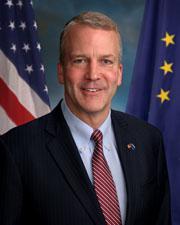
U.S. Senator for Alaska
Republican
Senate term end not loaded yet
Missed 3.1% of roll calls. Chamber median 2.1%.
The full voting recordCounts roll calls where most Democrats and most Republicans voted differently, leaving out procedural votes.
How we countFrom FEC filings, Voteview roll calls and Congress.gov.
Republican. In Congress since 2015, 2 terms in total.
Following saves Sullivan to your list, which Chamber & Street keeps on its server, linked to a cookie on this browser and not to your name or email. Email alerts will come with constituent verification.
Bills and resolutions Sullivan signed on to as a cosponsor. An original cosponsor signed on the day the bill was introduced. Source: govinfo bill status files, last updated Nov 6, 2026.
A resolution expressing support for the designation of the week of May 4, 2025, through May 10, 2025, as "National Small Business Week" to celebrate the contributions of small businesses and entrepreneurs in every community in the United States.
Sponsor Joni Ernst (R). Original cosponsor. 81 cosponsors. S.Res. 201 on Congress.gov
Passed the Senate
This resolution honors the contributions of small businesses in the United States and supports the designation of National Small Business Week.
A resolution expressing support for the designation of May 5, 2025, as the "National Day of Awareness for Missing and Murdered Indigenous Women and Girls".
Sponsor Steve Daines (R). Original cosponsor. 24 cosponsors. S.Res. 200 on Congress.gov(opens in a new tab)
Passed the Senate
This resolution expresses support for the designation of May 5, 2025, as the National Day of Awareness for Missing and Murdered Indigenous Women and Girls.
Keep Finfish Free Act of 2025
Sponsor Cory Booker (D). Original cosponsor. 3 cosponsors. S. 1529 on Congress.gov(opens in a new tab)
Introduced
A joint resolution providing for congressional disapproval under chapter 8 of title 5, United States Code, of the rule submitted by the Environmental Protection Agency relating to "California State Motor Vehicle and Engine and Nonroad Engine Pollution Control Standards; The 'Omnibus' Low NOx Regulation; Waiver of Preemption; Notice of Decision".
Joined Apr 29, 2025. 13 cosponsors. S.J.Res. 47 on Congress.gov(opens in a new tab)
Progress not on file
This joint resolution nullifies the Environmental Protection Agency notice titled California State Motor Vehicle and Engine and Nonroad Engine Pollution Control Standards; The ‘Omnibus’ Low NOX Regulation; Waiver of Preemption; Notice of Decision (90 Fed. Reg. 643) and published on January 6, 2025. Among other elements, the notice grants the California Air Resources Board request for a waiver for its Heavy-Duty Vehicle and Engine Omnibus Low NOX regulations. (Under the Clean Air Act, California may seek waivers of the preemption prohibiting states from enacting certain emission standards.)
HELPER Act of 2025
Sponsor Ashley Moody (R). Joined Apr 29, 2025. 27 cosponsors. S. 978 on Congress.gov(opens in a new tab)
Introduced
Homes for Every Local Protector, Educator, and Responder Act of 2025 or the HELPER Act of 2025
This bill establishes a program administered by the Department of Housing and Urban Development to provide mortgage assistance to law enforcement officers, elementary and secondary school teachers, firefighters, or other first responders. Specifically, these individuals may be eligible for a first-time mortgage on a primary family residence with no down payment. Instead, the mortgage is subject to a one-time, up-front mortgage insurance premium.
Freedom to Invest in Tomorrow’s Workforce Act
Sponsor Amy Klobuchar (D). Joined Apr 28, 2025. 16 cosponsors. S. 756 on Congress.gov(opens in a new tab)
Introduced
Freedom to Invest in Tomorrow’s Workforce Act
This bill expands the expenses eligible for tax-free withdrawals from a qualified tuition program (known as a 529 plan) to include tuition, fees (including test fees), books, supplies, equipment, and other expenses related to the enrollment or attendance in a recognized postsecondary credentialing program.
Under the bill, a recognized postsecondary credentialing program includes certain programs identified by a state as providing training services, a program listed in the Web Enabled Approval Management System (WEAMS) maintained by the Department of Veterans Affairs, certain examinations required to obtain or maintain a credential, and other reputable credentialing programs.
Further, under the bill, such programs must be designed for an individual to obtain
• an industry-recognized postsecondary employment credential (e.g., project management professional certificate, advanced emergency medical technician certificate, and welding supervisor certificate),
• a certificate of completion of a registered and certified apprenticeship,
• an occupational or professional license issued or recognized by a state or the federal government (and any certification required for obtaining such license), or
• an associate or baccalaureate degree.
Ocean Regional Opportunity and Innovation Act of 2025
Sponsor Lisa Murkowski (R). Original cosponsor. 9 cosponsors. S. 1392 on Congress.gov(opens in a new tab)
Introduced
Coastal Communities Ocean Acidification Act of 2025
Sponsor Lisa Murkowski (R). Original cosponsor. 6 cosponsors. S. 1391 on Congress.gov(opens in a new tab)
Introduced
A resolution honoring the life of the Honorable John Bennett Johnston, Jr., former Senator for the State of Louisiana.
Sponsor Bill Cassidy (R). Original cosponsor. 99 cosponsors. S.Res. 159 on Congress.gov(opens in a new tab)
Passed the Senate
A resolution commemorating the 50th anniversary of the Indian Self-Determination and Education Assistance Act.
Sponsor Lisa Murkowski (R). Original cosponsor. 13 cosponsors. S.Res. 156 on Congress.gov(opens in a new tab)
Passed the Senate
This resolution recognizes January 4, 2025, as the 50th anniversary of the enactment of the Indian Self-Determination and Education Assistance Act (ISDEAA). It also calls on the federal government to continue working with Indian tribes to fully uphold and implement ISDEAA and parallel authorities in federal law.
A joint resolution providing for congressional disapproval under chapter 8 of title 5, United States Code, of the rule submitted by the Environmental Protection Agency relating to "California State Motor Vehicle and Engine Pollution Control Standards; Advanced Clean Cars II; Waiver of Preemption; Notice of Decision".
Sponsor Shelley Capito (R). Original cosponsor. 31 cosponsors. S.J.Res. 45 on Congress.gov(opens in a new tab)
Introduced
This joint resolution nullifies the Environmental Protection Agency notice titled California State Motor Vehicle and Engine Pollution Control Standards; Advanced Clean Cars II; Waiver of Preemption; Notice of Decision (90 Fed. Reg. 642) and published on January 6, 2025. Among other elements, the notice grants the California Air Resources Board request for a waiver for its Advanced Clean Cars II (ACC II) regulations. (Under the Clean Air Act, California may seek waivers of the preemption prohibiting states from enacting certain emission standards.)
CONNECT for Health Act of 2025
Sponsor Brian Schatz (D). Original cosponsor. 73 cosponsors. S. 1261 on Congress.gov(opens in a new tab)
Introduced
Creating Opportunities Now for Necessary and Effective Care Technologies (CONNECT) for Health Act of 2025 or the CONNECT for Health Act of 2025
This bill expands coverage of telehealth services under Medicare.
Among other provisions, the bill
• permanently removes geographic restrictions on originating sites (i.e., the location of the beneficiary) and allows the home of the beneficiary to serve as the originating site for all services;
• permanently allows federally qualified health centers and rural health clinics to serve as the distant site (i.e., the location of the health care practitioner); and
• allows the Centers for Medicare & Medicaid Services (CMS) to generally waive coverage restrictions during any public health emergency.
Additionally, the CMS must post certain information about the effects of Medicare telehealth services on its website, including information about utilization, costs, and the outcome of services. The CMS must also (1) provide resources to health care professionals about the requirements for furnishing telehealth services under Medicare, including with respect to payment, patient privacy, and support for underserved populations; and (2) ensure certain quality measures are applied to telehealth services.
Sanctioning Russia Act of 2025
Sponsor Lindsey Graham (R). Original cosponsor. 84 cosponsors. S. 1241 on Congress.gov(opens in a new tab)
Introduced
Sanctioning Russia Act of 2025
This bill imposes penalties on certain persons (individuals and entities) if the President determines that the Russian government or a person acting at Russia's direction is involved with (1) refusing to negotiate a peace agreement with Ukraine; (2) violating a negotiated peace agreement; (3) initiating another invasion of Ukraine; or (4) overthrowing, dismantling, or seeking to subvert the Ukrainian government.
If the President makes such a determination, the bill requires certain actions including
• the President must impose visa- and property-blocking sanctions on specified persons such as the Russian president, certain Russian military commanders, and any foreign person that knowingly provides defense items to the Russian armed forces;
• the President must increase the rate of duty on all goods and services imported from Russia into the United States to at least 500% relative to the value of such goods and services;
• the President must increase the rate of duty on all goods and services imported into the United States from countries that knowingly engage in the exchange of Russian-origin uranium and petroleum products to at least 500% relative to the value of such goods and services;
• the Department of the Treasury must impose property-blocking sanctions on any financial institution organized under Russian law and owned wholly or partly by Russia, and any financial institution that engages in transactions with those entities; and
• the Department of Commerce must prohibit the export, reexport, or in-country transfer to or in Russia of any U.S.-produced energy or energy product.
Fishing Industry Credit Enhancement Act of 2025
Sponsor Angus King (I). Original cosponsor. 8 cosponsors. S. 1217 on Congress.gov(opens in a new tab)
Introduced
A resolution honoring the life of the Honorable Alan K. Simpson, former Senator for the State of Wyoming.
Sponsor John Barrasso (R). Original cosponsor. 99 cosponsors. S.Res. 148 on Congress.gov(opens in a new tab)
Passed the Senate
A resolution expressing the sense of the Senate that Congress should take all appropriate measures to ensure that the United States Postal Service remains an independent establishment of the Federal Government and is not subject to privatization.
Sponsor Gary Peters (D). Original cosponsor. 7 cosponsors. S.Res. 147 on Congress.gov(opens in a new tab)
Introduced
Maintaining and Enhancing Hydroelectricity and River Restoration Act of 2025
Sponsor Maria Cantwell (D). Original cosponsor. 14 cosponsors. S. 1183 on Congress.gov(opens in a new tab)
Introduced
Maintaining and Enhancing Hydroelectricity and River Restoration Act of 2025
This bill establishes a new investment tax credit in the amount of 30% of the basis of any hydropower improvement property.
The bill defines hydropower improvement property as property that
• adds or improves fish passage at a qualified dam;
• maintains or improves the quality of the water retained or released by a qualified dam;
• promotes downstream sediment transport and habitat maintenance;
• upgrades, repairs, or reconstructs a qualified dam to meet safety and security standards;
• improves public uses of, and access to, public waterways impacted by a qualified dam;
• removes an obsolete river obstruction; or
• places into service an approved remote dam.
Further, written approval for hydropower improvement property must be obtained from the Federal Energy Regulatory Commission or state or local officials prior to January 1, 2035.
The bill also allows an election to claim the investment tax credit for qualified progress expenses for some types of hydropower improvement property in advance of such property being placed into service. Any investment tax credit amount claimed for qualified progress expenses reduces the amount of the investment tax credit that may be claimed once the hydropower improvement property is placed into service.
The bill authorizes certain entities, including tax-exempt and governmental entities, to treat the investment tax credit for hydropower improvement property as a payment of tax and receive a refund of any overpayment (also known as elective pay).
Finally, the investment tax credit for hydropower improvement property may be transferred (i.e., sold).
A resolution recognizing the heritage, culture, and contributions of American Indian, Alaska Native, and Native Hawaiian women in the United States.
Sponsor Lisa Murkowski (R). Original cosponsor. 33 cosponsors. S.Res. 142 on Congress.gov(opens in a new tab)
Passed the Senate
This resolution celebrates the successes of American Indian, Alaska Native, and Native Hawaiian women and the contributions they have made in the United States. The resolution also recognizes the importance of providing for the safety and upholding the interests of these women.
Hearing Protection Act
Sponsor Mike Crapo (R). Joined Mar 25, 2025. 39 cosponsors. S. 364 on Congress.gov(opens in a new tab)
Introduced
A joint resolution providing for congressional disapproval under chapter 8 of title 5, United States Code, of the rule submitted by the Environmental Protection Agency relating to "Review of Final Rule Reclassification of Major Sources as Area Sources Under Section 112 of the Clean Air Act".
Sponsor John Curtis (R). Joined Mar 24, 2025. 5 cosponsors. S.J.Res. 31 on Congress.gov(opens in a new tab)
Became law
This joint resolution removes the requirements for sources of persistent and bioaccumulative hazardous air pollutants to comply with certain major source emissions standards when those sources reclassify as area sources (which have less stringent standards). Specifically, the joint resolution nullifies the Environmental Protection Agency rule titled Review of Final Rule Reclassification of Major Sources as Area Sources Under Section 112 of the Clean Air Act. The rule requires sources that seek to reclassify as area sources to implement certain control methods (e.g., continue to employ emission control methods required under the major sources requirements) to ensure they do not increase emissions beyond the major source requirements applicable at the time of reclassification.
A bill to require the Federal Energy Regulatory Commission to extend the time period during which licensees are required to commence construction of certain hydropower projects.
Sponsor Steve Daines (R). Joined Mar 24, 2025. 7 cosponsors. S. 1020 on Congress.gov(opens in a new tab)
Became law
This act authorizes the Federal Energy Regulatory Commission (FERC) to extend construction deadlines for hydropower projects that were issued a license before March 13, 2020. FERC is authorized, upon the request of the licensees, to extend the deadline for beginning construction on such projects an additional six years beyond the eight-year extension FERC is authorized to provide under current law. The extension must consist of no more than three consecutive two-year periods.
The act also provides that FERC may reinstate certain expired licenses for projects with construction deadlines extended under this act, effective as of the date they expire.
Stop CARB Act of 2025
Sponsor Mike Lee (R). Original cosponsor. 17 cosponsors. S. 1072 on Congress.gov(opens in a new tab)
Introduced
FIGHT China Act of 2025
Sponsor John Cornyn (R). Original cosponsor. 13 cosponsors. S. 1053 on Congress.gov(opens in a new tab)
Introduced
Foreign Investment Guardrails to Help Thwart China Act of 2025 or FIGHT China Act of 2025
This bill authorizes sanctions on certain foreign persons (individuals and entities) that are involved with China's defense or surveillance technology sectors. The bill also requires U.S. persons to notify the Department of the Treasury about their investments with certain foreign persons in various technologies, and (2) authorizes Treasury to prohibit U.S. persons from making investments with such foreign persons in some of these technologies.
Specifically, the President is authorized to impose property-blocking sanctions on certain foreign persons (including members of the Chinese Communist Party Central Committee, Chinese businesses, Chinese governmental entities, and businesses with equity securities primarily traded on Chinese stock exchanges) that Treasury determines to be knowingly engaged in significant operations in China's defense, defense-related material, or surveillance technology sectors.
Additionally, the bill authorizes Treasury to bar U.S. persons from knowingly engaging in certain transactions (such as acquiring an equity interest, providing a loan, or entering into a joint venture) with most of these categories of foreign persons if they involve a prohibited technology. Prohibited technologies include those that
• develop a quantum computer;
• develop, design, or produce materials, components, or systems for hypersonic systems; or
• develop, design, or produce artificial intelligence models for use by the Chinese government.
Treasury must require U.S. persons to notify Treasury if they engage in such transactions involving a range of technologies, including the prohibited technologies.
A bill to amend the John D. Dingell, Jr. Conservation, Management, and Recreation Act to reauthorize the National Volcano Early Warning and Monitoring System, and for other purposes.
Sponsor Lisa Murkowski (R). Original cosponsor. 3 cosponsors. S. 1052 on Congress.gov(opens in a new tab)
Introduced
Safe and Secure Transportation of American Energy Act
Sponsor Tim Sheehy (R). Original cosponsor. 9 cosponsors. S. 1017 on Congress.gov(opens in a new tab)
Introduced
Safe and Secure Transportation of American Energy Act
This bill expands the types of activities that are subject to criminal penalties related to damaging or destroying an interstate gas or hazardous liquid pipeline facility.
Under current law, a person who knowingly and willfully damages or destroys a pipeline facility is subject to criminal penalties, including a fine, a prison term of up to 20 years, or both. If a death results from the offense, the person may be imprisoned for any term of years or life.
Under the bill, these criminal penalties also apply to a person who knowingly and willfully
• vandalizes,
• tampers with, or
• disrupts or prevents the operation or construction of the facility.