
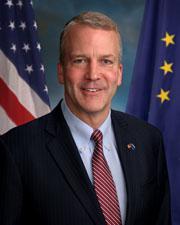
U.S. Senator for Alaska
Republican
Senate term end not loaded yet
Missed 3.1% of roll calls. Chamber median 2.1%.
The full voting recordCounts roll calls where most Democrats and most Republicans voted differently, leaving out procedural votes.
How we countFrom FEC filings, Voteview roll calls and Congress.gov.
Republican. In Congress since 2015, 2 terms in total.
Following saves Sullivan to your list, which Chamber & Street keeps on its server, linked to a cookie on this browser and not to your name or email. Email alerts will come with constituent verification.
Bills and resolutions Sullivan signed on to as a cosponsor. An original cosponsor signed on the day the bill was introduced. Source: govinfo bill status files, last updated Nov 6, 2026.
ENABLE Act
Sponsor Eric Schmitt (R). Original cosponsor. 16 cosponsors. S. 627 on Congress.gov
Introduced
A resolution calling on the United Kingdom, France, and Germany (E3) to initiate the snapback of sanctions on Iran under United Nations Security Council Resolution 2231 (2015).
Sponsor Pete Ricketts (R). Original cosponsor. 19 cosponsors. S.Res. 81 on Congress.gov(opens in a new tab)
Introduced
The resolution urges the E3 (the United Kingdom, France, and Germany) to invoke the snapback of United Nations (UN) sanctions against Iran under UN Security Council Resolution 2231 before the option expires on October 18, 2025.
This resolution also (1) recognizes that Iran's possession of a nuclear weapon would threaten U.S. and global security, (2) condemns Iran's repeated violations of certain international commitments related to nuclear weapons, and (3) reaffirms that the United States maintains the right to prevent Iran from acquiring nuclear weapons.
A bill to designate a mountain in the State of Alaska as Denali.
Sponsor Lisa Murkowski (R). Original cosponsor. 4 cosponsors. S. 573 on Congress.gov(opens in a new tab)
Introduced
Maritime Fuel Tax Parity Act
Sponsor Lisa Murkowski (R). Original cosponsor. 2 cosponsors. S. 549 on Congress.gov(opens in a new tab)
Introduced
Protecting Access for Hunters and Anglers Act of 2025
Sponsor Steve Daines (R). Original cosponsor. 36 cosponsors. S. 537 on Congress.gov(opens in a new tab)
Introduced
Protecting Access for Hunters and Anglers Act of 2025
This bill bars the Fish and Wildlife Service (FWS), the Bureau of Land Management (BLM), and the Forest Service from prohibiting or regulating the use of lead ammunition or tackle on federal land or water. The bill makes exceptions for specified existing regulations and where the FWS, the BLM, or the Forest Service determines that a decline in wildlife population at the specific unit of federal land or water is primarily caused by the use of lead in ammunition or tackle, based on the field data from such unit, and the state approves the regulations.
Coast Guard Authorization Act of 2025
Sponsor Ted Cruz (R). Original cosponsor. 3 cosponsors. S. 524 on Congress.gov(opens in a new tab)
Passed the Senate
Filipino Veterans Family Reunification Act of 2025
Sponsor Mazie Hirono (D). Original cosponsor. 12 cosponsors. S. 461 on Congress.gov(opens in a new tab)
Introduced
Filipino Veterans Family Reunification Act of 2025
This bill exempts from immigrant visa limitations the children of certain individuals who were naturalized due to their military service during World War II. Specifically, this applies to the children of veterans who served honorably during World War II in the U.S. Armed Forces or in Filipino military units such as the Philippine Army, Philippine Scouts, or recognized guerilla units.
Flight 293 Remembrance Act
Sponsor Patty Murray (D). Original cosponsor. 1 cosponsor. S. 411 on Congress.gov(opens in a new tab)
Introduced
Flight 293 Remembrance Act
This bill requires the Department of Defense (DOD) to identify and publish information related to non-combat military plane crashes and provide support to families of members of the Armed Forces who die in such crashes.
Specifically, DOD must identify and document all non-combat military plane crashes categorized as Operational Loss/Non-War Loss. Further, DOD must develop and maintain a public database of the names, ranks, and service details of all members of the Armed Forces who died in such crashes.
DOD must also provide assistance to the families of members of the Armed Forces who have died in non-combat crashes by (1) ensuring the families are aware of and have access to DOD benefits, resources, and support services; (2) offering personalized guidance on navigating and applying for such benefits, resources, and support services; and (3) connecting those families with community and peer support networks.
Additionally, DOD must establish a designated point of contact for such families to guide them through the benefits process, provide certain updates, and liaise with relevant agencies or organizations to ensure coordinated assistance.
The bill prohibits discrimination on the basis of disability, sex, race, color, or national origin in the provision of assistance and services under this bill.
A resolution recognizing the 80th anniversary of the amphibious landing on the Japanese island of Iwo Jima during World War II and the raisings of the flag of the United States on Mount Suribachi.
Sponsor Todd Young (R). Original cosponsor. 38 cosponsors. S.Res. 53 on Congress.gov(opens in a new tab)
Passed the Senate
This resolution recognizes the 80th anniversary of the amphibious landing of U.S. troops on the Japanese island of Iwo Jima in 1945 and commemorates the historic raising of the U.S. flag on Mount Suribachi that occurred on February 23, 1945. Additionally, the resolution recognizes the 250th year since the founding of the U.S. Marine Corps and the U.S. Navy.
Fair Access to Banking Act
Sponsor Kevin Cramer (R). Original cosponsor. 47 cosponsors. S. 401 on Congress.gov(opens in a new tab)
Introduced
Fair Access to Banking Act
This bill places restrictions on certain banks, credit unions, and payment card networks if they refuse to do business with a person who complies with the law. Restrictions include prohibiting the use of electronic funds transfer systems and lending programs, termination of an institution's depository insurance, and specified civil penalties.
Banks and other specified financial institutions are allowed to deny financial services to a person only if the denial is justified by a documented failure of that person to meet quantitative, impartial, risk-based standards established in advance by the institution. This justification may not be based upon reputational risks to the institution.
The bill establishes the right for a person to bring a civil action for a violation of this bill.
JOBS Act of 2025
Sponsor Timothy Kaine (D). Original cosponsor. 41 cosponsors. S. 383 on Congress.gov(opens in a new tab)
Introduced
Jumpstart Our Businesses by Supporting Students Act of 2025 or the JOBS Act of 2025
This bill expands student eligibility for Pell Grants by establishing the Job Training Federal Pell Grant program.
Specifically, the bill requires the Department of Education to award a job training Pell Grant to a student who does not have a degree; attends an institution of higher education (IHE); is enrolled in a career and technical education program at an IHE that provides 150 to 600 clock hours of instructional time over a period of 8 to 15 weeks and provides training aligned with high-skill, high-wage, or in-demand industry sectors (i.e., job training programs); and meets all other eligibility requirements for a Pell Grant.
The bill also specifies that any period during which a student receives a job training Pell Grant counts toward that student's Pell Grant eligibility period.
Secure Rural Schools Reauthorization Act of 2025
Sponsor Mike Crapo (R). Original cosponsor. 28 cosponsors. S. 356 on Congress.gov(opens in a new tab)
Became law
Secure Rural Schools Reauthorization Act of 2025
This act extends and modifies the Secure Rural Schools (SRS) program, under which states and counties containing certain federal land may receive payments from the Forest Service or the Bureau of Land Management (BLM) for schools, roads, and certain other municipal services.
The act modifies the SRS program, including by
• extending payments made to states and counties containing federal land through FY2026,
• providing lapsed payments for FY2024 and FY2025,
• extending the authority of counties to initiate projects using such funds through FY2028, and
• extending the authority to initiate projects proposed by resource advisory committees through FY2028.
ANCHOR Act
Sponsor Alex Padilla (D). Original cosponsor. 1 cosponsor. S. 318 on Congress.gov(opens in a new tab)
Passed the Senate
Accelerating Networking, Cyberinfrastructure, and Hardware for Oceanic Research Act or the ANCHOR Act
This bill requires the National Science Foundation (NSF) to develop a plan to improve the cybersecurity and telecommunications capabilities of the U.S. Academic Research Fleet (ARF).
ARF is comprised of U.S.-flagged vessels that provide at-sea laboratories where oceanographic scientists, educators, and students research and learn about marine science.
The bill requires the plan to include assessments of
• telecommunications and networking needs of ARF, consistent with typical scientific missions;
• cybersecurity needs appropriate for the ownership of ARF vessels and their typical research functions;
• the costs necessary to meet these needs; and
• the time required to implement necessary upgrades.
The plan must also include (1) a spending plan for the NSF, the Office of Naval Research, nonfederal owners of ARF vessels, and users of the vessels to cover identified costs; and (2) a proposal regarding the adoption of common solutions or consortial licensing agreements, or the centralization of cybersecurity, telecommunications, or data management at a single facility.
Among other factors specified in the bill, the NSF must consider the network capabilities necessary to meet mission needs (e.g., to upload data to shoreside servers), international standards and guidance for information security, and requirements for controlled unclassified or classified information.
The plan must be provided to Congress within one year of the bill's enactment.
AM Radio for Every Vehicle Act of 2025
Sponsor Edward Markey (D). Original cosponsor. 60 cosponsors. S. 315 on Congress.gov(opens in a new tab)
Passed committee
AM Radio for Every Vehicle Act of 2025
This bill requires the Department of Transportation (DOT) to issue a rule requiring AM radio capabilities to be standard in all new passenger vehicles. (AM radio is often used to deliver emergency alerts and news and entertainment programming; some newer vehicles do not include AM equipment.)
Specifically, this bill applies to passenger vehicles (1) manufactured in the United States for sale in the United States, imported into the United States, or shipped in interstate commerce; and (2) manufactured after the rule's effective date. The rule must require all such vehicles to have devices that can receive signals and play content transmitted by AM stations or digital audio AM stations installed as standard equipment and made easily accessible to drivers.
Prior to the rule's effective date, manufacturers that do not include devices that can access AM radio as standard equipment (1) must inform purchasers of this fact through clear and conspicuous labeling, and (2) may not charge an additional or separate fee for AM radio access.
DOT may assess civil penalties for any violation of the rule. The Department of Justice may also bring a civil action to enjoin a violation.
DOT’s authority to issue the rule expires 10 years after the bill’s enactment.
Further, the Government Accountability Office must study and report on the dissemination of emergency alerts to the public, including by conducting an assessment of AM broadcast stations relative to other Integrated Public Alert and Warning System communication technologies.
Fire Ready Nation Act of 2025
Sponsor Maria Cantwell (D). Original cosponsor. 8 cosponsors. S. 306 on Congress.gov(opens in a new tab)
Passed the Senate
Fire Ready Nation Act of 2025
This bill provides statutory authority for existing wildfire response services of the National Oceanic and Atmospheric Administration (NOAA), and establishes new programs and collaborative efforts to improve fire forecasting and readiness.
Specifically, in addition to other efforts, the bill directs NOAA to
• establish a coordinated fire weather services program to support readiness for and responsiveness to wildfires, fire weather, smoke, post-fire flooding and debris, and related hazards;
• develop a digital presence to promote access to and use of the services, tools, data, and information produced by the fire weather services program;
• establish a fire weather test bed to facilitate the evaluation and implementation of new capabilities, including through research and development on the use of uncrewed aircraft systems (commonly known as drones) to improve data collection;
• conduct an annual assessment after the close of fire weather season to investigate data gaps and update systems as needed;
• evaluate and update, as appropriate, the Automated Surface Observing System (the primary surface weather network in the United States) and the system used to rate the risk of wildfire; and
• establish an Incident Meteorologist Service within the National Weather Service to provide on-site support before, during, and after significant weather-related events.
The bill also exempts federal wildland firefighters, fire management response officials, and accompanying incident meteorologists and management teams from certain premium pay limitations.
Finally, the bill directs the Government Accountability Office to evaluate and report on the implementation of the fire weather services program, among other topics.
Southern Mongolian Human Rights Policy Act
Sponsor Jeff Merkley (D). Original cosponsor. 1 cosponsor. S. 288 on Congress.gov(opens in a new tab)
Introduced
Sarah's Law
Sponsor Joni Ernst (R). Joined Jan 28, 2025. 34 cosponsors. S. 84 on Congress.gov(opens in a new tab)
Introduced
Sarah's Law
This bill requires U.S. Immigration and Customs Enforcement (ICE) to detain a non-U.S. national (alien under federal law) who is unlawfully present in the United States and has been charged with a crime that resulted in the death or serious bodily injury of another person.
ICE must make reasonable efforts to obtain information about the identity of any victims of the crimes for which the detained individual was charged or convicted. ICE shall provide the victim, or a relative or guardian of a deceased victim, with information about the detained individual, including name, date of birth, nationality, immigration status, criminal history, and a description of any related removal efforts.
A joint resolution providing for congressional disapproval under chapter 8 of title 5, United States Code, of the rule submitted by the Department of Energy relating to "Energy Conservation Program: Energy Conservation Standards for Consumer Gas-fired Instantaneous Water Heaters".
Sponsor Ted Cruz (R). Original cosponsor. 14 cosponsors. S.J.Res. 4 on Congress.gov(opens in a new tab)
Passed committee
This joint resolution nullifies the rule titled Energy Conservation Program: Energy Conservation Standards for Consumer Gas-fired Instantaneous Water Heaters and submitted by the Department of Energy (DOE) on December 26, 2024. Under the rule, DOE adopted amended energy conservation standards for gas-fired instantaneous water heaters to achieve the maximum improvement in energy efficiency that DOE determined was technologically feasible and economically justified.
Promoting Domestic Energy Production Act
Sponsor James Lankford (R). Original cosponsor. 18 cosponsors. S. 224 on Congress.gov(opens in a new tab)
Introduced
Promoting Domestic Energy Production Act
This bill allows corporations to reduce their adjusted financial statement income to account for certain intangible costs related to oil, gas, or geothermal well drilling and development for purposes of calculating the corporate alternative minimum tax.
Under current law, a 15% corporate alternative minimum tax is imposed on a corporation with adjusted financial statement income exceeding an average of $1 billion for a consecutive three-year period (or an average of $100 million for a U.S. corporation that is part of a foreign parent multinational group if the adjusted financial statement income of such group exceeds an average of $1 billion for a consecutive three-year period). Adjusted financial statement income generally is the net income or loss reported on the corporation’s applicable financial statement for a tax year, with adjustments for specific items.
This bill expands the reductions that may be made to a corporation’s adjusted financial statement income to include (1) intangible drilling and development costs incurred by an operator of a domestic oil, gas, or geothermal well that are allowed as a deduction in the current tax year when computing regular taxable income; and (2) any depletion expenses related to the intangible oil, gas, or geothermal well drilling and development costs.
Main Street Tax Certainty Act
Sponsor Steve Daines (R). Original cosponsor. 45 cosponsors. S. 213 on Congress.gov(opens in a new tab)
Introduced
Main Street Tax Certainty Act
This bill makes permanent the qualified business income (QBI) tax deduction.
Under current law, individuals, estates, and trusts may deduct the lower of (1) 20% of QBI from a qualified business, qualified real estate investment trust dividends, and qualified publicly traded partnership income; or (2) 20% of taxable income less net capital gain. (Some limitations apply.)
However, under current law, the QBI tax deduction expires after December 31, 2025.
Natural Gas Tax Repeal Act
Sponsor Ted Cruz (R). Joined Jan 23, 2025. 17 cosponsors. S. 143 on Congress.gov(opens in a new tab)
Introduced
Natural Gas Tax Repeal Act
This bill eliminates a program administered by the Environmental Protection Agency that provides support for reducing methane emissions from the oil and gas sector. It also repeals a charge on methane emissions from facilities that contain petroleum and natural gas systems and emit 25,000 metric tons or more of greenhouse gases per year.
No Taxpayer Funding for Abortion and Abortion Insurance Full Disclosure Act of 2025
Sponsor Roger Wicker (R). Original cosponsor. 50 cosponsors. S. 186 on Congress.gov(opens in a new tab)
Introduced
No Taxpayer Funding for Abortion and Abortion Insurance Full Disclosure Act of 2025
This bill modifies provisions relating to federal funding for, and health insurance coverage of, abortions.
Specifically, the bill prohibits the use of federal funds for abortions or for health coverage that includes abortions. Such restrictions extend to the use of funds in the budget of the District of Columbia. Additionally, abortions may not be provided in a federal health care facility or by a federal employee.
Historically, language has been included in annual appropriations bills for the Department of Health and Human Services (HHS) that prohibits the use of federal funds for abortions—such language is commonly referred to as the Hyde Amendment. Similar language is also frequently included in appropriations bills for other federal agencies and the District of Columbia. The bill makes these restrictions permanent and extends the restrictions to all federal funds (rather than specific agencies).
The bill's restrictions regarding the use of federal funds do not apply in cases of rape, incest, or where a physical disorder, injury, or illness endangers a woman's life unless an abortion is performed. The Hyde Amendment provides the same exceptions.
The bill also prohibits qualified health plans from including coverage for abortions. Currently, qualified health plans may cover abortion, but the portion of the premium attributable to abortion coverage is not eligible for subsidies.
Child Care Workforce and Facilities Act of 2025
Sponsor Amy Klobuchar (D). Original cosponsor. 7 cosponsors. S. 169 on Congress.gov(opens in a new tab)
Introduced
Child Care Workforce and Facilities Act of 2025
This bill requires the Department of Health and Human Services to provide states and tribal entities with grants to increase access to licensed child care services.
The grants may be used to develop and expand the child care workforce or child care facilities in locations with insufficient available child care. Specifically, grants cover 50% of the cost of programs to support the education and training of caregivers or projects to build, expand, or renovate child care facilities in these areas.
Fire Suppression and Response Funding Assurance Act
Sponsor Alex Padilla (D). Original cosponsor. 5 cosponsors. S. 133 on Congress.gov(opens in a new tab)
Introduced
SAVE Act
Sponsor Mike Lee (R). Original cosponsor. 49 cosponsors. S. 128 on Congress.gov(opens in a new tab)
Introduced
Safeguard American Voter Eligibility Act or the SAVE Act
This bill requires individuals to provide documentary proof of U.S. citizenship when registering to vote in federal elections.
Specifically, the bill prohibits states from accepting and processing an application to register to vote in a federal election unless the applicant presents documentary proof of U.S. citizenship. The bill specifies what documents are considered acceptable proof of U.S. citizenship, such as identification that complies with the REAL ID Act of 2005 that indicates U.S. citizenship.
Further, the bill (1) prohibits states from registering an individual to vote in a federal election unless, at the time the individual applies to register to vote, the individual provides documentary proof of U.S. citizenship; and (2) requires states to establish an alternative process under which an applicant may submit other evidence to demonstrate U.S. citizenship.
Each state must take affirmative steps on an ongoing basis to ensure that only U.S. citizens are registered to vote, which shall include establishing a program to identify individuals who are not U.S. citizens using information supplied by certain sources.
Additionally, states must remove noncitizens from their official lists of eligible voters.
The bill allows for a private right of action against an election official who registers an applicant to vote in a federal election who fails to present documentary proof of U.S. citizenship.
The bill establishes criminal penalties for certain offenses, including registering an applicant to vote in a federal election who fails to present documentary proof of U.S. citizenship.