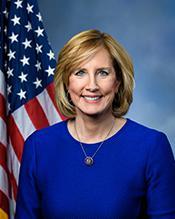
U.S. Representative for New York’s 24th district
Republican
119th Congress, two-year term
Missed 0.7% of roll calls. Chamber median 1.9%.
The full voting recordCounts roll calls where most Democrats and most Republicans voted differently, leaving out procedural votes.
How we countFrom FEC filings, Voteview roll calls and Congress.gov.
Republican. In Congress since 2017, 4 terms in total.
Following saves Tenney to your list, which Chamber & Street keeps on its server, linked to a cookie on this browser and not to your name or email. Email alerts will come with constituent verification.
Bills and resolutions Tenney signed on to as a cosponsor. An original cosponsor signed on the day the bill was introduced. Source: govinfo bill status files, last updated Nov 6, 2026.
Small Business Growth Act
Sponsor Blake Moore (R). Original cosponsor. 8 cosponsors. H.R. 354 on Congress.gov
Introduced
Border Wall Waste Accountability Act
Sponsor Beth Van Duyne (R). Original cosponsor. 7 cosponsors. H.R. 326 on Congress.gov(opens in a new tab)
Introduced
Border Wall Waste Accountability Act
This bill requires the Government Accountability Office to report to Congress on the total cost of unused construction materials that were obtained for construction of a U.S.-Mexico border wall from January 20, 2021, through January 20, 2025.
Justice for 9/11 Act
Sponsor Michael Lawler (R). Original cosponsor. 10 cosponsors. H.R. 296 on Congress.gov(opens in a new tab)
Introduced
Justice for 9/11 Act
This bill provides that any plea agreement entered into by Khalid Shaikh Mohammad, Walid Muhammad Salih Mubarak Bin ‘Attash, or Mustafa Ahmed Adam al Hawsawi for actions involving the terrorist attack on September 11, 2001, and its related judgment must not preclude the trial of such individuals under other provisions of law for that attack. In any trial of such individuals, the death penalty must be available.
In the case of any sentence imposed on Khalid Shaikh Mohammad, Walid Muhammad Salih Mubarak Bin ‘Attash, or Mustafa Ahmed Adam al Hawsawi, the individual must (1) be held at U.S. Naval Station, Guantanamo Bay, Cuba, in solitary confinement; (2) not be provided contact with foreign nationals; (3) not be provided with psychological treatment except that specifically authorized by medical authorities at Guantanamo Bay; and (4) not be transferred to the continental United States or any other country.
Fair Milk Pricing for Farmers Act
Sponsor Nicholas Langworthy (R). Original cosponsor. 17 cosponsors. H.R. 295 on Congress.gov(opens in a new tab)
Introduced
Fair Milk Pricing for Farmers Act
This bill requires manufacturers to report production cost and product yield information for all dairy products processed in the same facility or facilities to the Department of Agriculture (USDA) Dairy Product Mandatory Reporting Program. Further, USDA must publish a report containing the information obtained under these new requirements and publish a report every two years thereafter.
As background, under the Dairy Product Mandatory Reporting Program, USDA must collect certain dairy product sales information from manufacturers and release the data on a weekly basis.
GLRI Act of 2025
Sponsor David Joyce (R). Original cosponsor. 44 cosponsors. H.R. 284 on Congress.gov(opens in a new tab)
Introduced
Great Lakes Restoration Initiative Act of 2025 or the GLRI Act of 2025
This bill reauthorizes through FY2031 the Great Lakes Restoration Initiative, which carries out programs and projects to protect and restore the Great Lakes.
Panama Canal Repurchase Act of 2025
Sponsor Dusty Johnson (R). Original cosponsor. 29 cosponsors. H.R. 283 on Congress.gov(opens in a new tab)
Introduced
Panama Canal Repurchase Act of 2025
This bill authorizes the President to negotiate with the appropriate Panamanian government officials to reacquire the Panama Canal. The President must submit a report to Congress within 180 days of enactment detailing the progress of such negotiations, potential challenges, and anticipated outcomes.
Protection of Women and Girls in Sports Act of 2025
Sponsor W. Steube (R). Joined Jan 9, 2025. 83 cosponsors. H.R. 28 on Congress.gov(opens in a new tab)
Passed the House
Protection of Women and Girls in Sports Act of 2025
This bill generally prohibits school athletic programs from allowing individuals whose biological sex at birth was male to participate in programs that are for women or girls.
Specifically, the bill provides that it is a violation of Title IX of the Education Amendments of 1972 for federally funded education programs or activities to operate, sponsor, or facilitate athletic programs or activities that allow individuals of the male sex to participate in programs or activities that are designated for women or girls. (Title IX prohibits discrimination on the basis of sex in federally funded education programs or activities, including in public elementary and secondary schools and in colleges and universities.) Under the bill, sex is based on an individual's reproductive biology and genetics at birth.
The bill does not prohibit male individuals from training or practicing with programs or activities for women or girls as long as such training or practice does not deprive any female of corresponding opportunities or benefits.
The Government Accountability Office must report on the benefits for women or girls in single-sex sports that would be lost as a result of male participation. In particular, the report must document the negative psychological, developmental, participatory, and sociological effects of male participation on girls.
Gulf of America Act
Original cosponsor. 17 cosponsors. H.R. 276 on Congress.gov(opens in a new tab)
Progress not on file
Gulf of America Act of 2025
This bill renames the Gulf of Mexico as the Gulf of America and directs federal agencies to update their documents and maps to incorporate the new name.
REMAIN in Mexico Act of 2025
Sponsor Brandon Gill (R). Original cosponsor. 110 cosponsors. H.R. 273 on Congress.gov(opens in a new tab)
Introduced
Return Excessive Migrants and Asylees to International Neighbors in Mexico Act of 2025 or the REMAIN in Mexico Act of 2025
This bill requires the Department of Homeland Security (DHS) to implement the Migrant Protection Protocols as outlined in the January 25, 2019, memo titled Policy Guidance for Implementation of the Migrant Protection Protocols.
(The protocols generally required aliens who are not clearly admissible, including those seeking asylum, arriving by land along the U.S.-Mexico border to be returned to Mexico while their immigration proceedings are pending, rather than remain in the United States. On January 21, 2021, DHS stopped applying the protocols to newly-arrived individuals.)
Protecting Life and Taxpayers Act of 2025
Sponsor Michelle Fischbach (R). Original cosponsor. 45 cosponsors. H.R. 272 on Congress.gov(opens in a new tab)
Introduced
Protecting Life and Taxpayers Act of 2025
This bill requires entities receiving federal funds to certify that they will not, subject to certain exceptions, perform abortions or provide funding to other entities that perform abortions.
The bill provides exceptions for abortions performed in cases of rape or incest or when necessary to resolve a physical condition that endangers a woman's life.
Defund Planned Parenthood Act of 2025
Sponsor Michelle Fischbach (R). Original cosponsor. 60 cosponsors. H.R. 271 on Congress.gov(opens in a new tab)
Introduced
Defund Planned Parenthood Act of 2025
This bill restricts federal funding for Planned Parenthood Federation of America, Inc. or any of its affiliates or clinics for one year.
Specifically, it prohibits providing federal funding to those entities unless they certify that the affiliates and clinics will not perform, and will not provide funds to entities that perform, abortions during that year. If the certification requirement is not met, the Department of Health and Human Services and the Department of Agriculture must recoup any federal assistance received by those entities.
However, the bill's funding restriction does not apply to abortions performed in cases of rape or incest or when necessary to resolve a physical condition that endangers a woman's life.
The bill also provides additional funding for community health centers for the one-year period. These funds are subject to the same abortion-related restrictions and exceptions.
No Tax Dollars for Terrorists Act
Sponsor Tim Burchett (R). Original cosponsor. 27 cosponsors. H.R. 260 on Congress.gov(opens in a new tab)
Passed the House
No Tax Dollars for Terrorists Act
This bill requires the Department of State to develop and implement a strategy to discourage foreign countries and nongovernmental organizations from providing financial or material support to the Taliban, including by using U.S.-provided foreign assistance to discourage countries and organizations from providing such support to the Taliban.
The State Department must report to Congress on (1) foreign countries and nongovernmental organizations that have provided financial or material support to the Taliban and U.S. efforts to oppose such support; (2) the strategy to discourage such support and a plan for the strategy's implementation; (3) U.S.-funded direct cash assistance programs in Afghanistan; and (4) the Afghan Fund, including Taliban influence over Da Afghanistan Bank (the Afghan central bank).
Born-Alive Abortion Survivors Protection Act
Sponsor Ann Wagner (R). Joined Jan 7, 2025. 163 cosponsors. H.R. 21 on Congress.gov(opens in a new tab)
Passed the House
Born-Alive Abortion Survivors Protection Act
This bill establishes requirements for the degree of care a health care practitioner must provide in the case of a child born alive following an abortion or attempted abortion.
Specifically, a health care practitioner who is present must (1) exercise the same degree of care as would reasonably be provided to any other child born alive at the same gestational age, and (2) ensure the child is immediately admitted to a hospital. Additionally, a health care practitioner or other employee who has knowledge of a failure to comply with the degree-of-care requirements must immediately report such failure to law enforcement.
A health care practitioner who fails to provide the required degree of care, or a health care practitioner or other employee who fails to report such failure, is subject to criminal penalties—a fine, up to five years in prison, or both.
An individual who intentionally kills or attempts to kill a child born alive is subject to prosecution for murder.
The bill bars the criminal prosecution of a mother of a child born alive under this bill and allows her to bring a civil action against a health care practitioner or other employee for violations.
To amend the Internal Revenue Code of 1986 to provide special rules for the taxation of certain residents of Taiwan with income from sources within the United States.
Sponsor Jason Smith (R). Joined Jan 6, 2025. 46 cosponsors. H.R. 33 on Congress.gov(opens in a new tab)
Passed the House
WHO Withdrawal Act
Sponsor Andy Biggs (R). Original cosponsor. 22 cosponsors. H.R. 54 on Congress.gov(opens in a new tab)
Introduced
WHO Withdrawal Act
This bill requires the President to immediately withdraw the United States from the World Health Organization (WHO) and prohibits using any federal funds to provide for U.S. participation in the WHO.
The bill also repeals the 1948 act authorizing the United States to join the WHO.
FIND Act
Sponsor Jack Bergman (R). Original cosponsor. 154 cosponsors. H.R. 45 on Congress.gov(opens in a new tab)
Introduced
Firearm Industry Non-Discrimination Act or the FIND Act
This bill prohibits the federal government from entering into contracts with an entity that discriminates against firearm trade associations or businesses that deal in firearms, ammunition, or related products.
Specifically, the bill requires a federal agency to include in each contract for the procurement of goods or services awarded by the agency a clause requiring the prime contractor to certify that it (1) has no policy, practice, guidance, or directive that discriminates against a firearm entity or firearm trade association; and (2) will not adopt a policy, practice, guidance, or directive that discriminates against a firearm entity or firearm trade association during the term of the contract.
The bill establishes (1) a similar requirement with respect to subcontracts, and (2) penalties for violations.
The bill makes such prohibition inapplicable to a contract for the procurement of goods or services that is a sole-source contract.
Constitutional Concealed Carry Reciprocity Act of 2025
Sponsor Richard Hudson (R). Original cosponsor. 189 cosponsors. H.R. 38 on Congress.gov(opens in a new tab)
Introduced
Constitutional Concealed Carry Reciprocity Act
This bill establishes a federal statutory framework to regulate the carry or possession of concealed firearms across state lines.
Specifically, an individual who is eligible to carry a concealed firearm in one state may carry or possess a concealed handgun (other than a machine gun or destructive device) in another state that allows its residents to carry concealed firearms.
It sets forth requirements for lawful concealed carry across state lines. The bill preempts most state and local laws related to concealed carry and establishes a private right of action for a person adversely affected by interference with a concealed-carry right established by this bill.
Agent Raul Gonzalez Officer Safety Act
Sponsor Juan Ciscomani (R). Original cosponsor. 32 cosponsors. H.R. 35 on Congress.gov(opens in a new tab)
Passed the House
Agent Raul Gonzalez Officer Safety Act
This bill establishes new federal criminal offenses for operating a motor vehicle within 100 miles of the U.S. border while fleeing from a U.S. Border Patrol agent or a federal, state, or local law enforcement officer who is actively assisting or under the command of the U.S. Border Patrol.
The bill establishes criminal penalties for an offense, including a mandatory minimum prison term for an offense resulting in death or serious bodily injury. Additionally, a non-U.S. national who is convicted of or admits to committing an offense is inadmissible, deportable, and ineligible for immigration relief (including asylum).
POLICE Act of 2025
Sponsor Andrew Garbarino (R). Original cosponsor. 20 cosponsors. H.R. 31 on Congress.gov(opens in a new tab)
Introduced
Protect Our Law enforcement with Immigration Control and Enforcement Act of 2025 or the POLICE Act of 2025
This bill makes assaulting a law enforcement officer, firefighter, or other first responder a deportable offense.
Specifically, the bill makes deportable any non-U.S. national (alien under federal law) who has been convicted of (or admits to have committed) any act that constitutes the essential elements of any offense involving assault of a law enforcement officer, firefighter, or other first responder.
The Department of Homeland Security must publish annually on its website a report on the number of individuals deported in the previous year pursuant to this bill.
Preventing Violence Against Women by Illegal Aliens Act
Sponsor Nancy Mace (R). Original cosponsor. 60 cosponsors. H.R. 30 on Congress.gov(opens in a new tab)
Passed the House
Preventing Violence Against Women by Illegal Aliens Act
This bill establishes certain criminal grounds for making non-U.S. nationals (aliens under federal law) inadmissible and expands the crimes for which a non-U.S. national is deportable.
First, the bill establishes that a non-U.S. national is inadmissible if the individual has admitted to or is convicted of acts constituting the essential elements of stalking, child abuse, child neglect, child abandonment, a sex offense, conspiracy to commit a sex offense, a violation of certain protection orders, or domestic violence (including physical or sexual abuse or a pattern of coercive behavior when it occurs within certain close relationships).
Next, the bill establishes additional grounds for deportation. Under current law, a non-U.S. national is deportable for certain criminal convictions, including domestic violence, stalking, and child abuse. The bill makes any sex offense (including crimes against minors) or conspiracy to commit a sex offense a basis for deportation. The bill also expands the domestic violence crimes that make a non-U.S. national deportable to include physical or sexual abuse or a pattern of coercive behavior when it occurs within certain close relationships.
Laken Riley Act
Sponsor Mike Collins (R). Original cosponsor. 54 cosponsors. H.R. 29 on Congress.gov(opens in a new tab)
Passed the House
Laken Riley Act
This bill requires the Department of Homeland Security (DHS) to detain certain non-U.S. nationals (aliens under federal law) who have been arrested for burglary, theft, larceny, or shoplifting. The bill also authorizes states to sue the federal government for decisions or alleged failures related to immigration enforcement.
Under this bill, DHS must detain an individual who (1) is unlawfully present in the United States or did not possess the necessary documents when applying for admission; and (2) has been charged with, arrested for, convicted of, or admits to having committed acts that constitute the essential elements of burglary, theft, larceny, or shoplifting.
The bill also authorizes state governments to sue for injunctive relief over certain immigration-related decisions or alleged failures by the federal government if the decision or failure caused the state or its residents harm, including financial harm of more than $100. Specifically, the state government may sue the federal government over a
• decision to release a non-U.S. national from custody;
• failure to fulfill requirements relating to inspecting individuals seeking admission into the United States, including requirements related to asylum interviews;
• failure to fulfill a requirement to stop issuing visas to nationals of a country that unreasonably denies or delays acceptance of nationals of that country;
• violation of limitations on immigration parole, such as the requirement that parole be granted only on a case-by-case basis; or
• failure to detain an individual who has been ordered removed from the United States.
Federal Reserve Transparency Act of 2025
Sponsor Thomas Massie (R). Original cosponsor. 46 cosponsors. H.R. 24 on Congress.gov(opens in a new tab)
Introduced
Federal Reserve Transparency Act of 2025
This bill directs the Government Accountability Office (GAO) to complete, within 12 months, an audit of the Federal Reserve Board and Federal Reserve banks. In addition, the bill allows the GAO to audit the Federal Reserve Board and Federal Reserve banks with respect to (1) international financial transactions; (2) deliberations, decisions, or actions on monetary policy matters; (3) transactions made under the direction of the Federal Open Market Committee; and (4) discussions or communications among Federal Reserve officers, board members, and employees regarding any of these matters.
Illegitimate Court Counteraction Act
Sponsor Chip Roy (R). Original cosponsor. 38 cosponsors. H.R. 23 on Congress.gov(opens in a new tab)
Passed the House
Illegitimate Court Counteraction Act
This bill imposes sanctions against foreign persons (individuals and entities) who assist the International Criminal Court (ICC) in investigating, arresting, detaining, or prosecuting certain individuals.
The bill categorizes as protected persons (1) any U.S. individual, U.S. entity, or person in the United States, unless the United States is a state party to the Rome Statute of the ICC and provides formal consent to ICC jurisdiction; and (2) any foreign person that is a citizen or lawful resident of a U.S. ally that is not a state party to the Rome Statute or has not consented to ICC jurisdiction.
If the ICC attempts to investigate, arrest, detain or prosecute a protected person, the President must impose visa- and property-blocking sanctions against the foreign persons that engaged in or materially assisted in such actions, as well as against foreign persons owned by, controlled by, or acting on behalf of such foreign persons. The President must also apply visa-blocking sanctions to the immediate family members of those sanctioned.
Upon enactment, the bill rescinds all funds appropriated for the ICC and prohibits the subsequent use of appropriated funds for the ICC.
SAVE Act
Sponsor Chip Roy (R). Original cosponsor. 110 cosponsors. H.R. 22 on Congress.gov(opens in a new tab)
Passed the House
Safeguard American Voter Eligibility Act or the SAVE Act
This bill requires individuals to provide documentary proof of U.S. citizenship when registering to vote in federal elections.
Specifically, the bill prohibits states from accepting and processing an application to register to vote in a federal election unless the applicant presents documentary proof of U.S. citizenship. The bill specifies what documents are considered acceptable proof of U.S. citizenship, such as identification that complies with the REAL ID Act of 2005 that indicates U.S. citizenship.
Further, the bill (1) prohibits states from registering an individual to vote in a federal election unless, at the time the individual applies to register to vote, the individual provides documentary proof of U.S. citizenship; and (2) requires states to establish an alternative process under which an applicant may submit other evidence to demonstrate U.S. citizenship.
Each state must take affirmative steps on an ongoing basis to ensure that only U.S. citizens are registered to vote, which shall include establishing a program to identify individuals who are not U.S. citizens using information supplied by certain sources.
Additionally, states must remove noncitizens from their official lists of eligible voters.
The bill allows for a private right of action against an election official who registers an applicant to vote in a federal election who fails to present documentary proof of U.S. citizenship.
The bill establishes criminal penalties for certain offenses, including registering an applicant to vote in a federal election who fails to present documentary proof of U.S. citizenship.
Family and Small Business Taxpayer Protection Act
Sponsor Adrian Smith (R). Original cosponsor. 36 cosponsors. H.R. 196 on Congress.gov(opens in a new tab)
Introduced
Family and Small Business Taxpayer Protection Act
This bill rescinds unobligated funds that were provided by the Inflation Reduction Act of 2022 to the Internal Revenue Service (IRS) for enforcement activities related to the determination and collection of taxes, for operations support for taxpayer services and enforcement activities, and for a task force to research options for a free, direct electronic filing (e-filing) tax return system.
The bill also rescinds unobligated funds that were provided by the Inflation Reduction Act of 2022 for expenses of the
• Treasury Inspector General for Tax Administration,
• Office of Tax Policy,
• U.S. Tax Court, and
• offices within the Department of the Treasury that provide oversight and support for the IRS.