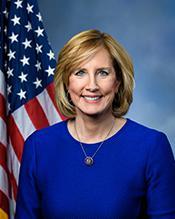
U.S. Representative for New York’s 24th district
Republican
119th Congress, two-year term
Missed 0.7% of roll calls. Chamber median 1.9%.
The full voting recordCounts roll calls where most Democrats and most Republicans voted differently, leaving out procedural votes.
How we countFrom FEC filings, Voteview roll calls and Congress.gov.
Republican. In Congress since 2017, 4 terms in total.
Following saves Tenney to your list, which Chamber & Street keeps on its server, linked to a cookie on this browser and not to your name or email. Email alerts will come with constituent verification.
Bills and resolutions Tenney signed on to as a cosponsor. An original cosponsor signed on the day the bill was introduced. Source: govinfo bill status files, last updated Nov 6, 2026.
National Law Enforcement Officers Remembrance, Support, and Community Outreach Act
Sponsor Troy Nehls (R). Joined Jan 21, 2025. 124 cosponsors. H.R. 309 on Congress.gov
Passed the House
National Law Enforcement Officers Remembrance, Support and Community Outreach Act. [sic]
This bill temporarily directs the Department of the Interior to award a grant to the National Law Enforcement Officers Memorial Fund for the expenses associated with operating and enhancing the community outreach, public education, and officer safety and wellness programs of the National Law Enforcement Museum.
No Retaining Every Gun In a System That Restricts Your Rights Act
Sponsor Michael Cloud (R). Original cosponsor. 74 cosponsors. H.R. 563 on Congress.gov(opens in a new tab)
Introduced
No Retaining Every Gun In a System That Restricts Your Rights Act
This bill modifies the retention requirements for firearm transaction records of federal firearms licensees (FFLs) that go out of business.
Current law generally requires FFLs that go out of business to deliver their firearm transaction records to the Bureau of Alcohol, Tobacco, Firearms and Explosives (ATF).
This bill removes the requirement for FFLs that go out of business to deliver their firearm transaction records to the ATF. Further, the bill requires the ATF to destroy all out-of-business records it has collected from FFLs.
Protecting Access for Hunters and Anglers Act
Sponsor Robert Wittman (R). Original cosponsor. 83 cosponsors. H.R. 556 on Congress.gov(opens in a new tab)
Passed the House
Protecting Access for Hunters and Anglers Act of 2025
This bill bars the Fish and Wildlife Service (FWS), the Bureau of Land Management (BLM), and the Forest Service from prohibiting or regulating the use of lead ammunition or tackle on federal land or water. The bill makes exceptions for specified existing regulations and where the FWS, the BLM, or the Forest Service determines that a decline in wildlife population at the specific unit of federal land or water is primarily caused by the use of lead in ammunition or tackle, based on the field data from such unit, and the state approves the regulations.
Make the Migrant Protection Protocols Mandatory Act of 2025
Sponsor Roger Williams (R). Original cosponsor. 40 cosponsors. H.R. 551 on Congress.gov(opens in a new tab)
Introduced
Make the Migrant Protection Protocols Mandatory Act of 2025
This bill requires the Department of Justice (DOJ) to remove certain non-U.S. nationals (aliens under federal law) from the United States while such an individual's application for admission is pending.
Specifically, if such an individual arrived by land from a foreign country bordering the United States and the individual is not clearly and beyond a doubt entitled to admission into the United States, DOJ must return that individual to that bordering foreign country while the individual's application for admission is pending. (Currently, DOJ may choose to detain such an individual or return the individual to the bordering foreign country while the application for admission is pending.)
CONTAINER Act
Sponsor David Rouzer (R). Original cosponsor. 9 cosponsors. H.R. 534 on Congress.gov(opens in a new tab)
Introduced
Creating Obstructions Necessary to Address Illegal and Nefarious Entry Rapidly Act or CONTAINER Act
This bill requires the Department of the Interior and the Forest Service to allow border states to place temporary, movable structures on federal lands adjacent to the U.S.-Canada and U.S.-Mexico borders without a special use authorization.
Border states may place these structures on such lands for the purpose of securing the northern or southern border for a period of not more than one year. Interior and the Forest Service must approve extension requests in 90-day increments if U.S. Customs and Border Protection determines that operational control of the border area has not been achieved.
RACE Act
Sponsor August Pfluger (R). Original cosponsor. 2 cosponsors. H.R. 529 on Congress.gov(opens in a new tab)
Introduced
Restoring American Confidence in Elections Act or the RACE Act
This bill establishes deadlines for states to count ballots and certify results in federal elections.
Specifically, the bill requires a state to finish counting the ballots cast in a federal election held in the state not later than 10:00 p.m. on the date of the election. Further, the state must certify the election results not later than 48 hours after the election.
The bill provides exceptions to these deadlines for bona fide emergencies (e.g., major disasters) or technical difficulties (e.g., malfunctioning election equipment or software).
NO GOTION Act
Sponsor John Moolenaar (R). Original cosponsor. 27 cosponsors. H.R. 524 on Congress.gov(opens in a new tab)
Introduced
No Official Giveaways Of Taxpayers’ Income to Oppressive Nations Act or the NO GOTION Act
This bill prohibits an entity that is created in, organized in, or controlled (in the aggregate) by China, Russia, Iran, or North Korea, or an entity controlled (in the aggregate) by one or more of such entities, from claiming multiple energy-related federal tax credits and incentives.
Specifically, the bill prohibits such entities from claiming the federal tax credits for
• alternative fuel vehicle refueling property,
• second-generation biofuel,
• biodiesel fuel,
• sustainable aviation fuel,
• renewable electricity production,
• carbon sequestration,
• zero-emission nuclear power production,
• clean hydrogen production,
• clean commercial vehicles,
• advanced manufacturing production,
• clean electricity production,
• clean fuel production,
• investments in energy property,
• advanced energy projects,
• clean electricity investment,
• biodiesel mixtures,
• alternative fuel, and
• alternative fuel mixtures.
Further, such entities are prohibited from claiming the federal tax deduction for energy efficient improvements to commercial buildings.
Finally, such entities are not entitled to a credit or refund of federal excise taxes paid on biodiesel, alternative fuel, or sustainable aviation fuel mixtures produced by the entities.
Permanent Tax Cuts for American Families Act of 2025
Sponsor Max Miller (R). Original cosponsor. 14 cosponsors. H.R. 523 on Congress.gov(opens in a new tab)
Introduced
Permanent Tax Cuts for American Families Act of 2025
This bill makes permanent the increased standard tax deduction amounts enacted in 2017 as part of the Tax Cuts and Jobs Act.
Under current law, the standard tax deduction consists of a statutory base amount that is adjusted annually for inflation. For tax years 2018-2025, the Tax Cuts and Jobs Act increased the standard tax deduction statutory base amounts to $24,000 (from $6,000) for joint filers, $18,000 (from $4,400) for head-of-household filers, and $12,000 (from $3,000) for single filers, which almost doubled the inflation-adjusted standard tax deduction amount for most taxpayers.
Under the bill, the increased standard tax deduction statutory base amounts of $24,000 for joint filers, $18,000 for head-of-household filers, and $12,000 for single filers are made permanent. The bill also makes permanent the annual adjustments to such amounts for inflation.
Travel Trailer and Camper Tax Parity Act
Sponsor Rudy Yakym (R). Joined Jan 16, 2025. 11 cosponsors. H.R. 332 on Congress.gov(opens in a new tab)
Introduced
Travel Trailer and Camper Tax Parity Act
This bill expands the exclusion of interest on floor plan financing from the limit on the tax deduction for business interest expenses to include interest on floor plan financing of certain non-motorized, towable campers and trailers.
Under current law, the tax deduction for business interest expenses is generally limited to 30% of adjusted taxable income. (Some exceptions apply.) However, under current law, interest on floor plan financing (financing used to acquire inventory for sale or lease) of motorized vehicles (e.g., self-propelled vehicles designed to transport people) is excluded from the limit on the tax deduction for business interest expenses.
Under the bill, the exclusion of interest on floor plan financing from the limit on the tax deduction for business interest expenses is expanded to include interest on floor plan financing of any camper or trailer designed to (1) provide temporary living quarters for recreational, camping, or seasonal use; and (2) be towed by, or affixed to, a motor vehicle.
Providing for congressional disapproval under chapter 8 of title 5, United States Code, of the rule submitted by the Department of Energy relating to "Energy Conservation Program: Energy Conservation Standards for Walk-In Coolers and Walk-In Freezers".
Sponsor Stephanie Bice (R). Original cosponsor. 10 cosponsors. H.J.Res. 24 on Congress.gov(opens in a new tab)
Became law
This joint resolution eliminates new, more stringent energy conservation standards for certain walk-in coolers and freezers, including the new limits on maximum daily energy consumption for walk-in non-display doors. Under the joint resolution, walk-in non-display doors and walk-in refrigeration systems are no longer required to comply with the new standards.
Specifically, the joint resolution nullifies the rule titled Energy Conservation Program: Energy Conservation Standards for Walk-In Coolers and Walk-In Freezers and submitted by the Department of Energy (DOE) on December 23, 2024. Under the rule, DOE adopted energy conservation standards for walk-in coolers and freezers to achieve the maximum improvement in energy efficiency that DOE determined was technologically feasible and economically justified. The rule required walk-in non-display doors to comply with those standards by December 23, 2027, and walk-in refrigeration systems to comply with them by December 31, 2028.
Concerning the National Collegiate Athletic Association policy for eligibility in women's sports.
Sponsor W. Steube (R). Original cosponsor. 14 cosponsors. H.Res. 47 on Congress.gov(opens in a new tab)
Introduced
This resolution calls on the National Collegiate Athletic Association (NCAA) to revoke its transgender student-athlete eligibility policy and urges the NCAA to require its member conferences to conform to a biological sex-based policy across all sports and all divisions.
Miracle on Ice Congressional Gold Medal Act
Sponsor Pete Stauber (R). Original cosponsor. 299 cosponsors. H.R. 452 on Congress.gov(opens in a new tab)
Became law
Miracle on Ice Congressional Gold Medal Act
This act provides for the award of Congressional Gold Medals to the members of the 1980 U.S. Olympic men's ice hockey team in recognition of the team's achievement at the 1980 Winter Olympic Games.
FAIR PREP Act of 2025
Sponsor Adrian Smith (R). Original cosponsor. 29 cosponsors. H.R. 451 on Congress.gov(opens in a new tab)
Introduced
Fostering Autonomy in Independent Returns by Prohibiting Redundant and Extralegal Programs Act of 2025 or the FAIR PREP Act of 2025
This bill prohibits the Internal Revenue Service (IRS) from preparing federal tax returns or refund claims, with some exceptions. The bill specifically prohibits the preparation of federal income tax returns or refund claims through the IRS’s Direct File program. (The Direct File program currently allows qualified taxpayers in 25 participating states to prepare and electronically file free federal tax returns through a portal on the IRS’s website.)
The bill defines prepare with respect to federal tax returns and refund claims as (1) the completion (in whole or in part) of any form or schedule for the purpose of calculating federal taxes or refunds, and (2) the filing (either electronically or on paper) of such federal tax returns or refund claims.
However, under the bill, federal and state tax returns and refund claims may be prepared through the IRS’s Free File program (a program that allows certain taxpayers to prepare and file free federal and state income tax returns using third-party tax-preparation software) or the Volunteer Income Tax Assistance grant program (through which the IRS partners with local community organizations to help low-income and disabled individuals and persons with limited English proficiency prepare and file free federal and state income tax returns).
Further, the Department of the Treasury may not award grants or enter into contracts or other transactions for the development or operation of an electronic tax preparation service.
FORCE Act
Sponsor Maria Salazar (R). Original cosponsor. 30 cosponsors. H.R. 450 on Congress.gov(opens in a new tab)
Introduced
Fighting Oppression until the Reign of Castro Ends or the FORCE Act
This bill prohibits removing Cuba from the list of state sponsors of terrorism until the President makes the determination that a transition government in Cuba is in power.
PFC Joseph P. Dwyer Peer Support Program Act
Sponsor Nick LaLota (R). Original cosponsor. 32 cosponsors. H.R. 438 on Congress.gov(opens in a new tab)
Introduced
PFC Joseph P. Dwyer Peer Support Program Act
This bill requires the Department of Veterans Affairs (VA) to establish the PFC Joseph P. Dwyer Peer Support Program to make grants to eligible entities for peer-to-peer mental health programs for veterans.
Eligible entities include (1) a nonprofit organization that has historically served the mental health needs of veterans; (2) a congressionally chartered veteran service organization; or (3) a state, local, or tribal veteran service agency, director, or commissioner.
The VA shall establish an advisory committee to create appropriate program standards.
Repealing Big Brother Overreach Act
Sponsor Warren Davidson (R). Original cosponsor. 193 cosponsors. H.R. 425 on Congress.gov(opens in a new tab)
Passed committee
Repealing Big Brother Overreach Act
This bill repeals the Corporate Transparency Act. The act requires existing companies and newly created companies to report beneficial ownership information to the Department of the Treasury’s Financial Crimes Enforcement Network for purposes of addressing the financing of terrorism and money laundering.
Hearing Protection Act
Sponsor Ben Cline (R). Original cosponsor. 151 cosponsors. H.R. 404 on Congress.gov(opens in a new tab)
Introduced
To designate the facility of the United States Postal Service located at 216 Cumberland Street in Rochester, New York, as the "Minister Franklin Florence Memorial Post Office".
Sponsor Joseph Morelle (D). Joined Jan 15, 2025. 25 cosponsors. H.R. 397 on Congress.gov(opens in a new tab)
Passed committee
This bill designates the facility of the United States Postal Service located at 216 Cumberland Street in Rochester, New York, as the "Minister Franklin Florence Memorial Post Office".
Dairy Farm Resiliency Act
Sponsor Nicholas Langworthy (R). Joined Jan 15, 2025. 6 cosponsors. H.R. 294 on Congress.gov(opens in a new tab)
Introduced
Dairy Farm Resiliency Act
This bill updates the Dairy Margin Coverage (DMC) program.
As background, the DMC program was enacted in the 2018 farm bill to support dairy operations by allowing producers to buy a guaranteed margin for their milk production. The margin is the difference between the Department of Agriculture's (USDA's) national all milk price and a calculated feed cost, which provides producers optional risk protection on price and feed costs.
The bill updates the current requirements that a participating dairy producer have an established milk production history with USDA's Farm Service Agency. Specifically, the bill requires that a dairy operation's production history for DMC be based on the most recent three-year history and be recalculated every five years.
The bill also increases Tier I margin coverage for annual milk production to 6 million pounds or less (currently 5 million pounds or less) and Tier II margin coverage to over 6 million pounds (currently over 5 million pounds).
Providing for congressional disapproval under chapter 8 of title 5, United States Code, of the rule submitted by the Department of Energy relating to "Energy Conservation Program: Energy Conservation Standards for Consumer Gas-fired Instantaneous Water Heaters".
Sponsor Gary Palmer (R). Original cosponsor. 29 cosponsors. H.J.Res. 20 on Congress.gov(opens in a new tab)
Became law
This joint resolution nullifies the rule titled Energy Conservation Program: Energy Conservation Standards for Consumer Gas-fired Instantaneous Water Heaters and submitted by the Department of Energy (DOE) on December 26, 2024. Under the rule, DOE adopted amended energy conservation standards for gas-fired instantaneous water heaters to achieve the maximum improvement in energy efficiency that DOE determined was technologically feasible and economically justified.
No Taxpayer Funding for the World Health Organization Act
Sponsor Chip Roy (R). Original cosponsor. 17 cosponsors. H.R. 401 on Congress.gov(opens in a new tab)
Introduced
No Taxpayer Funding for the World Health Organization Act
This bill prohibits the United States from providing any assessed or voluntary contributions to the World Health Organization.
PRECEPT Nurses Act
Sponsor Jennifer Kiggans (R). Original cosponsor. 26 cosponsors. H.R. 392 on Congress.gov(opens in a new tab)
Introduced
Providing Real-world Education and Clinical Experience by Precepting Tomorrow's Nurses Act or the PRECEPT Nurses Act
This bill establishes a new, nonrefundable tax credit for eligible nurse preceptors, subject to limitations. The bill also requires the Internal Revenue Service (IRS) to report to Congress certain information about the tax credit for nurse preceptors.
Under the bill, a nonrefundable tax credit of $2,000 is allowed for an eligible nurse preceptor through 2032. An eligible nurse preceptor is defined as an individual who provides at least 200 certified hours of supervision and personalized experiential learning, training, instruction, and mentoring in the clinical practice of nursing to a nursing student, advanced practice registered nursing student, or newly hired licensed nurse in a community designated as a health professional shortage area.
The bill also requires the IRS to report to Congress
• the number of taxpayers that claim the tax credit for nurse preceptors each year and the geographic distribution of such taxpayers,
• aggregated and averaged data on the preceptorships served by taxpayers as an eligible nurse preceptor, and
• the effectiveness of the tax credit in increasing the number of nurse preceptors in the United States.
Regulation Reduction Act of 2025
Sponsor Stephanie Bice (R). Original cosponsor. 24 cosponsors. H.R. 377 on Congress.gov(opens in a new tab)
Introduced
Regulation Reduction Act of 2025
This bill requires federal agencies to repeal certain existing rules prior to issuing a new rule.
Specifically, the bill prohibits an agency from issuing a rule that imposes a cost or responsibility on a nongovernmental person or a state or local government unless it repeals three or more related rules.
Additionally, an agency may not issue a major rule that imposes such a cost or responsibility unless (1) the agency has repealed three or more related rules, and (2) the cost of the new rule is less than or equal to the cost of the rules being repealed. A major rule is a rule that has resulted in or is likely to result in (1) an annual economic effect of at least $100 million; (2) a major increase in costs or prices for consumers, individual industries, government agencies, or geographic regions; or (3) significant adverse effects on competition, employment, investment, productivity, or innovation.
Any such repealed rule must be published in the Federal Register.
This bill does not apply to a rule or major rule that (1) relates to an internal agency policy or practice, (2) relates to procurement, or (3) is being revised to be less burdensome to decrease requirements imposed or compliance costs.
Additionally, each federal agency must submit to Congress and the Office of Management and Budget a report that includes a review of each rule of the agency and that identifies whether each rule is costly, ineffective, duplicative, or outdated.
Finding Federal Savings Committee Resolution
Sponsor Jay Obernolte (R). Original cosponsor. 6 cosponsors. H.Res. 36 on Congress.gov(opens in a new tab)
Introduced
Finding Federal Savings Committee Resolution
This resolution establishes the House Committee on the Elimination of Nonessential Federal Programs to analyze underperforming or nonessential federal programs and recommend actions to modify or eliminate those programs. The resolution also establishes expedited procedures for legislation reported by the committee to eliminate programs or rescind funding.
The committee shall cease to exist at the end of the 120th Congress.
Make Greenland Great Again Act
Sponsor Andrew Ogles (R). Original cosponsor. 16 cosponsors. H.R. 361 on Congress.gov(opens in a new tab)
Introduced
Make Greenland Great Again Act
This bill authorizes the President to seek to enter into negotiations with Denmark to acquire Greenland.
If such an agreement is reached, the President must transmit the agreement and related materials to Congress within five calendar days. The agreement shall go into effect 60 calendar days after such transmission unless Congress enacts a joint resolution of disapproval.