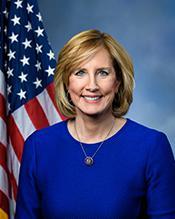
U.S. Representative for New York’s 24th district
Republican
119th Congress, two-year term
Missed 0.7% of roll calls. Chamber median 1.9%.
The full voting recordCounts roll calls where most Democrats and most Republicans voted differently, leaving out procedural votes.
How we countFrom FEC filings, Voteview roll calls and Congress.gov.
Republican. In Congress since 2017, 4 terms in total.
Following saves Tenney to your list, which Chamber & Street keeps on its server, linked to a cookie on this browser and not to your name or email. Email alerts will come with constituent verification.
Bills and resolutions Tenney signed on to as a cosponsor. An original cosponsor signed on the day the bill was introduced. Source: govinfo bill status files, last updated Nov 6, 2026.
Holocaust Education and Antisemitism Lessons Act
Sponsor Josh Gottheimer (D). Original cosponsor. 112 cosponsors. H.R. 768 on Congress.gov
Introduced
Holocaust Education and Antisemitism Lessons Act
This bill directs the U.S. Holocaust Memorial Museum to study and report on Holocaust education efforts in states, local educational agencies (LEAs), and public elementary and secondary schools. Among other elements, the study must (1) determine whether states and LEAs require Holocaust education as part of the curriculum taught in public elementary and secondary schools, (2) identify the standards and requirements relating to Holocaust education, and (3) identify the types of instructional material used to teach students about the Holocaust.
287(g) Program Protection Act
Sponsor Michael Cloud (R). Original cosponsor. 17 cosponsors. H.R. 756 on Congress.gov(opens in a new tab)
Introduced
287(g) Program Protection Act
This bill requires the Department of Homeland Security (DHS) to allow qualified state and local law enforcement agencies to perform certain immigration enforcement activities if the agency requests such authority. DHS may refuse to grant the request only if there is a compelling reason.
Currently, DHS is authorized to grant such authority but is not required to do so.
DHS must annually report on (1) the performance of these enforcement activities, and (2) the plans to expand these activities to additional states and localities.
Expressing the sense of Congress that tax-exempt fraternal benefit societies have historically provided and continue to provide critical benefits to the people and communities of the United States.
Sponsor Darin LaHood (R). Original cosponsor. 122 cosponsors. H.Con.Res. 4 on Congress.gov(opens in a new tab)
Introduced
This concurrent resolution expresses the sense of Congress that tax-exempt fraternal benefit societies serve as a private economic and social support system, providing benefits to their members is necessary to support the charitable and fraternal activities of the volunteer chapters, and their work should continue to be promoted.
CBO Show Your Work Act
Sponsor Warren Davidson (R). Original cosponsor. 35 cosponsors. H.R. 724 on Congress.gov(opens in a new tab)
Introduced
CBO Show Your Work Act
This bill requires the Congressional Budget Office (CBO) to make available to Congress and the public each fiscal model, policy model, and data preparation routine that the CBO uses to estimate the costs and other fiscal, social, or economic effects of legislation.
For each estimate of the costs and other fiscal effects of legislation, the CBO must also disclose, in a manner sufficient to permit replication by individuals not employed by the CBO, the data, programs, models, assumptions, and other details of the computations used to prepare the estimate.
For data that may not be disclosed, the CBO must make available to Congress and the public
• a complete list of all data variables for the data;
• descriptive statistics for all data variables for the data, to the extent that the descriptive statistics do not violate the rule against disclosure;
• a reference to the statute requiring that the data not be disclosed; and
• contact information for the individual or entity who has unrestricted access to the data.
Protect American Election Administration Act of 2025
Sponsor Tom Cole (R). Original cosponsor. 10 cosponsors. H.R. 723 on Congress.gov(opens in a new tab)
Introduced
Protect American Election Administration Act of 2025
This bill generally prohibits a state from soliciting, receiving, or expending any payment or donation of funds, property, or personal services from a private entity for the purpose of administering a federal election. For example, the bill prohibits the use of these payments or donations for programs related to voter education, outreach, and registration.
The prohibition shall not apply to a state's acceptance and use of a private entity's donation of space to be used for a polling place or an early voting site.
Life at Conception Act
Sponsor Eric Burlison (R). Original cosponsor. 116 cosponsors. H.R. 722 on Congress.gov(opens in a new tab)
Introduced
Life at Conception Act
This bill declares that the right to life guaranteed by the Constitution is vested in each human being at all stages of life, including the moment of fertilization, cloning, or other moment at which an individual comes into being.
Nothing in this bill shall be construed to authorize the prosecution of any woman for the death of her unborn child.
Recognizing the benefits of natural gas to the United States economy and environment, and recognizing natural gas as an affordable and "green" energy.
Sponsor Troy Balderson (R). Original cosponsor. 8 cosponsors. H.Res. 57 on Congress.gov(opens in a new tab)
Introduced
This resolution recognizes domestically produced natural gas as affordable, green, and necessary for the United States to be energy dominant while asserting that the United States should take a broad approach to meet energy needs. It also supports efforts to increase domestic production of natural gas and natural gas infrastructure, identify and remove barriers to the production of natural gas, and expedite the approval of liquefied natural gas export facilities in the United States.
FAIR Act of 2025
Sponsor Thomas Tiffany (R). Original cosponsor. 9 cosponsors. H.R. 711 on Congress.gov(opens in a new tab)
Introduced
Fairness, Anti-discrimination and Individual Rights Act of 2025 or FAIR Act of 2025
This bill prohibits the federal government and federally funded entities from discriminating against, or giving preference to, any person or group on the basis of race, color, or national origin with respect to contracts, employment, or other relevant activities. Federal agencies must review and modify their policies to conform with the bill's requirements. The bill also provides a private right of action for violations.
The bill defines preference as an advantage of any kind, including quotas, set-asides, numerical goals, timetables, or other numerical objectives.
Main Street Tax Certainty Act
Sponsor Lloyd Smucker (R). Original cosponsor. 192 cosponsors. H.R. 703 on Congress.gov(opens in a new tab)
Introduced
Main Street Tax Certainty Act
This bill makes permanent the qualified business income (QBI) tax deduction.
Under current law, individuals, estates, and trusts may deduct the lower of (1) 20% of QBI from a qualified business, qualified real estate investment trust dividends, and qualified publicly traded partnership income; or (2) 20% of taxable income less net capital gain. (Some limitations apply.)
However, under current law, the QBI tax deduction expires after December 31, 2025.
MERIT Act of 2025
Sponsor Barry Loudermilk (R). Original cosponsor. 24 cosponsors. H.R. 687 on Congress.gov(opens in a new tab)
Introduced
Heartbeat Protection Act of 2025
Sponsor Mike Kelly (R). Original cosponsor. 42 cosponsors. H.R. 682 on Congress.gov(opens in a new tab)
Introduced
Heartbeat Protection Act of 2025
This bill makes it a crime for a physician to knowingly perform an abortion (1) without determining whether the unborn child has a detectable heartbeat, (2) without informing the mother of the results, or (3) after determining that an unborn child has a detectable heartbeat.
A physician who performs a prohibited abortion is subject to criminal penalties—a fine, up to five years in prison, or both.
The bill provides an exception for an abortion that is necessary to save the life of a mother whose life is endangered by a physical (but not psychological or emotional) disorder, illness, or condition. It also provides exceptions for certain pregnancies that are the result of rape or incest. A physician who performs or attempts to perform an abortion under an exception must comply with specified requirements.
A woman who undergoes a prohibited abortion may not be prosecuted for violating or conspiring to violate the provisions of this bill.
Promoting Domestic Energy Production Act
Sponsor Mike Carey (R). Original cosponsor. 43 cosponsors. H.R. 662 on Congress.gov(opens in a new tab)
Introduced
Promoting Domestic Energy Production Act
This bill allows corporations to reduce their adjusted financial statement income to account for certain intangible costs related to oil, gas, or geothermal well drilling and development for purposes of calculating the corporate alternative minimum tax.
Under current law, a 15% corporate alternative minimum tax is imposed on a corporation with adjusted financial statement income exceeding an average of $1 billion for a consecutive three-year period (or an average of $100 million for a U.S. corporation that is part of a foreign parent multinational group if the adjusted financial statement income of such group exceeds an average of $1 billion for a consecutive three-year period). Adjusted financial statement income generally is the net income or loss reported on the corporation’s applicable financial statement for a tax year, with adjustments for specific items.
This bill expands the reductions that may be made to a corporation’s adjusted financial statement income to include (1) intangible drilling and development costs incurred by an operator of a domestic oil, gas, or geothermal well that are allowed as a deduction in the current tax year when computing regular taxable income; and (2) any depletion expenses related to the intangible oil, gas, or geothermal well drilling and development costs.
Whole Milk for Healthy Kids Act of 2025
Sponsor Glenn Thompson (R). Original cosponsor. 118 cosponsors. H.R. 649 on Congress.gov(opens in a new tab)
Introduced
Whole Milk for Healthy Kids Act of 2025
This bill revises requirements for milk provided by the National School Lunch Program of the Department of Agriculture (USDA).
Currently, schools participating in the program must provide milk that is consistent with the most recent Dietary Guidelines for Americans; USDA regulations require milk to be fat-free or low-fat and allow milk to be flavored or unflavored. The bill modifies these restrictions and instead permits schools to offer students whole, reduced-fat, low-fat, and fat-free flavored and unflavored milk. The milk that is offered may be organic or nonorganic. Further, USDA may not prohibit a participating school from offering students any of these milk choices.
Further, schools currently must provide a substitute for fluid milk, on receipt of a written statement from a licensed physician, for students whose disability restricts their diet. Under the bill, a parent or legal guardian may also provide the written statement.
In addition, schools currently participating in the program must provide meals that meet certain nutrition requirements; USDA regulations require that the average saturated fat content of the meals offered must be less than 10% of the total calories. Under the bill, fluid milk is excluded from the saturated fat content calculation; milk fat included in any fluid milk provided by the program must not be considered saturated fat for the purposes of measuring compliance with USDA regulations.
Finally, the bill prohibits schools participating in the program from purchasing or offering milk produced by Chinese state-owned enterprises.
National Constitutional Carry Act
Sponsor Thomas Massie (R). Original cosponsor. 78 cosponsors. H.R. 645 on Congress.gov(opens in a new tab)
Introduced
No Tax on Tips Act
Sponsor Vern Buchanan (R). Joined Jan 23, 2025. 27 cosponsors. H.R. 482 on Congress.gov(opens in a new tab)
Introduced
No Tax on Tips Act
This bill establishes a new tax deduction of up to $25,000 for tips, subject to limitations. The bill also expands the business tax credit for the portion of payroll taxes an employer pays on certain tips to include payroll taxes paid on tips received in connection with certain beauty services.
Under the bill, the new tax deduction for tips is limited to cash tips (1) received by an employee during the course of employment in an occupation that customarily receives tips, and (2) reported by the employee to the employer for purposes of withholding payroll taxes. (Under current law, an employee is required to report tips exceeding $20 per month to their employer.)
Further, an employee with compensation exceeding a specified threshold ($160,000 in 2025 and adjusted annually for inflation) in the prior tax year may not claim the new tax deduction for tips.
Finally, the bill expands the business tax credit for the portion of payroll taxes that an employer pays on certain tips to include payroll taxes paid on tips received in connection with barbering and hair care, nail care, esthetics, and body and spa treatments. (Under current law, an employer is allowed a business tax credit for the amount of payroll taxes paid on certain tips received by an employee in connection with providing, delivering, or serving food or beverages.)
Memorializing the unborn by lowering the United States flag to half-staff on the 22d day of January each year.
Sponsor Andrew Clyde (R). Original cosponsor. 14 cosponsors. H.Res. 56 on Congress.gov(opens in a new tab)
Introduced
This resolution expresses support for recognizing a Day of Tears and lowering flags to half-staff to honor unborn lives lost to abortion.
PARTS Act of 2025
Sponsor August Pfluger (R). Original cosponsor. 27 cosponsors. H.R. 631 on Congress.gov(opens in a new tab)
Introduced
RIFLE Act of 2025
Sponsor Tracey Mann (R). Original cosponsor. 34 cosponsors. H.R. 624 on Congress.gov(opens in a new tab)
Introduced
Reining In Federal Licensing Enforcement Act of 2025 or the RIFLE Act of 2025
This bill revises the federal statutory framework governing the licensing, inspection, and enforcement of federally licensed dealers, importers, and manufacturers of firearms (i.e., federal firearms licensees, or FFLs) by the Bureau of Alcohol, Tobacco, Firearms and Explosives (ATF).
With respect to an application for a license, this bill requires the ATF to make a preliminary determination, provide notice of a proposed denial, and allow the applicant to request a hearing.
With respect to inspections, this bill requires the ATF to establish standards for how it inspects, examines, or investigates FFLs for possible violations.
With respect to the enforcement of violations, this bill establishes a new framework. The new framework establishes a presumption that a violation by an FFL is not willful and requires the ATF to provide notice of and work with an FFL to rectify a violation.
In the case of a violation that is willful, the ATF has the burden of proving by clear and convincing evidence that the violation was committed willfully. The term willfully means that the person had actual knowledge of a legal duty, understood the obligation imposed by the legal duty, and deliberately disregarded the legal duty. The ATF may pursue revocation of an FFL’s license, but only after (1) providing notice and an opportunity to comply; and (2) finding that a lesser administrative action (e.g., warning, warning letter, or warning conference) is not likely to lead to future compliance.
Protecting First Responders from Secondary Exposure Act of 2025
Sponsor David Joyce (R). Original cosponsor. 28 cosponsors. H.R. 621 on Congress.gov(opens in a new tab)
Introduced
Protecting First Responders from Secondary Exposure Act of 2025
This bill expands the allowable uses of grant funds under the Comprehensive Opioid, Stimulant, and Substance Use Program administered by the Department of Justice.
Specifically, the bill allows grants to be used for purchasing containment devices for first responders and training first responders on the use of containment devices to prevent secondary exposure to fentanyl and other potentially lethal substances.
Equal Representation Act of 2025
Sponsor Chuck Edwards (R). Joined Jan 22, 2025. 66 cosponsors. H.R. 151 on Congress.gov(opens in a new tab)
Introduced
Equal Representation Act
This bill requires that the statement sent by the President to Congress after the decennial census indicating the number of persons in each state exclude noncitizens. (This statement is the basis for reapportionment of U.S. Representatives.)
The bill also requires any questionnaire used in the decennial census to include a checkbox or other similar option for respondents to indicate whether the respondent and each household member is (1) a U.S. citizen, (2) a U.S. national but not a citizen, (3) a non-U.S. national (alien under federal law) lawfully residing in the United States, or (4) a non-U.S. national unlawfully residing in the United States.
The Department of Commerce must make public the number of persons in each state, disaggregated by each of these four categories.
Proposing an amendment to the Constitution of the United States to require that the Supreme Court of the United States be composed of nine justices.
Sponsor Dusty Johnson (R). Original cosponsor. 108 cosponsors. H.J.Res. 28 on Congress.gov(opens in a new tab)
Introduced
This joint resolution proposes a constitutional amendment requiring the Supreme Court to consist of nine Justices.
Defending American Jobs and Investment Act
Sponsor Jason Smith (R). Original cosponsor. 25 cosponsors. H.R. 591 on Congress.gov(opens in a new tab)
Introduced
Defending American Jobs and Investment Act
This bill provides for the enforcement of remedies against foreign countries that have extraterritorial or discriminatory taxes.
Specifically, the bill requires the Department of the Treasury to periodically submit a report to Congress that lists each foreign country that has one or more extraterritorial or discriminatory taxes.
Treasury must commence enhanced bilateral engagement with each foreign country included in the report. This engagement must (1) express the concern of the United States with respect to the adverse trade and economic effects of tax policies that violate bilateral tax treaties and international tax norms, (2) urge the repeal of extraterritorial and discriminatory taxes that target U.S. persons, and (3) advise the foreign country of remedial actions (as outlined by this bill).
The bill increases income tax and withholding tax rates on certain foreign citizens, corporations, and partnerships of any foreign country listed in Treasury's report.
The bill provides the executive branch with additional tools to enforce against extraterritorial and discriminatory taxes. These tools include
• authorizing the President to prohibit government contracting for or procurement of goods or services from a foreign country listed in Treasury's report,
• directing Treasury to consider these taxes in assessing whether to enter into or update a bilateral tax treaty with the foreign country, and
• requiring the Office of the U.S. Trade Representative and the Department of Commerce to consider these taxes in assessing whether to enter into any free trade agreement or executive agreement with the foreign country.
Sarah’s Law
Sponsor Randy Feenstra (R). Original cosponsor. 53 cosponsors. H.R. 578 on Congress.gov(opens in a new tab)
Introduced
Sarah's Law
This bill requires the Department of Justice or the Department of Homeland Security (DHS) to detain a non-U.S. national (alien under federal law) who is unlawfully present in the United States and has been charged with, arrested for, convicted of, or admits to having committed acts that constitute the essential elements of a crime that resulted in the death or serious bodily injury of another person.
DHS must obtain information about the identity of any victims of the crimes for which the detained individual was charged or convicted. DHS shall provide the victim, or a relative or guardian of a deceased victim, with information about the detained individual, including name, date of birth, nationality, immigration status, criminal history, and a description of any related removal efforts.
ALIGN Act
Sponsor Jodey Arrington (R). Original cosponsor. 34 cosponsors. H.R. 574 on Congress.gov(opens in a new tab)
Introduced
Qualified Immunity Act of 2025
Sponsor Virginia Foxx (R). Joined Jan 21, 2025. 24 cosponsors. H.R. 503 on Congress.gov(opens in a new tab)
Introduced
Qualified Immunity Act of 2025
This bill provides statutory authority for qualified immunity for law enforcement officers in civil cases involving constitutional violations.
Current law provides a statutory civil cause of action against state and local government actors (e.g., law enforcement officers) for violations of constitutional rights, also known as Section 1983 lawsuits. The Supreme Court has also found an implied cause of action against federal law enforcement officers in certain situations (e.g., Fourth Amendment violations), also known as Bivens lawsuits. However, under the judicial doctrine of qualified immunity, government officials performing discretionary duties are generally shielded from civil liability, unless their actions violate clearly established rights of which a reasonable person would have known.
The bill provides statutory authority for these principles with respect to law enforcement officers. Specifically, under the bill, law enforcement officers are entitled to qualified immunity if (1) at the time of the alleged violation, the constitutional right at issue was not clearly established or the state of the law was not sufficiently clear that every reasonable officer would have known that the conduct was unconstitutional; or (2) a court has held that the specific conduct at issue is constitutional.
The bill applies to federal, state, and local law enforcement officers. It also specifies that law enforcement agencies and local governments may not be held liable if their officers are entitled to qualified immunity.