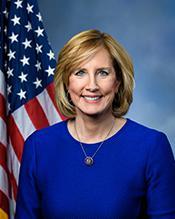
U.S. Representative for New York’s 24th district
Republican
119th Congress, two-year term
Missed 0.7% of roll calls. Chamber median 1.9%.
The full voting recordCounts roll calls where most Democrats and most Republicans voted differently, leaving out procedural votes.
How we countFrom FEC filings, Voteview roll calls and Congress.gov.
Republican. In Congress since 2017, 4 terms in total.
Following saves Tenney to your list, which Chamber & Street keeps on its server, linked to a cookie on this browser and not to your name or email. Email alerts will come with constituent verification.
Bills and resolutions Tenney signed on to as a cosponsor. An original cosponsor signed on the day the bill was introduced. Source: govinfo bill status files, last updated Nov 6, 2026.
Primary Care Enhancement Act of 2025
Sponsor Lloyd Smucker (R). Original cosponsor. 8 cosponsors. H.R. 1026 on Congress.gov
Introduced
US-Kazakhstan Trade Modernization Act
Sponsor Jimmy Panetta (D). Original cosponsor. 35 cosponsors. H.R. 1024 on Congress.gov(opens in a new tab)
Introduced
US-Kazakhstan Trade Modernization Act
This bill addresses trade between the United States and Kazakhstan.
Specifically, the bill authorizes the President to determine that Section 402 of the Trade Act of 1974 (commonly known as the Jackson-Vanik amendment) does not apply to Kazakhstan. The Jackson-Vanik amendment denies normal trade relations (NTR) status to some current and former nonmarket economy countries unless they comply with certain freedom-of-emigration requirements. Under a provision of this amendment, the President may extend NTR status to a country affected by the amendment by waiving the freedom-of-emigration requirements or determining that the country is not in violation of those requirements, subject to an annual review. Kazakhstan has received temporary NTR status since 1992.
Additionally, the bill authorizes the President to extend permanent NTR status to Kazakhstan.
To designate the facility of the United States Postal Service located at 86 Main Street in Haverstraw, New York, as the "Paul Piperato Post Office Building".
Sponsor Michael Lawler (R). Original cosponsor. 24 cosponsors. H.R. 1009 on Congress.gov(opens in a new tab)
Passed the House
This bill designates the facility of the U.S. Postal Service located at 86 Main Street in Haverstraw, New York, as the Paul Piperato Post Office Building.
To designate the facility of the United States Postal Service located at 298 Route 292 in Holmes, New York, as the "Sheriff Adrian 'Butch' Anderson Post Office Building".
Sponsor Michael Lawler (R). Original cosponsor. 24 cosponsors. H.R. 1008 on Congress.gov(opens in a new tab)
Passed the House
This bill designates the facility of the U.S. Postal Service located at 298 Route 292 in Holmes, New York, as the Sheriff Adrian "Butch" Anderson Post Office Building.
Antisemitism Awareness Act of 2025
Sponsor Michael Lawler (R). Original cosponsor. 89 cosponsors. H.R. 1007 on Congress.gov(opens in a new tab)
Introduced
Antisemitism Awareness Act of 2025
This bill provides statutory authority for the requirement that the Department of Education’s Office for Civil Rights take into consideration the International Holocaust Remembrance Alliance's (IHRA's) working definition of antisemitism when reviewing or investigating complaints of discrimination based on race, color, or national origin in programs or activities that receive federal financial assistance. According to the IHRA's working definition, antisemitism is a certain perception of Jews, which may be expressed as hatred toward Jews.
1071 Repeal to Protect Small Business Lending Act
Sponsor Roger Williams (R). Original cosponsor. 52 cosponsors. H.R. 976 on Congress.gov(opens in a new tab)
Introduced
1071 Repeal to Protect Small Business Lending Act
This bill repeals the statute that requires financial institutions to collect data regarding applications for women-owned, minority-owned, or small business loans. Currently, financial institutions must collect and report to the Consumer Financial Protection Bureau information on (1) how many applications were received; (2) the disposition of each application; (3) the type of loan; (4) the amount applied for; (5) the amount approved; and (6) each applicant’s census tract, revenue, race, sex, and ethnicity.
No User Fees for Gun Owners Act
Sponsor Ronny Jackson (R). Original cosponsor. 51 cosponsors. H.R. 943 on Congress.gov(opens in a new tab)
Introduced
No User Fees for Gun Owners Act
This bill prohibits a state or local government from imposing any insurance requirement, tax, user fee, or similar charge on the manufacture, import, acquisition, transfer, or continued ownership of a firearm or ammunition. The bill includes an exception for a generally applicable sales tax that is assessed against firearms or ammunition in the same proportion to which the tax applies to other goods or services.
Dismantle DEI Act of 2025
Sponsor Michael Cloud (R). Original cosponsor. 109 cosponsors. H.R. 925 on Congress.gov(opens in a new tab)
Introduced
Build the Wall Act of 2025
Sponsor Jefferson Shreve (R). Joined Feb 4, 2025. 10 cosponsors. H.R. 816 on Congress.gov(opens in a new tab)
Introduced
Build the Wall Act of 2025
This bill establishes the Southern Border Wall Construction Fund to be used by the Department of Homeland Security to construct and maintain physical barriers along the U.S.-Mexico border. All unobligated amounts in the Coronavirus State and Local Fiscal Recovery Funds must be immediately deposited in the Southern Border Wall Construction Fund.
To terminate the Department of Education.
Sponsor Thomas Massie (R). Original cosponsor. 37 cosponsors. H.R. 899 on Congress.gov(opens in a new tab)
Introduced
This bill terminates the Department of Education on December 31, 2026.
To prohibit individuals who are not citizens of the United States from voting in elections in the District of Columbia and to repeal the Local Resident Voting Rights Amendment Act of 2022.
Sponsor August Pfluger (R). Original cosponsor. 14 cosponsors. H.R. 884 on Congress.gov(opens in a new tab)
Passed the House
This bill prohibits a non-U.S. citizen from voting in a District of Columbia (DC) election and repeals relevant provisions of DC law.
Federal law prohibits noncitizens from voting in a federal election; however, in 2022, DC enacted a law allowing noncitizens who meet residency and other requirements to vote in local elections. This bill repeals the DC law, which went into effect on February 23, 2023.
No Foreign Persons Administering Our Elections Act
Sponsor August Pfluger (R). Original cosponsor. 9 cosponsors. H.R. 882 on Congress.gov(opens in a new tab)
Introduced
No Foreign Persons Administering Our Elections Act
This bill prohibits states and local jurisdictions from hiring noncitizens to administer federal elections.
Medicare Patient Access and Practice Stabilization Act of 2025
Sponsor Gregory Murphy (R). Original cosponsor. 198 cosponsors. H.R. 879 on Congress.gov(opens in a new tab)
Introduced
Medicare Patient Access and Practice Stabilization Act of 2025
This bill increases certain payment adjustments under the Medicare physician fee schedule for services furnished between April 1, 2025, and January 1, 2026.
IGO Anti-Boycott Act
Sponsor Michael Lawler (R). Original cosponsor. 24 cosponsors. H.R. 867 on Congress.gov(opens in a new tab)
Introduced
IGO Anti-Boycott Act
This bill penalizes U.S. persons (individuals or entities) that participate in certain boycotts imposed by international governmental organizations (IGOs).
The bill expands an existing law that prohibits various actions by U.S. persons in relation to boycotts imposed by foreign governments on a country that is friendly to the United States and not itself the object of a U.S. boycott. This bill applies those prohibitions to similar boycotts imposed by IGOs.
Prohibited actions include (1) refusing to do business with companies organized under the laws of the boycotted country, if the refusal is pursuant to an agreement with or request from the country or IGO imposing the boycott; (2) furnishing information about whether any person has a business relationship with or in the boycotted country; and (3) furnishing information about whether someone is associated with charitable or fraternal organizations that support the boycotted country.
Criminal penalties for willful violations of this law include fines of up to $1 million. In addition to such fines, individuals may be imprisoned for up to 20 years. Civil penalties may include fines and revocations of export licenses for certain national security-related items.
The bill also requires the President to annually submit to Congress and make available to the public a report describing these boycotts and listing the foreign countries and international organizations involved in fostering or imposing them.
Educational Choice for Children Act of 2025
Sponsor Adrian Smith (R). Original cosponsor. 91 cosponsors. H.R. 833 on Congress.gov(opens in a new tab)
Introduced
Green Tape Elimination Act of 2025
Sponsor Darrell Issa (R). Joined Jan 31, 2025. 5 cosponsors. H.R. 731 on Congress.gov(opens in a new tab)
Introduced
Green Tape Elimination Act of 2025
This bill exempts hazardous fuel reduction activities on federal lands from certain environmental and historic preservation regulations. Hazardous fuel means any vegetative material that is susceptible to burning, such as trees and grasses. Hazardous fuel reduction activities include installing firebreaks, using prescribed fire, and removing the hazardous fuels.
First, the bill states that hazardous fuel reduction activities are not to be considered a major federal action under the National Environmental Policy Act of 1969 (NEPA) for 10 years. NEPA requires agencies to identify and evaluate the impacts of major federal actions significantly affecting the quality of the human environment prior to finalizing certain decisions. Thus, the bill exempts such actions from environmental review under NEPA during that time period.
Next, the bill exempts hazardous fuel reduction activities from the Endangered Species Act of 1973, the National Historic Preservation Act, the Migratory Bird Treaty Act, and the Migratory Bird Conservation Act for 10 years.
The bill also directs the Environmental Protection Agency (EPA) to exclude certain air quality data when determining whether there are exceedances or violations of the national ambient air quality standard for air pollutants. In the event a hazardous fuel reduction activity has a significant impact on air quality, the EPA must exclude that data when making such determination.
Chemical Tax Repeal Act
Sponsor Beth Van Duyne (R). Joined Jan 31, 2025. 9 cosponsors. H.R. 640 on Congress.gov(opens in a new tab)
Introduced
Chemical Tax Repeal Act
This bill repeals the Hazardous Substance Superfund excise tax imposed on certain chemicals and chemical substances.
Under current law, an excise tax is imposed through December 31, 2031, on taxable chemicals and taxable chemical substances that are (1) manufactured or produced in the United States, or (2) imported into the United States. The excise tax rate varies between 44 cents per ton to $9.74 per ton, depending on the chemical and certain other variables. (There are 42 listed taxable chemicals and 151 listed taxable chemical substances.)
Further, under current law, amounts collected from the excise tax on taxable chemicals and taxable chemical substances are deposited into the Hazardous Substance Superfund, which finances the remediation of certain environmentally contaminated sites.
GORAC Act of 2025
Sponsor Beth Van Duyne (R). Original cosponsor. 6 cosponsors. H.R. 824 on Congress.gov(opens in a new tab)
Introduced
To amend the Internal Revenue Code of 1986 to allow a credit against tax for charitable donations to nonprofit organizations providing education scholarships to qualified elementary and secondary students.
Sponsor Adrian Smith (R). Original cosponsor. 27 cosponsors. H.R. 817 on Congress.gov(opens in a new tab)
Introduced
Educational Choice for Children Act of 2025
This bill establishes a nonrefundable tax credit for contributions (cash or stock) made by an individual to a tax-exempt organization that provides scholarships for qualified elementary and secondary school expenses to eligible students (scholarship granting organization), subject to limitations.
Under the bill, the tax credit is limited to the greater of $5,000 or 10% of adjusted gross income.
Further, the bill establishes a $5 billion annual volume cap (for 2025-2028) for the tax credit (which may be increased under certain circumstances). The volume cap is allocated by the Department of the Treasury for the tax credit on a first-come, first-serve basis (based on the contribution date). However, under the bill, 10% of the volume cap must be divided evenly among states for allocation to individuals residing in those states.
The bill allows any portion of the tax credit that exceeds the individual’s tax liability (less certain other tax credits) to be carried forward for up to five tax years.
The bill also
• establishes specific requirements for a scholarship granting organization,
• requires a scholarship granting organization to distribute all contributions within a specific timeframe (exceptions apply), and
• excludes from gross income scholarships received by an individual from a scholarship granting organization.
Finally, the bill prohibits federal, state, and local government entities, officers, and employees from imposing requirements that prevent the use of scholarship funds for private or religious elementary or secondary education expenses or discouraging the use of scholarship funds at such education institutions.
Sergeant Gary Beikirch Medal of Honor Act
Sponsor Joseph Morelle (D). Original cosponsor. 5 cosponsors. H.R. 803 on Congress.gov(opens in a new tab)
Introduced
Sergeant Gary Beikirch Medal of Honor Act
This bill allows a surviving spouse of a Medal of Honor recipient to receive a special pension concurrently with dependency and indemnity compensation.
STAR Act of 2025
Sponsor Blake Moore (R). Original cosponsor. 28 cosponsors. H.R. 802 on Congress.gov(opens in a new tab)
Introduced
Parental Notification and Intervention Act of 2025
Sponsor Mary Miller (R). Original cosponsor. 10 cosponsors. H.R. 799 on Congress.gov(opens in a new tab)
Introduced
Parental Notification and Intervention Act of 2025
This bill restricts the performance of an abortion on an unemancipated minor under 18 years of age.
Specifically, it prohibits a person or organization from performing, facilitating, or assisting with an abortion on an unemancipated minor without first complying with certain requirements, including parental notification and a 96-hour waiting period.
It establishes penalties—a fine, up to one year in prison, or both—for each willful violation.
A parent who is required to be notified of an abortion of an unemancipated minor may sue in federal court to prohibit the abortion.
Parental notification requirements may be waived in a medical emergency or in a case of physical abuse.
Ultrasounds Save Lives Act of 2025
Sponsor Mary Miller (R). Original cosponsor. 12 cosponsors. H.R. 797 on Congress.gov(opens in a new tab)
Introduced
Ultrasounds Save Lives Act of 2025
This bill requires health care providers to perform an ultrasound and obtain certain informed consent before performing an abortion procedure.
Specifically, before performing an abortion, providers must first perform an ultrasound and share the results with the woman, and also present the woman with an authorization form at least 24 hours before performing the abortion procedure. The form must (1) include specified information concerning gestational age, associated developmental characteristics, and medical risks of the abortion; (2) include a statement that an ultrasound has been performed and the results were shared with the woman; (3) disclose penalties that providers may face for failing to comply with the bill's requirements; and (4) include an affirmation that the individual signing the form understands the information. The form must be signed and witnessed in person and retained in the medical file.
The bill's requirements do not apply if, in reasonable medical judgment, compliance would pose a greater risk of death or substantial physical impairment of a major bodily function, excluding psychological or emotional conditions, of the pregnant woman.
The bill also establishes civil penalties for providers who do not comply with these requirements.
Second Chance for Moms Act
Sponsor Mary Miller (R). Original cosponsor. 13 cosponsors. H.R. 796 on Congress.gov(opens in a new tab)
Introduced
Second Chance for Moms Act of 2025
This bill requires labeling of the drug mifepristone to include certain information about the hormone progesterone and establishes a related telephone hotline. (Mifepristone is a drug that is approved to end pregnancies through 10 weeks gestation when used in conjunction with the drug misoprostol. The procedure is often referred to as medication abortion or the abortion pill.)
Pregnancy Is Not an Illness Act of 2025
Sponsor Mary Miller (R). Original cosponsor. 11 cosponsors. H.R. 795 on Congress.gov(opens in a new tab)
Introduced
Pregnancy Is Not an Illness Act of 2025
This bill prohibits the Food and Drug Administration (FDA) from treating pregnancy as an illness for the purposes of approving any abortion drug or imposing a risk evaluation and mitigation strategy for an abortion drug. The bill also nullifies FDA approval of any abortion drug that relied at all on the treatment of pregnancy as an illness, and specifically nullifies the FDA’s approval of the abortion drug mifepristone in effect before the bill is enacted.