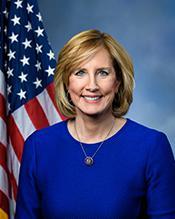
U.S. Representative for New York’s 24th district
Republican
119th Congress, two-year term
Missed 0.7% of roll calls. Chamber median 1.9%.
The full voting recordCounts roll calls where most Democrats and most Republicans voted differently, leaving out procedural votes.
How we countFrom FEC filings, Voteview roll calls and Congress.gov.
Republican. In Congress since 2017, 4 terms in total.
Following saves Tenney to your list, which Chamber & Street keeps on its server, linked to a cookie on this browser and not to your name or email. Email alerts will come with constituent verification.
Bills and resolutions Tenney signed on to as a cosponsor. An original cosponsor signed on the day the bill was introduced. Source: govinfo bill status files, last updated Nov 6, 2026.
One Flag for All Act
Sponsor Diana Harshbarger (R). Original cosponsor. 25 cosponsors. H.R. 1313 on Congress.gov
Introduced
Tax Fairness for Survivors Act
Sponsor Lois Frankel (D). Original cosponsor. 5 cosponsors. H.R. 1306 on Congress.gov(opens in a new tab)
Introduced
Tax Fairness for Survivors Act
This bill excludes certain payments related to sexual assault or sexual harassment claims from gross income for federal tax purposes.
Specifically, the bill excludes from gross income amounts received by an individual from a judgment, award, or settlement of a claim (including backpay, frontpay, punitive damages, attorney’s fees, or any payments made to release, resolve, or settle a claim) related to sexual harassment or a nonconsensual sexual act or sexual contact. Further, under the bill, such amounts are not wages or compensation and, thus, not subject to certain payroll taxes (Social Security, railroad retirement, and unemployment insurance).
Under current law, amounts received from a judgment, award or settlement of a claim may be excluded from gross income if attributable to a personal physical injury or physical sickness. However, under current law, compensatory and other amounts received from a judgment, award or settlement unrelated to a personal physical injury or physical sickness generally are included in gross income. (Some exceptions apply.)
Death Tax Repeal Act
Sponsor Randy Feenstra (R). Original cosponsor. 182 cosponsors. H.R. 1301 on Congress.gov(opens in a new tab)
Introduced
Fighting Trade Cheats Act of 2025
Sponsor Mike Bost (R). Original cosponsor. 39 cosponsors. H.R. 1284 on Congress.gov(opens in a new tab)
Introduced
Fighting Trade Cheats Act of 2025
This bill increases penalties for, and establishes additional enforcement mechanisms related to, fraudulent and grossly negligent violations of U.S. customs laws.
Specifically, the bill increases the maximum civil penalty for a fraudulent violation to three times the domestic value of the merchandise. (Currently, the maximum penalty is the domestic value of the merchandise.) It prohibits a person who commits a fraudulent violation from importing merchandise into the United States for a five-year period.
Additionally, the bill increases the maximum civil penalty for a grossly negligent violation to the lesser of (1) 3 times the domestic value of the merchandise; or (2) 10 times the lawful duties, taxes, and fees. (Currently, the maximum penalty is the lesser of the domestic value of the merchandise or four times the lawful duties, taxes, and fees.) It prohibits a person who commits a grossly negligent violation from importing merchandise into the United States for a two-year period.
Further, the bill applies these importation bans to an affiliated person (e.g., a family member or employee) of the person who committed the fraudulent or grossly negligent violation.
The bill establishes a private right of action for an interested party (e.g., a manufacturer) affected by customs fraud or grossly negligent violations.
The bill prohibits any person (or an affiliated person) who commits a fraudulent or grossly negligent violation from participating in the U.S. Customs and Border Protection's Importer of Record program, and further requires revocation of their importer of record numbers.
Supporting the Local Radio Freedom Act.
Sponsor Steve Womack (R). Original cosponsor. 233 cosponsors. H.Con.Res. 12 on Congress.gov(opens in a new tab)
Introduced
This concurrent resolution declares that Congress should not impose any new performance fee, tax, royalty, or other charge relating to the public performance of sound recordings on a local radio station for broadcasting sound recordings over the air, or on any business for such public performance of sound recordings.
Patriot Day Act
Sponsor Brian Fitzpatrick (R). Joined Feb 12, 2025. 17 cosponsors. H.R. 911 on Congress.gov(opens in a new tab)
Introduced
Patriot Day Act
This bill establishes Patriot Day as a federal holiday.
Combating Illicit Xylazine Act
Sponsor Jimmy Panetta (D). Original cosponsor. 114 cosponsors. H.R. 1266 on Congress.gov(opens in a new tab)
Passed the House
Combating Illicit Xylazine Act
This bill regulates xylazine under the Controlled Substances Act (CSA).
Xylazine, also known as tranq, is a nonopioid sedative and pain reliever that is approved for use in animals. Recently, the Drug Enforcement Administration (DEA) has reported an increase in trafficking of fentanyl mixed with xylazine.
This bill adds xylazine, including its salts, isomers, and salts of isomers, to schedule III of the CSA. Schedule III controlled substances, including anabolic steroids, buprenorphine, and ketamine, have less potential for abuse than a schedule I or II substance, have a currently accepted medical use, and have low or moderate risk of dependence if abused.
Under the bill, manufacturing, distributing, or dispensing xylazine, or possessing with intent to manufacture, distribute, or dispense xylazine for illicit use is subject to criminal penalties under the CSA. The bill also requires xylazine transactions to be tracked in the drug reporting system maintained by the DEA.
The bill exempts from registration under the CSA persons and entities that possess xylazine (1) lawfully dispensed by a veterinarian or pharmacy and (2) for an animal or for use in certain animal-control or wildlife programs.
The bill also exempts xylazine manufacturers from the CSA's physical security requirements.
Finally, the bill requires the DEA, in coordination with the Food and Drug Administration, to report on (1) the prevalence and impact of illicit xylazine use in the United States, and (2) updated information on the prevalence and proliferation of xylazine trafficking and misuse in the United States.
Long-Term Care Transparency Act
Sponsor Nicholas Langworthy (R). Original cosponsor. 6 cosponsors. H.R. 1256 on Congress.gov(opens in a new tab)
Introduced
Long-Term Care Transparency Act
This bill requires the Administration on Aging to submit to Congress an annual report that (1) aggregates reports submitted to the administration by state long-term care ombudsman offices for the year, and (2) summarizes the findings of such reports.
(State long-term care ombudsman programs investigate and respond to complaints by and on behalf of residents in long-term care facilities, including nursing homes, assisted living facilities, and other adult care homes. Each state long-term care ombudsman office is required to submit an annual report to the administration including data related to complaints and conditions in long-term care facilities and an evaluation of the problems experienced by long-term care residents.)
Stop Human Trafficking of Unaccompanied Migrant Children Act of 2025
Sponsor Morgan Luttrell (R). Original cosponsor. 7 cosponsors. H.R. 1202 on Congress.gov(opens in a new tab)
Introduced
Stop Human Trafficking of Unaccompanied Migrant Children Act of 2025
This bill establishes requirements relating to placing unaccompanied alien children with sponsors. (Under federal law, an unaccompanied alien child is a minor with no lawful immigration status and no parent or legal guardian in the United States to provide care and physical custody.)
Before the Department of Health and Human Services (HHS) may release such a child to a sponsor, the sponsor must complete a fingerprint background check and vetting that includes (1) a public records check, (2) a National Sex Offender Registry check, (3) a Federal Bureau of Investigation National Criminal History Check, (4) a child abuse and neglect check, and (5) state and local criminal history checks. Each adult in the sponsor's household must also undergo such vetting before the placement.
The bill also requires HHS to visit the home of a proposed sponsor before the placement and to conduct periodic home visits after.
A child may not be placed with a sponsor who is unlawfully present in the United States unless the sponsor is the child's parent, relative, or legal guardian.
HHS must retroactively apply these vetting standards to all sponsors for placements made since January 20, 2021.
Protecting Privacy in Purchases Act
Sponsor Riley Moore (R). Original cosponsor. 132 cosponsors. H.R. 1181 on Congress.gov(opens in a new tab)
Passed the House
Protecting Privacy in Purchases Act
This bill prohibits payment card networks from using merchant codes that distinguish firearms retailers from general-merchandise retailers or sporting-goods retailers.
The Department of Justice must enforce this bill and report annually on the resulting investigations and cases.
Fair Access to Banking Act
Sponsor Andy Barr (R). Joined Feb 10, 2025. 151 cosponsors. H.R. 987 on Congress.gov(opens in a new tab)
Introduced
Fair Access to Banking Act
This bill places restrictions on certain banks, credit unions, and payment card networks if they refuse to do business with a person who complies with the law. Restrictions include prohibiting the use of electronic funds transfer systems and lending programs, termination of an institution's depository insurance, and specified civil penalties.
Banks and other specified financial institutions are allowed to deny financial services to a person only if the denial is justified by a documented failure of that person to meet quantitative, impartial, risk-based standards established in advance by the institution. This justification may not be based upon reputational risks to the institution.
The bill establishes the right for a person to bring a civil action for a violation of this bill.
Health Care Provider Shortage Minimization Act of 2025
Sponsor Earl Carter (R). Original cosponsor. 9 cosponsors. H.R. 1160 on Congress.gov(opens in a new tab)
Introduced
Health Care Provider Shortage Minimization Act of 2025
This bill provides statutory authority to classify qualified locum tenens physicians and advanced care practitioners as independent contractors for federal tax purposes. (Locum tenens generally refers to an individual who temporarily fulfills the duties of another individual and is commonly used to refer to temporary staffing in the healthcare industry.)
Under current law, independent contractors are considered self-employed for federal tax purposes and, thus, are required to make quarterly estimated income tax payments and pay self-employment taxes (Social Security and Medicare taxes). (Other federal tax reporting requirements and obligations apply.)
The bill defines a qualified locum tenens physician or advanced care practitioner as an individual who provides temporary services for not more than one continuous year at a site of service as (1) a doctor of medicine, osteopathy, dentistry, optometry, or podiatry (authorized to provide such services by the state, U.S. possession, or U.S. territory in which such services are performed); or (2) a nurse practitioner, physician’s assistant, or certified registered nurse anesthetist. The term also includes an individual who provides such temporary services and is otherwise considered a physician under the Social Security Act (e.g., certain chiropractors).
Pandemic Unemployment Fraud Enforcement Act
Sponsor Jason Smith (R). Original cosponsor. 25 cosponsors. H.R. 1156 on Congress.gov(opens in a new tab)
Passed the House
Pandemic Unemployment Fraud Enforcement Act
This bill extends from 5 to 10 years the statute of limitations for federal criminal charges or civil enforcement actions for fraud related to several unemployment insurance programs that were established during the COVID-19 pandemic.
The extension applies to Pandemic Unemployment Assistance, Federal Pandemic Unemployment Compensation, Mixed Earners Unemployment Compensation, and Pandemic Emergency Unemployment Compensation. The bill extends the statute of limitations for (1) criminal charges related to fraud, including aggravated identity theft, wire fraud, and conspiracy to commit fraud; and (2) civil actions involving false claims. However, the bill does not apply to a criminal prosecution or civil enforcement action if the applicable statute of limitations expired before the date of the bill's enactment.
Additionally, the bill rescinds specified unobligated funds that were provided in the American Rescue Plan Act of 2021 to the Department of Labor for anti-fraud and program integrity activities.
Crime Victims Fund Stabilization Act of 2025
Sponsor Ann Wagner (R). Joined Feb 7, 2025. 327 cosponsors. H.R. 909 on Congress.gov(opens in a new tab)
Passed the House
Crime Victims Fund Stabilization Act of 2025
This bill adds a new source of revenue for the Crime Victims Fund (CVF). Specifically, the bill requires certain civil monetary penalties collected from settlements and judgments in cases involving fraud and false claims against the federal government to be deposited into the CVF through FY2029.
The CVF supports federal, state, and local programs and activities to compensate and assist victims of crimes. Currently, the CVF is funded by deposits from a variety of sources, including federal criminal fines, penalties, and assessments; forfeited bail bonds; and certain other gifts, donations, and bequests.
Nancy Gardner Sewell Medicare Multi-Cancer Early Detection Screening Coverage Act
Sponsor Jodey Arrington (R). Joined Feb 7, 2025. 338 cosponsors. H.R. 842 on Congress.gov(opens in a new tab)
Introduced
Nancy Gardner Sewell Medicare Multi-Cancer Early Detection Screening Coverage Act
This bill allows, beginning in 2028, for Medicare coverage and payment for multi-cancer early detection screening tests that are approved by the Food and Drug Administration and that are used to screen for cancer across many cancer types, if the Centers for Medicare & Medicaid Services determines such coverage is appropriate. Coverage is limited to those under a certain age (age 68 in 2028, increased by one year every year thereafter) and to one test every 11 months.
Family Farm and Small Business Exemption Act
Sponsor Tracey Mann (R). Original cosponsor. 89 cosponsors. H.R. 1131 on Congress.gov(opens in a new tab)
Introduced
Family Farm and Small Business Exemption Act
This bill restores an exemption for certain family farms and small businesses on the Free Application for Federal Student Aid (FAFSA) form. The bill applies to the net worth of (1) a family farm on which the family resides, or (2) a small business with not more than 100 full-time or full-time equivalent employees that is owned and controlled by the family.
Prior to recent changes made to the FAFSA, the net worth of these family farms and small businesses were excluded as assets when calculating a student's financial need to determine federal student aid eligibility. Beginning with the 2024-2025 academic year, the net worth of these farms and businesses are treated as an asset and therefore included in the calculation. This bill restores the exemption to exclude such net worth from the calculation.
No DeepSeek on Government Devices Act
Sponsor Josh Gottheimer (D). Original cosponsor. 32 cosponsors. H.R. 1121 on Congress.gov(opens in a new tab)
Introduced
No DeepSeek on Government Devices Act
This bill directs the Office of Management and Budget to develop standards and guidance requiring removal of the DeepSeek application from federal agency information technology. Such standards and guidance also apply to any successor application developed or provided by High Flyer or entities owned by High Flyer.
DeepSeek is an artificial intelligence start-up founded in 2023 and based in Hangzhou, China. DeepSeek's chief executive officer also created High Flyer, a hedge fund that is reportedly the sole funder of DeepSeek.
DETERRENT Act
Sponsor Michael Baumgartner (R). Joined Feb 7, 2025. 21 cosponsors. H.R. 1048 on Congress.gov(opens in a new tab)
Passed the House
Defending Education Transparency and Ending Rogue Regimes Engaging in Nefarious Transactions Act or the DETERRENT Act
This bill expands oversight and disclosure requirements related to foreign sources and institutions of higher education (IHEs).
Specifically, the bill requires an IHE to annually disclose to the Department of Education (ED) any year in which the IHE
• receives a gift from a foreign country of concern (e.g., China or Russia) or foreign entity of concern of any dollar amount;
• receives a gift or contract from a foreign source (other than a foreign country of concern or foreign entity of concern) that is valued at $50,000 or more, considered alone or in combination with all other gifts or contracts within a calendar year (current disclosure threshold is $250,000 or more), or which has an undetermined monetary value;
• enters into a contract with a foreign country of concern or foreign entity of concern after receiving a waiver for such contract; or
• is substantially controlled by a foreign source.
Additionally, the bill
• prohibits IHEs from entering into contracts with a foreign country of concern or with a foreign entity of concern without obtaining a waiver,
• requires certain IHEs to disclose gifts or contracts between covered individuals (e.g., researchers) and foreign sources, and
• requires private IHEs with specified assets or investments to file annual investment disclosure reports.
The bill requires ED to investigate possible violations of this bill and outlines the various penalties for each violation. Penalties may include losing eligibility for federal student financial aid.
Providing for congressional disapproval under chapter 8 of title 5, United States Code, of the rule submitted by the Internal Revenue Service relating to "Gross Proceeds Reporting by Brokers That Regularly Provide Services Effectuating Digital Asset Sales".
Sponsor Mike Carey (R). Joined Feb 7, 2025. 9 cosponsors. H.J.Res. 25 on Congress.gov(opens in a new tab)
Became law
This joint resolution nullifies requirements for persons effectuating decentralized financial (DeFi) transactions to report certain information regarding digital asset sales to the Internal Revenue Service (IRS). Specifically, the joint resolution nullifies the requirements included in the rule titled Gross Proceeds Reporting by Brokers That Regularly Provide Services Effectuating Digital Asset Sales and issued by the IRS on December 30, 2024.
Decentralized finance refers to the suite of financial activities and services that are facilitated by cryptocurrency and intended to be conducted without any sort of reliance on traditional financial tools or intermediaries.
BOWSER Act
Sponsor Andrew Ogles (R). Original cosponsor. 10 cosponsors. H.R. 1089 on Congress.gov(opens in a new tab)
Introduced
Veterans 2nd Amendment Protection Act
Sponsor Mike Bost (R). Original cosponsor. 70 cosponsors. H.R. 1041 on Congress.gov(opens in a new tab)
Passed the House
Veterans 2nd Amendment Protection Act
This bill prohibits the Department of Veterans Affairs (VA) from transmitting certain information to the National Instant Criminal Background Check System (NICS) utilized by licensed importers or dealers of firearms.
Specifically, the bill prohibits the VA from transmitting personally identifying information of a veteran or a beneficiary to the NICS solely on the basis that such veteran or beneficiary has an appointed fiduciary to manage their benefits, unless there is an order or finding of a judicial authority that such veteran or beneficiary is a danger to themselves or others.
Strengthening our Servicemembers with Milk Act
Sponsor Derrick Van Orden (R). Joined Feb 5, 2025. 31 cosponsors. H.R. 648 on Congress.gov(opens in a new tab)
Introduced
Strengthening our Servicemembers with Milk Act
This bill requires the Department of Defense (DOD) to provide varieties of fluid or powdered milk (e.g., unflavored or organic) to members of the Armed Forces at dining facilities on military installations. Under the bill, DOD is prohibited from purchasing such milk from an entity owned or controlled by a foreign adversary.
To amend the Internal Revenue Code of 1986 to modify the railroad track maintenance credit.
Sponsor Mike Kelly (R). Joined Feb 5, 2025. 183 cosponsors. H.R. 516 on Congress.gov(opens in a new tab)
Introduced
This bill increases the annual limit on the tax credit for qualified railroad track maintenance expenses (also referred to as the short line railroad tax credit) and expands eligibility for claiming the credit.
Under current law, the tax credit is limited each tax year to $3,500 multiplied by the sum of the number of miles of railroad track owned or leased by the taxpayer (miles owned or leased) and the number of railroad track miles assigned to the taxpayer by a Class II or III railroad (miles assigned). This bill increases the annual limit to $6,100 multiplied by the sum of miles owned or leased and miles assigned. The $6,100 amount used in the calculation of the tax credit limit is adjusted for inflation for tax years beginning after 2025.
The bill also expands eligibility for the tax credit to include gross expenses for maintaining railroad tracks owned or leased as of January 1, 2024. Under current law, the tax credit is limited to gross expenses for maintaining railroad tracks owned or leased as of January 1, 2015.
Voter Eligibility Verification Act of 2025
Sponsor Beth Van Duyne (R). Original cosponsor. 16 cosponsors. H.R. 1037 on Congress.gov(opens in a new tab)
Introduced
Voter Eligibility Verification Act of 2025
This bill requires the Department of Homeland Security to respond within 15 days of receiving a request from certain state officials for the immigration status of an individual on a list of potential voters.
Protection of Women in Olympic and Amateur Sports Act of 2026
Sponsor W. Steube (R). Original cosponsor. 73 cosponsors. H.R. 1028 on Congress.gov(opens in a new tab)
Introduced
Protection of Women in Olympic and Amateur Sports Act
This bill requires certified national governing bodies (NGBs) of amateur sports (e.g., USA Gymnastics) to prohibit a person whose sex is male from participating in an amateur athletic competition that is designated for females, women, or girls.
Under the bill, male means an individual who has, had, will have—or would have, but for a developmental or genetic anomaly or historical accident—the reproductive system that at some point produces, transports, and utilizes sperm for fertilization.