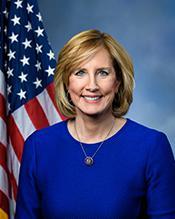
U.S. Representative for New York’s 24th district
Republican
119th Congress, two-year term
Missed 0.7% of roll calls. Chamber median 1.9%.
The full voting recordCounts roll calls where most Democrats and most Republicans voted differently, leaving out procedural votes.
How we countFrom FEC filings, Voteview roll calls and Congress.gov.
Republican. In Congress since 2017, 4 terms in total.
Following saves Tenney to your list, which Chamber & Street keeps on its server, linked to a cookie on this browser and not to your name or email. Email alerts will come with constituent verification.
Bills and resolutions Tenney signed on to as a cosponsor. An original cosponsor signed on the day the bill was introduced. Source: govinfo bill status files, last updated Nov 6, 2026.
To establish uniform standards for flag displays in the House of Representatives facilities.
Sponsor Abraham Hamadeh (R). Original cosponsor. 11 cosponsors. H.Res. 167 on Congress.gov
Introduced
Protect Medicaid Act
Sponsor Richard Hudson (R). Joined Feb 26, 2025. 16 cosponsors. H.R. 1195 on Congress.gov(opens in a new tab)
Introduced
Protect Medicaid Act
This bill prohibits federal payment under Medicaid for the administrative costs of providing health benefits to noncitizens who are ineligible for Medicaid based on their immigration status. The Department of Health and Human Services must report on specified information regarding states that provide health benefits to such individuals.
Protecting American Agriculture from Foreign Adversaries Act of 2025
Sponsor Dan Newhouse (R). Original cosponsor. 60 cosponsors. H.R. 1576 on Congress.gov(opens in a new tab)
Introduced
Protecting American Agriculture from Foreign Adversaries Act of 2025
This bill makes changes to the Committee on Foreign Investment in the United States (CFIUS), including by requiring CFIUS to determine whether a national security review is necessary for reportable agricultural land transactions that are referred by the Department of Agriculture (USDA). (CFIUS oversees the national security risks of certain foreign investment in the United States. CFIUS has the authority to review covered transactions, which include mergers, acquisitions, and takeovers that could result in foreign control of a U.S. business; certain investments in businesses involved in critical technologies, critical infrastructure, or sensitive personal data; and certain real estate transactions.)
Specifically, the bill directs CFIUS to, after receiving notification from USDA, determine (1) whether a reportable agricultural land transaction is a covered transaction, and (2) whether CFIUS should initiate a national security review or take another action with respect to the transaction.
Reportable agricultural land transaction means a transaction (1) that USDA has reason to believe is a covered transaction; (2) that involves the acquisition of an interest in agricultural land by a foreign person of China, North Korea, Russia, or Iran; and (3) with respect to which a foreign person is required to submit a report to USDA regarding their agricultural land transactions.
The bill also expands the membership of CFIUS to include the Secretary of Agriculture for covered transactions that involve agricultural land, agricultural biotechnology, or the agriculture industry (e.g., agricultural transportation, storage, and processing).
No American Land for Communist China Act
Sponsor Dan Newhouse (R). Original cosponsor. 60 cosponsors. H.R. 1575 on Congress.gov(opens in a new tab)
Introduced
Providing for congressional disapproval under chapter 8 of title 5, United States Code, of the rule submitted by the Environmental Protection Agency relating to "National Emission Standards for Hazardous Air Pollutants: Rubber Tire Manufacturing".
Sponsor H. Griffith (R). Original cosponsor. 20 cosponsors. H.J.Res. 61 on Congress.gov(opens in a new tab)
Became law
This joint resolution removes emission regulations on hazardous air pollutants under the rubber tire manufacturing source category, specifically from the rubber processing subcategory. The joint resolution nullifies the Environmental Protection Agency (EPA) rule titled National Emission Standards for Hazardous Air Pollutants: Rubber Tire Manufacturing, which addresses the decision in Louisiana Environmental Action Network v. EPA (D.C. Cir. 2020) that requires the EPA to address unregulated emissions from a major source category when it conducts the 8-year technology review. The rule implemented emissions standards for the rubber processing subcategory.
Expressing condolences to the families, friends, and loved ones of the victims of the crash of American Eagle Flight 5342 and PAT 25, and for other purposes.
Sponsor Ron Estes (R). Original cosponsor. 93 cosponsors. H.Res. 153 on Congress.gov(opens in a new tab)
Passed the House
This resolution expresses condolences to the families, friends, and loved ones of the victims of the crash of American Eagle Flight 5342 and the U.S. Army helicopter flying under the call sign PAT 25 near Ronald Reagan Washington National Airport on January 29, 2025.
The resolution also commends the heroic actions of the first responders, emergency services personnel, and all those who aided in the recovery efforts.
Charitable Act
Sponsor Blake Moore (R). Joined Feb 24, 2025. 54 cosponsors. H.R. 801 on Congress.gov(opens in a new tab)
Introduced
Charitable Act
This bill allows an individual taxpayer who does not itemize their tax deductions to claim a tax deduction for charitable contributions and eliminates the tax penalty for overstating charitable contributions. (Some limitations apply).
Under the bill, for tax years beginning in 2026 or 2027, an individual taxpayer who does not itemize their tax deductions may deduct charitable contributions of up to one-third of the standard deduction allowed to such individual. (Under current law, an individual taxpayer generally must itemize their tax deductions to deduct charitable contributions.)
The bill also eliminates the tax penalty for an underpayment of taxes attributable to overstated charitable contributions by taxpayers who do not itemize deductions. (Under current law, taxpayers who claim a deduction under this bill may be assessed a tax penalty in the amount of 50% of the portion of an understatement of tax liability attributable to overstated charitable contributions.)
American Victims of Terrorism Compensation Act
Sponsor Michael Lawler (R). Original cosponsor. 73 cosponsors. H.R. 1530 on Congress.gov(opens in a new tab)
Introduced
Enhanced Iran Sanctions Act of 2025
Sponsor Michael Lawler (R). Joined Feb 24, 2025. 295 cosponsors. H.R. 1422 on Congress.gov(opens in a new tab)
Passed the House
Enhanced Iran Sanctions Act of 2025
This bill imposes sanctions on certain foreign persons (individuals and entities) that are involved in Iran's petroleum sector as well as certain associated persons. The bill also requires or authorizes actions to facilitate the enforcement of sanctions on Iran.
Specifically, the bill requires the President to impose visa- and property-blocking sanctions on any foreign person that, after the bill's enactment, knowingly engages in any transaction related to the processing, export, or sale of oil, condensates, gas, liquefied natural gas, or other petrochemical products in whole or in part from Iran. The President must also impose sanctions on certain foreign persons associated with a sanctioned individual or entity. For example, the President must sanction the subsidiaries and corporate officers of a sanctioned business.
The bill provides certain exceptions to these sanctions, including specifying that sanctions do not apply to the importation of goods or to conducting or facilitating transactions for humanitarian assistance.
The Department of State must establish an interagency working group that shall seek to establish a multilateral contact group to coordinate international efforts to enforce sanctions on Iran.
The bill expands the State Department rewards program to authorize a reward payment to any individual who furnishes information leading to the identification of a person (1) subject to sanctions under this bill, or (2) that has attempted or is attempting to evade sanctions under this bill.
Automotive Support Services to Improve Safe Transportation Act of 2025
Sponsor Tom Barrett (R). Joined Feb 24, 2025. 7 cosponsors. H.R. 1364 on Congress.gov(opens in a new tab)
Passed the House
Automotive Support Services to Improve Safe Transportation Act of 2025 or the ASSIST Act of 2025
This bill expands the definition of medical services for purposes of veterans’ benefits to include additional medically necessary automobile adaptations. Under the bill, the Department of Veterans Affairs may provide funding for ramp and kneeling systems, lowered floors, mobility device lifts, non-articulating trailers, and ingress or egress accessibility modifications.
United States-Israel Defense Partnership Act of 2025
Sponsor Joe Wilson (R). Joined Feb 24, 2025. 178 cosponsors. H.R. 1229 on Congress.gov(opens in a new tab)
Introduced
United States-Israel Defense Partnership Act of 2025
This bill requires or authorizes certain actions to increase defense-related cooperation between the United States and Israel.
Specifically, the bill requires the Department of Defense (DOD) to
• establish a cooperative program, with the concurrence of Israel's Ministry of Defense (MOD), to develop and deploy advanced technologies for countering unmanned systems that threaten the United States and Israel;
• establish in Israel an office of the Defense Innovation Unit (an organization that focuses on rapidly fielding and scaling commercial technology across the U.S. military); and
• seek to engage Israel's MOD on the ascension of Israel into the national technology and industrial base (currently defined in law as the persons and organizations engaged in research, development, production, integration, services, or information technology activities conducted within the United States, the United Kingdom, Australia, New Zealand, and Canada).
The bill authorizes DOD, upon request of Israel's MOD, to jointly conduct research, development, test, and evaluation (RDT&E) of emerging technologies such as artificial intelligence and robotics to meet defense challenges.
Additionally, the bill extends the authority for DOD to (1) carry out RDT&E on a joint basis with Israel to establish anti-tunnel and counter unmanned aerial systems capabilities through 2028, and (2) transfer defense articles intended for use as reserve stocks for Israel through January 1, 2029.
Providing for congressional disapproval under chapter 8 of title 5, United States Code, of the rule submitted by the Department of Energy relating to "Energy Conservation Program for Appliance Standards: Certification Requirements, Labeling Requirements, and Enforcement Provisions for Certain Consumer Products and Commercial Equipment".
Sponsor Andrew Clyde (R). Joined Feb 24, 2025. 6 cosponsors. H.J.Res. 42 on Congress.gov(opens in a new tab)
Became law
This joint resolution eliminates new, more stringent certification, labeling, and enforcement requirements related to energy conservation standards for specific types of appliances.
Specifically, the joint resolution nullifies a rule titled the Energy Conservation Program for Appliance Standards: Certification Requirements, Labeling Requirements, and Enforcement Provisions for Certain Consumer Products and Commercial Equipment and published by the Department of Energy (DOE) on October 9, 2024. Under the rule, DOE modified its regulations on the energy efficiency of certain types of consumer products (e.g., washing machines and dishwashers) and industrial equipment (e.g., computer room air conditioners). DOE modified certification requirements, labeling requirements, and enforcement provisions for these products and equipment to (1) align reporting requirements with currently applicable energy conservation standards and test procedures, and (2) provide DOE with the information necessary to determine the appropriate classification of products for the application of standards.
Unplug the Electric Vehicle Charging Stations Program Act
Sponsor Tony Wied (R). Original cosponsor. 10 cosponsors. H.R. 1513 on Congress.gov(opens in a new tab)
Introduced
Unplug the Electric Vehicle Charging Stations Program Act
This bill repeals grant programs that provide funding for electric vehicle charging infrastructure and alternative fueling infrastructure.
Specifically, the bill repeals the Charging and Fueling Infrastructure Grant Program under which the Department of Transportation provides grants for acquiring and installing publicly accessible electric vehicle charging infrastructure, hydrogen fueling infrastructure, propane fueling infrastructure, or natural gas fueling infrastructure that is directly related to the charging or fueling of a vehicle.
It also repeals the National Electric Vehicle Infrastructure Formula Program under which the Federal Highway Administration (FHWA) provides grants for deploying electric vehicle charging infrastructure and establishing a network to facilitate data collection, access, and reliability. In addition, the bill rescinds unobligated funds that were provided to the FHWA for the program and prohibits funds from being used to carry out the program.
TRIO Access Act
Sponsor Gwen Moore (D). Original cosponsor. 4 cosponsors. H.R. 1490 on Congress.gov(opens in a new tab)
Introduced
Protecting Life in Foreign Assistance Act
Sponsor Virginia Foxx (R). Original cosponsor. 15 cosponsors. H.R. 1465 on Congress.gov(opens in a new tab)
Introduced
DOE and USDA Interagency Research Act
Sponsor Frank Lucas (R). Joined Feb 21, 2025. 2 cosponsors. H.R. 1326 on Congress.gov(opens in a new tab)
Passed the House
DOE and USDA Interagency Research Act
This bill requires the Department of Energy and Department of Agriculture to carry out cross-cutting and collaborative research and development activities through the establishment of an interagency agreement.
The agencies are authorized to (1) carry out reimbursable agreements in order to maximize research and development effectiveness, and (2) collaborate with other federal agencies. Further, the interagency agreement must require the use of a competitive, merit-reviewed process, which considers applications from federal agencies, national laboratories, institutions of higher education, and nonprofit institutions.
Research and development activities may include
• collaborative research in a variety of focus areas such as machine learning and artificial intelligence, biofuels and biobased products, grid modernization and security, rural technology development, and wildfire risks and prevention;
• developing methods to accommodate large voluntary standardized and integrated data sets on agricultural, environmental, supply chain, and economic information;
• supporting research infrastructure and workforce development; and
• collaborative research and development on ways to improve agriculture operations and processing efficiencies, and reduce greenhouse gas emissions.
Growing and Preserving Innovation in America Act of 2025
Sponsor Randy Feenstra (R). Joined Feb 21, 2025. 7 cosponsors. H.R. 1062 on Congress.gov(opens in a new tab)
Introduced
Growing and Preserving Innovation in America Act of 2025
This bill makes permanent the increased percentage rates at which a domestic corporation may deduct (for federal tax purposes) foreign-derived intangible income and global intangible low-taxed income (GILTI).
As background, for tax years beginning after 2017 and before 2026, a domestic corporation generally is allowed a tax deduction equal to the sum of (1) 37.5% of the corporation’s foreign-derived intangible income, and (2) 50% of the corporation’s GILTI and any dividends that are attributable to the corporation’s GILTI. However, under current law, the tax deduction decreases starting in 2026, to the sum of (1) 21.875% of the corporation’s foreign-derived intangible income, and (2) 37.5% of the corporation’s GILTI and any dividends that are attributable to the corporation’s GILTI.
Under the bill, for tax years beginning in 2026, a domestic corporation generally may claim a tax deduction equal to the sum of (1) 37.5% of the corporation’s foreign-derived intangible income, and (2) 50% of the corporation’s GILTI and any dividends that are attributable to the corporation’s GILTI.
Make American Flags in America Act of 2025
Sponsor Nicholas Langworthy (R). Original cosponsor. 53 cosponsors. H.R. 1421 on Congress.gov(opens in a new tab)
Introduced
9/11 Responder and Survivor Health Funding Correction Act of 2025
Sponsor Andrew Garbarino (R). Original cosponsor. 133 cosponsors. H.R. 1410 on Congress.gov(opens in a new tab)
Introduced
9/11 Responder and Survivor Health Funding Correction Act of 2025
This bill modifies the World Trade Center Health Program (WTCHP), including by updating the formula for determining the program’s annual funding amounts and authorizing mental health providers to provide certain evaluations under the program.
The WTCHP is a federal health care program (terminating in FY2090) providing responders and survivors with monitoring and treatment of certified medical conditions related to the terrorist attacks that occurred on September 11, 2001. Under current law, the program’s annual federal funding is determined based on the amount specifically appropriated in the previous fiscal year, adjusted for inflation.
The bill establishes a new federal funding formula for FY2026-FY2090 that is generally based on annual changes in the number of enrollees. The bill also increases the amounts the program may spend annually on medical research and activities relating to data collection. The bill requires the National Institute for Occupational Safety and Health (NIOSH), which administers the program, to submit a report to Congress on the program’s projected budgetary needs and expenditures.
In addition, the bill authorizes licensed mental health providers to perform initial health evaluations with respect to mental health conditions for purposes of determining eligibility under the WTCHP. NIOSH must issue regulations specifying the categories of mental health providers that may perform these activities.
ELITE Vehicles Act
Sponsor Jodey Arrington (R). Original cosponsor. 13 cosponsors. H.R. 1367 on Congress.gov(opens in a new tab)
Introduced
Eliminate Lavish Incentives To Electric Vehicles Act or the ELITE Vehicles Act
This bill eliminates federal tax credits for the purchase of certain clean vehicles (generally electric vehicles and plug-in hybrid vehicles) and electric vehicle recharging stations.
Specifically, the bill repeals the federal tax credits for
• the purchase of a qualified used clean vehicle (tax credit of up to $4,000 for the purchase of a previously-owned clean vehicle before 2033),
• the purchase of a qualified new clean vehicle (tax credit of up to $7,500 for the purchase of a new clean vehicle before 2033),
• the purchase of a qualified commercial clean vehicle (business tax credit of up to $40,000 for the purchase of a commercial clean vehicle before 2033), and
• alternative fuel vehicle refueling property used to recharge electric vehicles (tax credit of up to $1,000 for individuals or up to $100,000 for businesses for the installation of property before 2033 that is used to recharge electric vehicles).
Susan Muffley Act of 2025
Sponsor Michael Turner (R). Original cosponsor. 41 cosponsors. H.R. 1357 on Congress.gov(opens in a new tab)
Introduced
Susan Muffley Act of 2025
This bill restores the full vested monthly benefits for eligible participants of certain pension plans that were sponsored by Delphi Corporation and terminated as a result of General Motors' bankruptcy in 2009.
The Pension Benefit Guaranty Corporation (PBGC) must recalculate and adjust each plan participant's monthly benefits payment. The PBGC must also apply the recalculation to previously-made monthly payments and make a lump-sum payment for any additional benefits based on the recalculation.
The bill establishes and provides appropriations to a fund for the payment of these benefits and specifies how the lump-sum payments are treated for tax purposes.
Women’s Protection in Telehealth Act
Sponsor W. Steube (R). Original cosponsor. 7 cosponsors. H.R. 1349 on Congress.gov(opens in a new tab)
Introduced
Women’s Protection in Telehealth Act
This bill excludes providers of abortion-inducing drugs from participating in Medicare unless the provider is a physician who physically examines the patient, is physically present when the drug is administered, and schedules an in-person follow-up visit with the patient within 14 days of administering the drug.
AIMM Act
Sponsor Adrian Smith (R). Original cosponsor. 21 cosponsors. H.R. 1347 on Congress.gov(opens in a new tab)
Introduced
Smithsonian National Museum of the American Latino Act
Sponsor Nicole Malliotakis (R). Original cosponsor. 130 cosponsors. H.R. 1330 on Congress.gov(opens in a new tab)
Introduced
Smithsonian American Women’s History Museum Act
Sponsor Nicole Malliotakis (R). Original cosponsor. 231 cosponsors. H.R. 1329 on Congress.gov(opens in a new tab)
Introduced
Smithsonian American Women’s History Museum Act
This bill authorizes the Smithsonian American Women's History Museum to be located on a particular site within the Reserve of the National Mall in Washington, DC.
Specifically, the bill designates the South Monument site as the location for the museum; however, the President may designate an alternative site within 180 days of the bill's enactment. (The site is the undeveloped land across the National Mall from the National Museum of African American History and Culture.) Administrative jurisdiction of the site must be transferred to the Smithsonian Institution.
The Board of Regents of the Smithsonian Institution must have the approval of specified federal entities (e.g., the Commission of Fine Arts) to plan, design, and construct a museum building. The bill (1) outlines the criteria for considering site and design proposals, and (2) requires the Smithsonian Institution to reimburse for costs resulting from the building approval process.
The bill directs the museum to be dedicated to preserving, researching, and presenting the history, achievements, and lived experiences of biological women in the United States. Under this bill, the museum may not identify, present, describe, or depict any biological male as a female.
In carrying out its duties, the museum's advisory council must (1) seek and utilize guidance from a broad array of knowledgeable and respected sources reflecting the diversity of the political viewpoints and authentic experiences held by women in the United States, and (2) seek guidance for the creation and substantial revision of exhibits and programs.